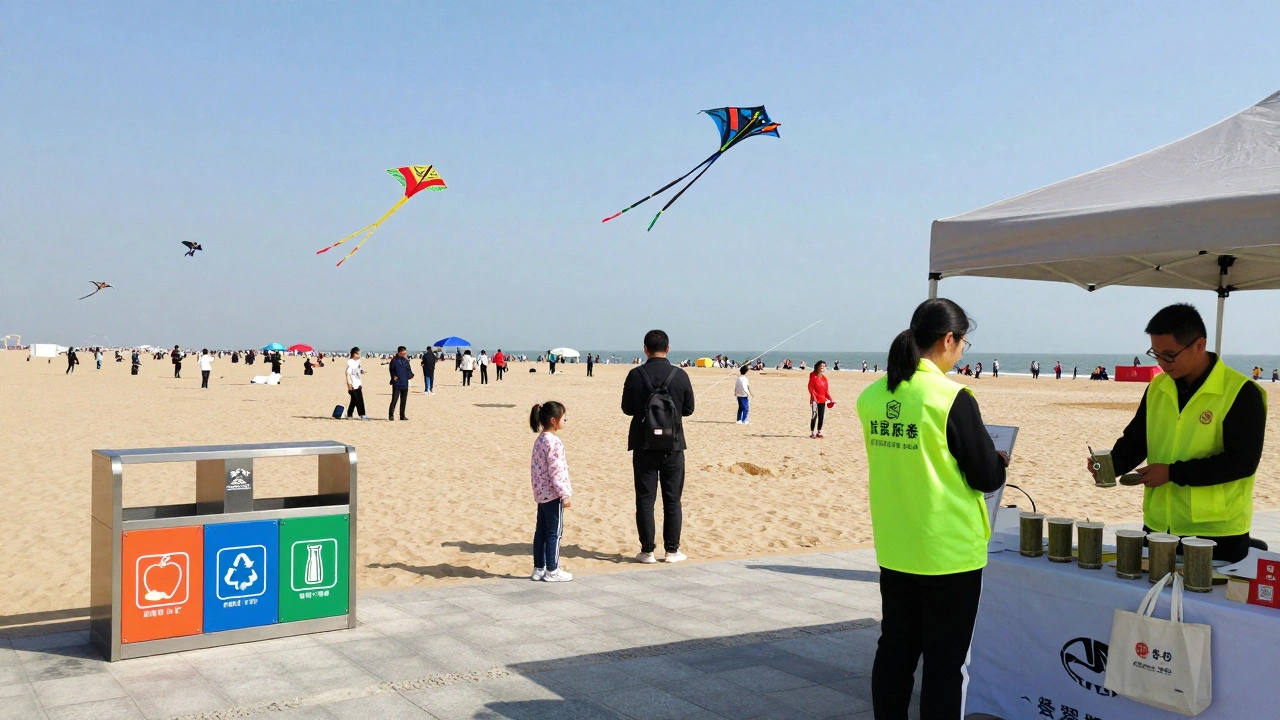
Every year, thousands of people gather in parks and beaches to fly kites-colorful, soaring, and full of joy. But behind the fun, there’s a hidden cost: plastic wrappers, single-use food containers, disposable banners, and abandoned string. Kite events don’t have to be this way. With small, smart changes, the kite community can turn festivals into clean, green celebrations that honor the sky-not pollute it.
Why Kite Events Generate So Much Waste
Kite festivals are loud, crowded, and full of snacks. Organizers often rely on cheap, easy solutions: plastic bags for vendor goods, Styrofoam cups for drinks, printed flyers that get tossed after one day. Volunteers hand out plastic-wrapped candy to kids. Banners made of vinyl hang for hours and then end up in landfills. String? Most of it’s nylon or polyester, not biodegradable. One study from the 2024 Pacific Northwest Kite Festival found that over 80% of waste collected came from food packaging and event materials-not kite parts.
It’s not that people don’t care. It’s that no one’s shown them a better way.
Switch to Reusable and Compostable Supplies
The easiest win? Replace disposables with reusable or compostable options. Instead of plastic cups, use bamboo or stainless steel cups that can be washed and reused. If you need single-use items, choose certified compostable ones-like plant-based plates from companies like Eco-Products or World Centric. These break down in 60-90 days in commercial compost facilities.
Vendors should be required to use paper bags or cloth totes instead of plastic. Many festivals now charge a small fee for plastic bags, which cuts usage by over 70%. Some even offer discounts to customers who bring their own containers. Why not do the same with kite string? Swap plastic-wrapped spools for cardboard-packaged, 100% cotton or silk string. It’s stronger, safer for birds, and decomposes naturally.
Design Waste-Free Zones
Set up clearly marked areas: one for recycling, one for compost, and one for landfill. Label them with pictures, not just words. A photo of a plastic bottle goes with recycling. A picture of an apple core goes with compost. This cuts confusion. At the 2025 Oregon Kite Classic, they used color-coded bins-green for compost, blue for recycling, black for trash-and saw a 65% drop in contamination.
Make it easy for people to do the right thing. Place bins every 50 feet along main walkways. Have volunteers in bright vests to guide people. Don’t assume everyone knows what goes where. Even well-meaning attendees put compostable cups in recycling bins because they look like plastic.

Go Digital: Kill the Paper
Printed programs? Maps? Schedules? Most people have smartphones. Replace them with QR codes. Link to a simple webpage with event times, vendor lists, and safety rules. You save money, trees, and ink. Plus, you can update the schedule in real time if the wind shifts or a performer cancels.
Use digital check-ins for volunteers and vendors. No paper sign-in sheets. No lost contact info. One festival in Maine cut their paper use by 92% in just one year. They saved $3,200 in printing and still had more accurate records.
Choose Eco-Friendly Kites and Materials
Not all kites are created equal. Many are made with polyester fabric, plastic ribs, and synthetic glue. These materials don’t break down. And when a kite crashes into a tree or gets lost in the ocean, it becomes litter.
Encourage makers to use natural fibers: bamboo for frames, organic cotton or hemp for sails. Water-based, non-toxic paints instead of chemical dyes. Some builders are even using recycled plastic bottles to weave kite tails-turning waste into art.
Host a "Green Kite Build" workshop. Teach kids how to make kites from old newspapers and bamboo skewers. It’s cheap, fun, and teaches sustainability in a hands-on way. At the Portland Kite Club’s 2025 event, over 200 kids made kites from recycled materials. None of them ended up as trash.

Partner with Local Environmental Groups
You don’t have to do this alone. Team up with local clean-up groups, recycling centers, or environmental nonprofits. They can help with waste sorting, provide compost bins, or even supply volunteers. In return, give them a booth at the event. It’s a win-win: you get help, they get exposure.
The Oregon Environmental Council helped run the 2025 Willamette Kite Festival’s waste station. They trained 30 volunteers, provided compostable gloves, and even turned collected food scraps into fertilizer for a community garden. The festival’s carbon footprint dropped by 40% that year.
Track Your Impact
What gets measured gets improved. Keep track of how much waste you produce before and after changes. Weigh the trash. Count the number of compostable items used. Survey attendees about what they noticed. Use simple tools: a digital scale, a clipboard, or even a free app like Sustainable Kite Events is a growing movement within the kite community focused on reducing environmental impact through reusable materials, digital tools, and community partnerships. .
Share your results. Post them on social media. Send a short update to local news. People love to see progress. And when others see you’re doing it right, they’ll copy you.
Start Small. Stay Consistent.
You don’t need to overhaul your whole event overnight. Pick one thing to change this year. Maybe it’s switching to compostable plates. Or banning plastic string. Or setting up one recycling station. Do that well. Then add another next year.
Some festivals have gone fully zero-waste. Others just cut plastic by half. Both are victories. The goal isn’t perfection. It’s progress. Every kite that flies without leaving a trace is one more step toward a cleaner sky.
Can I still use plastic kite string at a sustainable event?
Plastic string-especially nylon or polyester-doesn’t break down and can harm wildlife. At sustainable kite events, organizers now require 100% cotton, silk, or recycled fiber string. These materials are biodegradable, safer for birds, and just as strong. If you bring plastic string, you’ll be asked to swap it at the event’s gear check.
What if my local park doesn’t have compost bins?
Bring your own compostable containers and take them home to compost. Or partner with a local community garden or composting service. Many cities have drop-off sites for compostable waste. Some even offer free pickup for events. Call your city’s waste department-they often help organize this for public gatherings.
How do I convince vendors to go green?
Offer them a discount on booth fees if they use eco-friendly packaging. Provide a list of approved suppliers who sell compostable plates, bamboo utensils, or paper bags. Make it easy for them. Many vendors want to be sustainable-they just don’t know where to start. A little guidance goes a long way.
Are there any certifications for sustainable kite events?
Not yet, but several kite associations are working on one. The International Kite Organization is testing a "Green Kite Certified" standard that rewards events for waste reduction, renewable energy use, and eco-materials. In the meantime, follow the practices of top events like the Oregon Kite Classic or the Maine Wind Festival-they’ve set the benchmark.
What’s the biggest mistake people make when trying to go green?
Assuming "biodegradable" means it’ll break down anywhere. Many "compostable" items need industrial facilities with high heat to decompose. If they end up in a landfill or the ocean, they act like plastic. Always check labels and use the right bins. When in doubt, bring it home.