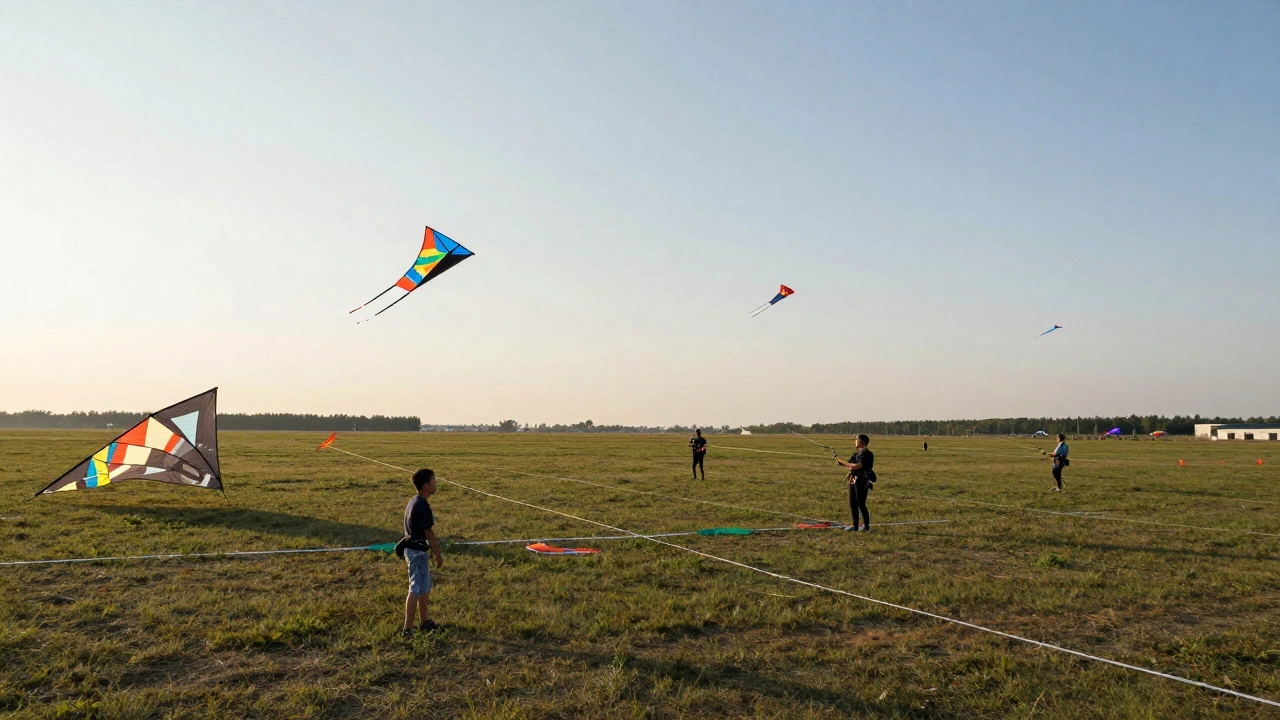
When you show up to a kite competition, you’re not just bringing your kite-you’re bringing your reputation. These events aren’t just about who flies the highest or spins the fastest. They’re about community. And if you don’t know how to share the sky, you’ll quickly become the person everyone whispers about-not for your skills, but for your attitude.
Know the Field, Respect the Space
Kite competition fields aren’t random open spaces. They’re carefully planned zones, often divided into launch areas, flying lanes, and no-fly buffers. Each flyer gets assigned a section based on their category: single-line, dual-line, or power kites. If you’re new, ask the event coordinator where your zone starts and ends. Don’t assume you can fly wherever you want just because the sky looks empty.One time in Oregon, a flyer brought a 12-foot delta kite to a field meant for small sport kites. He didn’t realize his line was cutting through three other fliers’ lanes. By the third crash, two kites were tangled in trees. He didn’t mean to cause trouble. But he didn’t check the rules. That’s the problem-most accidents happen because someone thought, "It’s just one kite. No one will mind."
Respect the boundaries. If your line crosses into another person’s zone, pull it back. If someone’s kite is coming in low, give them room. No one wants to see their favorite kite go spinning into the ground because someone else didn’t watch their altitude.
Wait Your Turn
Kite competitions aren’t races. They’re choreographed performances. That means timing matters. If you’re in a judged routine, you’ll be called up in order. Don’t launch before your turn. Don’t hover near the launch line while waiting. Don’t buzz around the judges’ table like a drone.At the 2025 Pacific Northwest Kite Festival, a team showed up 20 minutes early and started flying their group formation before the official start. They got points deducted for "unauthorized performance." Why? Because they disrupted the flow. Judges couldn’t hear the next flier’s music. Spectators couldn’t see the next act. It wasn’t about skill-it was about discipline.
Even in free-flight zones, wait your turn. If someone’s kite is climbing, let them get to altitude before you launch. If you’re flying a large power kite, give smaller kites a 100-yard buffer. It’s not just polite-it’s physics. A 20-foot power kite can pull with over 50 pounds of force. That’s enough to yank a lightweight sport kite out of the sky.
Don’t Steal the Wind
Wind isn’t just weather-it’s currency. And in a crowded field, the best wind isn’t always where you think it is. The upwind side of the field gets the cleanest air. Downwind? Turbulence. Gusty pockets. Dead zones.If you’re flying a precision kite, you want smooth, steady wind. So don’t set up directly behind someone else’s large kite. You’re not just flying in their shadow-you’re flying in their turbulence. That’s called "stealing the wind," and it’s one of the quickest ways to earn bad will.
At the 2024 International Kite Classic, a veteran flier noticed a newcomer setting up right in the wake of a 30-foot team kite. He walked over, handed the guy a small wind meter, and said, "Try 150 feet upwind. You’ll see the difference." The newcomer got third place. The veteran didn’t win-but he earned respect.
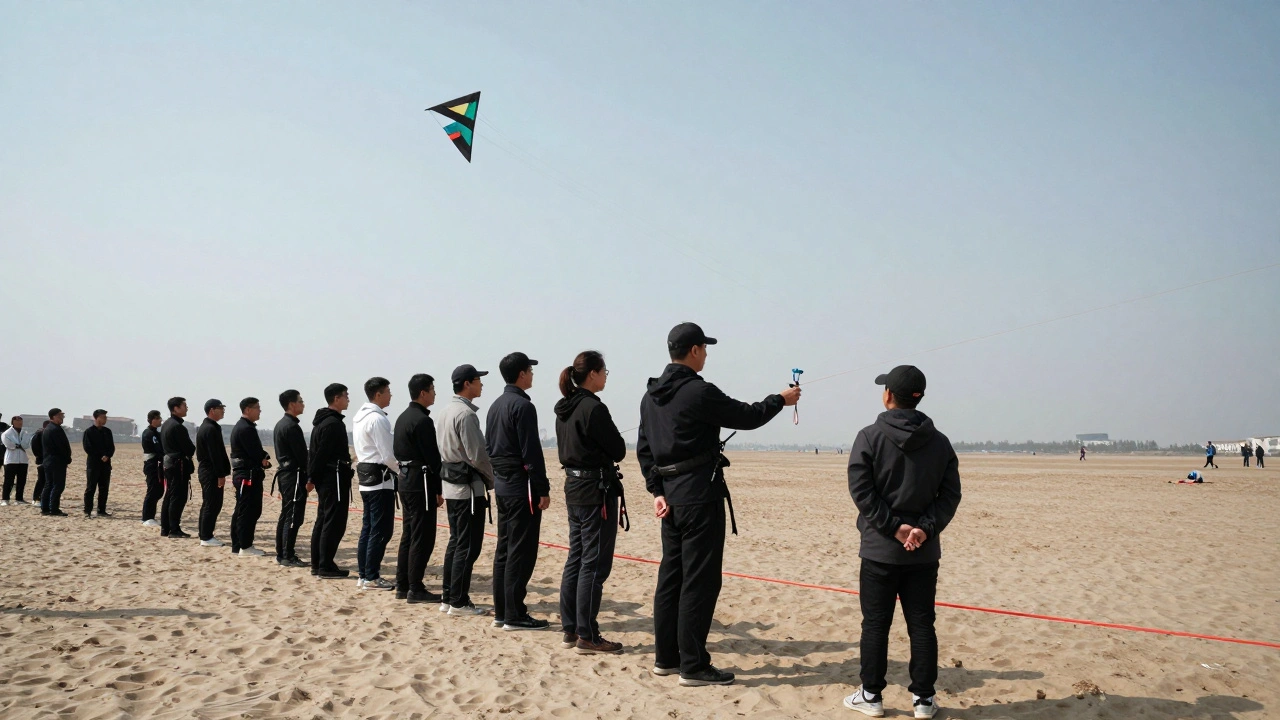
Help, Don’t Hinder
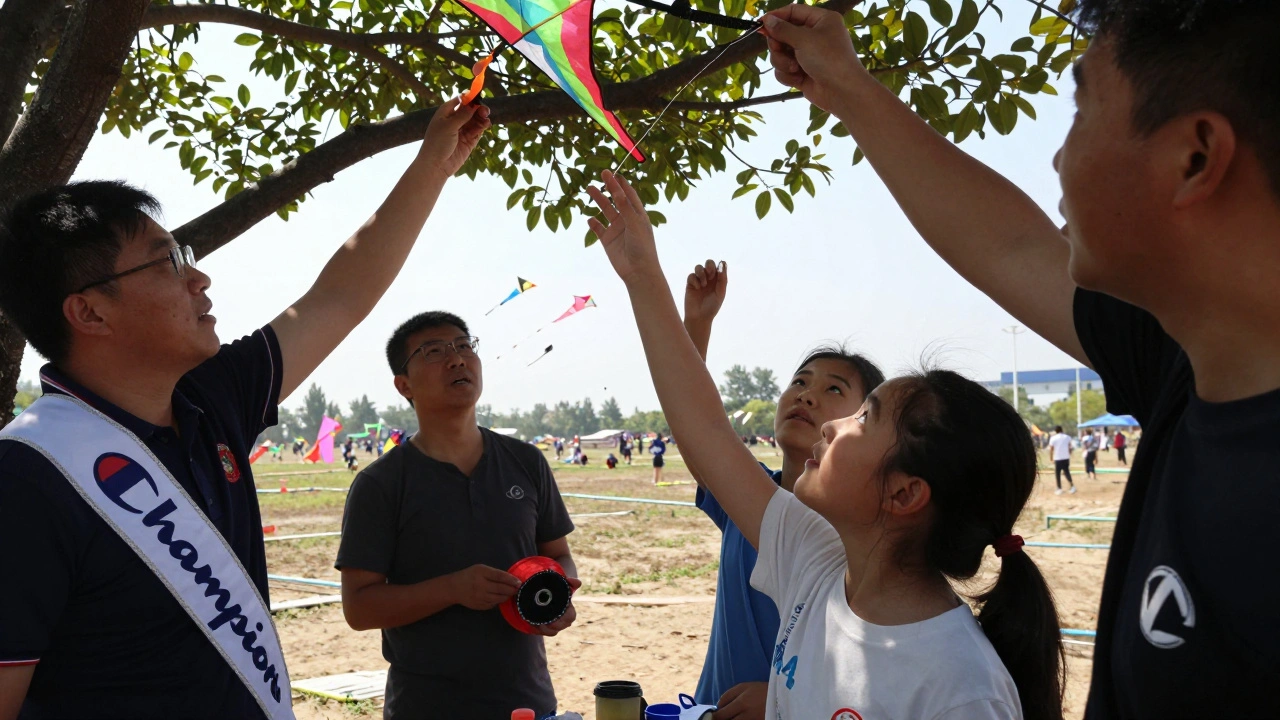
When someone’s kite crashes, don’t just stand there. Don’t laugh. Don’t yell, "You blew it!"Help. Even if it’s not your kite. Even if you’re in the middle of your own routine. Pick up tangled lines. Hold the tail while they untangle the bridle. Hand them a spare spool. It takes five seconds. And it makes you part of the community, not just a competitor.
At the 2023 Kitefest in Hood River, a 12-year-old girl’s kite got stuck in a tree. Three adults helped her get it down. One of them was the reigning champion. She didn’t win that day. But she walked away with a new mentor-and a whole lot more confidence.
Keep It Clean
Kite lines snap. Kite frames break. Glue, tape, and epoxy get everywhere. And if you leave a trail of debris behind, you’re not just being messy-you’re being dangerous.Used line? Tie it up. Don’t toss it on the grass. Broken carbon rod? Put it in your bag. Don’t leave it where someone might step on it. Even a tiny shard can cut skin-or slice through another flier’s line.
At a regional event last year, a flier left a pile of broken spars near the launch zone. A child stepped on one. It pierced through their sneaker. The event had to shut down for 45 minutes while the kid got medical help. The flier never came back.
Win With Grace, Lose With Dignity
You’re going to lose. Maybe you’ll fly better than anyone else and still come in second. Maybe your kite will crash right before the final judges’ call. That’s part of the game.Don’t argue with judges. Don’t blame the wind. Don’t rant on social media. If you have a question, ask calmly after the event. Most judges are former competitors. They’ve been where you are.
And if you win? Don’t gloat. Don’t post a video with "I’m the best" in the caption. Say thanks. Thank your team. Thank the organizers. Thank the person who helped you pick your kite up after your last crash.
Winning a kite competition doesn’t mean you flew the best. It means you flew with skill-and with heart.
What Not to Do
- Don’t fly in someone else’s assigned zone.
- Don’t launch before your turn.
- Don’t fly directly behind another kite.
- Don’t leave debris on the field.
- Don’t yell at judges or other fliers.
- Don’t take photos or videos while someone is performing without asking.
What To Do Instead
- Arrive early and check the field map.
- Ask if you can help after a crash.
- Offer a spare line or tool if someone looks stuck.
- Applaud good flying-even if it’s not yours.
- Clean up after yourself.
- Thank the volunteers.
Why This Matters
Kite flying isn’t just a sport. It’s a tradition passed down through generations. From the ancient Chinese war kites to the modern precision teams in Oregon, the culture has always been built on trust. You don’t need a license to fly a kite. But you do need to earn the right to share the sky.Every time you respect the field, you make it safer for the next person. Every time you help someone up, you keep the spirit alive. And every time you fly with humility, you remind everyone why we do this-not to win, but to be part of something bigger.
What should I do if someone flies in my assigned zone?
Stay calm. Politely point to the field map and say, "I think we’re in each other’s zones." Most people don’t realize they’re out of place. If they don’t move, ask an event volunteer. Never confront someone aggressively-kite lines can snap under tension, and a sudden jerk can cause injury.
Can I fly multiple kites at once during a competition?
Only if the rules allow it. Most competitions limit fliers to one kite per category. Flying two at once without permission is seen as disruptive and unsafe. If you want to do a dual-kite routine, check the event guidelines ahead of time. Some festivals have special categories for team or multi-kite performances.
Is it okay to use drones to film kite competitions?
No-not unless the event specifically permits it. Drones can interfere with kite lines, scare birds, and distract fliers. Even if you’re not flying near kites, the noise and movement can throw off performances. Always ask the event organizer before launching a drone. Many competitions have designated drone zones, or require certified pilots.
How do I know what size kite is allowed in my category?
Check the event’s rulebook before you arrive. Most competitions list weight, wingspan, and line strength limits. For example, single-line sport kites usually max out at 10 square feet of sail area. Power kites often have minimum line ratings of 150 lb. If you’re unsure, bring your kite to the registration table-volunteers will help you match it to the right class.
What if I see someone breaking the rules but no one is stopping them?
Don’t confront them yourself. Find an event volunteer, marshal, or judge. Most events have a quiet reporting system. You can say something like, "I noticed someone flying in the no-launch zone near the judges." Let the organizers handle it. Your role is to fly well and set an example-not to be the enforcer.