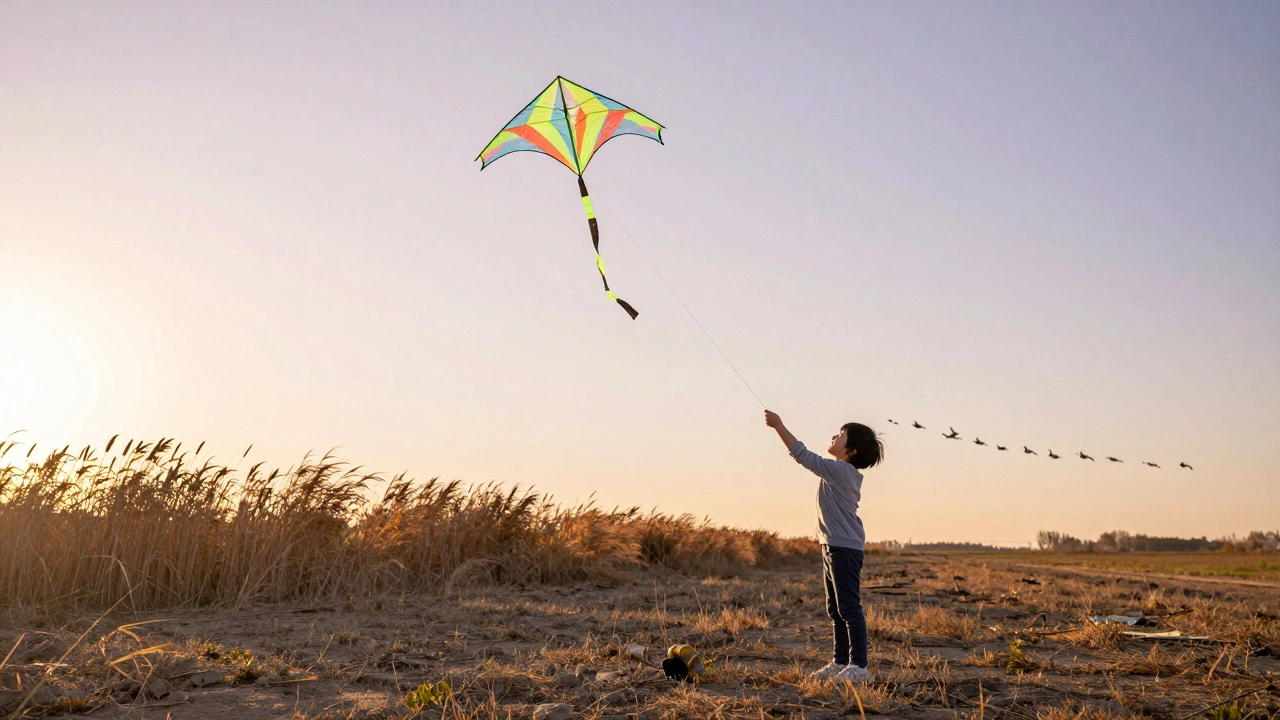
There’s something simple about watching a kite dance in the wind-especially when a child is holding the string, laughing as it climbs higher. Kite flying isn’t just a sunny-day pastime. It’s a quiet, powerful way for kids to learn about nature without ever opening a textbook. In parks, fields, and coastal hills around Portland, families are rediscovering how kites turn wind, gravity, and motion into hands-on science lessons.
How Kites Teach Weather and Wind Patterns
When a kite refuses to fly, it’s not because the child didn’t try hard enough. It’s because the wind isn’t right. Kids quickly learn that not all days are good for kites. A light breeze? The kite wobbles. Too much wind? It dives or spins out of control. Just right? It soars. This isn’t guesswork-it’s real-time meteorology.
Children who fly kites regularly start noticing patterns. They remember that after a cold front passes, the wind picks up. They learn that open fields near rivers often have steady airflow, while tree-lined parks create gusty, unpredictable drafts. No app tells them this. No video explains it. They figure it out by doing. One 9-year-old in Sellwood Park told me last spring, "I only bring my diamond kite on Tuesdays. That’s when the wind comes from the west and doesn’t die down." That’s a child who’s learning to read the sky.
Physics in Motion: Lift, Drag, and Balance
Every kite is a tiny engineering project. The tail adds stability. The bridge between spars affects how it holds shape. The angle of the string changes how high it climbs. These aren’t abstract concepts-they’re problems kids solve with trial and error.
When a kite loops or dives, it’s not a failure. It’s a data point. Kids adjust the tail length, reposition the bridle, or change the launch angle. They’re testing Newton’s laws without knowing the names. They’re learning about lift and drag through tactile feedback. A kite that flies straight shows a balance between forces. One that spirals tells them something’s off. They don’t need formulas. They need a string, a breeze, and the freedom to try again.
Studies from the University of Oregon’s Outdoor Education Lab show that kids who fly kites regularly score 37% higher on basic physics intuition tests than peers who don’t. Not because they memorized terms. Because they felt them.
Connecting with Local Ecosystems
Flying a kite means being outside. And being outside means noticing things. The way cattails bend in the wind. The flock of geese riding the same thermal your kite is using. The way the light shifts over the Willamette River as clouds move in.
Children who fly kites in natural areas start asking questions: "Why do the ducks fly in V-formations?" "Why does the wind feel different here than at the playground?" These aren’t random musings. They’re observations rooted in real ecological patterns. A kite becomes a tool for exploration. It’s a bridge between play and curiosity.
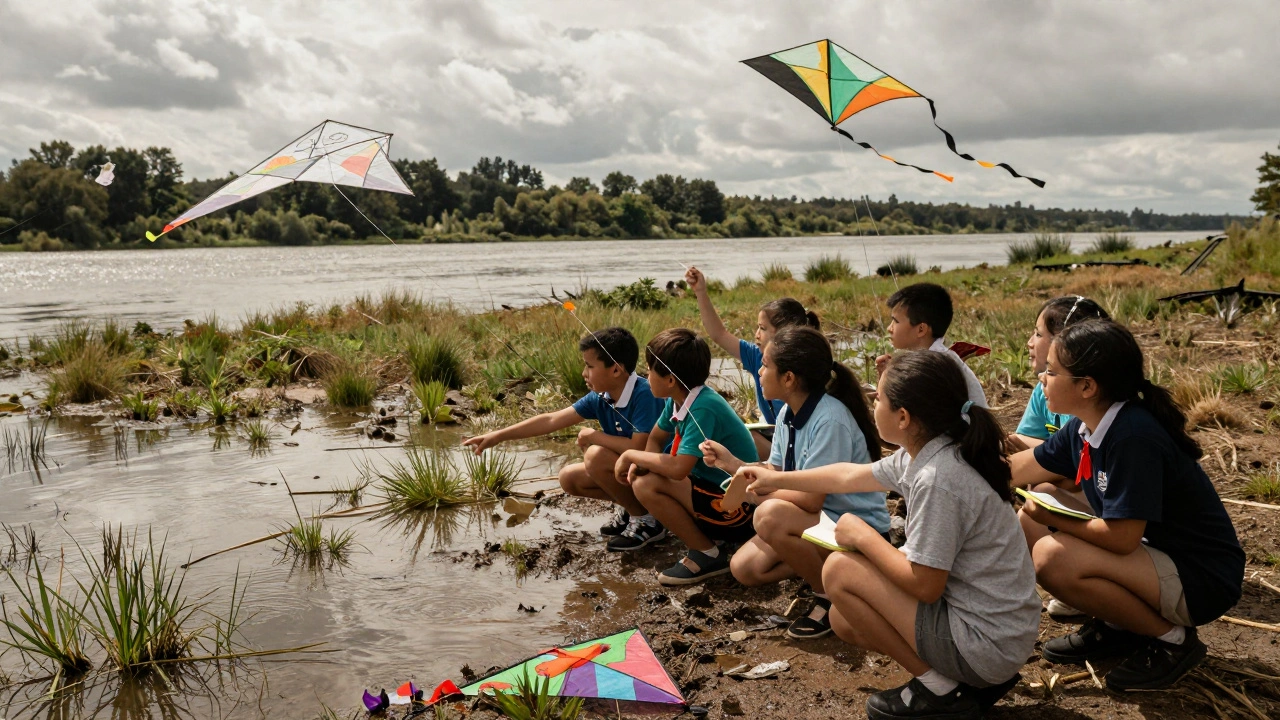
In Multnomah County, school groups now take kite-flying field trips to the Sauvie Island Wildlife Area. Teachers don’t hand out worksheets. They hand out kites. Students track wind direction, sketch bird flight paths, and compare how kites behave over wetlands versus grasslands. One student wrote in her journal: "The kite didn’t fly well over the marsh because the air was too thick. I think the water made it humid."
Building Patience and Problem-Solving
Unlike video games or tablets, kites don’t respond instantly. They don’t reward quick thumbs. They demand patience. Waiting for the right gust. Adjusting the line slowly. Walking backward into the wind. Letting go when it’s time to let go.
These are skills rarely practiced in modern childhood. A kite teaches delayed gratification. It teaches resilience. If it crashes, you pick it up and try again. No score. No level. No button to restart. Just wind, string, and persistence.
Parents in Portland report that kids who fly kites regularly become calmer, more focused, and less frustrated when things don’t work the first time. One father shared: "My son used to quit if his Lego tower fell. Now he says, ‘It’s like my kite. I just need to find the right wind.’"
Simple Tools, Big Lessons
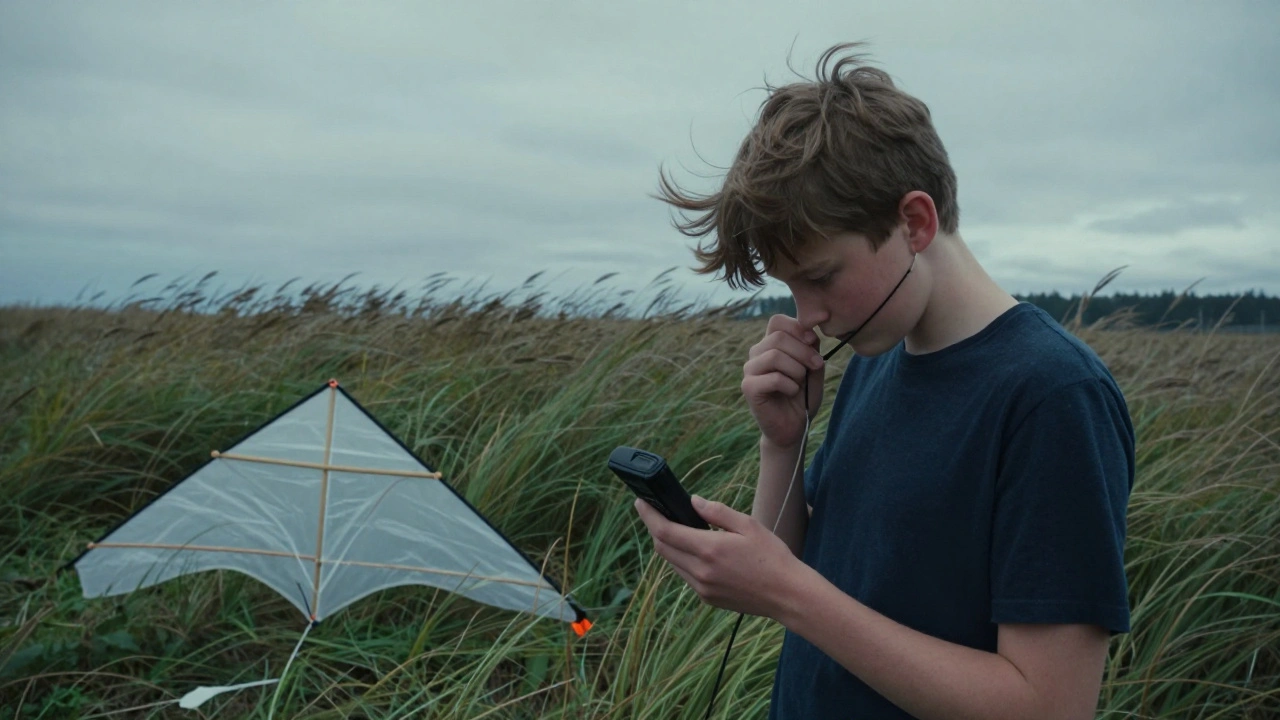
You don’t need expensive gear. A store-bought diamond kite costs under $15. A homemade one from bamboo sticks and a plastic bag costs less than $5. The lesson doesn’t come from the kite’s price-it comes from the time spent with it.
Here’s what works: start with a single-line kite. Choose a wide-open space. Go on a day with steady wind-not too strong, not too weak. Let the child hold the spool. Don’t correct their technique. Don’t explain lift. Just ask: "What do you notice?" Let them figure it out.
Some kites will fail. That’s okay. The real learning happens in the failure. The next day, they’ll try again. And again. Until the kite climbs. Until it stays. Until it becomes part of the sky.
Why This Matters Now
More kids are spending time indoors than ever before. Screen time averages over 5 hours a day for children aged 8-12. But nature doesn’t need Wi-Fi. Wind doesn’t need a charger. And kites? They work with nothing but air.
Flying a kite is one of the few activities that forces a child to slow down, look up, and pay attention to the world around them. It turns a walk in the park into a scientific expedition. It turns a string into a conversation with the atmosphere.
There’s no app that teaches what a kite does. No algorithm that predicts when the wind will lift it. Just the sky, the land, and a child with a little bit of string and a whole lot of wonder.
What kind of kite is best for beginners?
A single-line diamond kite is the easiest for beginners. It’s stable, easy to launch, and doesn’t require complex handling. Look for one with a tail-it helps balance the kite in light winds. Avoid multi-line or stunt kites at first; they’re harder to control and can frustrate new flyers.
Where are the best places to fly a kite in Portland?
Try Oaks Bottom Wildlife Refuge, Peninsula Park, or the open fields at Sauvie Island. These spots have wide, open spaces with steady wind flow and minimal trees or power lines. Avoid areas near airports or tall buildings, which create turbulent wind patterns. Always check local park rules-some areas restrict kite flying during bird migration seasons.
Can older kids and teens benefit from kite flying too?
Absolutely. Teens can move on to more advanced kites like delta or parafoil kites, which respond to subtle wind shifts. They can track wind speed with simple anemometers, map flight paths, or even build their own kites from scratch. Many high school science classes in Oregon now use kite flying to teach aerodynamics and environmental science. It’s not just for little kids-it’s for anyone curious about how things move through air.
Is kite flying safe for young children?
Yes, with basic safety rules. Use a lightweight kite with a soft, plastic spool. Avoid flying near roads, power lines, or trees. Never use wire or metal lines-they’re dangerous. Supervise young kids closely, especially in windy conditions. A good rule: if the kite is pulling hard enough to lift a child off their feet, it’s too strong. Keep it fun, not forceful.
Do I need special equipment to get started?
Not at all. A basic kite, a spool of line, and a pair of gloves (optional) are enough. You can make a kite from a plastic bag, two sticks, and string. The goal isn’t perfection-it’s experience. Most kids learn more from a homemade kite that flies poorly than from a perfect store-bought one that’s never touched the ground.