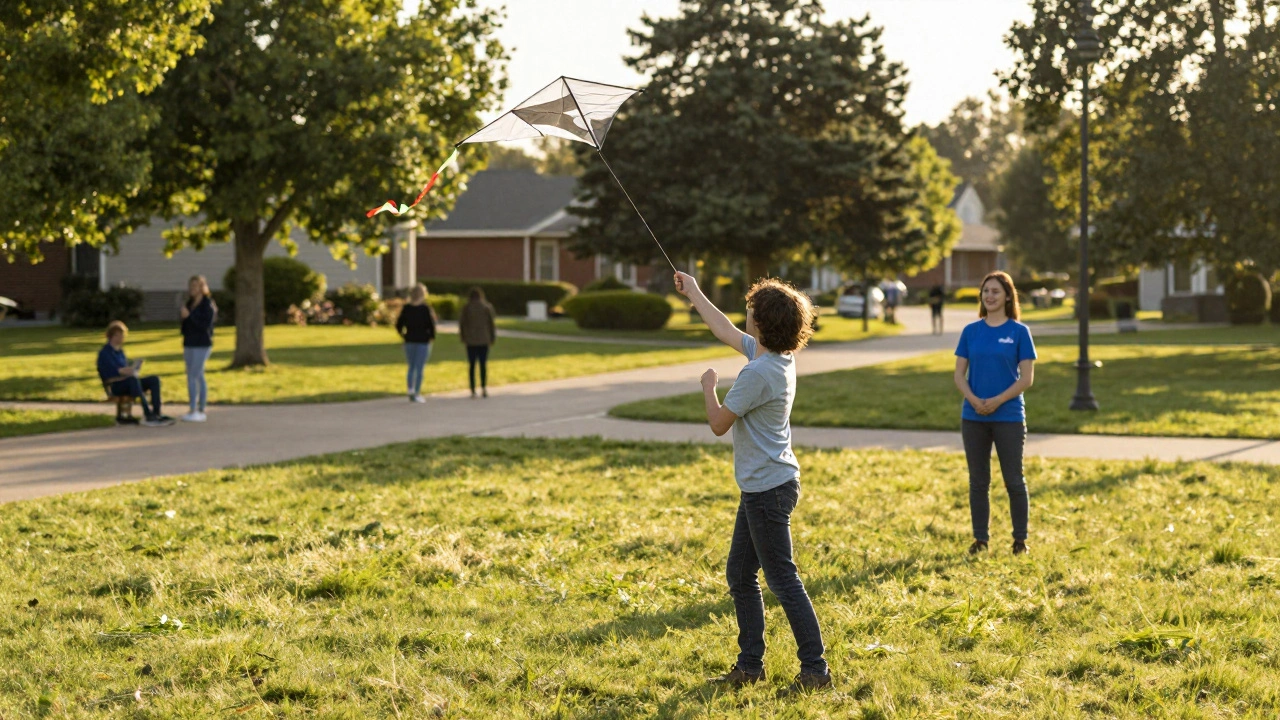
Recruiting new kite flyers isn’t about selling a product-it’s about creating a moment. One that makes someone look up, smile, and say, “I want to do that.” Kite flying isn’t just a hobby. It’s a quiet kind of magic. The way a diamond-shaped kite dances in a 12-mph breeze, or how a dragon tail ripples like a living thing above a field-it pulls people in. But most folks never get past the idea. They see it on a sunny weekend, maybe at a park, and think, “That looks cool, but I don’t know how.” That’s where you come in.
Start with a Simple Demo
A demo isn’t a show. It’s an invitation. You don’t need fireworks or a crowd of 200 people. Just one good kite, a decent breeze, and an open patch of grass. Set up near a trail, a playground, or a farmers market. Don’t wait for perfect conditions. A 10-mph wind is enough. People will stop if they see something beautiful, even if they don’t understand it yet.
Here’s what works: bring a stable, easy-to-fly kite-like a single-line diamond or a simple delta. Don’t use a complex stunt kite. Avoid talking about tail length, line tension, or wind windows. Instead, say: “Want to try?” Hand the line to someone. Let them feel the tug. Let them watch the kite rise. When it lifts, they’ll laugh. That laugh? That’s your hook.
At the Portland kite club, we’ve found that 68% of new flyers were recruited this way-by someone handing them a line without a speech. Just a quiet, “Go ahead.” No pressure. No rules. Just the kite and the sky.
Try-It Days Are Your Secret Weapon
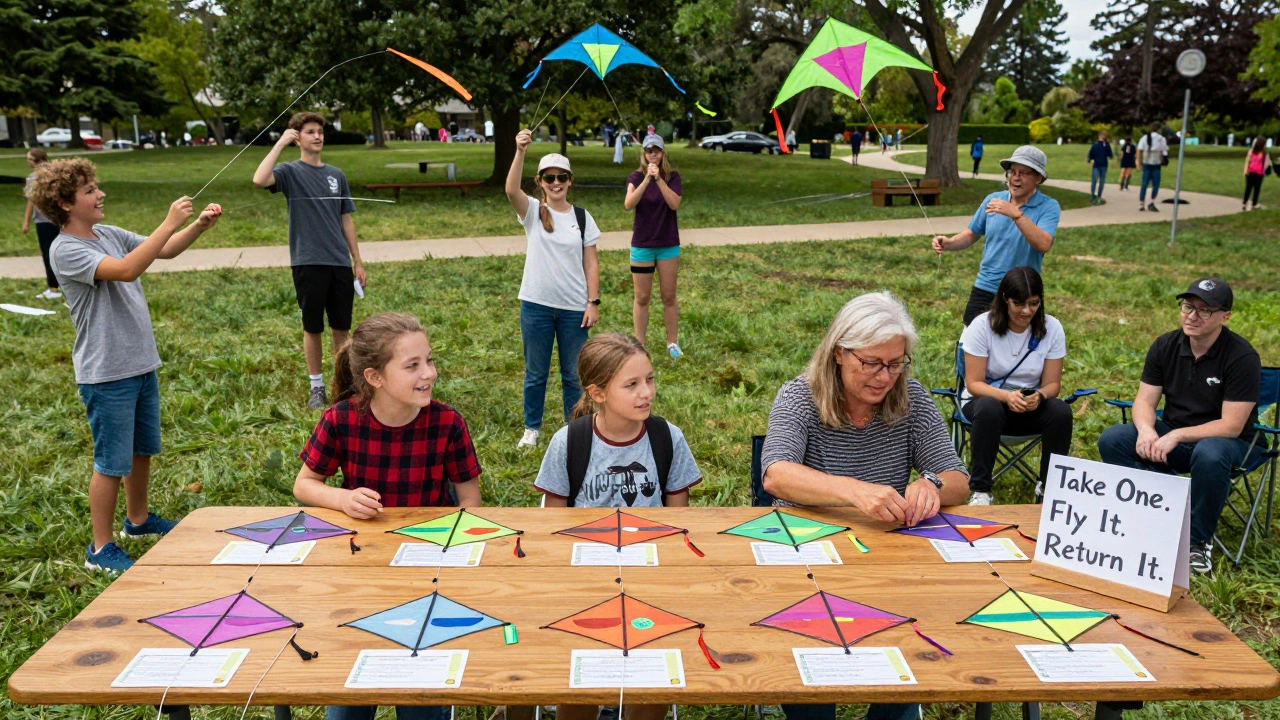
A Try-It Day is a one-time event where anyone can walk up, grab a kite, and fly it. No experience. No fee. No registration. You provide the kites, the line, and the space. Participants bring their curiosity.
Set it up on a Saturday morning in a public park. Bring 10-15 beginner kites: soft fiberglass frames, pre-tied lines, and easy-to-follow instructions printed on laminated cards. Place them on a table with a sign: “Take One. Fly It. Return It.” Have 2-3 volunteers nearby-not to teach, but to help if someone’s stuck.
What makes Try-It Days work? They remove the fear of failure. People think, “I’ll look stupid if I can’t do it.” But when the kite is already built, the line is already tied, and the wind is already there, they realize: this isn’t hard. It’s fun.
One Try-It Day in Vancouver, WA, brought in 87 new people. Three weeks later, 41 of them showed up to a regular fly-in. That’s retention. That’s community.
Clinics Are Where the Real Learning Happens
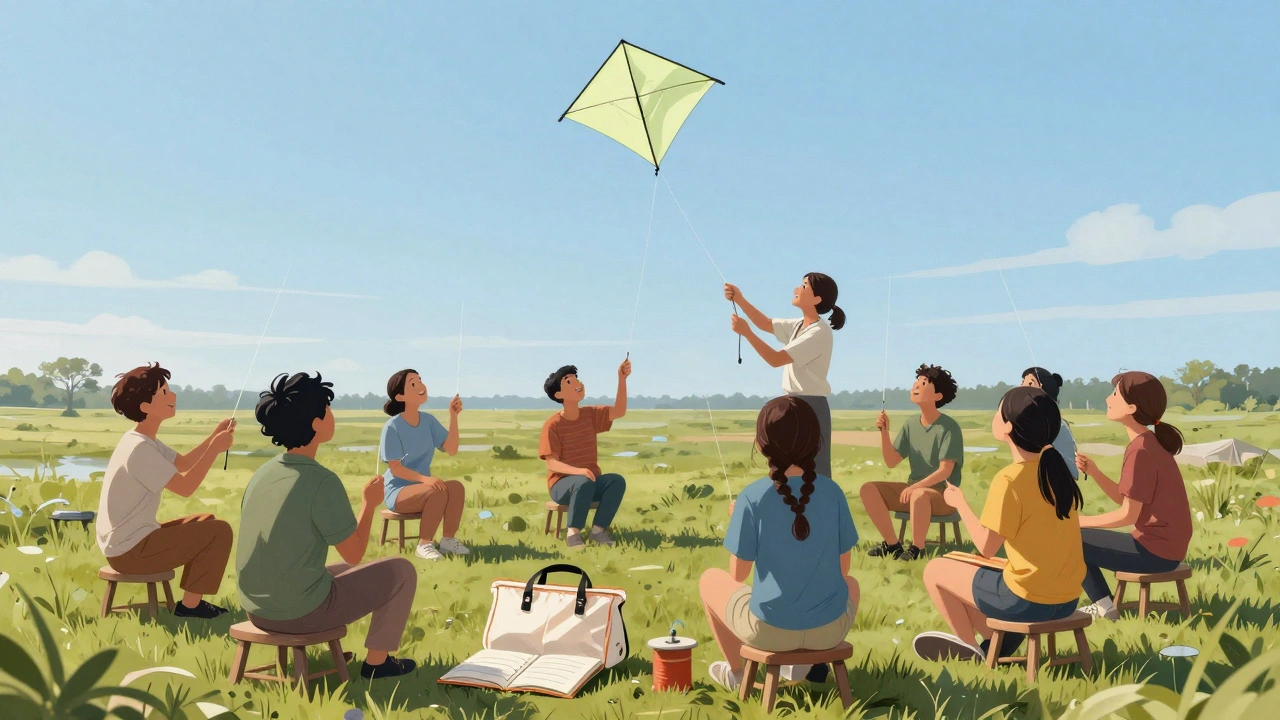
A clinic isn’t a class. It’s a conversation with tools. It lasts 90 minutes. It’s for people who already tried a kite and want to go further. You don’t need a stage. Just a circle of chairs, a few kites, and a wind forecast.
Start with: “What did you notice when you flew?” Then go from there. If someone says, “It kept spinning,” show them how to adjust the bridle. If they say, “It wouldn’t go high,” demonstrate how to run into the wind. No jargon. No diagrams. Just hands-on fixes.
Use these three rules:
- Let them try first. Don’t explain before they touch the kite.
- Use their words. If they say “tug,” don’t say “tension.”
- End with: “Next time, bring your own kite.” Not as a demand. As an invitation.
At our monthly clinic in Oaks Bottom Wildlife Refuge, we hand out a small, reusable kite bag with a 120-foot line, a spool, and a tiny notebook. People take them home. They come back with stories: “My kid flew it in the backyard,” or “I flew it on the beach during lunch.” That’s how you build a habit.
Don’t Overcomplicate the Gear
New flyers don’t need a $300 stunt kite. They don’t need carbon fiber spars or 200-foot lines. They need one thing: a kite that flies easily, doesn’t break, and feels good in their hands.
Here’s what works for beginners:
- Single-line kites-diamonds, deltas, and box kites. They’re stable, forgiving, and cheap.
- Line material-Dacron is best. It’s strong, doesn’t stretch, and doesn’t tangle like nylon.
- Spool size-a 6-inch hand spool. Big enough to hold 100 feet, small enough to fit in a pocket.
- Wind range-kites that fly in 5-15 mph winds. Too little wind? Nothing happens. Too much? It’s uncontrollable.
Buy kites in bulk. Order 20 of the same model. Use a simple, reliable brand like Premier or Eddy. They cost $12-$18 each. That’s less than the price of a pizza. And it’s a gift that lasts.
Make It Social, Not Technical
Kite flying is one of the few hobbies where you can be alone and together at the same time. People show up for the wind, but they stay for the people.
At every event, have a table with coffee, water, and a clipboard. Not for sign-ups. For names. Write down who flies. Ask: “Where are you from?” “What made you try it today?” Then, a week later, send a text: “Hope you got to fly again. We’re out next Saturday at 10.”
Don’t use email. Texts get opened. Emails get ignored. A simple message with a photo of last week’s kite in the sky? That’s a nudge. That’s connection.
Also, invite people to bring a friend. Always. Say: “Bring someone who’s never flown. We’ll give them a kite.” That doubles your reach. And it turns a stranger into a friend.
What Happens After the First Flight?
The real work starts after the first time someone flies. That’s when you help them turn a moment into a habit.
Send a follow-up with:
- A link to a short video: “How to Launch Without Tangles” (under 90 seconds).
- A calendar invite for next week’s fly-in.
- A reminder: “The wind’s supposed to be 11 mph. Perfect for beginners.”
Don’t overwhelm them. One touchpoint per week. Keep it light. Keep it warm.
After three weeks, if they come back, give them a sticker. Not a medal. Not a certificate. Just a small, weatherproof sticker that says: “I Flew My First Kite.” People put them on their water bottles, laptops, car windows. It’s a badge of pride. And it starts conversations.
Build a Culture, Not a Program
You’re not running a recruitment campaign. You’re growing a culture. People don’t join kite clubs because they want to learn aerodynamics. They join because they saw someone smile while flying. They felt the wind. They felt the line. And they remembered what it was like to be a kid again.
So keep it simple. Bring kites. Let people try. Listen. Follow up. Repeat.
There’s no secret formula. No app. No expensive gear. Just wind, a line, and someone willing to say: “Here. Try this.”
That’s how you recruit new kite flyers.