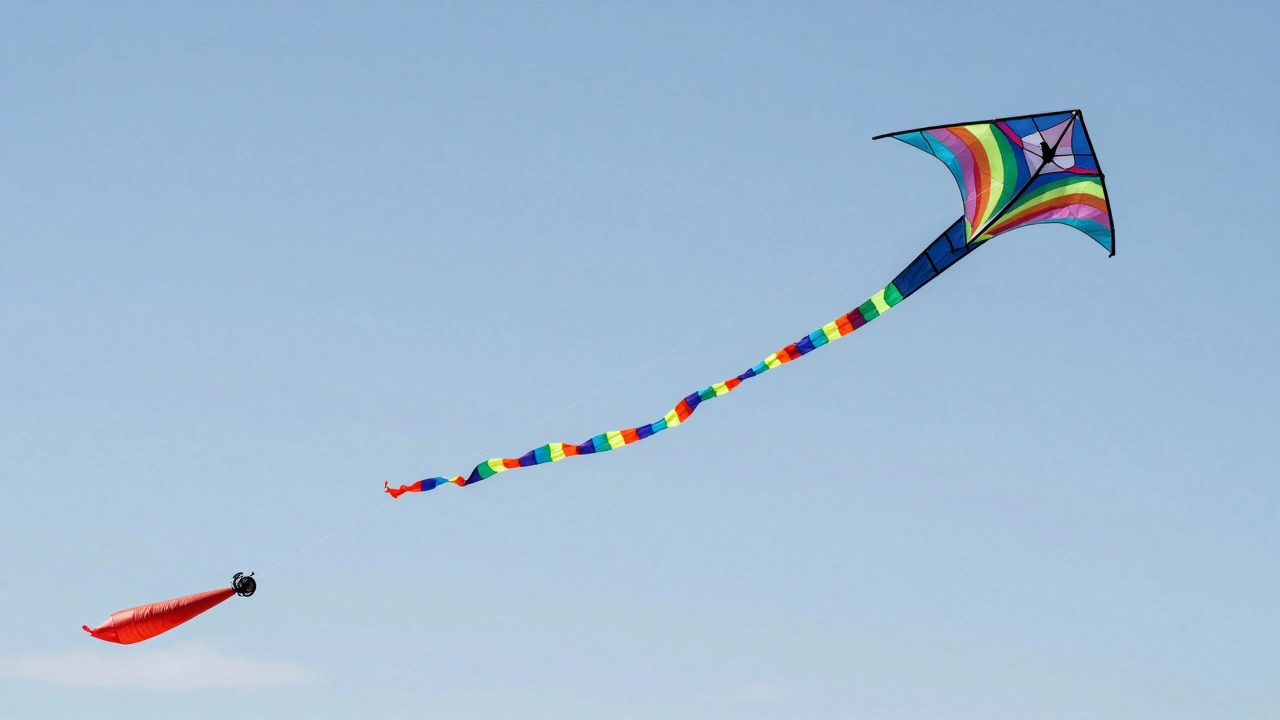
Ever launched a kite only to watch it spin, wobble, or dive straight into the ground? You’re not alone. Most beginner kites fly fine in calm air, but the moment the wind picks up or gets gusty, things go sideways. That’s where kite tail kits and drogues come in-not just as decorations, but as essential tools for control and show.
Why Your Kite Needs a Tail or Drogue
Kites don’t fly the same way birds do. They’re pulled by wind, but they also get pushed around by turbulence. Without something to balance them, the kite’s nose will yaw left and right, or it’ll roll like a barrel. This isn’t just annoying-it’s dangerous if you’re flying near people or power lines.A tail adds drag to the lower end of the kite, pulling it into alignment with the wind. Think of it like the feather on an arrow. A drogue, on the other hand, is a small, cone-shaped or cylindrical device attached to the kite’s line, usually near the reel. It doesn’t touch the kite itself but creates resistance in the line, helping to stabilize the whole system.
Both work to reduce oscillation. But they do it differently. A tail affects the kite’s body directly. A drogue affects the tension in the line. That’s why you’ll see tail kits on single-line kites, and drogues on dual-line or power kites used for traction or tricks.
Types of Kite Tail Kits
Not all tails are created equal. There are three main types you’ll find on the market:- Single-streamer tails - Simple, long ribbons of fabric or plastic. Great for small kites under 1.5 meters. They’re cheap, easy to replace, and give a classic look.
- Multi-tail kits - These have 3 to 12 individual streamers branching off a central hub. They’re heavier, more stable, and better for medium to large kites. The multiple streams create balanced drag across the width.
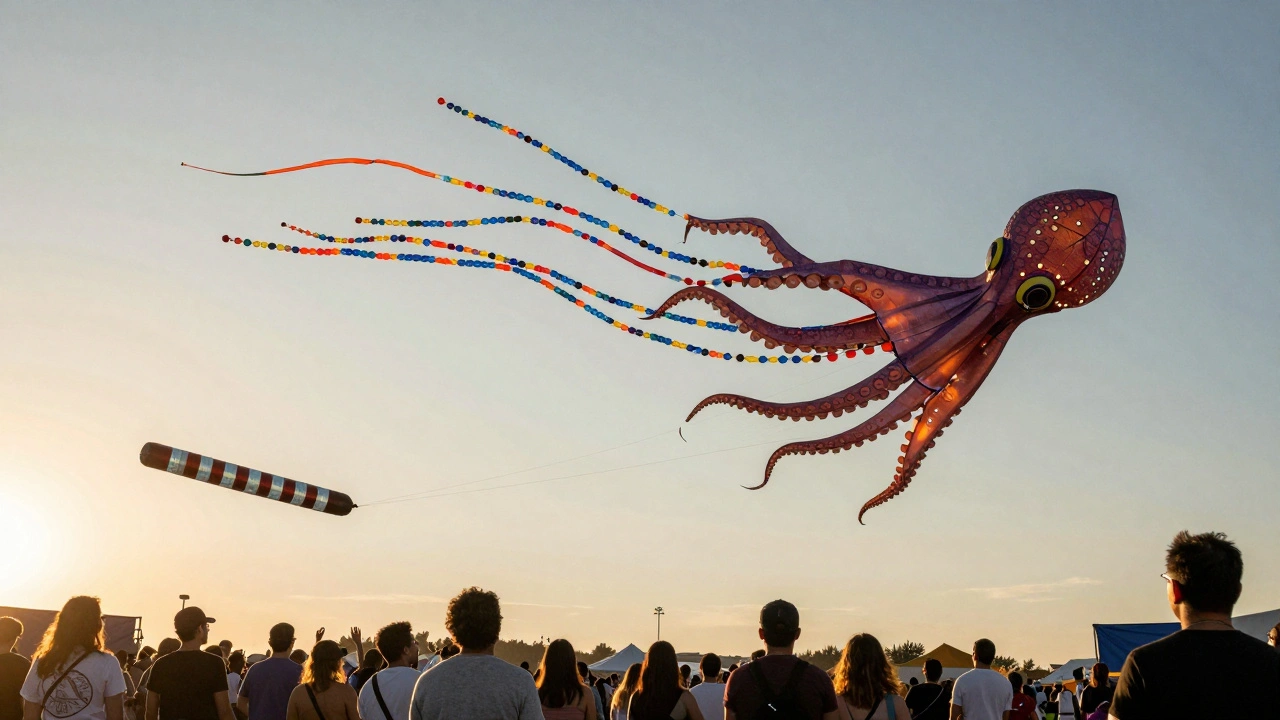
- Beaded or bell tails - These include plastic beads, wooden rings, or even small bells spaced along the tail. They add weight, sound, and visual motion. Great for festivals or evening flying with LED lights.
Most tail kits come in 10-foot, 20-foot, and 30-foot lengths. For a standard diamond kite, a 20-foot tail is usually enough. Bigger kites, like the 4-meter octopus or dragon kites, need 40 feet or more. Too short? It won’t help. Too long? It drags the kite down.
What Are Drogues and How Do They Work?
Drogues are often confused with parachutes, but they’re not meant to slow descent. They’re designed to create consistent drag in the flying line. When wind gusts hit, the line jerks. A drogue smooths that out by resisting sudden pulls.You’ll find drogues in two main styles:
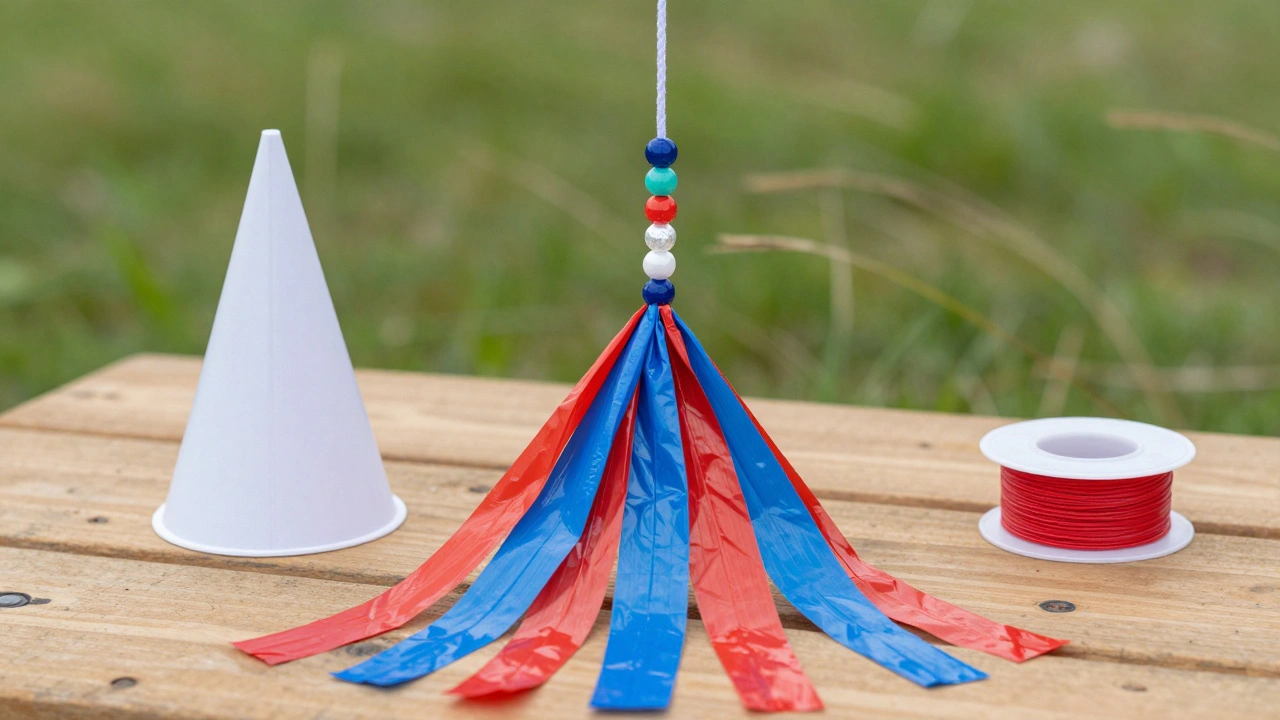
- Conical drogues - These look like inverted funnels. They’re lightweight and work best on lighter lines (like 50-pound test). Common on sport kites and stunt kites.
- Cylindrical drogues - Tubular and slightly heavier. Better for power kites or those used in kiteboarding. They handle 100+ pound lines and hold up in strong wind.
Most drogues attach with a carabiner or snap to the flying line. You slide it on before tying your knot, then lock it in place. You can even adjust its position-closer to the kite for more line tension, or closer to the reel for smoother reeling.
One pro tip: If you’re flying in gusty conditions and your kite keeps surging forward, try moving the drogue closer to the kite. That extra drag right before the kite helps it stay planted in the sky.
When to Use a Tail vs. a Drogue
It’s not either/or. Sometimes you need both. But here’s when each shines:- Use a tail if your kite is unstable side-to-side. If it’s yawing like a drunk bird, a tail fixes that fast.
- Use a drogue if your kite surges, dives, or tugs hard on your hands. If the line feels like a rubber band snapping, a drogue steadies the pull.
- Use both if you’re flying a large, heavy kite in variable wind-like a giant octopus or a 6-foot hexagon. The tail keeps it aligned; the drogue keeps the line tension smooth.
Most factory kites come with a basic tail. But if you’re flying in Portland’s erratic spring winds-where it’s calm one minute and gusting at 25 mph the next-you’ll want to upgrade.
DIY Tail Kits: Make Your Own
You don’t need to buy a kit. Making your own tail is cheap and fun. Grab some lightweight plastic trash bags, ribbon, or even old t-shirts. Cut strips 1.5 inches wide and 4 to 6 feet long. Tie them to a central line with a simple overhand knot every 6 inches.For extra flair, add beads, glow sticks, or small reflective strips. You can even paint them with fluorescent colors. A homemade tail with alternating red and blue strips looks amazing at sunset.
Test it. Fly the kite without a tail first. Then add your DIY version. You’ll feel the difference immediately. No spinning. No diving. Just smooth, steady flight.
Visual Impact: Why Color and Motion Matter
Kite flying isn’t just about staying airborne-it’s about spectacle. A plain white kite with a black tail looks fine. But a kite with a 30-foot rainbow tail? That’s a crowd-pleaser.Color and movement draw eyes. Beaded tails clatter and sway. Multi-streamer tails ripple like a school of fish. LED-lit tails turn night flying into a light show. Drogues with reflective strips catch the sun as they spin on the line.
At the annual Portland Kite Festival, the most photographed kites aren’t the biggest-they’re the ones with tails that move like living things. One year, a dragon kite with 100 colored streamers and a glowing drogue drew a crowd of 300 people just standing there watching it dance.
Common Mistakes and How to Avoid Them
People mess up tails and drogues in predictable ways:- Using a tail that’s too light - A 10-foot tail on a 5-foot kite won’t cut it. Weight matters. If the tail flutters like a limp noodle, it’s not doing its job.
- Putting the drogue on the kite - Drogues go on the line, not the kite. Attaching one to the bridle will throw off balance and cause crashes.
- Ignoring wind conditions - In steady wind, you might not need either. In gusty wind, you need both. Always check the forecast before you go.
- Forgetting to check wear - Plastic tails crack. Drogues get tangled. Replace them before they fail mid-flight. A broken tail mid-air can tangle your line and ruin your day.
Keep spare tails and drogues in your kite bag. I keep three extra tails and two drogues in a ziplock in my pack. You never know when the wind will surprise you.
Final Tip: Test Before You Fly
Don’t just slap on a tail and launch. Test it first. Hold the kite up, let the wind catch it, and watch how it behaves. If it wobbles, add more tail. If it surges, adjust the drogue. It takes two minutes, but it saves hours of frustration.Kite flying should feel effortless. With the right tail kit or drogue, it will be. You’ll fly longer, safer, and with more style than ever before.
Do I need a tail if my kite came with one?
Maybe. Factory tails are often short and lightweight, meant for calm days. If you fly in gusty or variable wind, upgrading to a longer, heavier tail will make a big difference. Test it: if your kite still wobbles, it’s time for a better one.
Can I use a drogue on a single-line kite?
Yes, but it’s less common. Drogues are mainly used on dual-line or power kites where line tension matters more. On a simple diamond kite, a tail does the job better. A drogue on a single-line kite can make reeling in harder without adding much stability.
How long should my kite tail be?
A good rule of thumb: 3 to 5 times the length of your kite. So if your kite is 3 feet tall, try a 9- to 15-foot tail. For very large kites (over 4 feet), go up to 10 times the length. Start with the middle range and adjust based on how it flies.
Are drogues safe for kids’ kites?
Yes, if used correctly. Drogues reduce sudden tugs on the line, which can make flying safer for kids. But make sure the drogue is lightweight and not a choking hazard. Avoid metal parts. Always supervise children when using drogues.
Can I fly without a tail or drogue?
In perfectly steady, light wind-yes. But most real-world conditions aren’t perfect. Wind gusts, turbulence, and changing speeds will make your kite unstable without some form of stabilization. For consistent, enjoyable flying, use at least a tail.