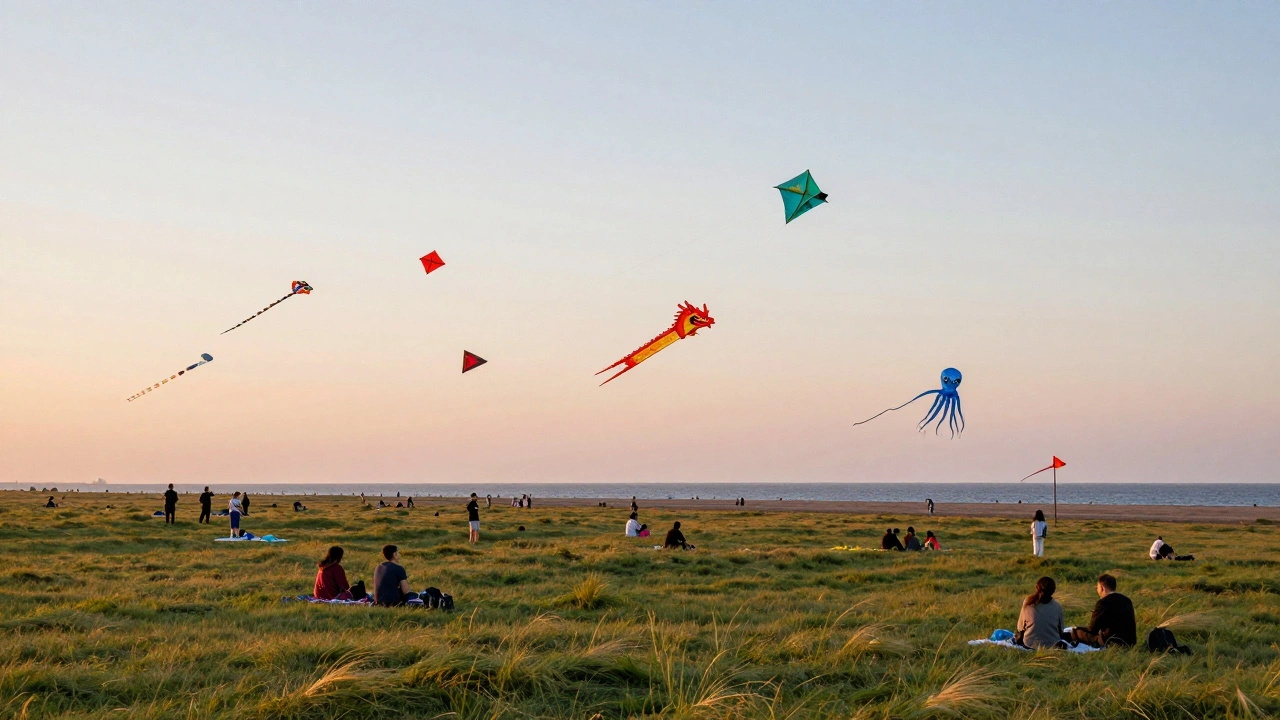
Nothing beats the sight of dozens of colorful kites dancing across a clear blue sky, pulled by wind you can feel in your bones. Kite festivals aren’t just events-they’re experiences. You’re not just watching; you’re part of the rhythm of the wind, the laughter of families, the quiet focus of seasoned flyers. But if you’ve never been to one, planning your trip can feel overwhelming. Where do you even start? What weather actually works? Where should you sleep? This isn’t about fancy gear or flying techniques. It’s about showing up at the right time, in the right place, with the right plan.
Choose the Right Festival for Your Style
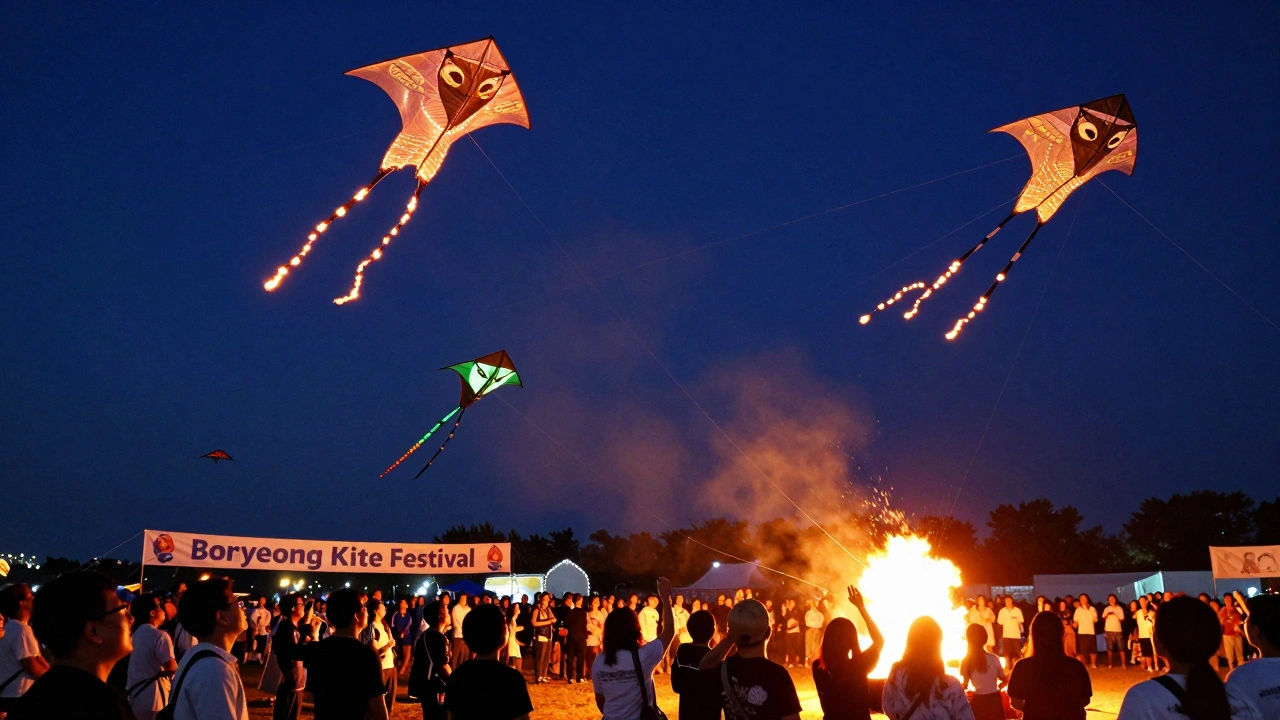
Not all kite festivals are the same. Some are huge, chaotic, and packed with international teams flying giant geometric kites that look like flying dragons. Others are quiet, community-driven, and perfect for beginners with simple diamond kites. If you’re bringing kids, look for festivals with workshops and beginner zones. If you’re into competitive flying, find one with judged categories and prize money. The kite festival scene varies wildly by location.For example, the Washington State International Kite Festival in Long Beach pulls over 100,000 visitors every August. It’s got everything: stunt teams, fire kites at night, and even kite-surfing demos. But if you want something smaller, the Albuquerque International Balloon Fiesta’s kite zone in October offers calm winds and fewer crowds. Then there’s the Boryeong Kite Festival in South Korea, where you’ll find kites shaped like cartoon characters and giant octopuses-perfect if you’re looking for something surreal.
Check the festival’s official website. Look for details on kite size limits, launch zones, and whether they allow electric wind generators (some ban them). Don’t assume every festival welcomes all kite types. Some only allow traditional designs. Others require registration for flyers. Missing this step means showing up with your favorite kite, only to be told you can’t fly it.
Weather Is Everything-Don’t Guess It
Wind is the silent star of any kite festival. Too little, and your kite won’t lift. Too much, and it’ll tear itself apart. The sweet spot? 8 to 15 miles per hour. That’s a gentle breeze that rustles leaves but doesn’t make you hold onto your hat.Don’t rely on the local weather app for the city. Kite festivals happen in open fields, beaches, or hills-places where wind behaves differently. A forecast of "sunny and 70°F" doesn’t tell you if the wind will pick up at 2 p.m. or die down by noon. Instead, check wind forecasts for the exact location. Use sites like Windy.com or Windfinder.com. Zoom in on the festival site. Look at the wind speed graph for the day you plan to fly. Aim for consistent wind, not spikes. A steady 10 mph for six hours is better than 20 mph for one hour and then nothing.
Also, avoid flying in rain or right after it. Wet kite lines get heavy. Fabric soaks up moisture and turns into a drooping, soggy mess. Even if the sky looks clear, humidity above 70% can kill lift. Early mornings are usually best. Dew has dried, the air is stable, and the wind hasn’t been disrupted by heat from the ground.
Where to Stay: Don’t Just Pick the Closest Hotel
Hotels near major festivals get booked months in advance-and they jack up prices. A $120 room in town might become $450 during festival week. And if you’re staying downtown, you might be an hour away from the launch field. That’s not practical if you need to set up gear at sunrise.Look for options within 5 miles of the venue. Campgrounds often open special festival zones. Some even rent out pre-pitched tents or offer shuttle services. Airbnb and Vrbo rentals in nearby towns are usually cheaper and give you space to store gear. I once stayed in a farmhouse 4 miles from the Long Beach festival. The host had a garage big enough for three kites, a kitchen for snacks, and a porch where I met three other flyers who became my crew for the weekend.
Pro tip: Book early. Many festivals have partner lodging deals. Check their official site for “Recommended Accommodations.” These are often discounted and located on shuttle routes. If you’re flying in from out of state, consider renting a car. Public transport to kite festivals is usually nonexistent. Even if you take a train, you’ll need a ride from the station to the field.
What to Pack: Less Is More
You don’t need a truckload of gear. Stick to the essentials:- Your kite (and a backup-kites break)
- Extra spools of line (at least two, one for light wind, one for strong)
- Line cutter (a small plastic one, like a kite-specific model-never use scissors)
- Wind meter (a simple handheld one costs under $20)
- Sturdy gloves (kite line cuts skin like wire)
- Sunscreen, hat, and water (you’ll be outside all day)
- Portable chair or blanket
- Small repair kit: tape, extra spars, glue, and zip ties
Leave the drone at home. Most festivals ban them. They interfere with kite lines and scare birds. Same with large power banks or generators. You’re there to fly kites, not run a charging station.
Arrive Early, Leave Late
The best flying happens before 10 a.m. and after 4 p.m. Midday heat causes turbulence. That’s when the wind gets choppy. Show up at dawn if you can. That’s when the field is quiet, the ground is still damp from dew, and the wind is smooth. You’ll get your spot, set up without crowds, and have time to test your kite before the rush.Stay until dusk. Many festivals have evening events-glow kites, lantern releases, or bonfire fly-ins. These are magical. You’ll see kites with LED strips, fire kites with wicks, and even kites shaped like animals that light up like living constellations. It’s not just a show. It’s a community ritual.

Connect Before You Go
Join the festival’s Facebook group or Reddit thread. People post updates daily: "Wind’s picking up at 11 a.m.," "The north field is muddy," "They’re running out of line spools at the vendor tent." You’ll learn things no website tells you. One person told me last year that the best launch spot was behind the restrooms-out of the wind shadow from the trees. I wouldn’t have known unless I’d asked.Bring a small notebook. Write down what works. Did your kite fly better with 150 feet of line or 200? Did the wind shift direction after lunch? These notes become your personal guide for next year.
What If It Rains?
Most festivals don’t cancel for rain. They just move indoors. Check if they have a kite museum, workshops, or vendor halls. Some even host kite-building contests. I once watched a 7-year-old make a kite from a plastic bag and bamboo skewers-and it flew better than half the store-bought ones. Don’t write off a rainy day. It’s often when the real magic happens.What’s the best time of year to attend a kite festival?
Spring and fall are ideal. Temperatures are mild, and wind patterns are steadier. In the U.S., April to June and September to October are peak months. Coastal areas like Long Beach and Cape Hatteras have reliable wind year-round. Avoid summer in inland areas-heat creates unstable air. Winter festivals exist (like in Denmark), but they’re rare and require heavy-duty gear.
Can I bring my own kite to any festival?
Most allow personal kites, but check rules first. Some festivals limit kite size (no larger than 3 meters across) or ban certain materials (like carbon fiber spars). Others require registration for competitive flyers. Always verify before packing. If you’re unsure, call the event organizer. Most have a phone number on their site.
Do I need to buy a ticket to fly my kite?
Usually not. Entry to the festival grounds is often free. But if the event has a main stage, food vendors, or special exhibits, you might need a ticket. Some festivals charge for parking or shuttle access. Always check the ticket section of the official website. Don’t assume free entry means free everything.
What if my kite breaks on-site?
Bring a repair kit. Tape, zip ties, and spare spars are your lifeline. Many festivals have vendor tents with replacement lines or basic tools. But don’t count on it. One flyer I met had his entire frame snap in half. He used duct tape and a bamboo skewer from a nearby food cart to rebuild it. He flew it again by noon. Preparation beats panic.
Is it safe to fly kites with kids?
Yes, but with caution. Use lightweight kites designed for children. Avoid long lines-they can tangle and pull kids off balance. Stay away from power lines and roads. Most festivals have designated family zones with soft ground and low wind. Always supervise. A kite line under tension can cut skin. Teach kids to never run with a line. Let the wind do the work.
If you’re thinking about your first kite festival trip, just start simple. Pick one event. Check the wind. Book early. Pack light. Show up ready to watch, learn, and maybe even fly. You don’t need perfection. You just need to be there when the wind rises-and the sky fills with color.