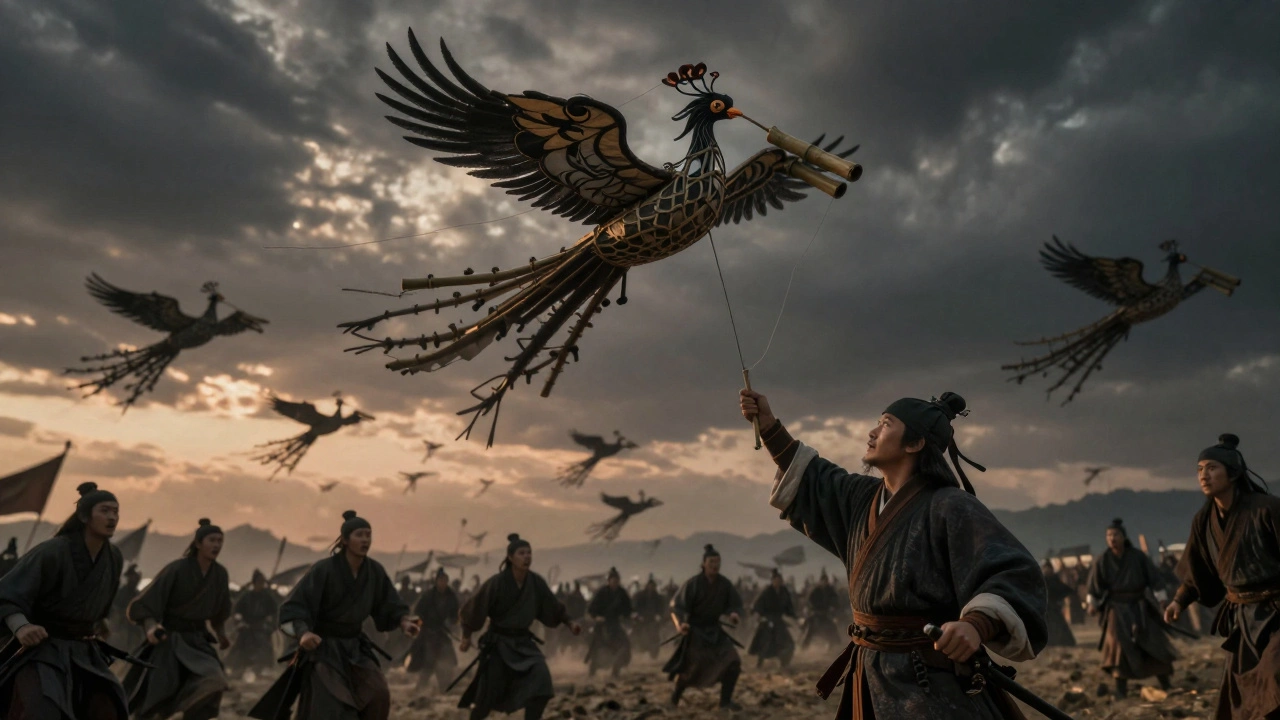
Imagine a wooden bird soaring through the sky before humanity ever invented an airplane. It sounds like science fiction, but it is actually history. The story of kite history is the fascinating journey of how humans first harnessed wind power for flight, starting over two millennia ago in ancient China begins not with a hobbyist in a park, but with soldiers on a battlefield. While we associate Chinese kites today with colorful festivals and springtime leisure, their original purpose was far more practical-and sometimes deadly.
Beyond Play: The Military Roots of Early Kites
You might think the first kites were toys made by children, but that is a common misconception. In the early days, specifically during the Warring States period (475-221 BC), these flying objects were tools of war. Historical records point to Mozi, a philosopher and engineer, as one of the earliest creators. He reportedly crafted a wooden kite that could stay airborne for a full day. However, wood was heavy and difficult to shape. Later, Lu Ban, a master carpenter often credited with inventing many mechanical devices, improved upon Mozi's design by creating a kite shaped like a phoenix using bamboo.
Why did they bother? Bamboo was lighter and more flexible than wood, allowing for better control in windy conditions. But the real innovation came when silk became available. Silk kites were significantly lighter, making them easier to launch. During the Han Dynasty, military commanders used these silk kites for communication across battlefields. They would tie messages to the tails or use them to measure distances. Imagine trying to coordinate troop movements without radios; a kite provided a visual signal that could be seen from miles away.
The most famous military application involved sound. Generals attached bamboo tubes or flutes to the frames of their kites. When the wind blew through these tubes, the kites produced eerie, ghostly whistles. Flying these "ghost kites" over enemy camps at night caused panic among opposing troops, who believed they were hearing spirits. This psychological warfare tactic gave the kite-flying army a distinct advantage without firing a single arrow.
From War to Worship: Religious and Cultural Shifts
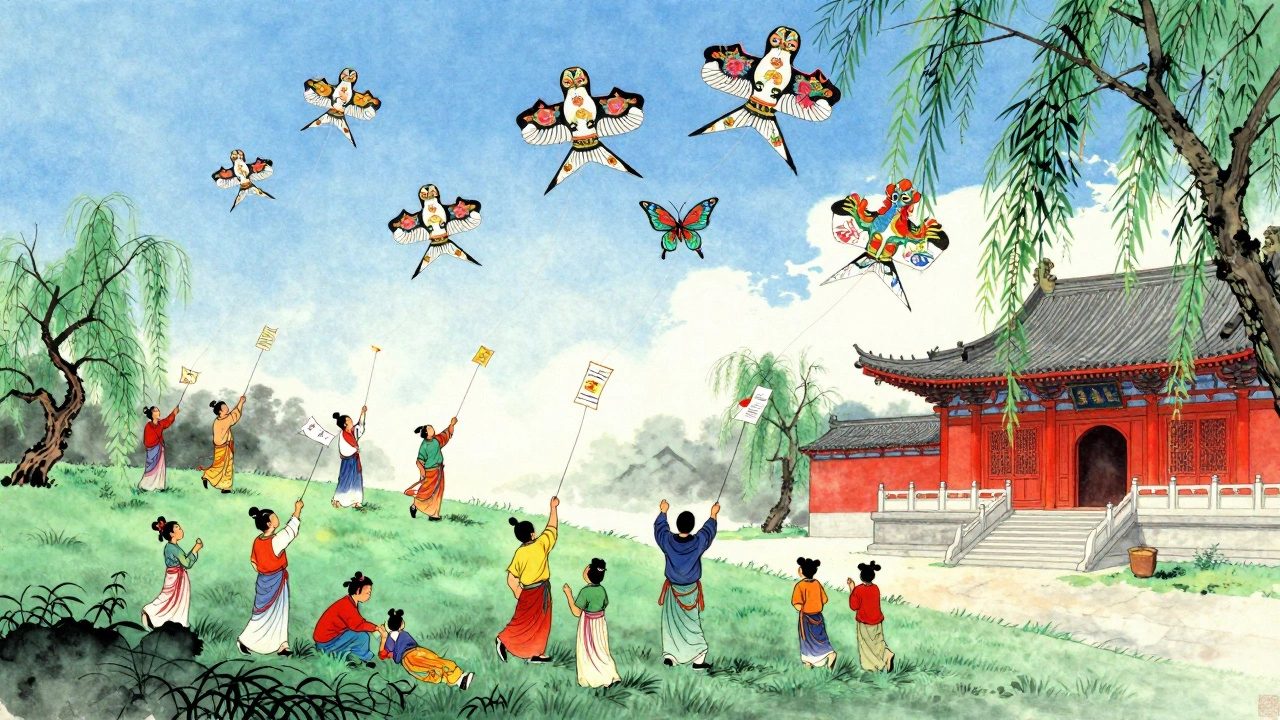
As empires stabilized and warfare decreased, the role of the kite shifted from the battlefield to the temple. By the time of the Tang Dynasty (618-907 AD), kite flying had become deeply intertwined with religious practices and folk beliefs. People began to see the act of releasing a kite into the sky as a way to send prayers to heaven. If you wanted to get rid of bad luck, illness, or negative energy, you would write your troubles on a piece of paper, attach it to a kite, and let it fly until the string broke. The wind would carry your misfortunes away, leaving you free of their burden.
This ritual wasn't just superstition; it was a communal event. Families would gather during specific festivals, particularly around the Qingming Festival (Tomb-Sweeping Day), to honor ancestors. The sight of hundreds of kites filling the sky served as a collective expression of hope and renewal. Artists began decorating kites with intricate paintings of deities, dragons, and mythical creatures. These weren't mass-produced items; each kite was a unique work of art, hand-painted by skilled artisans. The designs carried symbolic meanings-a dragon represented imperial power, while a butterfly symbolized love and freedom.
The connection between kites and spirituality also influenced their shapes. Traditional kites often mimicked animals or celestial bodies. The hexagonal kite, known as the "six-sided," was popular because its structure was stable and easy to make, yet it looked elegant against the blue sky. As the craft evolved, so did the complexity. Artisans started experimenting with multi-sectioned kites, where several smaller kites were linked together to form massive figures like giant snakes or dragons that undulated in the air.
The Golden Age: Song and Ming Dynasties
If the Han Dynasty introduced kites to the masses, the Song Dynasty (960-1279 AD) turned kite flying into a national obsession. This era marked the true birth of recreational kite flying. You could find people flying kites in every corner of society-from peasants in rural villages to scholars in imperial courts. The demand for high-quality kites led to the establishment of specialized workshops in cities like Beijing and Hangzhou.
During this period, the materials and techniques reached new heights. Artisans perfected the use of mulberry bark paper, which was stronger and smoother than traditional rice paper. They also developed advanced frameworks using precisely cut bamboo strips. The key to a good kite wasn't just the material; it was the balance. A skilled maker knew exactly how much weight to add to the tail to ensure the kite flew straight. Too light, and it would spin out of control; too heavy, and it would crash immediately after launch.
The Ming Dynasty (1368-1644 AD) further solidified kite culture. Emperor Zhu Yuanzhang, the founder of the Ming dynasty, was known to have enjoyed kite flying himself. His endorsement helped elevate the status of kite makers. Kites became essential gifts during weddings and birthdays. A beautifully crafted kite symbolized good fortune and prosperity. Children received kites as rewards for good behavior or academic success. The tradition of giving kites as gifts continues in some parts of China today, preserving a link to this golden age.
| Dynasty | Primary Material | Main Purpose | Notable Innovation |
|---|---|---|---|
| Warring States | Wood | Military Signaling | First recorded aerial device |
| Han | Silk & Bamboo | Communication & Warfare | Sound-producing tubes |
| Tang | Paper & Silk | Religious Rituals | Hand-painted designs |
| Song | Mulberry Paper | Recreation & Sport | Specialized workshops |
| Ming | Fine Paper & Bamboo | Celebration & Gifting | Complex multi-section kites |
How Kites Reached the West
For centuries, kite flying remained largely confined to East Asia. However, trade routes eventually carried these fascinating objects westward. Arab merchants traveling along the Silk Road encountered kites in China and brought them back to the Middle East. From there, they spread to Europe. Initially, Europeans viewed kites with suspicion, associating them with pagan rituals or witchcraft. It took several hundred years for kites to gain acceptance in Western cultures.
In the 18th century, scientific interest in kites surged. Figures like Benjamin Franklin used kites to study electricity. His famous experiment involving a lightning rod and a kite demonstrated that lightning was electrical in nature. This shift transformed the kite from a mere toy or religious tool into a scientific instrument. Engineers began using kites to lift cameras for aerial photography and to test aerodynamic principles that would later contribute to the development of airplanes.
Despite this global spread, China retained its reputation as the birthplace of the kite. Modern historians credit Chinese inventors with developing the basic principles of lift and drag long before Western scientists formalized them. The structural integrity of the traditional Chinese kite-relying on a cross-shaped frame covered with a taut surface-remains the foundation for almost all modern recreational kites.
Preserving the Craft Today
Today, you can still find master kite makers in places like Weifang, Shandong province, often called the "Kite Capital of the World." Every year, the Weifang International Kite Festival draws thousands of visitors from around the globe. These festivals aren't just about flying kites; they are celebrations of heritage. Artisans compete to create the most innovative designs, blending traditional techniques with modern materials like carbon fiber and nylon.
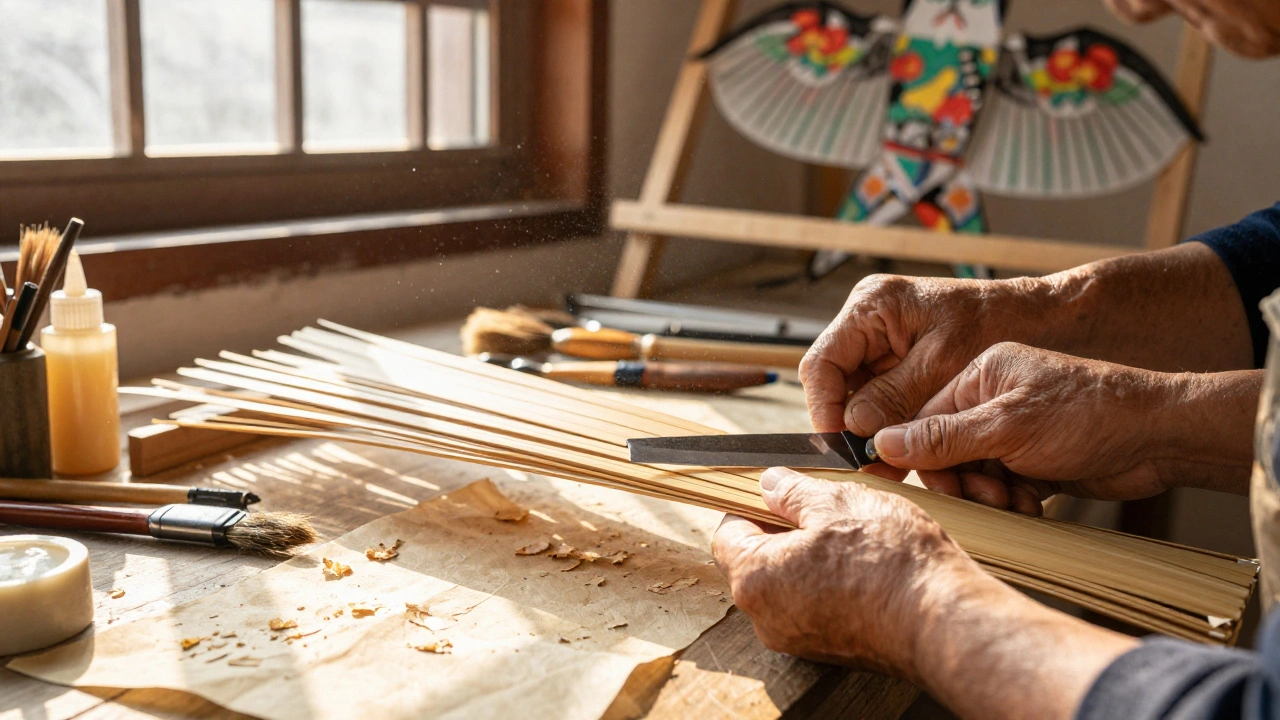
Learning to make a traditional kite is a rigorous process. It requires patience, precision, and an understanding of physics. A young apprentice might spend years learning how to select the right bamboo-looking for flexibility and strength-before being allowed to construct a complete kite. The curing process alone can take weeks. Bamboo must be dried slowly to prevent cracking, then split into uniform strips. Each strip is shaved to a specific thickness to ensure even weight distribution.
While synthetic materials have made kites cheaper and more durable, many enthusiasts prefer handmade traditional kites. There is something special about holding a kite that was crafted by human hands, using methods unchanged for centuries. When you fly such a kite, you feel a connection to the past-to the soldiers, priests, and artists who first lifted these objects into the sky. It reminds us that innovation often starts with simple curiosity and evolves into something profound.
Who invented the first kite?
Historical records suggest that Mozi, a Chinese philosopher, created the first wooden kite around 500 BC. Later, Lu Ban improved the design by using bamboo and shaping it like a phoenix. While exact dates are debated, these figures are widely credited with pioneering kite technology in ancient China.
Were kites originally used for fun?
No, kites were initially developed for military purposes. During the Warring States period and Han Dynasty, they were used for signaling troops, measuring distances, and even psychological warfare. Recreational kite flying didn't become popular until the Tang and Song Dynasties, over a thousand years later.
What materials were used in ancient Chinese kites?
Early kites were made from wood, which was heavy and difficult to maneuver. Innovators later switched to bamboo for the frame due to its lightweight and flexible properties. For the covering, silk was preferred for its strength and lightness, though mulberry bark paper became popular during the Song Dynasty for its durability and smooth texture.
How did kites spread to other parts of the world?
Kites traveled along the Silk Road via Arab merchants who brought them to the Middle East and eventually Europe. Initially met with skepticism, kites gained traction in the West during the 18th century when scientists like Benjamin Franklin used them for experiments, transforming them into tools for scientific discovery.
Where can I see traditional kite making today?
The best place to experience traditional kite culture is Weifang, China, home to the annual Weifang International Kite Festival. Here, you can watch master artisans craft kites using centuries-old techniques and participate in competitions that showcase both historical and modern designs.