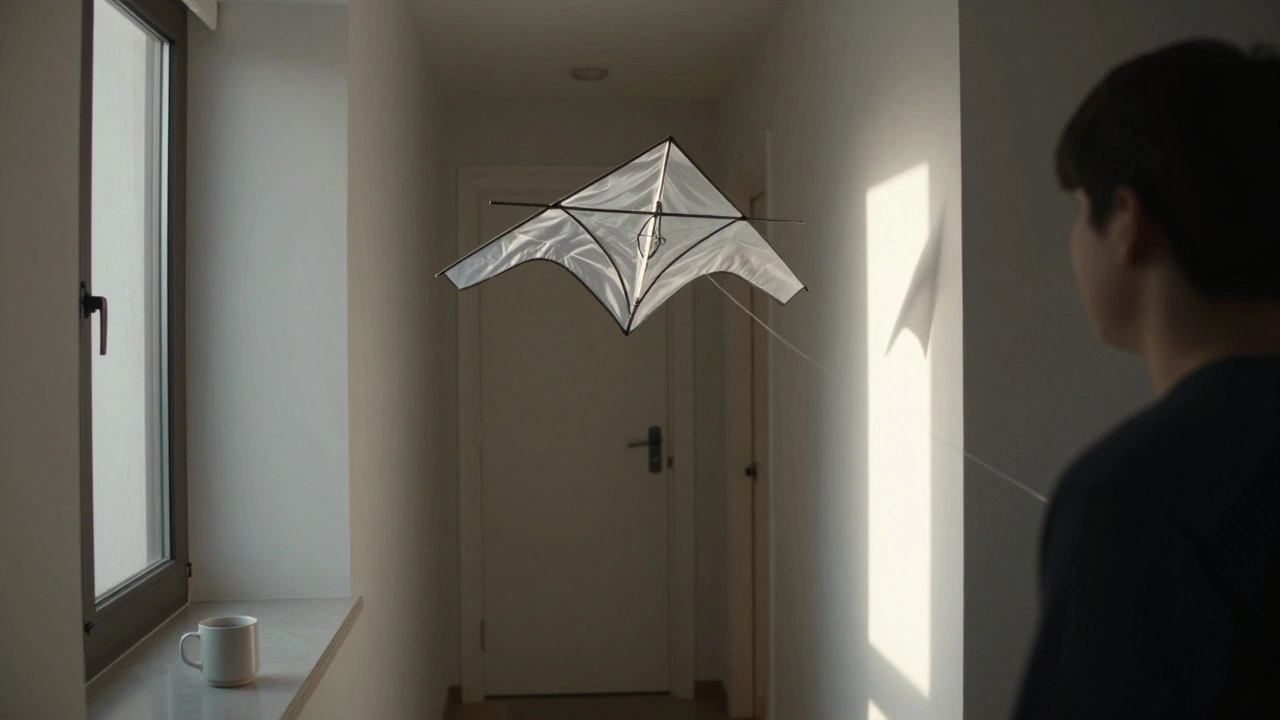
Ever stood in your living room, wind howling outside, and wondered why you can’t just fly a kite inside? It’s not as crazy as it sounds. Indoor kites exist - and they’re not just for museums or kids’ birthday parties. But here’s the real question: should you pick an indoor-only kite or a crossover kite that works both inside and out? The answer isn’t about which one flies higher. It’s about how you want to spend your time flying.
What Makes an Indoor-Only Kite Different
Indoor-only kites are built like precision instruments. They’re lightweight, often under 100 grams, and made with thin, low-drag materials like ripstop nylon or polyester film. Their frames are usually carbon fiber or fiberglass - stiff enough to hold shape, but flexible enough to handle tight turns. Most have two or three lines, which lets you control them like a remote-controlled plane, but without any motors.
These kites need zero wind. They fly in still air because they’re designed to ride on the subtle air currents you create by walking backward or shifting your hands. You don’t need a park. You don’t even need a window. A 10x10 foot room is enough. I’ve flown one in my apartment’s hallway while waiting for coffee to brew. It’s meditative. You’re not fighting the wind - you’re dancing with it.
But there’s a catch: these kites break easily. A bump against a doorframe, a sudden twist from a pet, or even a too-tight line tension can snap the frame. They’re not meant for rough handling. If you’ve ever tried to fly a kite near trees or stairs, you know how fast things go wrong. Indoor-only kites aren’t built for that.
Crossover Kites: The Jack-of-All-Trades
Crossover kites are the middle ground. They weigh between 150 and 300 grams. Their frames are thicker, often made of fiberglass or aluminum. The fabric is tougher - usually ripstop polyester with reinforced leading edges. They’re designed to handle light outdoor breezes (3-8 mph) but still fly indoors if you’re careful.
Here’s what they can do: fly in your living room, then take them outside on a calm afternoon and keep going. I’ve used the same kite for a morning session in my basement, then headed to the riverfront park later. No gear change. No extra bag. Just one kite that does both.
But they’re not perfect. Indoors, they feel heavier. You need more space - at least 15x15 feet - to avoid hitting walls or furniture. The extra weight means slower turns and less responsiveness. If you’re used to the feather-light precision of a true indoor kite, a crossover will feel clumsy. Outdoors, they’re not as stable as a real outdoor kite. If the wind picks up past 10 mph, they’ll start to wobble.
Performance Comparison: Indoor-Only vs. Crossover
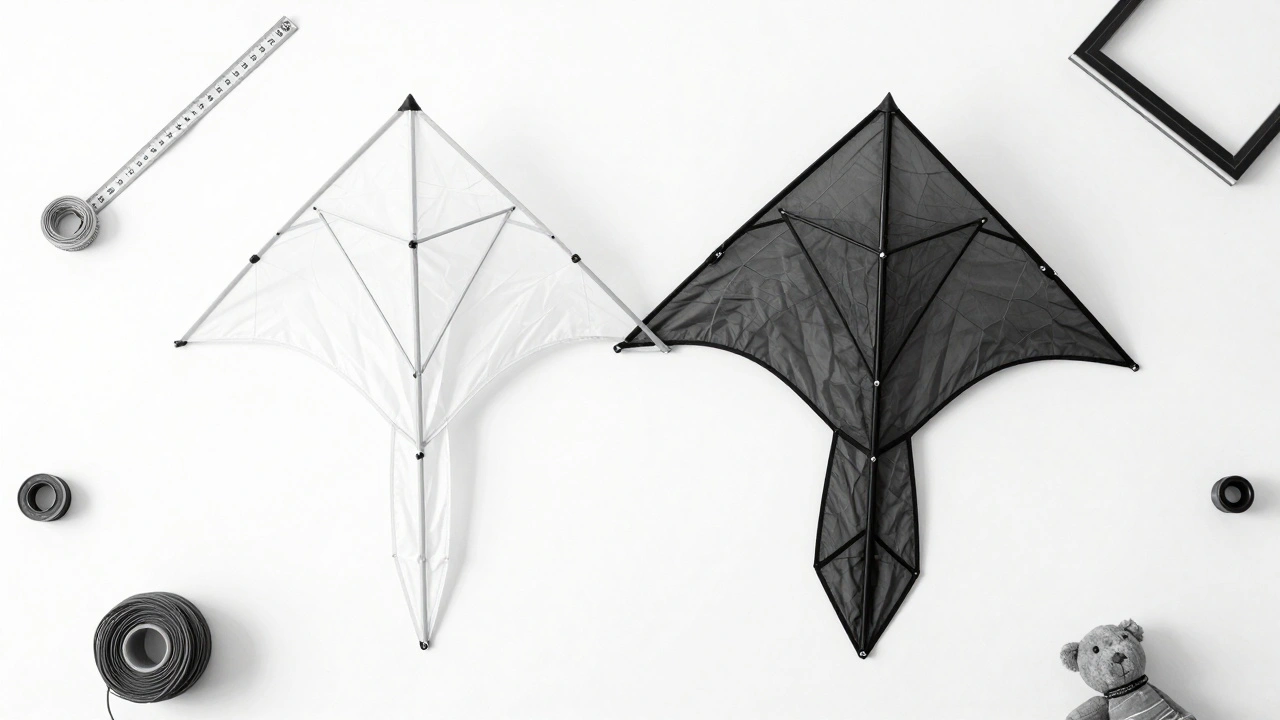
| Feature | Indoor-Only Kite | Crossover Kite |
|---|---|---|
| Weight | 50-100 grams | 150-300 grams |
| Frame Material | Carbon fiber, ultra-light fiberglass | Fiberglass, aluminum |
| Material Durability | Thin film, fragile | Reinforced polyester |
| Minimum Space Needed | 8x8 feet | 15x15 feet |
| Indoor Maneuverability | High - sharp turns, hovering | Moderate - slower, less precise |
| Outdoor Wind Tolerance | None - will crash instantly | Up to 8 mph |
| Typical Price | $40-$80 | $60-$120 |

Who Should Choose Indoor-Only
If you live in a city apartment with no yard, no park nearby, and you want to fly every day - even when it’s raining - then indoor-only is your best bet. You’ll get the purest experience: total control, quiet focus, and the satisfaction of making something light enough to float on your breath.
It’s also great for training. Many professional indoor flyers start here. The precision required teaches you how to read air movement, anticipate line tension, and react instantly. These skills translate to outdoor flying too - but you’ll never learn them if you’re always relying on wind to do the work.
But you need patience. These kites demand care. You’ll need to store them in a case. You’ll need to avoid pets, kids, and sudden movements. If you’re the type who leaves gear lying around, this isn’t for you.
Who Should Choose Crossover
If you have a backyard, a nearby field, or just like the idea of one kite doing double duty - go crossover. You’ll save money. You’ll save space. You won’t have to choose between flying indoors after work and outdoors on weekends.
I know a teacher in Seattle who uses her crossover kite to teach physics to middle schoolers. She flies it inside during winter, then takes it to the school field in spring. No extra equipment. No confusion. Just one kite that bridges two worlds.
But if you’re serious about indoor flying - meaning you want to do tricks, hover, or compete - a crossover won’t cut it. It’s a compromise. It’s not the best at either job. It’s just good enough for both.
What You’re Really Choosing
This isn’t just about kites. It’s about your lifestyle.
Indoor-only kites ask you to slow down. To create space - literally and mentally. You have to plan your flight path. You have to be quiet. You have to respect the fragility of the thing you’re flying. It’s not a toy. It’s a tool for mindfulness.
Crossover kites ask you to be practical. They’re for people who want flexibility. Who don’t want to own two kites. Who like the idea of flying wherever they are - no matter the weather.
There’s no right answer. But there is a better fit.
What to Look for When Buying
Here’s what to check before you buy:
- Frame joints: Look for snap-fit or threaded connections. Avoid glued joints - they crack over time.
- Line material: Dyneema or spectra lines last longer than polyester. They’re more expensive but worth it.
- Line length: Indoor kites usually need 15-25 feet. Crossovers need 30-50 feet for outdoor control.
- Brand reputation: Try brands like Windsculpt a U.S.-based kite maker known for durable indoor designs or IndoorKite a European brand specializing in ultra-light precision kites. Both have been around since 2018 and have consistent quality.
Common Mistakes to Avoid
- Trying to fly a crossover kite in a small room. You’ll hit walls. You’ll get frustrated. You’ll blame the kite. It’s not the kite - it’s the space.
- Using outdoor kite lines indoors. They’re too thick. They create drag. Your indoor kite will feel sluggish.
- Buying the cheapest option. Indoor kites under $30 are usually made with poor materials. They break after one session.
- Expecting a crossover to perform like a pro indoor kite. It won’t. It’s designed for convenience, not competition.
Final Thought: One Kite, Two Worlds
Indoor kite flying isn’t about escaping the outdoors. It’s about finding a different kind of freedom. One where you control the air, not the other way around. Whether you choose an indoor-only kite or a crossover, you’re choosing a way to slow down, focus, and play with physics in a way most people never do.
Start with what fits your life. Not what looks coolest online.
Can I fly an indoor-only kite outside on a windless day?
Technically, yes - if there’s absolutely no wind, you can try. But indoor-only kites aren’t designed for outdoor use. Even a 1 mph breeze will overpower them. They’re too light and too fragile. You’ll likely crash it within seconds. Don’t risk it.
Do I need special lines for indoor kites?
Yes. Indoor kites need thin, low-drag lines - usually 20-30 lb test Dyneema or Spectra. Regular kite lines from outdoor kites are too thick and create too much drag indoors, making the kite feel sluggish. Look for lines labeled "indoor" or "precision flying" - they’re often sold in 50-foot spools.
Can kids fly indoor-only kites safely?
Only with supervision. Indoor-only kites are fragile and have sharp frame ends. A child’s sudden movement can snap the frame or cause injury. For kids, a crossover kite is safer - it’s heavier, more durable, and less likely to break on impact. Always choose age-appropriate models.
How long do indoor kites last?
It depends. A well-cared-for indoor-only kite can last 2-3 years with regular use. Crossover kites last longer - 4-5 years - because they’re built tougher. But if you’re flying daily and bumping into walls, even the best kite won’t survive more than 6 months. Storage matters as much as flying.
Are there competitions for indoor kite flying?
Yes. There are national and international indoor kite competitions, especially in Europe and Japan. Events include precision choreography, hover contests, and trick routines. Most use true indoor-only kites because they offer the control needed for complex maneuvers. Crossover kites aren’t allowed in official competitions.