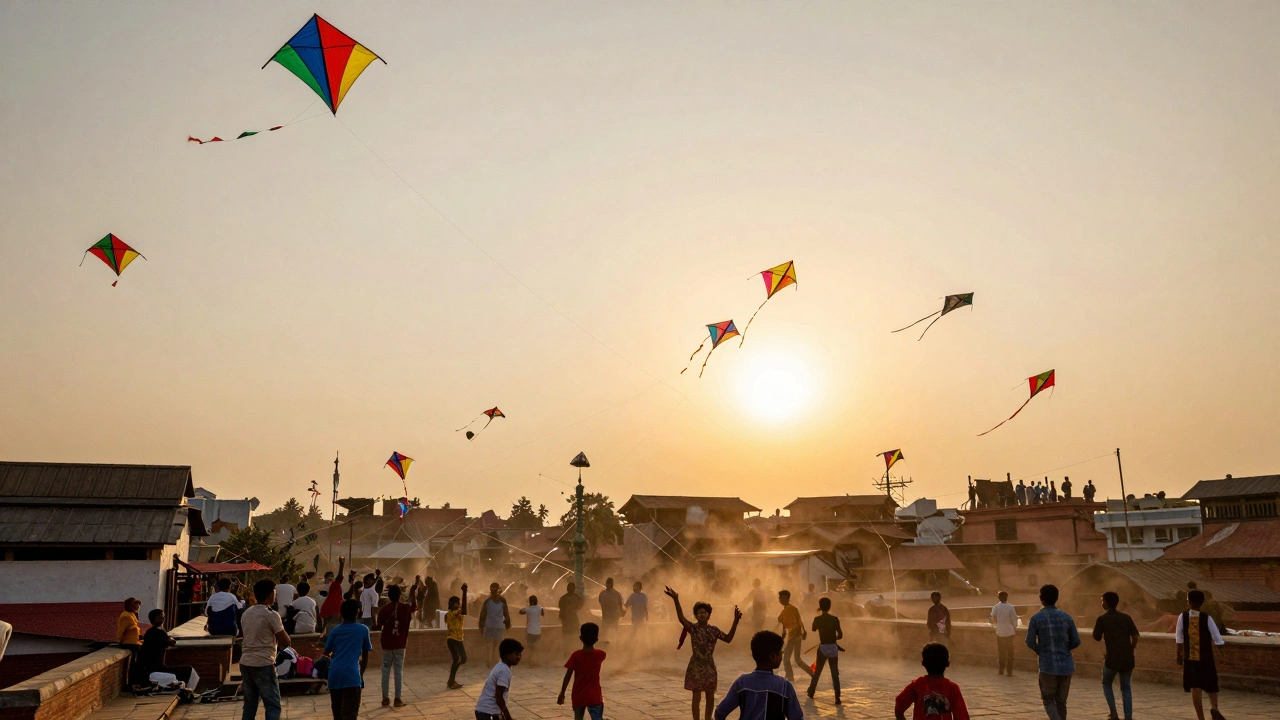
Every year in late autumn, the skies over Nepal turn into a chaotic, colorful battlefield. Thousands of handmade kites rise together, tangled in strings sharp enough to cut skin, as families, friends, and strangers fight for dominance in the air. This isn’t a sport. It’s a ritual. And it’s most intense during Dashain and Tihar - Nepal’s two biggest festivals.
Why Kites Fly During Dashain
For many Nepalis, flying kites during Dashain isn’t just fun - it’s symbolic. The kites represent messages sent to the gods, rising above the earth to reach the heavens. As the days grow shorter and the sun moves south, people fly kites to keep the sun from leaving too soon. The belief? If enough kites fill the sky, the sun will stay longer, bringing warmth and light into the coming months.
It’s not a quiet activity. Kite flying turns into a full-blown competition. Strings are coated with ground glass or crushed rice flour - called manja - to make them razor-sharp. The goal? Cut your neighbor’s kite loose. A successful cut is met with cheers. A lost kite is a badge of honor. Children run through streets chasing fallen kites, and adults climb rooftops to spot the next target. In Kathmandu and Pokhara, the sky becomes a mosaic of reds, yellows, greens, and blues - all moving in sync with the wind.
Tihar’s Kite Connection
Just days after Dashain ends,
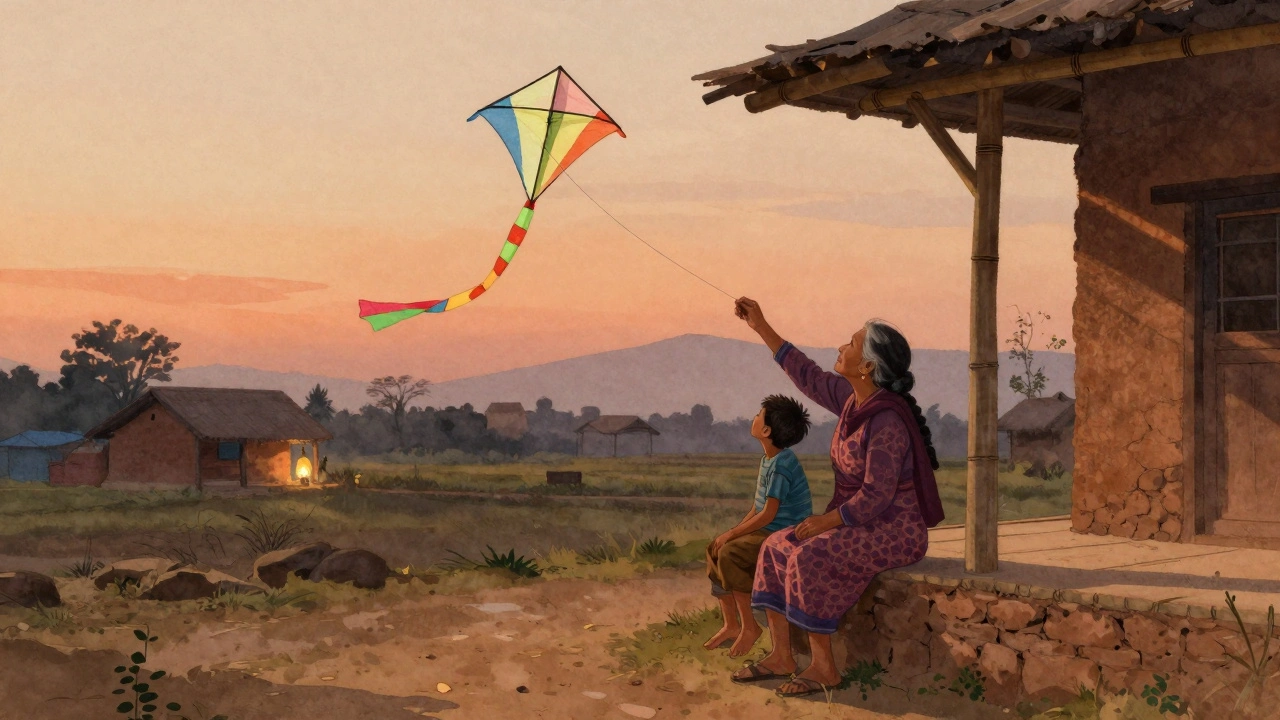
Unlike Dashain’s fierce competition, Tihar’s kite flying is more peaceful. Families fly kites together, often in the late afternoon as the sun dips low. The colors are softer, the strings less aggressive. It’s a time to reflect, to enjoy the last of the autumn breeze before winter settles in. In rural villages, grandparents teach grandchildren how to fold paper into simple diamond shapes, using bamboo frames they’ve carved themselves. No glass on the strings here - just laughter, stories, and the quiet hum of wind through paper.
How Nepali Kites Are Made
Nepali kites aren’t bought from stores. They’re built by hand, often in the weeks leading up to Dashain. The process starts with bamboo. Thin strips are soaked in water, bent into a perfect diamond shape, and tied with cotton thread. The frame is then covered with thin, strong paper - usually recycled from old newspapers or rice paper.
The tail is crucial. A long, flowing tail made of strips of colored paper helps stabilize the kite in strong winds. Some kites have multiple tails, each a different color. The manja string is the most dangerous part. It’s made by coating cotton thread with a paste of glue and powdered glass, then drying it in the sun. This process can take days. Families often prepare dozens of strings, each one labeled with their name so they can claim their cut kites later.
There’s no single design. Some kites are shaped like birds. Others look like stars, fish, or even cartoon characters. But the classic Nepali kite is simple: a diamond with a long tail. It’s not about fancy shapes. It’s about how high it flies, how long it lasts, and how well it can cut another kite’s string.
The Rules of the Sky
There are no official rules. But there are unwritten laws. You don’t fly a kite near power lines - people have died doing that. You don’t fly over temples or cemeteries. You don’t cut a child’s kite unless you’re ready to give it back. And you never, ever use a kite string to harm someone. The sharp strings have caused serious injuries - even deaths - when they snap and fly back like wires.
Local governments have tried to ban the use of glass-coated strings. In 2023, the Kathmandu Metropolitan City banned manja during Dashain after more than 30 injuries were reported in one week. But the ban didn’t stick. People still make their own. The tradition is too deep. Instead, many now use synthetic strings coated with less dangerous abrasives. Others wrap the string in cloth to protect their hands.
Still, the thrill remains. A cut kite falling from the sky is a moment of pure joy. It’s a sign that you’ve won. That you’ve outsmarted the wind. That you’ve taken part in something older than modern Nepal.
What Happens to the Kites After the Festival?
After Dashain and Tihar, the skies clear. The kites that didn’t get cut drift down, tangled in trees, caught on rooftops, or buried in muddy streets. Many are left to rot. But some are rescued.
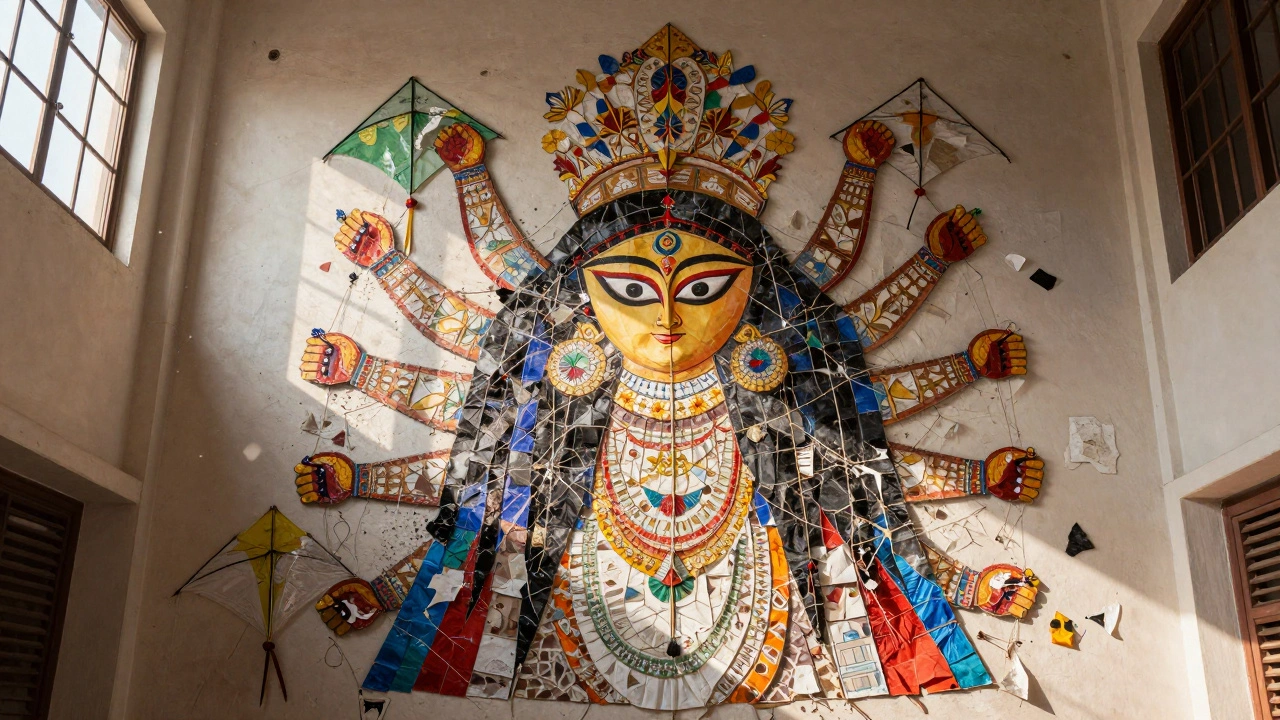
In rural areas, children collect fallen kites and turn them into decorations. They hang them from doorways, string them across courtyards, or use the paper to wrap gifts. In Kathmandu, artists collect them and turn them into murals. One community center in Patan turned 2,000 kites into a giant mosaic of the goddess Durga - still on display today.
Some families save their best kites. They hang them in their homes as talismans, believing they bring good luck for the year ahead. Others burn them in small ceremonies, releasing the spirit of the kite back to the sky.
Why This Tradition Endures
Modern Nepal has smartphones, electric cars, and TikTok. But every autumn, millions still fly kites. Why?
Because it’s not about the kites. It’s about connection. Dashain brings families together. Tihar reminds people of their place in nature. And kite flying? It’s the one thing everyone - young, old, rich, poor - can do together. You don’t need money. You don’t need technology. You just need wind, paper, and the will to reach up.
For Nepalis, the sky isn’t empty. It’s full of stories. And every kite, no matter how simple, carries a piece of that story.
Why do Nepalis fly kites during Dashain?
Nepalis fly kites during Dashain to symbolically send messages to the gods and to keep the sun from moving too far south. The belief is that if enough kites fill the sky, the sun will stay longer, bringing warmth and light. It’s also a competitive tradition where people try to cut each other’s kite strings with glass-coated lines - a victory marked by cheers and the chase of fallen kites.
What is manja, and why is it dangerous?
Manja is a special kite string made by coating cotton thread with a paste of glue and powdered glass, then drying it in the sun. It’s used to cut other kites’ strings during competitions. The problem? When it snaps, it can fly back like a razor wire, causing serious cuts and even deaths. In 2023, over 30 injuries were reported in Kathmandu alone, leading to temporary bans - though the tradition persists.
How are traditional Nepali kites made?
Traditional Nepali kites are handmade using thin bamboo strips for the frame and recycled paper for the sail. The frame is shaped into a diamond and tied with cotton thread. A long tail made of colored paper strips helps with stability. The string is coated with manja for cutting, though some now use safer alternatives. Families often build dozens of kites in the weeks before Dashain.
Are kites flown during Tihar the same as during Dashain?
Not exactly. During Tihar, kite flying is calmer and more family-oriented. The strings are rarely coated with glass, and the focus is on enjoying the wind and the last days of autumn. Kites are often simpler in design, and the activity is more about bonding than competition. It’s a quieter, reflective version of the Dashain frenzy.
What happens to kites after the festivals?
Many fallen kites are left to rot in streets and trees. But in rural areas, children collect them for decorations. Artists in cities like Patan have turned thousands into large murals. Some families hang their best kites at home as lucky charms, while others burn them in small rituals to release their spirit back to the sky.