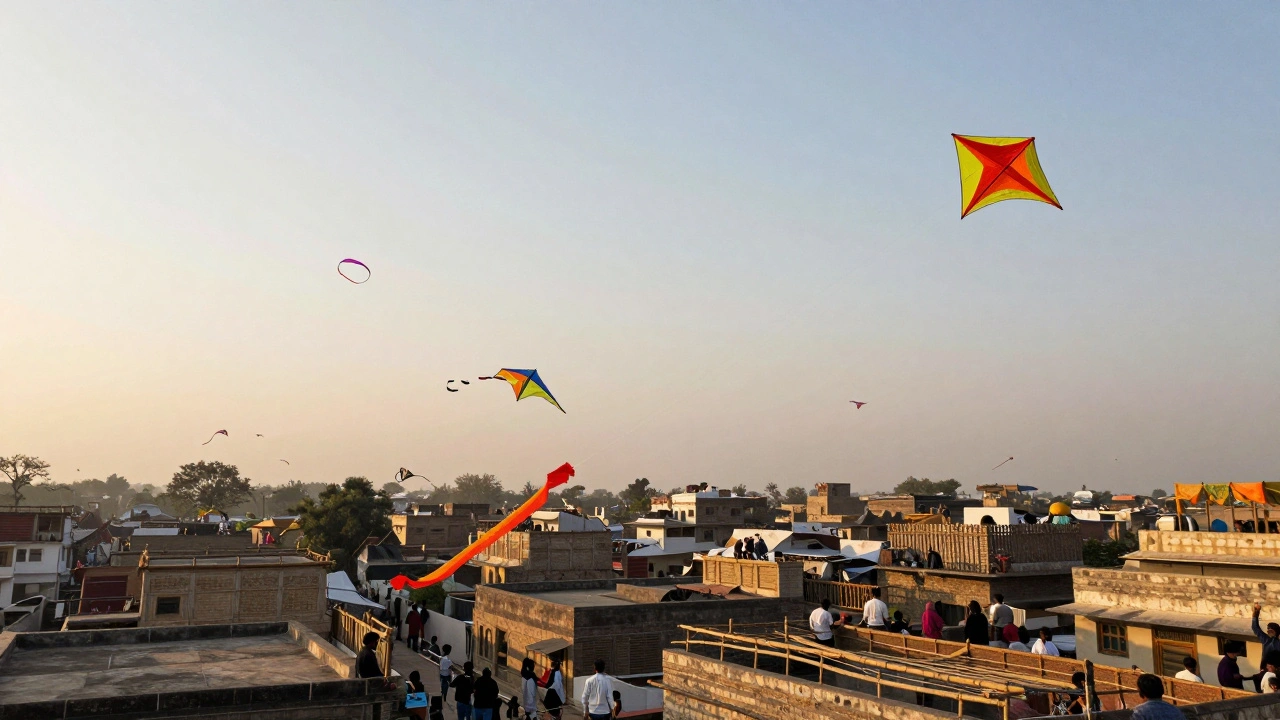
Every year in early February, the skies over Ahmedabad, Jaipur, and Surat turn into a chaotic, colorful battlefield. Thousands of handmade kites-some no bigger than a dinner plate, others stretching over six feet-soar above rooftops, pulled by strings so thin they’re nearly invisible. This isn’t just a children’s pastime. It’s Patang kite fighting, a centuries-old tradition in India where the goal isn’t just to fly high, but to cut down your opponent’s kite with a razor-sharp string. The sound of snapping threads, the cheers of crowds, and the sudden descent of a fallen kite are all part of a ritual older than modern India itself.
Where Patang Kite Fighting Began
Patang kite fighting didn’t emerge overnight. Its roots stretch back over 2,000 years, possibly to the Indian subcontinent’s ancient kingdoms. While kite flying was common in China and Southeast Asia, it was in northern India-especially in Gujarat and Rajasthan-that it transformed into a competitive sport. By the 16th century, during the Mughal era, kite flying became a royal pastime. Emperors like Akbar and Shah Jahan held elaborate kite battles in their courts. Nobles would compete not just for sport, but for status. Winning a kite fight meant you had the best craftsmanship, the sharpest string, and the most skilled hands.
By the 19th century, the practice spread beyond royalty into villages and towns. Farmers, merchants, and laborers took to the rooftops during Makar Sankranti, the winter harvest festival. The kite became a symbol of freedom, of reaching higher than your daily struggles. Even today, in rural Gujarat, families spend weeks preparing for the festival. They mix their own glue, hand-paint patterns with natural dyes, and twist their own kite string from cotton thread soaked in a secret mixture of glue and ground glass.
The Anatomy of a Patang Kite
A true Patang kite isn’t bought at a store. It’s built by hand. The frame is made from lightweight bamboo strips, split and shaped with a knife. The covering is usually white tissue paper, sometimes layered with thin cotton for durability. What makes it fly isn’t just the shape-it’s the balance. A well-made Patang has a slight curve, like a shallow bowl, so it catches the wind just right. The tail, if used at all, is minimal-sometimes just a single strip of paper. Too much tail, and the kite loses speed. Too little, and it spins out of control.
Color matters too. Red, yellow, and orange dominate because they stand out against the winter sky. Blue and green are common, but rarely used in fights-they’re harder to track mid-air. Some kites carry small mirrors or bells. When cut, the falling kite rings out, announcing its defeat. Others have intricate hand-drawn faces or religious symbols. A kite isn’t just a tool-it’s a personal statement.
The Cutting String: A Weapon Made of Thread
The real magic lies in the string. Not the cotton thread itself, but what’s done to it. Traditional Patang string, called manja, is coated with a mixture of ground glass, rice starch, and sometimes powdered aluminum. The glass comes from broken bottles, crushed into a fine powder. The rice starch acts as a binder. The aluminum adds weight and shine. This mixture dries hard and sharp, like microscopic blades glued to the thread.
The string is wound onto wooden spools called kite reels. Fighters hold the reel with gloved hands-usually leather or thick cotton-to avoid cuts. The real skill isn’t in pulling the string hard. It’s in the flick. A quick, sideways tug, like snapping a towel, creates a sharp angle between the two kites. If done right, the manja cuts through the opponent’s string like a hot knife through butter. The cut isn’t always clean. Sometimes the string frays. Sometimes the kite spirals down in a tangle. But when it works? The fall is silent. The crowd roars.
How the Fight Actually Works
There are no referees. No scorecards. No official rules. A fight starts when two kites cross paths. The goal is simple: cut the opponent’s string and make their kite fall. Once a kite is cut, it’s yours to claim. People scramble across rooftops, chasing the falling kite. Whoever catches it first wins the trophy. In some cities, the first kite to hit the ground is considered the winner. In others, it’s whoever brings it home.
There’s strategy. You don’t just go for the strongest kite. You look for the weakest point-the knot, the tail, the patch. You wait. You circle. You let the wind do the work. The best fighters don’t rush. They let the other kite tire, then strike. Some use two strings at once-one to distract, one to cut. Others use the wind patterns of tall buildings, darting in and out of drafts like a fighter in a ring.
It’s dangerous. In 2023, over 400 people in Gujarat alone were treated for kite-related injuries. Most were cuts from manja strings. Some were falls from rooftops. A few were electrocuted when kites got tangled in power lines. Still, the tradition continues. It’s not about winning. It’s about the ritual.
The Cultural Meaning Behind the Fight
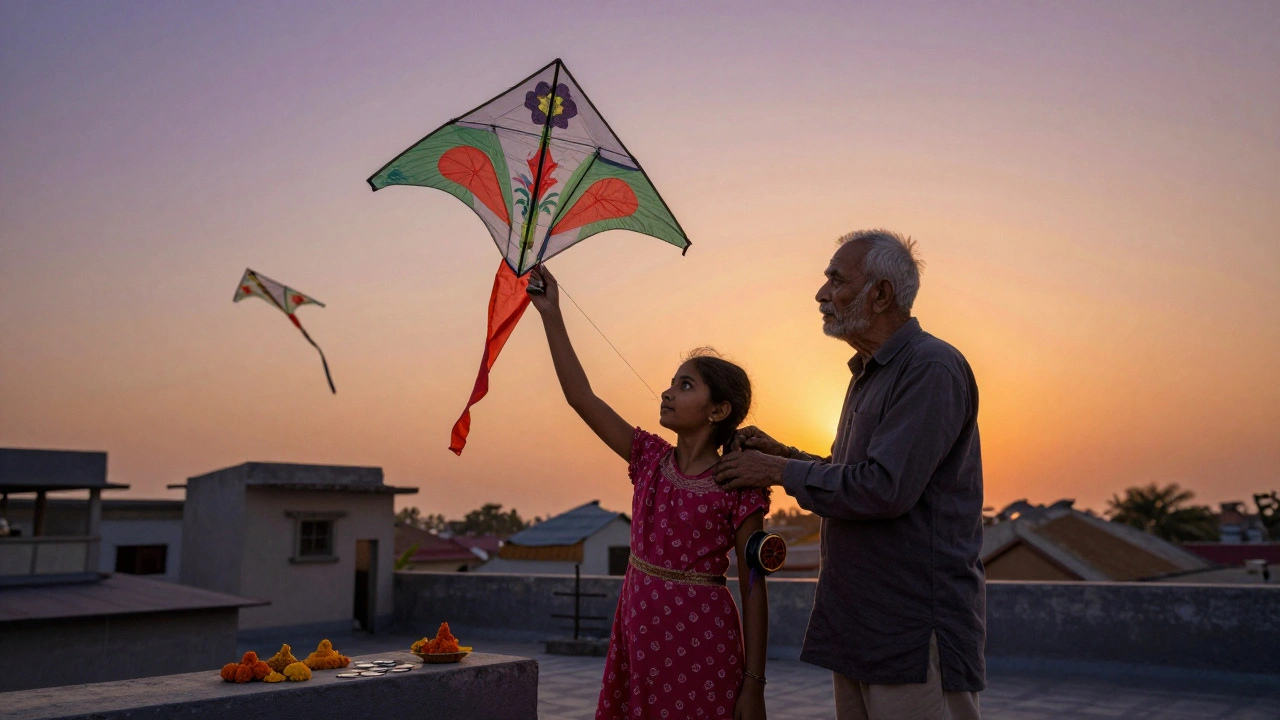
Patang kite fighting isn’t just a game. It’s a social event, a spiritual act, and a rite of passage. In villages, boys learn to make kites from their grandfathers. Girls often help paint them. The festival brings together entire neighborhoods. Families share sweets. Elders tell stories of their own childhood fights. For many, catching a kite from the sky feels like catching a piece of luck.
There’s also a deeper layer. In Hindu tradition, Makar Sankranti marks the sun’s northward journey. Flying kites is a way to honor the sun god, Surya. The act of letting go-a kite cut free and falling-is symbolic. It represents releasing what no longer serves you. The cut string, left dangling in the air, becomes a prayer carried away on the wind.
Even today, you’ll find small offerings at the base of rooftops: a few coins, a drop of milk, a pinch of turmeric. They’re not for luck. They’re for respect-for the wind, for the sky, for the tradition.
Modern Challenges and the Fight to Keep It Alive
It’s not easy to keep this tradition alive. Plastic strings, sold cheaply in markets, have replaced manja in many places. They’re safer-but they don’t cut. And without cutting, there’s no fight. Some cities have banned manja entirely. In 2022, the Supreme Court of India ruled that glass-coated strings were a public safety hazard. Cities like Delhi and Mumbai now enforce strict bans.
But the tradition hasn’t died. In Gujarat, artisans still make manja by hand. They’ve even started using ceramic powder instead of glass-just as sharp, but less dangerous. Some schools teach kite-making as part of cultural education. Festivals now include workshops on safe flying, first aid for cuts, and kite design competitions. Young people are adapting, not abandoning.
There’s a quiet resistance too. In small towns, families still gather on rooftops at dawn. They don’t post videos. They don’t chase likes. They just fly. And when the wind picks up, and the strings begin to sing, it’s clear: this isn’t just about kites. It’s about connection.
How to Make Your Own Patang Kite and Cutting String
If you want to try this yourself, here’s how it’s done the traditional way:
- Get two bamboo sticks-about 18 inches and 12 inches long. Soak them in water overnight to make them flexible.
- Shape them into a cross. Tie them together with cotton thread at the center.
- Cut white tissue paper to fit the frame, leaving a 1-inch border. Glue it on with a mix of flour and water.
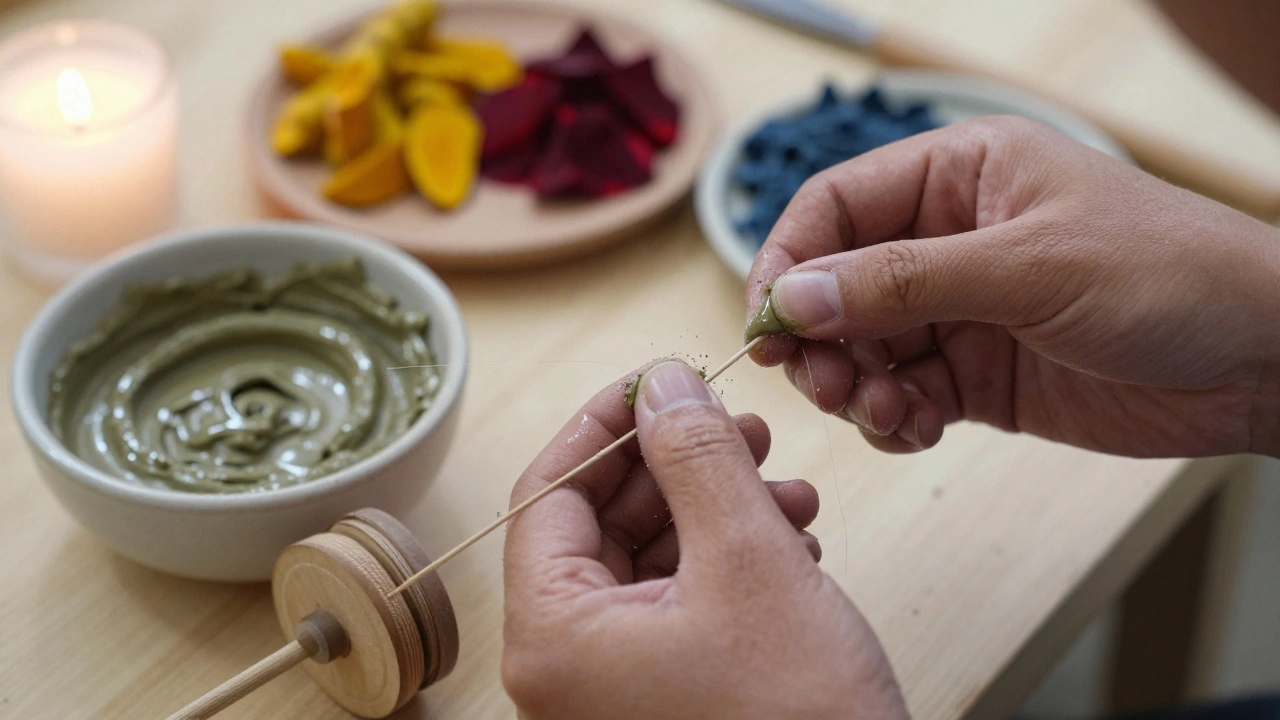
- Let it dry for 12 hours. Then paint it with natural dyes: turmeric for yellow, beetroot for red, indigo for blue.
- Attach a single tail, no longer than 6 inches, to the bottom.
- For the string: take 100% cotton thread. Mix 1 part rice flour with 2 parts water. Boil until thick. Add powdered ceramic (available at craft stores) and stir until it forms a paste. Let it cool.
- Dip the thread into the paste, then hang it to dry in the sun for 24 hours. It should feel hard and slightly glossy.
Test your string by gently pulling it against a piece of paper. If it leaves a cut, it’s ready. Never use glass. Ceramic is safer and just as effective.
Why is Patang kite fighting only popular in certain parts of India?
Patang kite fighting is strongest in Gujarat, Rajasthan, and parts of Uttar Pradesh because these regions have wide-open spaces, strong winter winds, and deep cultural ties to Makar Sankranti. The festival marks the end of winter and the start of longer days, making it the perfect time for outdoor celebrations. In cities like Ahmedabad and Jaipur, kite fighting has been passed down for generations, becoming part of local identity. Other areas lack the wind patterns or the historical tradition to sustain it.
Can you use regular kite string to fight Patang kites?
No. Regular kite string-plastic or nylon-won’t cut. It’s too smooth and flexible. Patang fighting depends entirely on the sharp, abrasive coating of manja. Without it, kites just tangle or float away. Some modern fighters use ceramic-coated thread as a safer alternative, but plain string won’t work. If you try to fight with regular string, you’ll lose every time.
Is Patang kite fighting dangerous?
Yes, it can be. The manja string can cause deep cuts, especially on fingers and arms. Falls from rooftops and electrocution from power lines are also risks. In 2023, over 400 people in Gujarat required medical treatment for kite-related injuries. But most injuries happen because people use glass-coated string or fly in unsafe areas. Using ceramic-coated thread, wearing gloves, and avoiding power lines reduces the risk dramatically. Many communities now teach safety along with tradition.
Do women participate in Patang kite fighting?
Historically, men dominated the actual fighting, but women have always played a key role. They painted kites, prepared the manja, and held the reels while men flew. Today, more women are taking to rooftops. In cities like Surat and Vadodara, all-female kite teams compete in organized events. Some of the sharpest cutters today are women who learned the craft from their grandmothers. The tradition is changing-not disappearing.
What happens to the fallen kites?
The first person to catch a fallen kite claims it. In rural areas, children race after them like treasure. Some kites are kept as trophies. Others are burned or buried as a sign of respect-especially if they carry religious symbols. In cities, kites are often collected by volunteers and recycled into paper crafts. The act of catching a kite is symbolic: it’s not about ownership, but about participation in the moment.