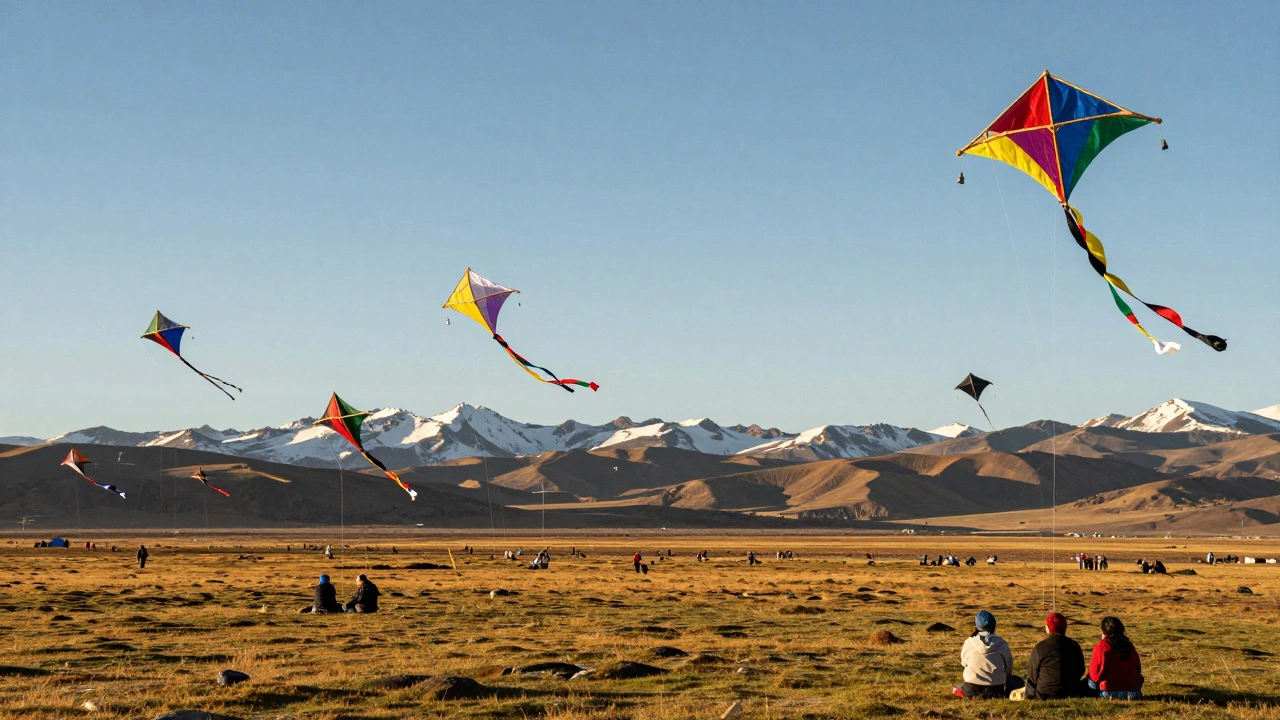
Every year in late March and early April, the skies above the Andes Mountains in Peru turn into a living mosaic of color. Thousands of handcrafted kites rise together, not as toys or entertainment, but as prayers. This is the tradition of Peruvian Easter kite flying-a practice older than many modern holidays, blending indigenous beliefs with Catholic rituals in a way that feels both ancient and alive.
Why Kites? The Origins of the Tradition
The roots of this practice go back centuries, long before Spanish colonizers brought Christianity to Peru. Indigenous communities in the highlands, especially around the town of Santiago de Chilcas in the Huancavelica region, had long used kites to communicate with spirits. They believed the wind carried messages to the gods, and the higher the kite flew, the closer it got to the divine.
When Catholic missionaries arrived in the 1500s, they tried to suppress native rituals. But instead of disappearing, the kite tradition merged with Easter. The rising of kites became a symbol of Christ’s resurrection-lifting from death into the sky. Over time, families began flying kites on Holy Saturday and Easter Sunday, turning a spiritual act into a community event.
How the Kites Are Made
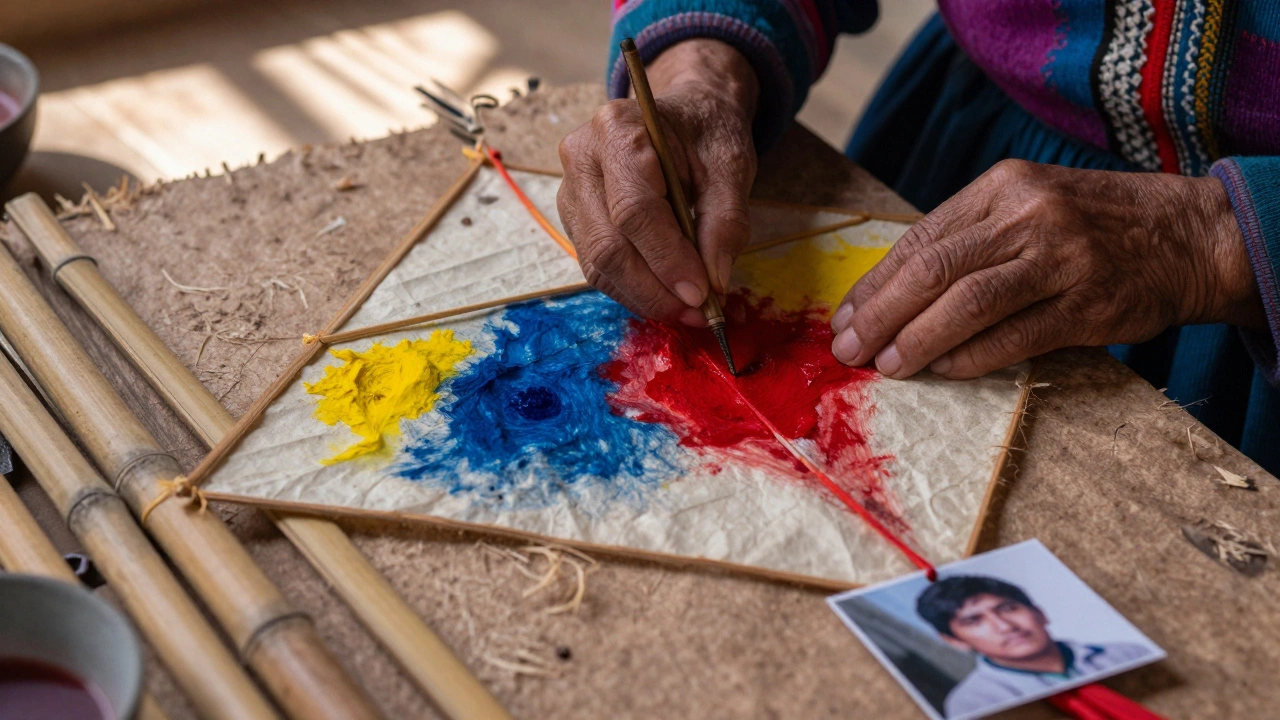
These aren’t the plastic kites sold in toy stores. Each one is handmade, often by entire families working together for weeks. The frame is built from bamboo strips, carefully selected for flexibility and strength. The paper is usually handmade from tree bark or recycled newspaper, painted with natural dyes made from local plants: cochineal insects for red, indigo leaves for blue, and turmeric for yellow.
The shapes are symbolic. A diamond shape represents the earth. A cross means the four cardinal directions and the Christian faith. Some kites have long tails woven with strips of cloth that flutter like prayers. Others include small bells that chime in the wind, believed to carry voices to heaven.
One family in the town of Chilca told me they spend nearly two months preparing for the festival. The father cuts the bamboo, the mother mixes the glue from cornstarch and water, the children paint the designs. Grandparents teach the meanings behind each symbol-what each color stands for, which spirits are honored, which ancestors are remembered.
The Day of the Flight
On Holy Saturday, families gather on open hillsides, often miles from town. There’s no music, no food stalls, no crowds of tourists. Just quiet preparation. People sit on the ground, tying strings, adjusting frames, whispering prayers. When the wind picks up around midday, they release their kites one by one.
It’s not a competition. No one tries to cut another’s string or knock a kite down. The goal is simple: get the kite as high as possible. The higher it flies, the more powerful the prayer. If a kite breaks free and drifts away, it’s not a loss-it’s a sign that the prayer has been carried to the heavens.
Some kites are dedicated to loved ones who have passed. Families write names on the kite’s tail or attach small photos. Others are flown for crops, for rain, for healing. In one village, a woman told me she flies a kite every year for her son, who died in a mining accident. "He loved the sky," she said. "Now he watches over us from up there."
The Meaning Behind the Colors
Color isn’t chosen randomly. Each hue carries meaning, passed down through generations:
- Red - Life, blood, sacrifice
- Yellow - Sun, energy, resurrection
- Green - Earth, fertility, renewal
- Blue - Sky, spirit, the divine
- White - Purity, peace, the soul
- Black - Death, but also transformation
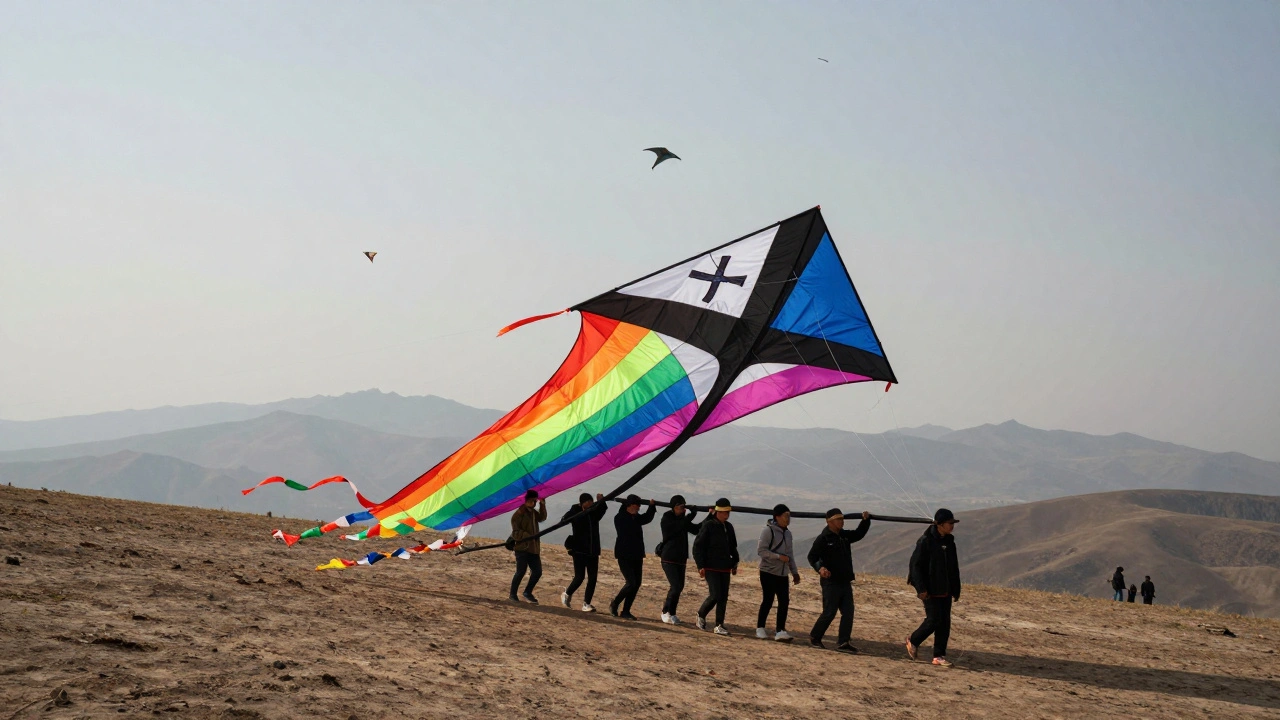
Some kites combine all six colors, representing the full cycle of life, death, and rebirth. These are often the largest and most intricate, flown by elders or community leaders. In 2023, a kite measuring over 12 meters across was flown in the town of Huaytará. It took 17 people to carry it to the hilltop.
Why This Tradition Still Matters
In a world where technology connects us but often separates us from our roots, the Peruvian kite tradition remains a powerful act of memory. It’s not about spectacle. It’s about continuity. Children learn their heritage not from textbooks, but from the feel of bamboo in their hands and the scent of natural dyes on their fingers.
Young people in Lima and Cusco are starting to return to the practice. Some universities now offer workshops on traditional kite-making. A nonprofit group in Ayacucho has recorded over 800 different kite designs, preserving patterns that were nearly lost.
It’s also a quiet resistance. In places where indigenous languages are fading, the kites carry symbols that speak louder than words. A child who can’t yet speak Quechua can still understand what the red and yellow on a kite mean.
What You Won’t See in Tourist Brochures
You won’t find this festival on Instagram. There are no ticket booths. No guided tours. No souvenir shops. The event is organized by local families, not governments or tour companies. Visitors are welcome-but only if they come with respect. No drones. No loud cameras. No touching the kites.
One traveler wrote in a journal: "I thought I was there to watch a show. I left feeling like I had witnessed a prayer."
Most of the kites are burned after Easter. Not as a sacrifice, but as a release. The ashes rise with the smoke, carrying the final prayers upward. What remains are the memories, the stories, and the next year’s kites, already being planned.
How to Honor the Tradition
If you ever have the chance to witness this, go quietly. Sit with the families. Watch how they hold their kites before letting go-not with excitement, but with reverence. If you want to help, support local artisans who still make these by hand. Buy a kite directly from a community in Huancavelica or Ayacucho. Don’t look for "Peruvian-style" kites made in China. The real ones carry more than color-they carry generations.
Why do Peruvians fly kites at Easter?
Peruvians fly kites at Easter as a spiritual practice that blends indigenous Andean beliefs with Catholic traditions. The kites symbolize Christ’s resurrection, with their ascent representing the soul rising to heaven. Families use this moment to send prayers, remember loved ones who have passed, and ask for blessings for crops, health, and rain. The tradition dates back centuries and remains deeply meaningful in rural communities.
What materials are used to make Peruvian Easter kites?
Peruvian Easter kites are made from natural, locally sourced materials. The frame is built with bamboo strips, chosen for their strength and flexibility. The covering is handmade paper, often made from tree bark or recycled newspaper. Paints come from natural dyes: cochineal insects for red, indigo leaves for blue, turmeric for yellow, and charcoal for black. Glue is made from cornstarch and water. No plastic or synthetic materials are used in traditional kites.
Are Peruvian Easter kites sold as souvenirs?
Authentic Peruvian Easter kites are not made for sale as souvenirs. They are created as sacred offerings and are typically burned after Easter to release the prayers. However, some artisans now make smaller, non-religious versions for tourists, using the same techniques but without spiritual symbols. These are sold in markets in Cusco and Lima, but they lack the cultural depth of the originals. True traditional kites are only made by families for their own rituals.
Where is the best place to see Peruvian Easter kite flying?
The most authentic and large-scale kite flying happens in the highland towns of Huancavelica, Ayacucho, and Huaytará. Santiago de Chilcas in Huancavelica is considered the heart of the tradition. These areas are remote, and the events are organized by local communities-not tourist agencies. Visitors should arrive early, respect local customs, and avoid bringing drones or loud equipment. The best time to go is Holy Saturday afternoon.
Is it safe to visit during the kite festival?
Yes, it is safe. These events are peaceful, community-led, and deeply respectful. There is no violence, no commercialization, and no crowds. The main risks are altitude-related-many of the flying sites are above 3,000 meters. Visitors should prepare for cold, windy conditions and bring warm clothing. The biggest "risk" is emotional: many visitors leave with a deeper understanding of life, death, and memory than they expected.