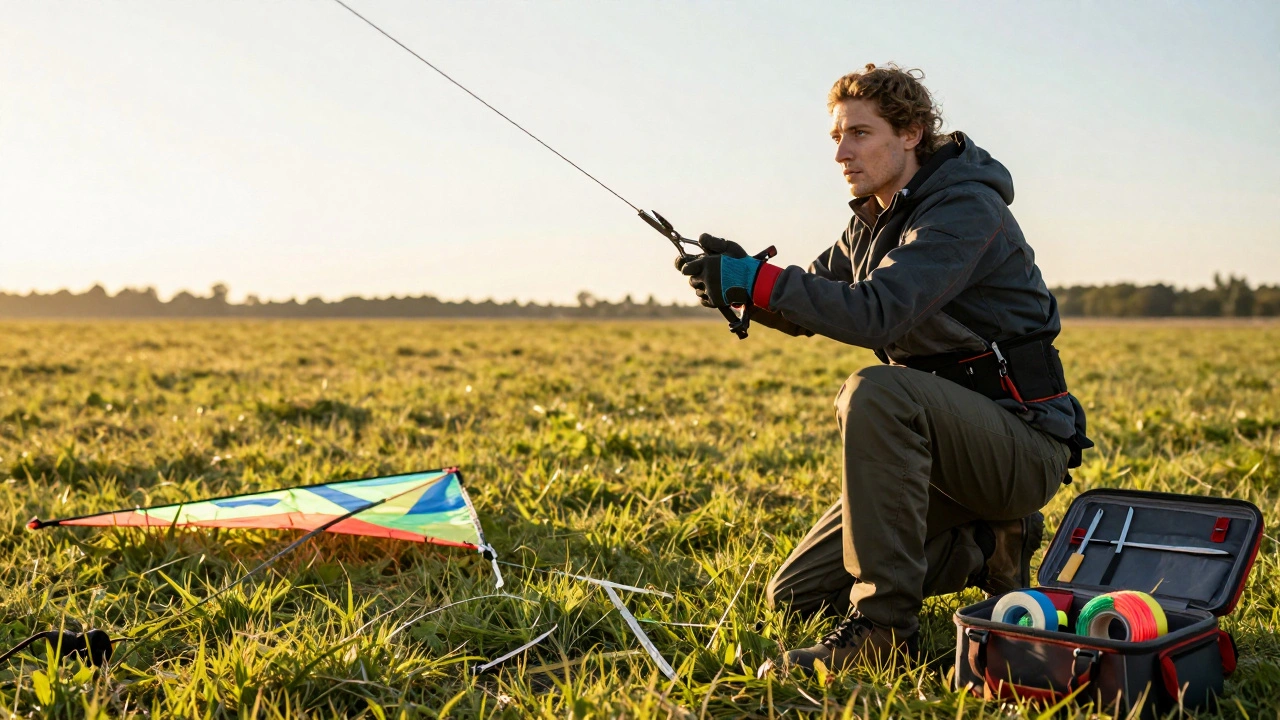
Ever been out flying your kite, only to have the line snap, the tail come loose, or the frame twist mid-flight? You’re not alone. One minute you’re watching your kite dance in the wind, the next you’re staring at a tangled mess on the ground. The difference between a frustrating day and a smooth flying session? A simple, well-packed field toolkit. You don’t need a fancy kit. You just need the right things-nothing more, nothing less.
Why a Kite Field Toolkit Isn’t Optional
Kites are simple machines, but they’re not indestructible. Wind gusts, tree branches, rocky landings, and even kids running into lines can wreck a kite faster than you can say "takedown." A good toolkit lets you fix problems on the spot instead of packing up and going home. Think of it like a first aid kit-but for your kite. You don’t need it every time you fly, but when you do need it, you’ll be glad you brought it.
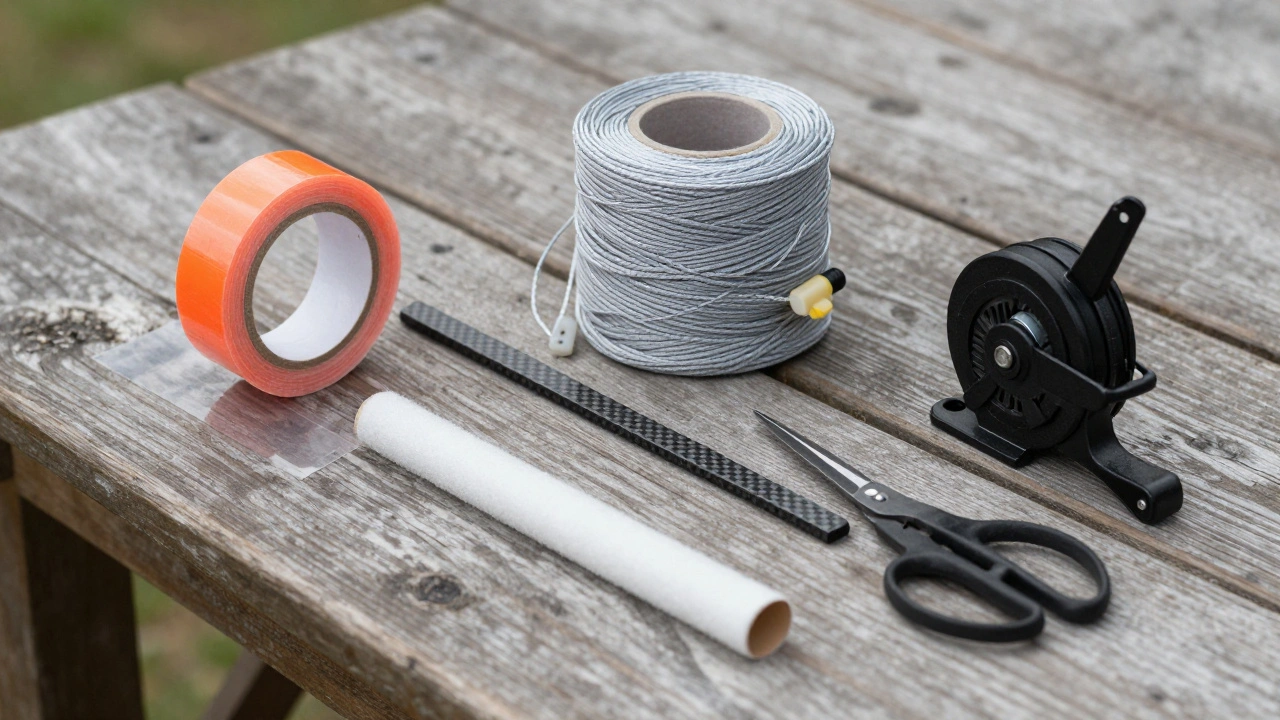
Most people skip the toolkit because they think kites are "set and forget." But that’s how you end up with a broken spine, a tangled line, and no way to fix it. Real kite flyers carry a small bag with just five essentials: a knife, repair tape, spare line, spare spars, and a line winder. Everything else is nice to have-but not necessary.
The Knife: Your Most Important Tool
You need a knife. Not a Swiss Army knife. Not a pocketknife with twelve attachments. You need a sharp, single-blade line cutter. Why? Because kite lines are made of high-strength spectra or dyneema, and they don’t cut like fishing line. They’re thin, slippery, and strong enough to slice through your fingers if you pull too hard. A dull knife won’t cut it-literally.
Look for a knife with a hooked tip or a serrated edge. The hook helps you grab the line and pull it taut before cutting. The serrated edge grips the line so it doesn’t slip. Brands like Line-Cut Pro a lightweight, single-blade line cutter designed specifically for kite flyers and KiteLineX a compact, retractable line cutter with a safety lock are made for this exact job. Keep it in a pocket you can reach fast-preferably on your belt or harness.
Pro tip: Always carry a backup blade. One snap of a line under tension can chip or dull a knife. A spare blade costs less than a dollar and fits in your pocket.
Tape: The Invisible Hero
Broken spars? Loose tails? Frayed bridles? That’s where tape comes in. Not duct tape. Not electrical tape. You need Kite Repair Tape a thin, strong, waterproof polyester tape designed to bond to kite fabric without leaving residue.
Regular tape peels off in the sun, sticks to everything, and leaves gunk on your kite. Kite repair tape is different. It’s thin, flexible, and sticks like crazy to nylon, polyester, and carbon fiber. A single 10-yard roll lasts for years. Cut it into 2-inch strips and roll them onto a small cardboard tube. Tuck the tube into your toolkit bag. When a spar cracks, wrap the tape around it like a bandage. It won’t fix the break forever, but it’ll hold until you get home.
Pro tip: Keep a small pair of scissors in your kit. You’ll thank yourself when you need to cut tape quickly. No need for a full-size pair-just a 2-inch travel scissors.
Spare Line: The Lifeline
Your kite line is the connection between you and your kite. If it snaps, you’re done. But not if you’ve got a spare. Most kites use 50-100 lb test line. That’s not fishing line. It’s a thin, braided synthetic thread. You can’t just grab any spool at the hardware store.
Buy line that matches your kite’s specs. If your kite uses 75 lb test, get 75 lb test. Wrap a 50-foot spool onto a plastic reel. Tuck it into your toolkit. When your line breaks, cut the damaged section, tie the new line on with a double fisherman’s knot, and you’re back in the air in five minutes.
Don’t forget: Always carry a few extra line connectors. These are the small plastic or metal clips that attach the line to your kite’s bridle. They’re cheap, easy to lose, and impossible to fly without.
Spare Spars: Keep the Frame Alive
The spine and cross spar are the skeleton of your kite. Carbon fiber spars are light and strong-but they snap under stress. A single gust can crack one. That’s why you carry spares.
For most sport kites, carry one full spine and one cross spar. They should match your kite’s length and diameter. If you fly a 1.5m kite, bring a 1.5m spine. If you fly a dual-line stunt kite, bring both the top and bottom spars. Wrap them in foam or bubble wrap to protect them. Tape them together so they don’t roll around in your bag.
Pro tip: Mark your spars with a marker. Write the kite model and size on them. That way, if you borrow someone else’s gear, you won’t mix them up.
The Line Winder: More Than Just a Spool
A line winder isn’t just for storing line. It’s for safety. When you’re flying, you need to control the line tension. A winder lets you let out or reel in line smoothly. Without one, you’re wrapping line around your hands-and that’s how you get rope burns or worse.
Look for a winder with a locking handle and a comfortable grip. The KiteWinder Classic a lightweight, plastic line winder with a spring-loaded locking mechanism is the most common. It holds 100 feet of line and clips to your belt. Never fly without one. It’s not optional.
What Else Should You Carry?
Here’s what most people think they need-and why they don’t:
- Glue-No. It takes hours to dry. Tape works instantly.
- Needles and thread-Only if you’re sewing a torn sail. That’s a home repair, not a field fix.
- Extra tails-Only if your kite uses detachable tails. Most don’t.
- Multi-tool-Too bulky. Stick to the knife.
- Phone-Yes. But not for photos. Use it as a wind meter app. Wind speed matters more than you think.
Keep it light. Your toolkit should fit in a small pouch that clips to your belt or hangs from your backpack strap. If it’s too big, you won’t carry it. And if you don’t carry it, you won’t use it.

How to Pack Your Toolkit
Here’s a simple, tested layout:
- Line cutter (with spare blade)
- Roll of kite repair tape (pre-cut into 2-inch strips)
- 50-foot spool of spare line with two connectors
- One full spine and one cross spar (wrapped and taped together)
- Line winder with 100 feet of line already on it
- Small pair of scissors
- Wind speed app on your phone (optional but useful)
Put it all in a waterproof zip-top bag. Tuck it into your outer pocket. Check it before every flight. If something’s missing, replace it. Don’t wait until you’re stuck in the field.
Real-World Example: What Happens When You Don’t Have a Toolkit
Last fall, a flyer in Oregon lost his kite in a tree. He didn’t have a line cutter. He tried pulling it down with his hands. The line cut his palm. He spent two hours trying to climb a tree with a broken kite. He ended up buying a new one. The whole thing cost him $120 and a trip to urgent care.
He could’ve fixed it in five minutes with a knife and a little tape. That’s the difference between luck and preparation.
Final Rule: Carry It. Every Time.
It doesn’t matter if you’re flying a simple diamond or a 4-line stunt kite. If you’re flying outdoors, you need this kit. It’s not about being fancy. It’s about being ready. The wind doesn’t care if you forgot your toolkit. It will still gust. Your kite will still break. And you’ll still be out there, stuck.
Keep your toolkit in your car. Keep it in your bag. Keep it by the door. Make it part of your routine. Just like your keys or your wallet. If you do, you’ll fly more, fix more, and enjoy more.
What’s the best type of tape for kite repairs?
Use kite repair tape, not duct tape or electrical tape. Kite repair tape is thin, waterproof, and bonds strongly to kite fabric without leaving sticky residue. It’s designed to flex with the kite and hold up in sun and wind. Brands like KiteTape Pro and FlexFix Tape are widely used by flyers. A single roll lasts for years.
Can I use fishing line as spare kite line?
No. Fishing line is not designed for kite flying. It’s too stiff, doesn’t handle wind loads well, and can snap suddenly. Kite line is braided, has consistent tension, and is rated for specific pull forces. Always use line made for kites-usually labeled as 50 lb, 75 lb, or 100 lb test. It’s safer and more reliable.
How often should I replace my kite line?
Replace your kite line every 20-30 flights, or sooner if you notice fraying, discoloration, or stiffness. UV exposure weakens the fibers over time. Even if the line looks fine, it’s weaker than it used to be. Always carry a spare, and check your line before every flight.
Do I need a line winder for small kites?
Yes. Even small kites can pull hard enough to cause rope burns. A line winder gives you control and prevents accidents. It also helps you manage line length quickly. A basic winder costs less than $10 and weighs almost nothing. Skip it at your own risk.
Can I make my own kite repair kit?
Absolutely. The best kit is the one you carry. Buy each item separately: a line cutter, kite tape, spare line, spars, and a winder. Store them in a small waterproof pouch. Customize it based on your kite type. A delta kite needs different spars than a parafoil. Tailor your kit to your gear.
If you fly kites regularly, your toolkit is your insurance. It’s not about being prepared for the perfect day. It’s about surviving the messy ones. Keep it simple. Keep it ready. And keep flying.