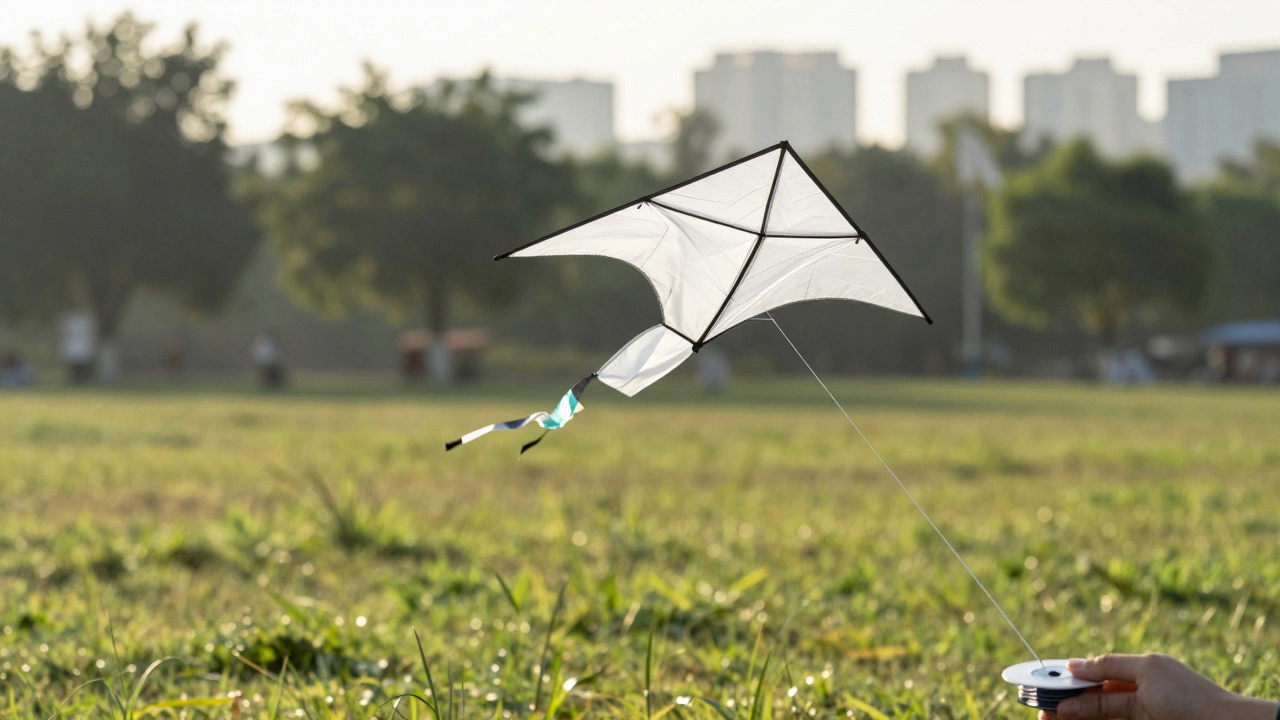
Most people think kites are for big open fields and windy days. But some of the most satisfying kites you’ll ever fly are the ones that fit in your palm. Miniature kites-smaller than a smartphone-are not just cute novelties. They’re precision machines, built for agility, speed, and surprising power. If you’ve ever watched a dragon kite twist through clouds and wondered how something so big stays aloft, imagine the same control in something you can carry in your pocket. That’s the magic of miniature kites.
Why Miniature Kites Are Different
Miniature kites aren’t just small versions of your average diamond kite. They’re engineered differently. A standard 4-foot kite needs steady wind to stay up. A miniature kite, say 4 inches wide, works best in light breezes-sometimes even just a few miles per hour. That’s because its surface area is tiny, so it doesn’t need much lift. But here’s the catch: it also doesn’t need much space. You can fly one in a backyard, a park bench, or even a parking lot. No need to drive to the beach.
Materials matter more here than in big kites. You can’t use thick paper or heavy bamboo. You need lightweight, strong materials: ripstop nylon, carbon fiber rods, and ultra-thin kite line. A 30-foot spool of 0.5mm Dyneema line is enough for dozens of flights. These kites often weigh less than 10 grams. That’s lighter than a AA battery.
And they’re fast. A well-built miniature kite can zip across the sky at 30+ mph in a steady 8 mph wind. That’s because it’s so light, even a puff of air sends it darting. It doesn’t drift-it zips. That’s why people call them nano-kites or micro-darters.
Three Classic Miniature Kite Designs
You don’t need fancy tools to build one. Start with these three proven designs.
- The Diamond Nano: A scaled-down version of the classic diamond. Use two 1/16-inch carbon rods, 4 inches long, crossed and taped at the center. Cut a diamond shape from ripstop nylon, 5 inches wide, 6 inches tall. Add a tail that’s 1.5 times the kite’s height-just a 3-inch strip of Mylar. This one flies steady in gusty wind.
- The Sled Mini: No tail needed. Two parallel carbon rods, 5 inches long, bent slightly into an arc. Stretch a rectangle of nylon between them, 4 inches wide, 7 inches tall. Attach the line to the center. This kite dives and climbs like a hummingbird. Best for calm days.
- The Delta Micro: A triangle shape, 6 inches base, 5 inches height. Use a single 6-inch carbon spar for the spine, and two 4-inch rods for the wings. This one turns on a dime. Perfect for tricks. It’s the favorite of competitive micro-kite flyers in Portland and Tokyo.
Each design has its own personality. The Diamond Nano is forgiving. The Sled Mini is silent. The Delta Micro? It’s a dancer.
How to Build One in Under an Hour
You’ll need:
- 1 sheet of ripstop nylon (12x18 inches)
- Two carbon fiber rods, 1/16 inch diameter, 6 inches long
- 0.5mm Dyneema flying line (30 feet)
- Clear packing tape
- Scissors and a ruler
- A small drop of CA glue (optional, for rod joints)
Step 1: Cut your kite shape. Use one of the three designs above. Trace it on the nylon with a pencil.
Step 2: Lay the rods on the nylon to form the frame. Tape them in place with small strips of tape-don’t cover the whole surface. You want the fabric to flex.
Step 3: Tie the flying line to the center. Use a double overhand knot. Leave 6 inches of slack, then tie a loop. This lets you attach it to a spool later.
Step 4: Add the tail (if needed). For the Diamond Nano, cut a 3-inch strip of Mylar and tape it to the bottom. For the others, skip this.
Step 5: Test it. Hold the line and walk backward slowly. Let the wind catch it. If it spins, your tail is too short. If it dives, your center of gravity is off. Adjust the knot position-move it 1/8 inch toward the nose. Repeat until it flies straight.
That’s it. You’ve built a working kite in 45 minutes. Now go try it.
Where to Fly Them
Miniature kites don’t need wide-open spaces. They need smooth airflow. Avoid trees, power lines, and buildings that create turbulence. Look for:
- Open lawns with no tall grass
- Flat rooftops (if safe and legal)
- Shorelines with light onshore wind
- Urban parks with wide, clear paths
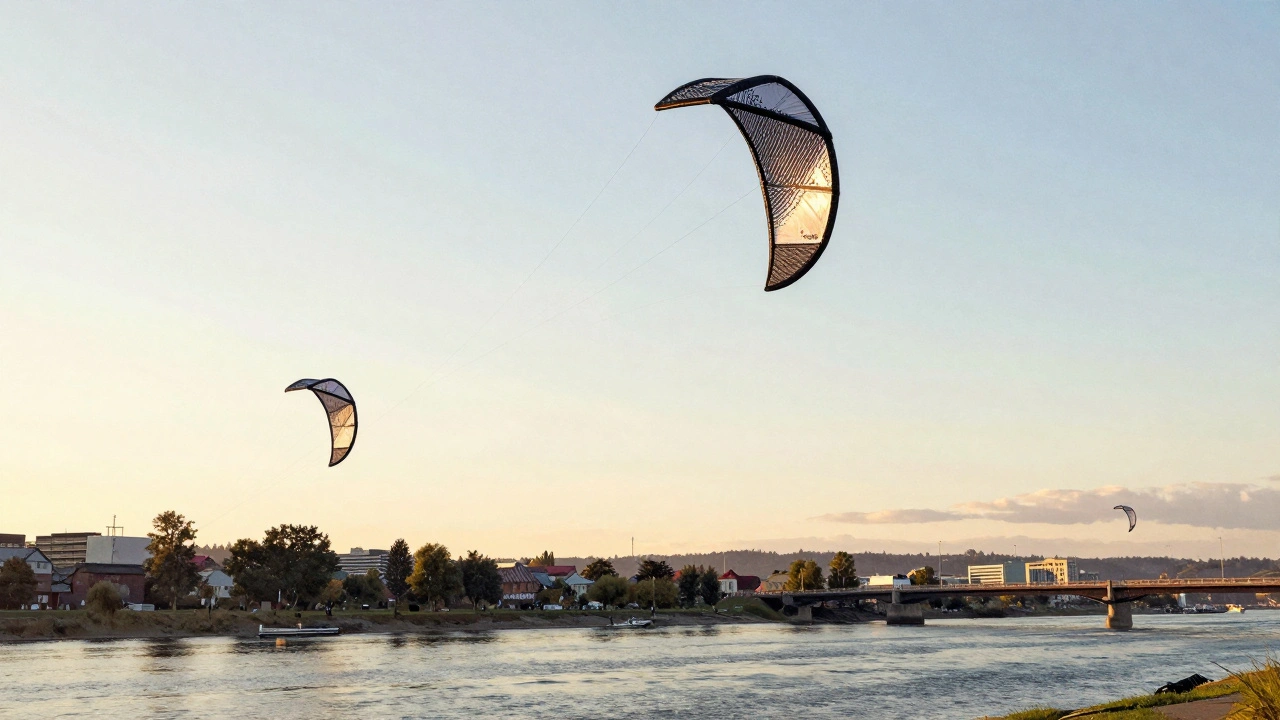
Portland’s Eastbank Esplanade is a hotspot. The river wind is steady, and the path is wide. You’ll see people flying nano-kites there on weekends. Some use drones to launch them-just to see how high they can go. Others fly them in pairs, racing across the sky.
Don’t fly in rain. Wet nylon weighs down the kite. And avoid wind gusts over 15 mph. Too much power can snap the line or rip the frame.
Common Mistakes and How to Fix Them
Even experienced builders mess up. Here’s what goes wrong-and how to fix it.
- It spins in circles. That means the tail is unbalanced or the frame is crooked. Check your tape joints. Make sure the rods are straight. Add a longer tail.
- It won’t lift off. Your line is too heavy, or the kite’s too big for the wind. Try a thinner line. Or switch to a Sled Mini-it needs less lift.
- The line breaks. You’re using cheap cotton thread. Switch to Dyneema. It’s stronger than steel, pound for pound. And never fly near sharp objects.
- It crashes into trees. You’re too close. Start 50 feet away. Let it climb slowly. Miniature kites don’t need a running start.
One pro tip: Keep spare rods and line on hand. A single carbon rod costs less than $2. A 30-foot spool of line runs $5. You’ll go through them faster than you think.
Why People Love Them
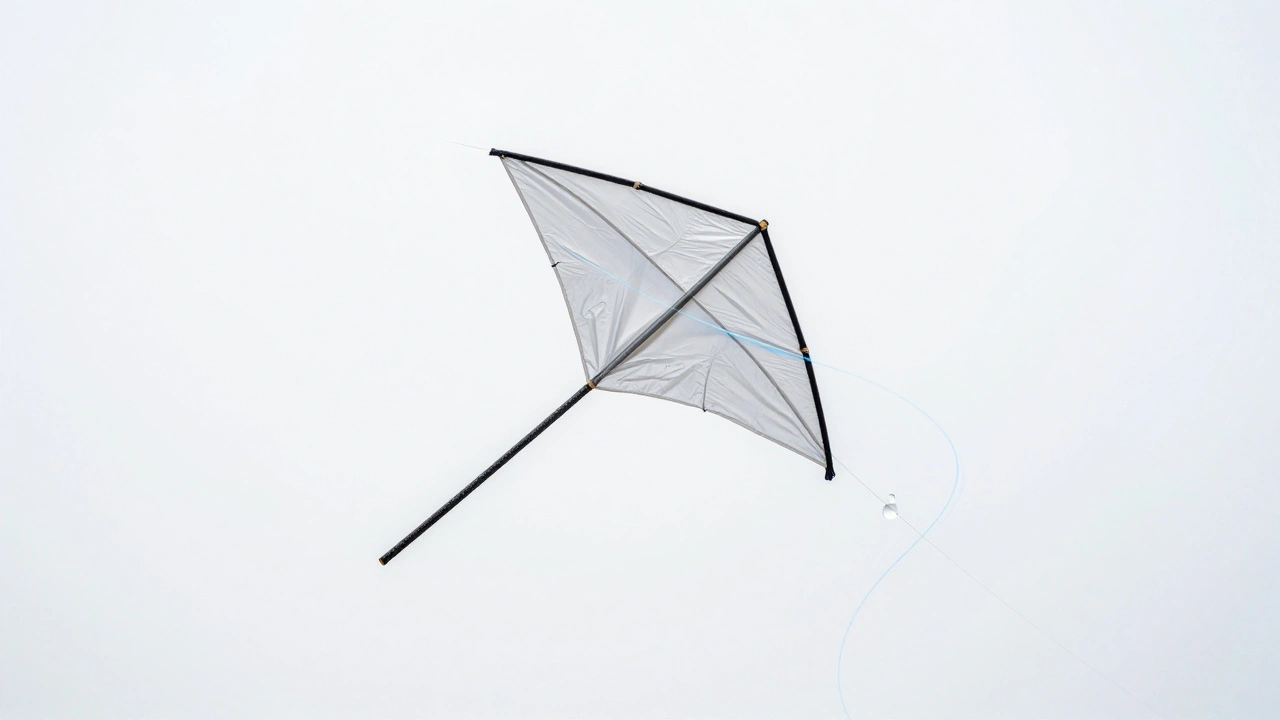
Miniature kites aren’t just toys. They’re meditative. You don’t need a team. You don’t need a trailer. You just need a quiet moment and a light breeze. Some fly them alone, watching the way the fabric ripples in the wind. Others compete in micro-kite races-timing how long a kite stays airborne, or how far it can fly in 30 seconds.
There’s a community around them. Reddit’s r/MiniatureKites has over 12,000 members. They share builds, tricks, and wind reports. In Tokyo, there’s a monthly micro-kite meet-up at Yoyogi Park. In Portland, a group meets every third Sunday at Peninsula Park. No registration. Just bring your kite and a spool of line.
And they’re cheap. A full kit-nylon, rods, line, tape-costs under $15. You can build ten kites for the price of one big one. And when one breaks? You just make another.
What’s Next? Upgrading Your Miniature Kite
Once you’ve flown a few, you’ll want more. Here’s how to level up:
- Try glow-in-the-dark line for night flying. Use a UV flashlight to charge it.
- Add LED lights-tiny coin-cell ones that weigh less than a gram.
- Build a dual-line version. Two lines mean steering. You can make it loop, roll, or hover.
- Try flying two kites at once. It’s hard, but when you get it right, it looks like magic.
Some people even attach micro-cameras to them. Not for surveillance-just to see what the sky looks like from 30 feet up. The footage is surreal. The clouds move faster. The ground looks like a painting.
Can I fly a miniature kite indoors?
Not really. Miniature kites need real wind-air moving past the fabric. Indoors, even with a fan, the air doesn’t flow smoothly enough. You might get a few seconds of lift, but it won’t fly properly. Stick to outdoor spaces with steady breeze.
What’s the smallest kite you can actually fly?
The smallest functional kite is about 1.5 inches wide. It’s made from a single piece of Mylar, with a carbon rod thinner than a human hair. It needs a 5 mph breeze and a 100-foot line to stay stable. Most people start with 3-inch kites-they’re easier to handle and more forgiving.
Do I need special permission to fly miniature kites?
In most places, no. Miniature kites are too small to interfere with aircraft or power lines. But avoid flying near airports (within 5 miles) or over private property without permission. Always check local park rules-some ban kites entirely, even tiny ones.
Are miniature kites good for kids?
Yes, but supervise them. The carbon rods are sharp. The line can cut skin if pulled tight. Kids under 8 should use pre-built kites with soft, plastic frames. Older kids love building them-it’s a great way to learn physics, patience, and precision.
How long does a miniature kite last?
A well-made kite can fly 50+ times before needing repairs. The nylon wears out slowly. The carbon rods rarely break unless they hit something hard. Keep spares. Replace the line every few months-it stretches and weakens with use. A kite that’s 6 months old is still new.