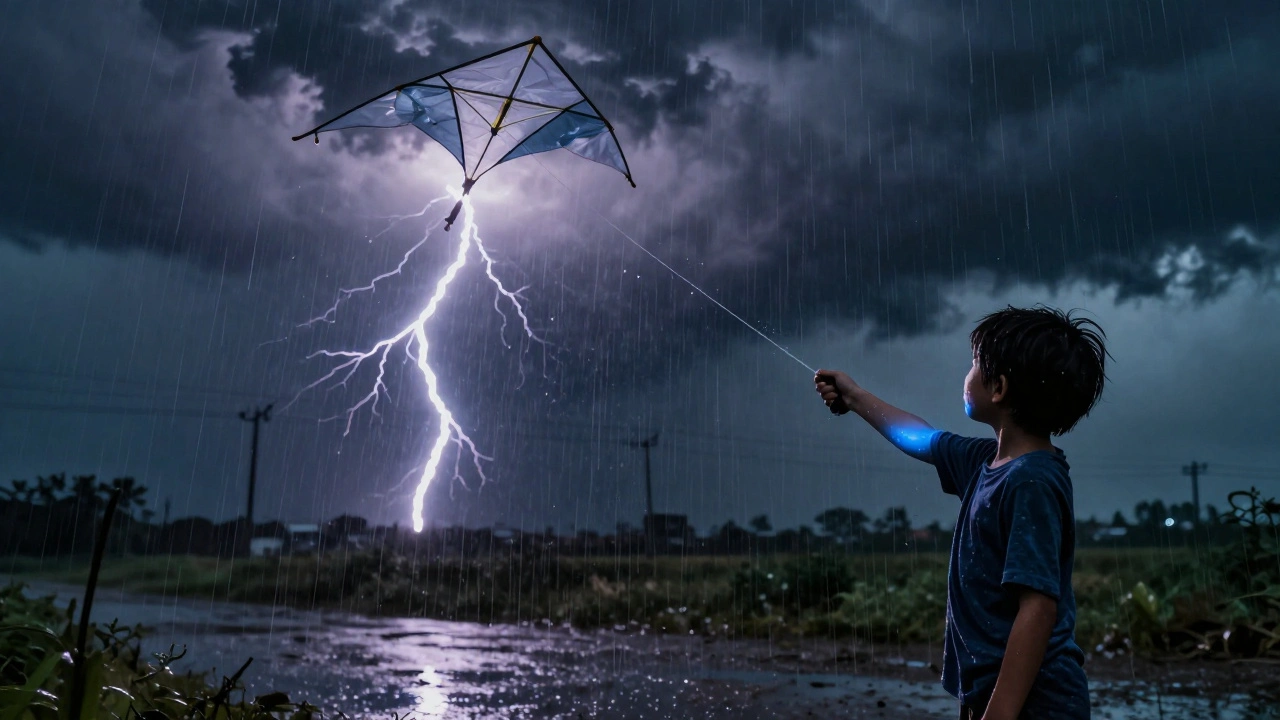
Kite flying sounds like a simple, peaceful pastime-wind in your hair, a colorful tail dancing across the sky. But when clouds roll in and the air gets heavy, that innocent hobby can turn deadly. Every year, people get seriously injured-or worse-because they don’t realize how dangerous a kite becomes in stormy weather. It’s not just about getting wet. It’s about becoming a conductor for lightning or high-voltage electricity. And it happens faster than you think.
Why a Kite Turns Into a Lightning Rod
Most people think lightning strikes tall buildings, trees, or antennas. But in open fields or near power lines, a kite isn’t just a toy-it’s a direct path to the sky. Kites are often made with carbon fiber rods, metal frames, or even wet string. Even a regular cotton string soaked in rain becomes conductive. When you hold that string, you’re holding a wire that connects you to a storm cloud.
The National Weather Service recorded over 170 kite-related electrical incidents in the U.S. between 2010 and 2023. Nearly half of them involved children under 14. One case in Florida in 2021 left a 12-year-old with third-degree burns after his nylon-line kite touched a 13,800-volt power line. He survived, but lost the use of his right hand.
How Electricity Travels Through Kite String
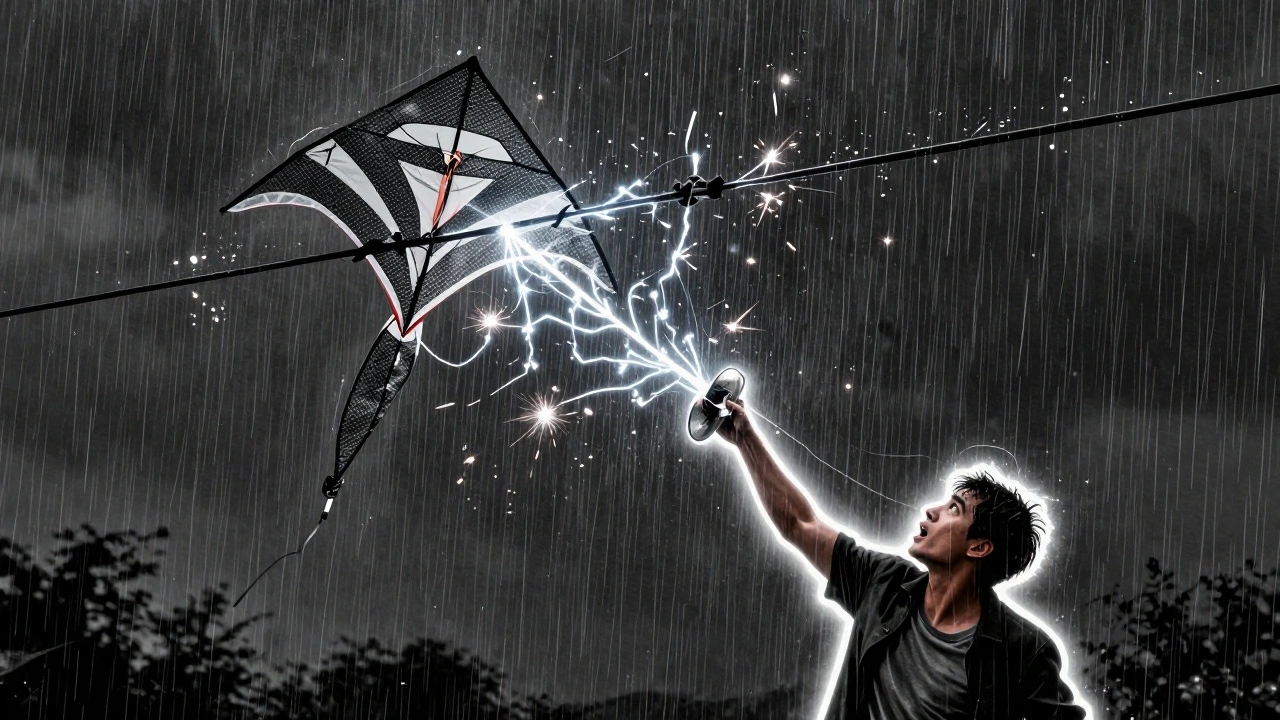
Electricity doesn’t need a direct lightning strike to kill you. It can jump. When a kite flies near power lines, even a few inches away, voltage can arc across the gap. Wet string, humid air, and metal parts make that arc easier. The current doesn’t stop at the kite-it travels down the line into your hands, your body, and into the ground.
Think of it like this: a kite string isn’t just thread. In stormy conditions, it becomes a live wire. The voltage from a power line can be 10,000 to over 100,000 volts. Household outlets? 120 volts. That’s why even a small spark near a kite can stop your heart.
Real-World Scenarios That Go Wrong
- A man in Ohio launched a large diamond-shaped kite during a passing thunderstorm. He didn’t see the dark clouds building. The kite got caught in a transformer line. He was thrown 15 feet backward and suffered cardiac arrest. Bystanders revived him with CPR.
- In Texas, a family was flying a commercial LED kite at dusk. The lights made it look like a firework. A power line arced to the kite’s metal frame. Both parents were hospitalized. Their 8-year-old daughter was unharmed because she was holding a plastic spool-dry and non-conductive.
- Two teens in Oregon tried to fly a kite during a light drizzle. They didn’t think it was dangerous. The kite brushed a utility pole. One boy lost consciousness. The other was lucky-he dropped the string before the current reached him.
These aren’t rare accidents. They’re predictable. And they’re preventable.
What Makes a Kite Dangerous in Storms?
Not all kites are equal when it comes to risk. Here’s what makes a kite a hazard:
- Conductive materials: Carbon fiber, aluminum, steel, or any metal in the frame or tail. Even metallic paint or foil decorations can do damage.
- Wet string: Cotton, nylon, or polyester strings absorb moisture. Rain turns them into wires. Dry string? Still risky. Humidity alone can lower resistance enough for current to flow.
- Height: Kites that fly above 150 feet are more likely to reach power lines. In urban areas, power lines hang lower than you think-sometimes just 30 feet above the ground.
- Location: Flying near substations, transformers, or transmission towers? That’s playing Russian roulette with electricity.
The worst part? You don’t need a full thunderstorm. A darkening sky, gusty wind, or even a passing shower is enough. Lightning doesn’t wait for rain to start.
What to Do Instead
Don’t throw away your kite. Just change your rules.
- Check the forecast. If there’s any chance of rain, wind over 20 mph, or thunder in the next 6 hours, leave the kite on the ground.
- Stay away from power lines. Always fly in open fields at least 500 feet from any utility poles or wires. That’s farther than you think.
- Use dry, non-conductive string. Look for polyester or Dacron lines labeled “non-conductive.” Avoid cotton and wet string at all costs.
- Never fly in cloudy or dark skies. If you can’t see the sun clearly, it’s not safe. Storms move faster than you can run.
- Teach kids the rule: no kite when the sky looks angry. Show them the signs-dark clouds, sudden wind shifts, static crackling in the air.
Some kite clubs in California and Washington now require weather checks before launch. They use smartphone apps that show real-time lightning strike maps. It’s not overkill-it’s common sense.
What to Do If Your Kite Gets Stuck
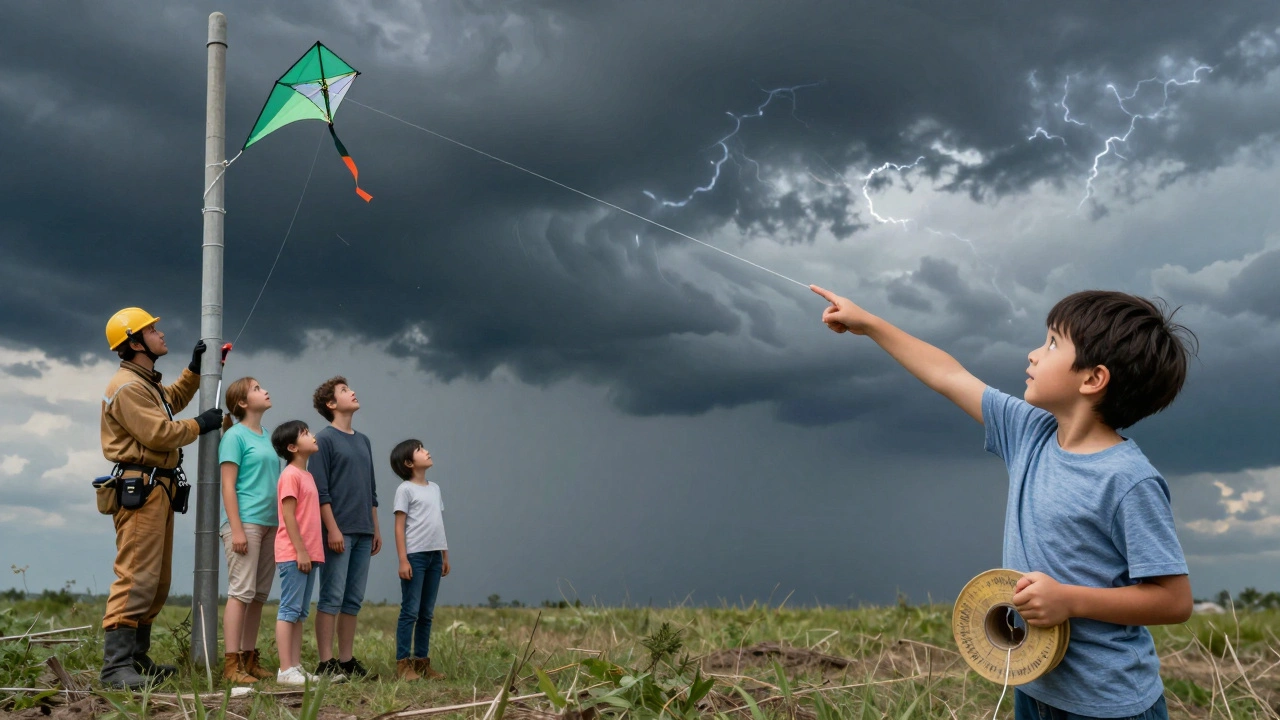
If your kite tangles in a power line, don’t try to pull it down. Don’t even go near it. Call the local utility company immediately. They have trained crews with insulated tools. You? You’re just a person with a string.
Never use a stick, pole, or ladder to reach it. That’s how people get electrocuted. One man in Minnesota tried to knock his kite loose with a metal pole. He died instantly. The utility company later said the line was carrying 34,500 volts. The pole didn’t even have to touch it-the electricity jumped.
Myths That Get People Killed
- Myth: “I’m wearing rubber-soled shoes-I’m safe.” Truth: Rubber soles won’t stop thousands of volts. They’re meant for minor shocks, not power lines.
- Myth: “It’s just a little rain. Nothing bad will happen.” Truth: Moisture reduces electrical resistance by 80%. A wet string conducts 10 times better than a dry one.
- Myth: “Lightning only strikes the tallest object.” Truth: Lightning seeks the best path to ground. A kite on a wet string is a better path than a tree 50 feet away.
When to Call It Quits
Here’s a simple rule: if the wind feels strange, the air smells electric, or your hair stands up-even slightly-get off the field immediately. That’s not imagination. That’s the sign of an imminent lightning strike. You have less than 30 seconds to get to safety.
And if you’re ever unsure? Just walk away. Kites are replaceable. Lives aren’t.
Final Thought
Kite flying is beautiful. It connects us to the wind, to childhood, to quiet moments under open skies. But that beauty vanishes when you ignore the science. A kite in stormy weather isn’t a toy-it’s a risk. And that risk doesn’t care if you’re experienced, if you’ve flown for years, or if you think you’re careful.
Respect the sky. Respect the wires. And never, ever fly when the weather turns.
Can a kite really attract lightning?
Yes. A kite flying in stormy weather can act as a lightning rod. The string, especially if wet or made of conductive material, creates a path for electricity to travel from the cloud to the ground. There have been documented cases of people being struck while flying kites during thunderstorms, even if the kite didn’t directly touch a cloud.
Is it safe to fly a kite near power lines if the weather is clear?
No. Even in clear weather, kites can drift into power lines. High-voltage electricity can arc through the air, especially if the kite has metal parts or the string is damp. The U.S. Consumer Product Safety Commission advises staying at least 500 feet away from all power lines, regardless of the weather.
What kind of kite string is safest?
The safest kite string is dry, non-conductive polyester or Dacron. Avoid cotton, nylon, or any string that absorbs moisture. Look for labels that say “non-conductive” or “insulated.” Always keep your string dry-store it in a sealed bag before flying.
What should I do if my kite gets stuck in a power line?
Never try to pull it down yourself. Don’t use a stick, ladder, or metal tool. Stay at least 300 feet away and call your local utility company immediately. They have trained personnel and insulated equipment to safely remove it. Trying to fix it yourself could cost you your life.
Are there any legal restrictions on kite flying near power lines?
Yes. In most U.S. states, it’s illegal to fly kites within 500 feet of power transmission lines. The Federal Aviation Administration also restricts kite flying above 150 feet without permission. Many local parks have posted signs banning kite flying near utility infrastructure. Always check local rules before flying.