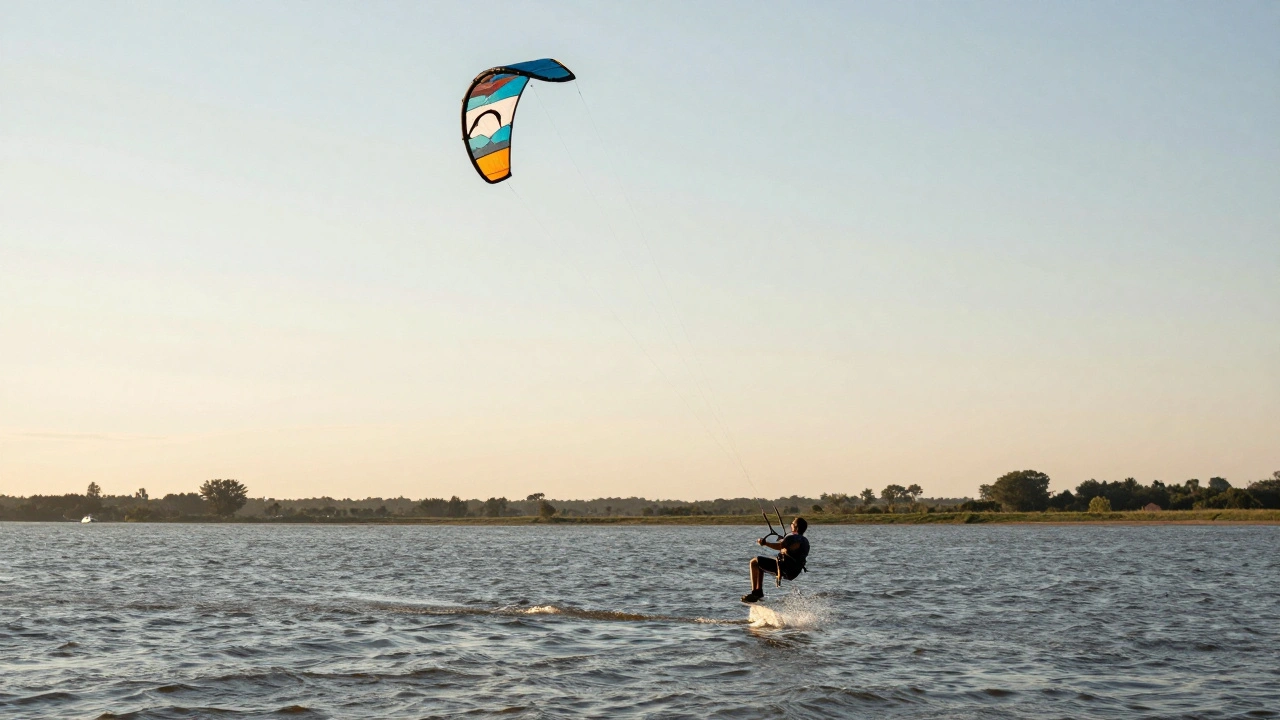
Most people think stunt kites are just for showing off in the park. But if you’ve ever watched a pro pilot chain together a flick-flack into a Jacob’s Ladder, you know it’s more like dance than flight. These aren’t random moves-they’re precise, linked sequences that turn wind into art. And once you learn how to connect them, your kite doesn’t just fly. It talks.
What Is a Flick-Flack?
The flick-flack is the first real trick most stunt kite pilots learn after mastering basic turns. It’s not a spin. It’s not a loop. It’s a sudden, controlled flip that looks like the kite’s been slapped by the wind-except you did it on purpose. To execute it, you pull one line sharply while releasing a tiny bit of tension on the other. The kite dives, rolls 360 degrees over its nose, and snaps back into level flight. Done right, it lands with a sharp thwip sound, like a whip cracking.
Most beginners mess this up by yanking too hard. The kite spirals into the ground. The fix? Less force, more timing. You need to feel the kite’s momentum. A good flick-flack happens in under half a second. If it takes longer, you’re fighting the wind instead of working with it. Top pilots do this so smoothly, you’d think the kite has a mind of its own.
What Is Jacob’s Ladder?
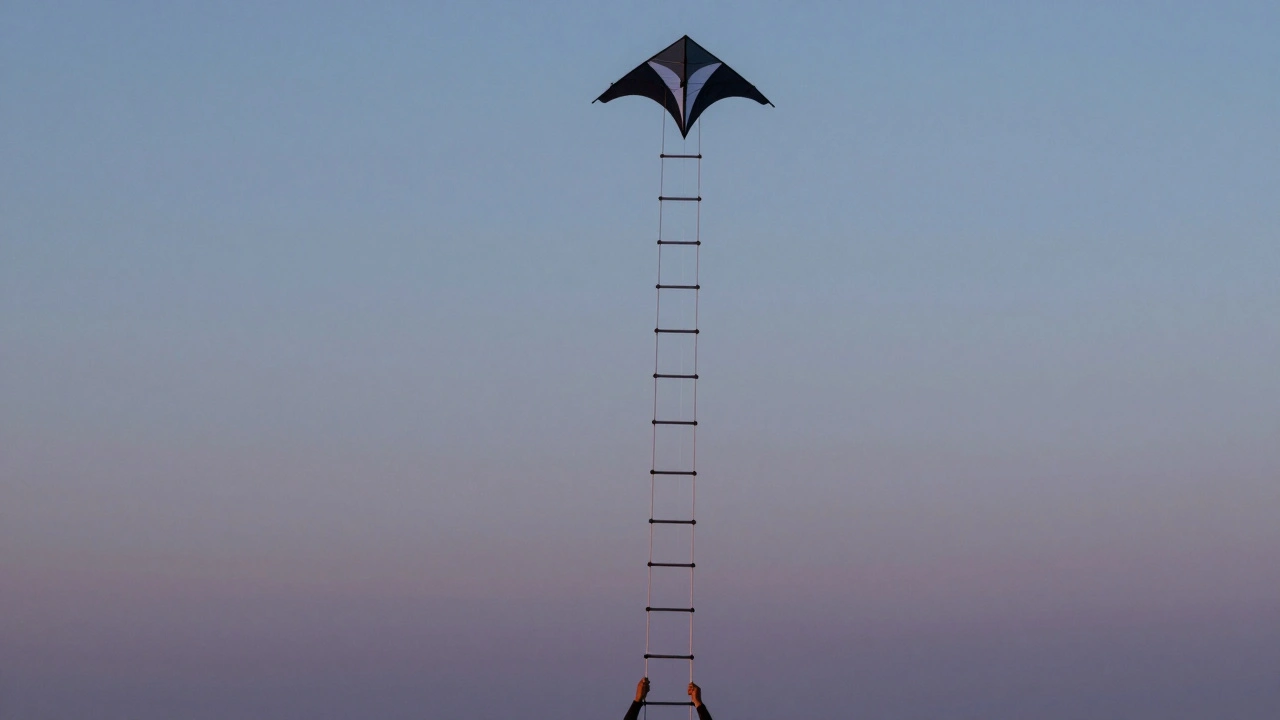
Jacob’s Ladder is the next level. It’s a sequence of rapid, alternating backflips that make the kite look like it’s climbing a vertical ladder made of air. Each flip is triggered by a quick tug on one line, then the other, in perfect rhythm. The key? Don’t pause between flips. The kite needs to keep rotating, not stop and reset. If you hesitate, it stalls. If you tug too late, it tumbles sideways.
Most people try to do this too fast. That’s the mistake. Jacob’s Ladder isn’t about speed-it’s about consistency. Each flip should be the same height, the same angle. A clean ladder has six to eight clean flips before it levels out. Anything less, and it looks sloppy. Anything more, and you’re risking a crash.
Pro pilots often practice this over water. If the kite drops, it lands softly. If it goes sideways, you can recover without chasing it through a tree. That’s how the best in the world train-by making failure safe.
Why Combine Them?
Linking a flick-flack into a Jacob’s Ladder isn’t just flashy. It’s the foundation of real freestyle flying. The flick-flack sets up the kite’s energy. It gives you downward momentum. The Jacob’s Ladder uses that momentum to climb back up. Together, they create a complete motion cycle: down, roll, climb, repeat.
Think of it like a skateboarder ollieing into a kickflip. One trick alone is cool. But the combo? That’s where the art lives. In freestyle competitions, judges don’t just score how many tricks you do. They score how well they flow. A flick-flack into Jacob’s Ladder scores higher than five random loops because it shows control, timing, and understanding of physics.
There’s also a rhythm to it. The flick-flack happens in 0.4 seconds. The first flip of Jacob’s Ladder starts 0.2 seconds later. That 0.2-second gap is everything. Too short, and the kite doesn’t recover. Too long, and the flow breaks. Top pilots train with metronomes-not to keep beat, but to feel the silence between moves.
How to Start Learning the Combo
You don’t learn this combo in one day. You build it in stages.
- Master the flick-flack on its own. Do 20 clean ones in a row without crashing. Use a light wind-10 to 15 mph. Too much wind hides your mistakes.
- Practice the Jacob’s Ladder alone. Start with three flips. Then five. Then seven. Keep the height even. If the kite gets lower on the third flip, you’re pulling too hard.
- Now try linking them. Do a flick-flack. Wait one full second. Then start Jacob’s Ladder. Don’t rush. Focus on the pause. That’s where control lives.
- Once that feels steady, reduce the pause to half a second. Then a quarter. Eventually, you’ll be able to go straight from flip to ladder without stopping.
- Record yourself. Watch it in slow motion. You’ll see where you hesitate, where you tug too hard, where the kite wobbles. That’s your homework.
Most people quit here. They think they’re not good enough. But the difference between a good pilot and a great one? It’s not talent. It’s repetition. The best flyers in the world have done this combo thousands of times. Some of them have videos of themselves doing it 50 times in a row without a single drop.
Equipment Matters
You can’t do this combo with just any kite. A cheap toy from the mall? Forget it. You need a true stunt kite-double-line, delta or bow-shaped, with responsive lines and a light frame. Look for kites made for freestyle, not just for beginners. Brands like Ozone, Peter Powell, and Prism are trusted by competition pilots.
Line tension is everything. Too loose, and the kite won’t respond. Too tight, and it’ll snap your wrists. Most pros use 150-pound test Spectra line. It’s thin, strong, and doesn’t stretch. You’ll feel every tug, every twitch. That’s how you learn.
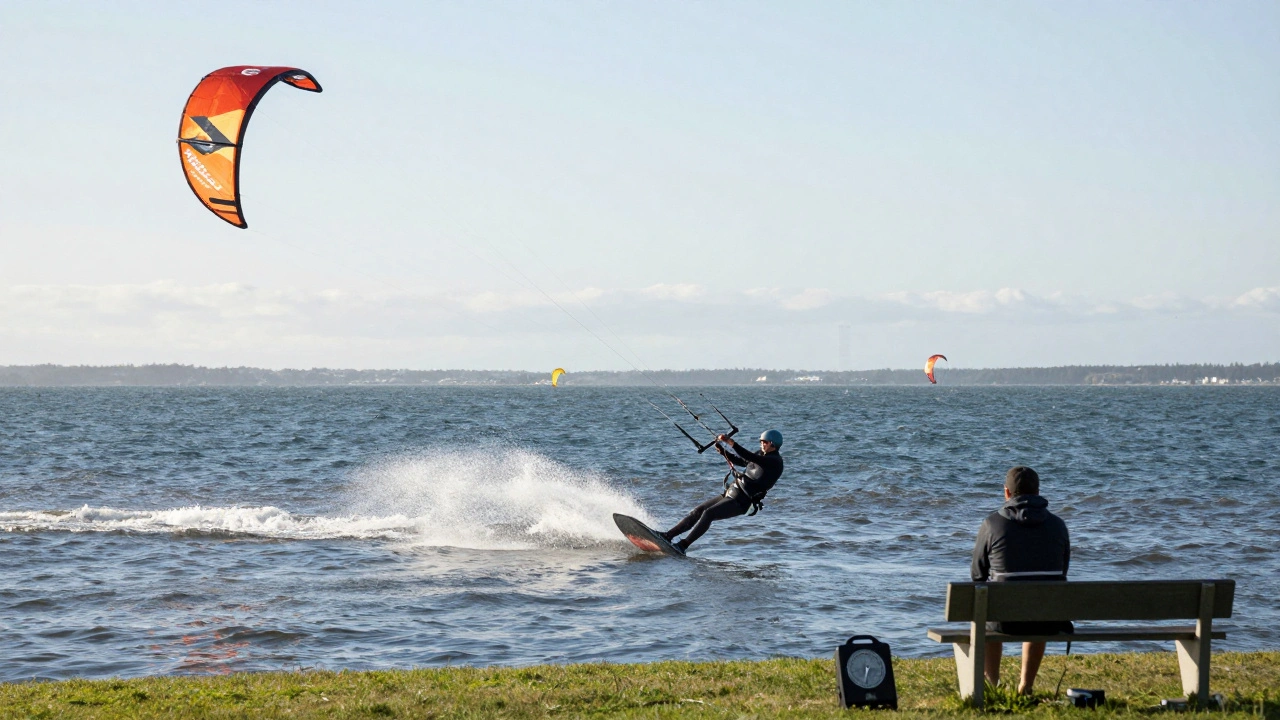
And don’t ignore the wind. A steady 12 mph is ideal. Gusty conditions? Don’t even try. The combo needs smooth, predictable airflow. That’s why most serious pilots fly near rivers, lakes, or open fields-places where wind doesn’t bounce off buildings.
Common Mistakes and How to Fix Them
- Mistake: The kite spins out after the flick-flack. Fix: You pulled too hard on one line. Try pulling with your pinky finger, not your whole hand. Control comes from finesse.
- Mistake: The Jacob’s Ladder gets slower after the third flip. Fix: You’re not releasing the line fast enough after each tug. Practice the release motion without the kite. Snap your wrist like you’re throwing a ball.
- Mistake: The kite dives into the ground after the combo. Fix: You didn’t level out. After the last flip, gently pull both lines equally to stabilize. It’s not a stop-it’s a reset.
Where to Practice
Portland’s Tom McCall Waterfront Park is a secret hotspot. The river creates steady, smooth wind. No trees. No power lines. Just open space. That’s why local pilots gather there every weekend. You’ll see people doing flick-flacks, Jacob’s Ladders, and even double backflips. They don’t show off. They just fly.
If you’re not near a river, find an open field. Big parks. School grounds after hours. Just make sure there’s nothing overhead. A single power line can ruin your whole season.
What Comes Next?
Once you’ve nailed the flick-flack into Jacob’s Ladder, you’ve unlocked the door to real freestyle. Next up: the Cobra, the Helix, and the Backward Spin. Each one builds on the last. But they all start with the same thing: control.
This isn’t about tricks. It’s about listening. The kite tells you when it’s ready. You just have to learn how to hear it.
Can I learn the flick-flack and Jacob’s Ladder combo with a beginner kite?
No. Beginner kites are too heavy and slow to respond to the precise inputs needed. You need a true stunt kite designed for freestyle-lightweight, with responsive lines and a stable frame. A toy kite won’t give you the feedback you need to learn timing and control.
How long does it take to master this combo?
Most people take 3 to 6 months of regular practice-about 2 to 3 hours a week. It’s not about how long you fly, but how focused you are. One hour of deliberate practice, where you analyze every move, is worth three hours of random flying.
Is wind speed important for this combo?
Yes. Ideal wind is 10 to 15 mph. Too light, and the kite won’t respond. Too strong, and it becomes uncontrollable. Use a wind meter app or check local weather stations. If the leaves are constantly shaking, you’re in the sweet spot.
Do I need to buy expensive lines?
Not expensive-but you do need quality. Use 150-pound test Spectra or Dyneema line. They’re thin, strong, and don’t stretch. Avoid cotton or nylon lines-they absorb moisture, sag over time, and hide your inputs. Your hands need to feel every movement.
Can I do this combo in a park with trees nearby?
Don’t. Trees, power lines, and buildings create unpredictable wind patterns. You’ll crash more than you fly. Find open space. A field, a beach, or a riverside. Safety and consistency come first. If you can’t fly cleanly, you can’t learn.