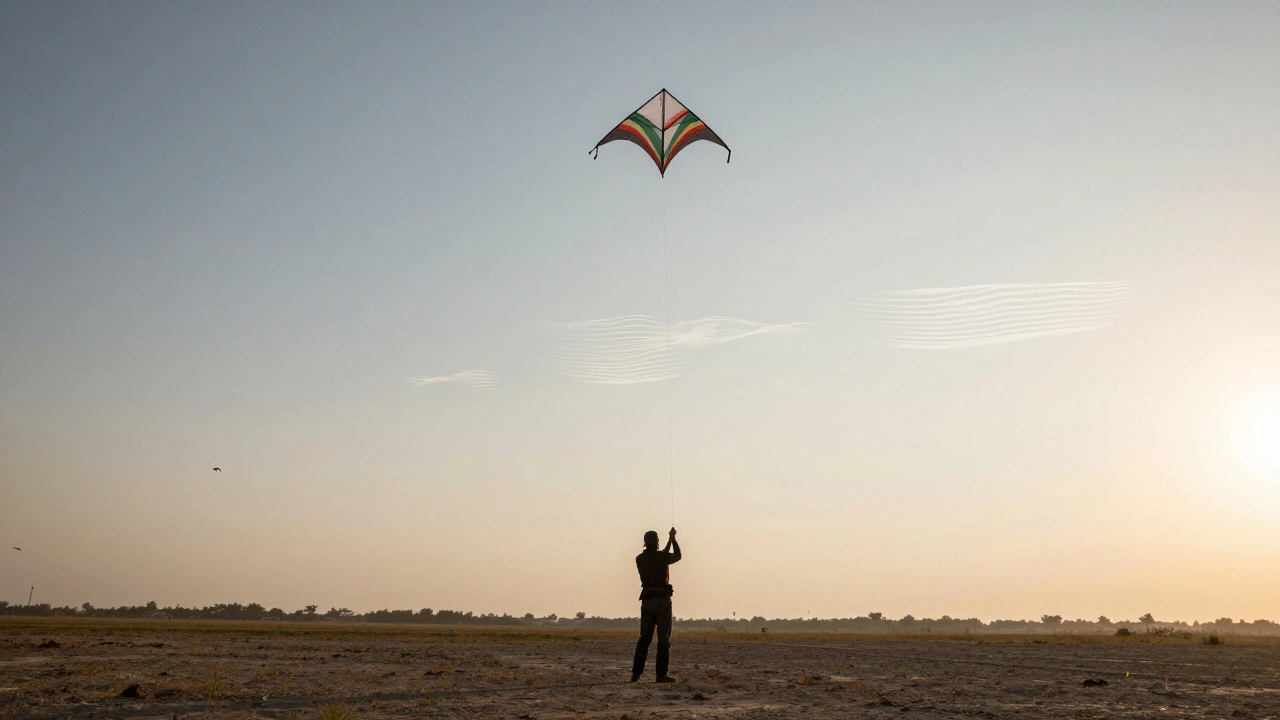
When you're holding the line in a kite fight, it's not just about strength-it's about where you fly. The wind window isn't just space above you; it's your battlefield. And the difference between winning and losing often comes down to one thing: whether you're flying through the center or skimming the edge.
What Is the Wind Window?
The wind window is the three-dimensional area where your kite can fly, shaped like a quarter-sphere in front of you. Think of it as a giant dome stretching from directly overhead down to the ground, and from one side to the other. The center of this window is directly in front of you, at about 45 degrees up. The edges are the outermost zones, near the ground on either side. Most beginners stay in the center because it feels safe and stable. But高手? They know the edge is where the power lives-and where fights are won.
Center Strategy: Control and Stability
Flying in the center means you're in the sweet spot for control. The wind here is smooth, consistent, and less turbulent. Your kite responds quickly to small tugs on the line. This is where you set up, test your opponent’s moves, and wait for mistakes. If you’re flying a heavier kite, like a traditional Afghan or Pakistani fighter, the center is your best friend. It lets you hold position without constant correction.
But here’s the catch: the center is crowded. Every good flier knows this zone. If you stay here too long, you’re just another target. Opponents will circle you, cut your line with precision, or lure you into a trap. You can’t win a fight from the center alone. You need to use it as a base, not a fortress.
Real-world example: In the 2024 Kite Fighting Championship in Lahore, the top three finalists all started in the center. But only the winner moved out-after 17 minutes of holding ground, he dropped low and sliced across the edge, catching his opponent off guard. That move wasn’t luck. It was timing.
Edge Strategy: Power, Speed, and Surprise
The edge of the wind window is where the wind accelerates. As air flows around the edges, it gains speed. That means your kite pulls harder, moves faster, and turns sharper. This is where you launch surprise attacks. It’s also where most kites stall or flip if you’re not careful.
Flying near the edge requires different technique. You need to keep tension on the line constantly. Let up even for a second, and your kite drops into the dead zone-right where the wind loses power. That’s when it tumbles. But if you ride it right, you can zip across the sky like a razor blade. Many fighters use the edge to build momentum before a cutting run. They’ll fly low on one side, then suddenly yank the line upward and across, sending their kite diagonally into the opponent’s path.
Edge flying also works best with lighter kites. The Afghan-style diamond, for instance, is built for this. Its narrow tail and stiff frame let it snap into sharp turns without losing lift. In Bangladesh, fighters train for months just to master edge control. They start by flying their kites in tight circles just above the ground, learning how to read the wind’s shift near the surface.
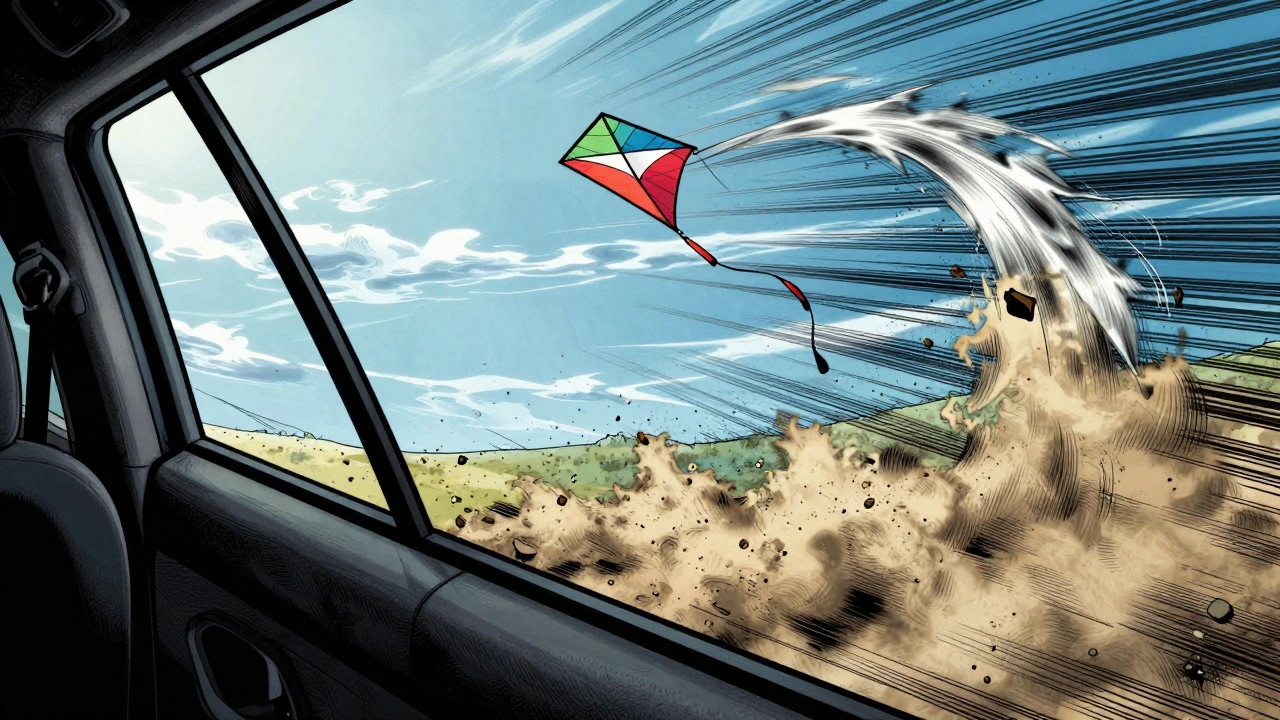
When to Use Each Strategy
Here’s the rule most pros follow: Start in the center. Attack from the edge.
Beginners think they need to go straight for the kill. But that’s how you lose. The best fighters let their opponents make the first move. They watch how the other flier handles the wind. Do they overcorrect? Do they panic when the kite dips? Once you see a pattern, you move.
Use the center to gather intel. Stay there long enough to understand your opponent’s rhythm. Then, when they’re focused on defending, drop low. Swing wide. Let your kite dive toward the edge, then snap up and across. That’s when the line cuts. That’s when the kite falls.
One tactic used in northern India: the “Shadow Drop.” You fly your kite high in the center, pretending to hold steady. Your opponent leans in, thinking they can cut you. Then you let go-just slightly-and your kite drops like a stone toward the edge. By the time they react, you’re already behind them, line taut, ready to slice.
Common Mistakes
Most people fail because they treat the wind window like a flat plane. It’s not. The wind changes at every height. Near the ground, it’s gusty. Higher up, it’s steadier. And right at the edge, it’s unpredictable. Here are the three biggest errors:
- Staying too long in the center. You become predictable. You become easy to read.
- Overusing the edge without control. If you don’t feel the tension, your kite flips. And once it’s spinning, you’re done.
- Ignoring wind shifts. A sudden breeze from the left? That changes the whole window. If you don’t adjust, your kite drifts into the dead zone.
Pro tip: Always check the wind before you launch. Throw a few blades of grass in the air. Watch how they fall. That’s your wind map. If they spiral near the ground, the edge is choppy. If they drop straight, the center is clean. Adjust your strategy before you even fly.

Training Drills for Better Control
You can’t learn edge strategy by watching videos. You need to feel it. Here are three drills used by champions:
- The Figure Eight - Fly your kite in a tight figure eight, crossing through the center and brushing the edge on each loop. Do this for 10 minutes straight. Your hands will shake. That’s good. It means you’re learning muscle memory.
- The Silent Cut - Have a friend hold a second kite. Don’t try to cut it. Just fly around it, staying 10 inches away. No contact. No tension. Just control. This teaches you how to read line tension without pulling.
- The Wind Shift Challenge - Fly on a day with changing wind. When the breeze shifts, you have 3 seconds to reposition your kite. If you don’t, you lose control. This builds instinct.
These drills don’t make you better overnight. But after 30 days? You’ll notice the difference. Your kite won’t just fly-it’ll dance.
Final Thought: The Edge Is Where the Fight Happens
The center keeps you alive. The edge makes you dangerous. The best kite fighters don’t just fly kites-they ride the wind. They don’t fight for space. They fight for timing. And the moment you stop seeing the wind window as a flat sky, and start seeing it as a living, shifting zone of power-you’ll start winning.
Can you win a kite fight using only the center strategy?
No, not reliably. While the center gives you control and stability, it’s also the most predictable zone. Every experienced flier knows how to defend there. To win, you need to use the edge to create surprise, build speed, and deliver the cutting maneuver. The center is your setup zone, not your attack zone.
What type of kite works best for edge flying?
Lightweight, narrow-frame kites with stiff tails work best. The Afghan diamond and the Pakistani fighter kite are top choices. They’re designed to snap into sharp turns and maintain lift even in turbulent edge winds. Heavier kites, like the traditional Indian chata, struggle here because they lack the agility to respond quickly to wind shifts.
How do you avoid stalling when flying near the edge?
Never let your line go slack. Keep constant tension-think of it like holding a guitar string. If you feel the kite dragging or slowing, give a small, quick tug upward. This re-engages the wind. Also, avoid flying too close to the ground. The dead zone where wind loses power starts about 2-3 feet above the surface. Stay above that line.
Is wind window strategy different in high winds vs. light winds?
Yes. In high winds, the edge becomes even more powerful but also more dangerous. Your kite will pull harder, so you need stronger line and better grip. In light winds, the center is more stable, but the edge can disappear entirely. You’ll need to fly higher to catch the wind, and cuts must be slower, more deliberate. Always adapt your zone based on wind strength.
How long should you stay in the center before moving to the edge?
There’s no fixed time, but most fights are won within 5-10 minutes. If you’re still in the center after 7 minutes and haven’t made a move, you’re probably losing. Watch your opponent’s behavior. If they’re shifting, adjusting, or looking for a pattern-that’s your cue. The moment they overcommit, go for the edge. Timing beats duration.