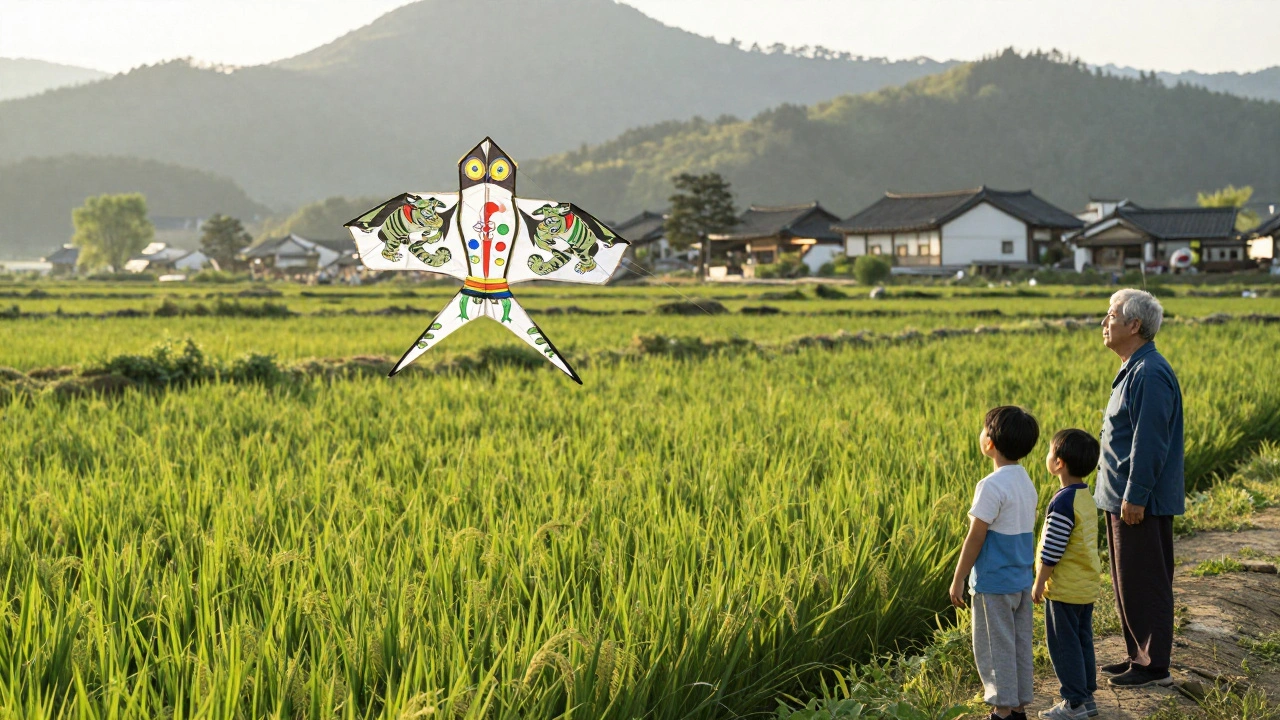
For centuries, the skies over Korea have been filled with more than just wind and clouds. Among the most unique and meaningful kites flown were the Bang-Pae Yeon-a type of shield kite unlike any other in the world. These weren’t toys or decorations. They were symbols, tools, and even spiritual objects passed down through generations. Today, few people outside Korea know about them. But their story is deeply tied to Korean identity, survival, and the quiet power of tradition.
What Is a Bang-Pae Yeon?
The Bang-Pae Yeon is a kite shaped like a shield-wide at the top, tapering to a point at the bottom. It’s not made from delicate paper or lightweight bamboo like Western kites. Instead, it’s built with thick hanji paper, a handmade Korean paper made from mulberry bark, and a sturdy bamboo frame. The frame is curved in a way that mimics a warrior’s shield, and it’s often painted with bold black lines, geometric patterns, or even animal motifs like tigers or dragons.
Unlike the diamond-shaped kites you see at beaches or festivals, the Bang-Pae Yeon doesn’t fly high for fun. It’s designed to fly low and steady, close to the ground. Its purpose? To protect. In old Korean villages, families would fly these kites during spring and autumn to ward off bad luck, illness, and evil spirits. The wind carrying the kite was believed to carry away misfortune. Some even tied small bells or strips of cloth to the kite’s tail to make noise-sound was thought to scare away dark forces.
A Kite That Wasn’t Just for Fun
In the late Joseon Dynasty (1300s-1800s), the Bang-Pae Yeon was more than folklore. It was part of daily life. Farmers in the southern provinces, especially Jeolla and Gyeongsang, would fly them after planting rice. The kite’s flight was seen as a sign that the season was blessed. If the kite flew straight and steady, the harvest would be good. If it tumbled or broke, it was a warning to check the fields, repair tools, or even delay planting.
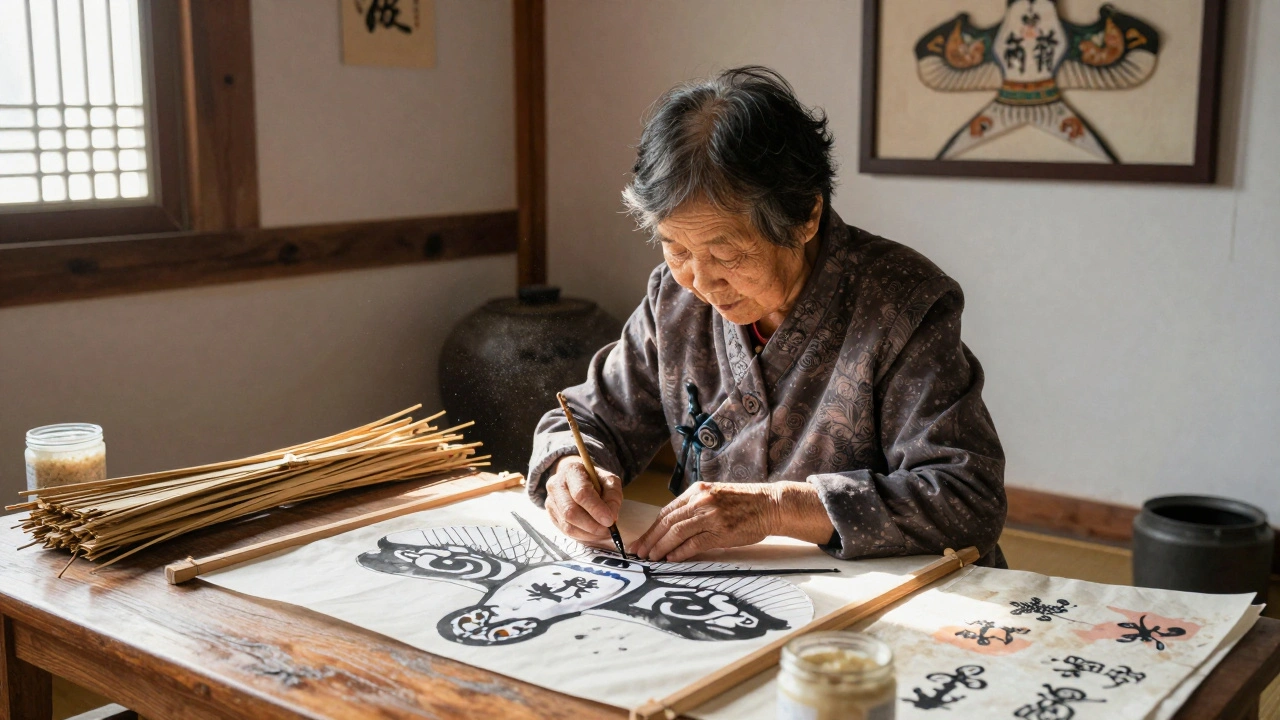
Children weren’t just flying kites-they were learning responsibility. Making a Bang-Pae Yeon took days. First, you had to harvest bamboo from the right slope, dry it for weeks, then split it into thin, flexible strips. The hanji paper had to be stretched carefully over a wooden frame, glued with rice paste, and left to dry in the sun. No two kites were exactly alike. Each family had its own pattern, passed down from grandparent to child.
Women often painted the designs. Symbols like the sun, moon, or five-colored stripes weren’t random. The five colors represented the five elements in Korean cosmology: wood (green), fire (red), earth (yellow), metal (white), and water (black). A kite with all five colors was believed to bring balance to the household.
Why Did It Almost Disappear?
By the 1950s, the Bang-Pae Yeon was fading. War, industrialization, and Western influence changed everything. Kites became seen as childish, outdated, or even superstitious. Schools stopped teaching kite-making. Urban families moved into apartments with no yard. Young people started playing with plastic toys, not handmade shields.
By the 1980s, fewer than 20 people in all of Korea still knew how to make a true Bang-Pae Yeon. Most of them were over 70. One of the last masters, Kim Young-soon from Jeonju, spent her life collecting old fragments of kites, studying museum archives, and teaching children in her village. She didn’t have funding. She didn’t have a museum. She just had a small room in her house, filled with bamboo, paper, and paint.
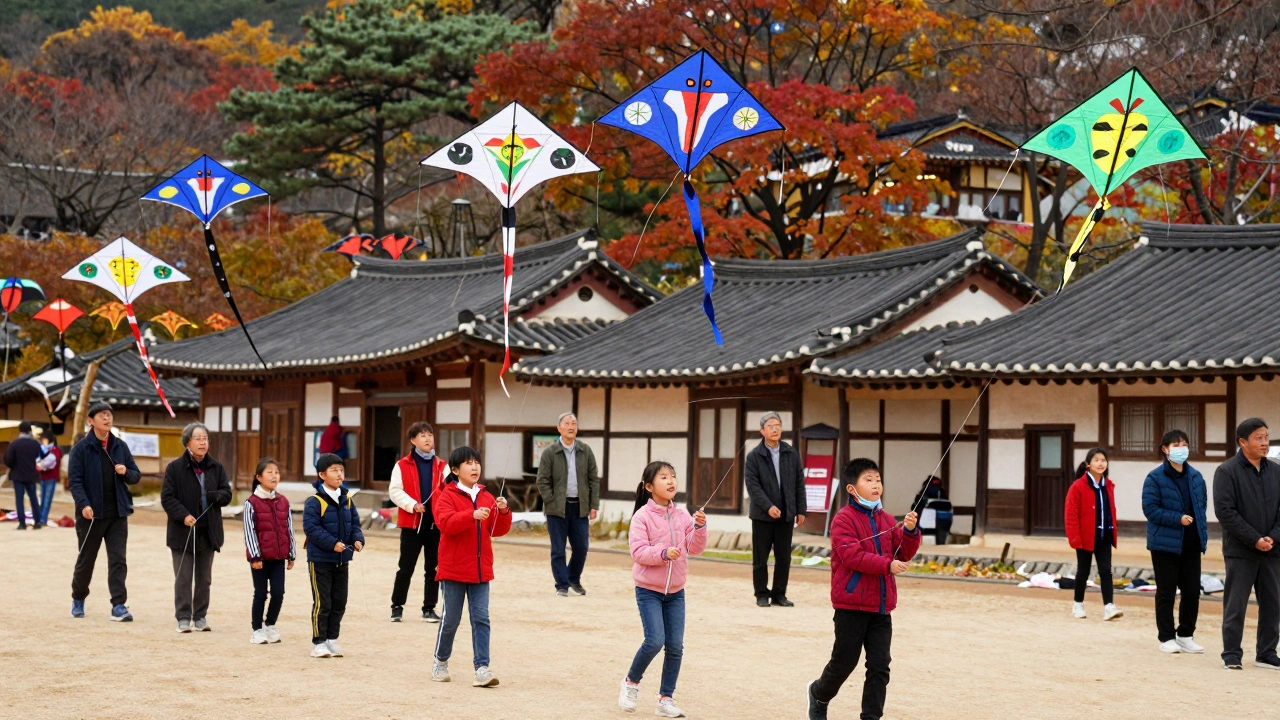
Her breakthrough came in 1998, when a local cultural center invited her to lead a workshop. Within five years, over 300 students had learned the craft. Today, thanks to her efforts and others like her, the Bang-Pae Yeon is recognized as a South Korean Intangible Cultural Heritage. There are now annual kite festivals in Jeonju and Andong where children fly handmade versions. But even now, most of these are simplified. The real thing-the one with the exact bamboo curve, the hand-stretched hanji, the traditional ink patterns-is still rare.
How Is It Made? The Real Process
Building a true Bang-Pae Yeon isn’t something you learn from a video. It’s a ritual. Here’s how it’s done:
- Harvest the bamboo. Only bamboo from the south-facing slopes of Jirisan Mountain is used. It must be at least three years old, with straight, hollow stems.
- Dry and split. The bamboo is split into four equal strips, then slowly dried for 45 days in the shade. Too much sun makes it brittle.
- Shape the frame. The strips are bent into the shield shape using steam and tied with hemp thread. The curve must be exact: 28 degrees at the top, tapering to 12 degrees at the bottom. This angle lets the kite ride the wind without flipping.
- Prepare the hanji. The paper is soaked in water, stretched over a wooden board, and left to dry for 72 hours. It’s then cut to fit the frame with a 1-inch overlap.
- Glue and paint. Rice paste is brushed on, and the paper is carefully laid over the frame. Once dry, black ink is used to draw the traditional patterns-no stencils, no rulers. Each line is drawn freehand, based on memory and tradition.
- Test and bless. The kite is flown once before the season begins. If it flies true, the family considers it lucky. If not, they wait until the next moon phase to try again.
There are no instructions. No manuals. Just stories. And the hands that remember them.
Modern Revival and What’s Lost
Today, you can buy Bang-Pae Yeon kites online. Some are made in factories with synthetic paper and plastic frames. They’re colorful. They’re cheap. But they’re not the same. The real ones still carry the weight of history. They’re heavier. They fly slower. They don’t soar like rockets-they glide like prayers.
Some schools now teach kite-making as part of cultural education. Museums display old examples. But the deeper meaning? That’s harder to recover. Most people today see it as a craft. But for those who grew up with it, it was a way to speak to ancestors, to ask for protection, to say, “We are still here.”
One elderly woman from Busan, now 89, still flies a Bang-Pae Yeon every spring. She says, “I don’t fly it to show off. I fly it because my mother did. And her mother before her. If I stop, who will remember?”
How You Can Keep the Tradition Alive
If you’re drawn to this tradition, here’s how to engage with it respectfully:
- Support artisans who make authentic Bang-Pae Yeon kites. Look for makers in Jeonju or Andong who use hanji and bamboo.
- Visit cultural festivals. The Korean Kite Festival in Andong (every October) is the best place to see real ones in motion.
- Learn the history. Read about the Joseon Dynasty’s folk beliefs. Understand that this wasn’t just play-it was survival.
- Don’t call it a “decorative kite.” It’s not art for the wall. It’s a living practice.
The Bang-Pae Yeon isn’t just a kite. It’s a quiet act of resistance against forgetting. A way to hold onto something that no one wrote down, but everyone felt.
What is the difference between a Bang-Pae Yeon and a regular kite?
The Bang-Pae Yeon is shaped like a shield, not a diamond or triangle. It’s heavier, made with thick hanji paper and bamboo, and designed to fly low and steady-not high and fast. While modern kites are for entertainment, the Bang-Pae Yeon was used for spiritual protection and seasonal guidance in traditional Korean villages.
Why is hanji paper so important?
Hanji is made from mulberry bark and is stronger, more durable, and more flexible than regular paper. It can withstand wind, rain, and sun better. In Korean tradition, hanji was believed to have spiritual qualities-it could carry prayers and blessings. Using anything else changes the kite’s meaning entirely.
Can I make a Bang-Pae Yeon myself?
Yes, but not easily. The process requires specific materials-bamboo from Jirisan, handmade hanji, rice paste, and traditional ink. Most people start with kits from cultural centers in Korea. But the real skill is in the freehand painting and frame shaping, which takes years to master. It’s not a craft you learn in an afternoon.
Are there any modern uses for the Bang-Pae Yeon?
Today, it’s mostly used in cultural education and festivals. Some Korean-American communities fly it during Lunar New Year to honor heritage. Artists have also used it as a symbol in exhibitions about forgotten traditions. But its original purpose-as a spiritual protector-is rarely practiced anymore.
Where can I see an authentic Bang-Pae Yeon?
The National Folk Museum of Korea in Seoul has a collection of historical Bang-Pae Yeon kites. The Andong Folk Museum and Jeonju Hanji Museum also display original pieces. For live demonstrations, attend the Andong International Kite Festival every October.