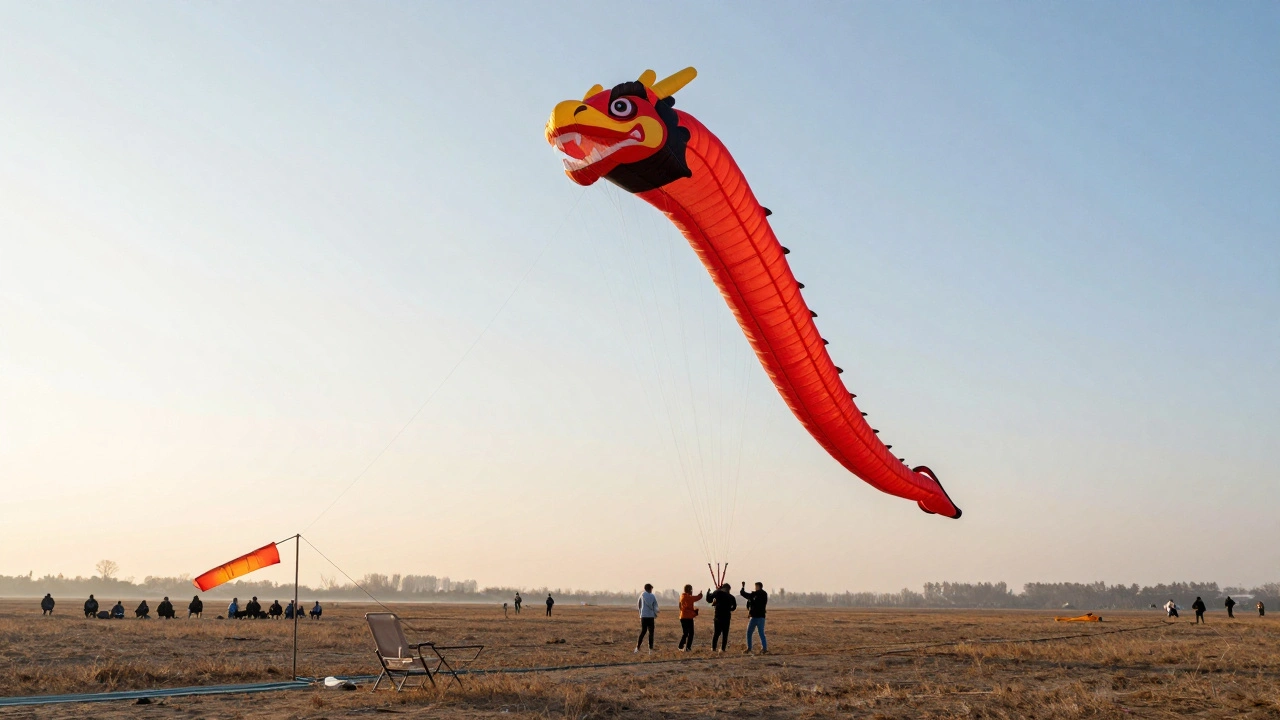
There’s something about a sky full of kites that makes you stop and stare. Whether it’s a giant dragon weaving through the clouds, a swarm of colorful diamonds dancing in unison, or a single octopus spinning like a living windsock - kite festivals turn ordinary days into unforgettable moments. But if you’ve ever shown up at one and ended up standing behind a tree or squinting from the back of the crowd, you know not all spots are created equal. This guide cuts through the noise. No fluff. Just what to watch for, where to sit, and how to make sure you don’t miss a single moment.
Know the Kite Types Before You Go
Not all kites are made the same. Each type tells a story. If you show up without knowing what you’re looking at, you’ll miss half the magic. Here’s what to watch for:
- Box kites - These look like floating cubes. They’re stable, silent, and often fly in perfect formation. Watch how they lock into wind patterns like synchronized swimmers.
- Dragon kites - These are long, segmented kites that ripple like a living creature. The best ones stretch over 100 feet and need 10+ people to launch. Look for the tail’s movement - a smooth, rolling wave means perfect wind balance.
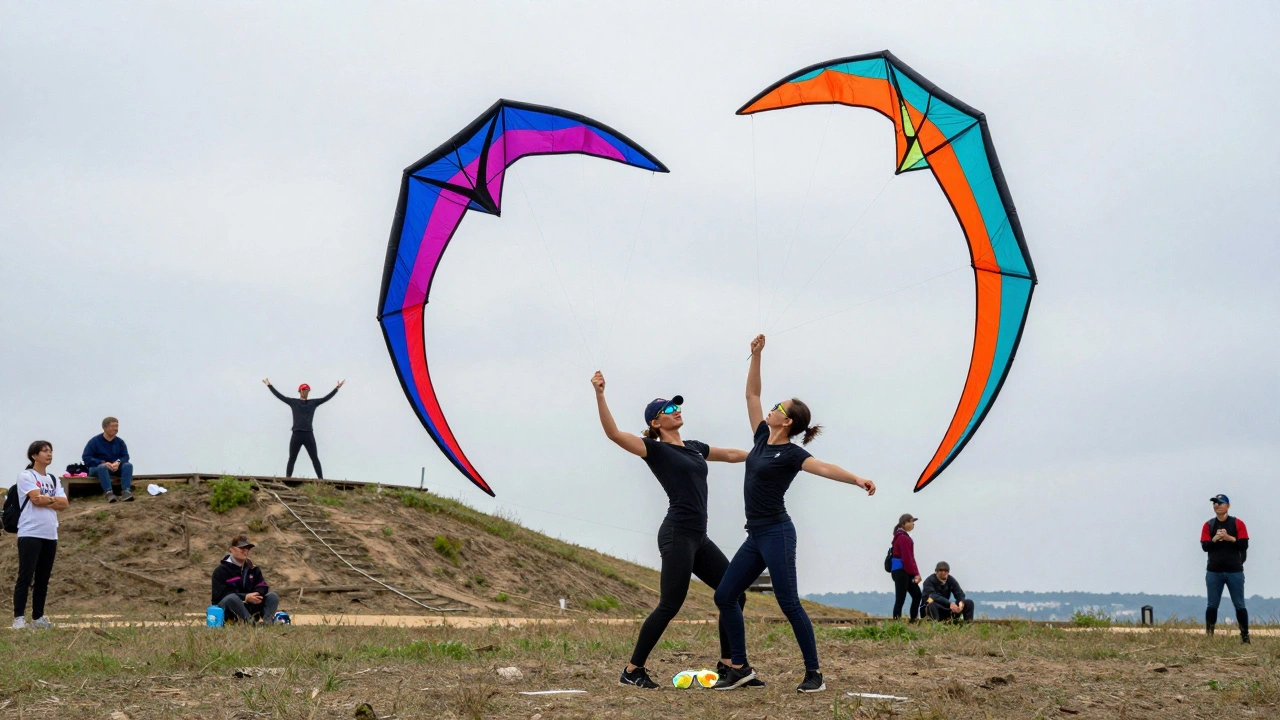
- Stunt kites - Single or dual-line kites that do flips, spirals, and dives. These are the acrobats. Watch for the pilot’s footwork. If they’re stepping back and forth like they’re dancing, they’re pulling off advanced maneuvers.
- Weather kites - These are large, simple kites shaped like diamonds or diamonds with tails. They’re not flashy, but they’re the backbone of any festival. They fly in huge numbers and create the iconic sea-of-color effect.
Most festivals have a program listing which kites will fly at what time. Grab one. Or check the official app. If you see a multi-line kite (three or more lines), you’re in for a treat. These require three pilots working together. They’re rare. And unforgettable.
Where to Sit: The Golden Spots
Location is everything. A bad seat means you’ll spend the whole day craning your neck or waiting for a gap in the crowd. Here’s where the best views live:
- Downwind edge of the field - This is the #1 spot. Stand or sit about 50-75 feet from the launch zone, but still on the grassy side. You’ll see kites rise, glide, and dive directly toward you. No one else thinks to sit here - they all crowd the front. You’ll have room, clear sightlines, and the wind won’t blow sand into your eyes.
- On a slight hill or raised platform - If the festival has a viewing mound, bleachers, or even a parking lot overpass, take it. Even a 3-foot rise changes everything. You’ll see the full arc of the kites, not just their tops. Bonus: you can see the pilots’ movements, which tells you what’s coming next.
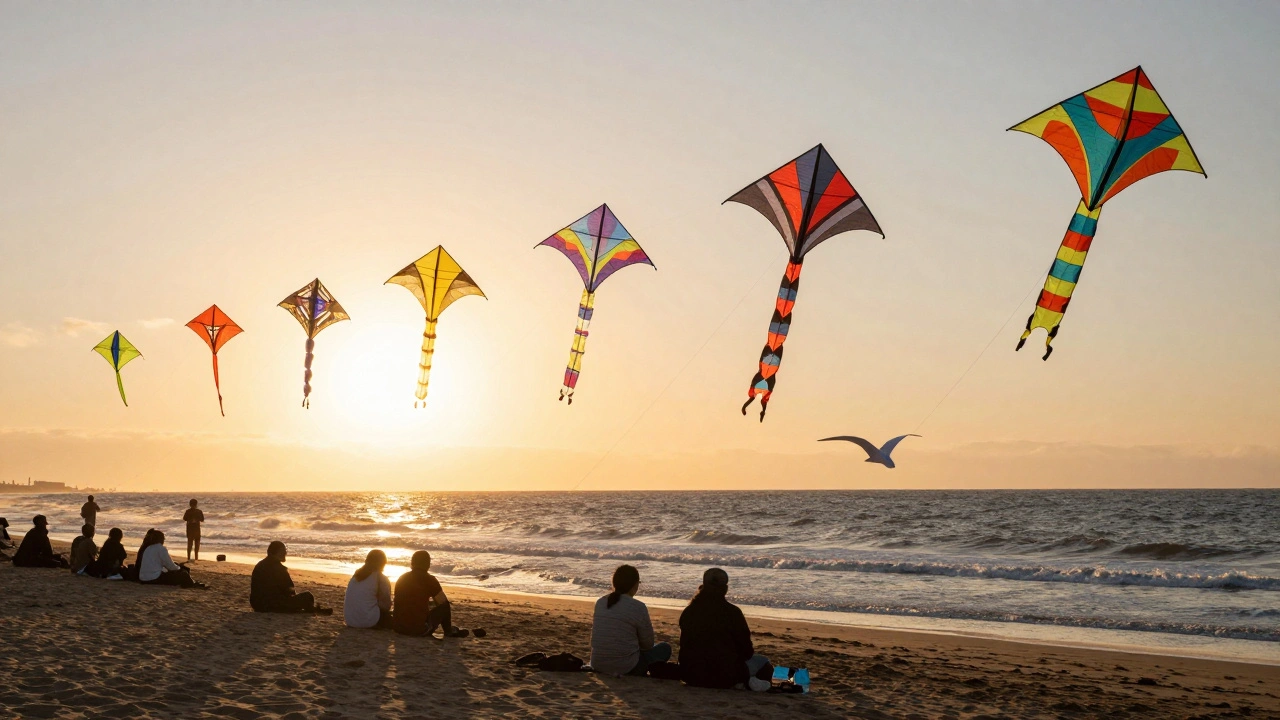
- Along the shoreline (if near water) - Coastal festivals like the annual Wilmington Kite Festival in North Carolina have kites flying over the ocean. The wind is steadier, and the kites fly higher. Sit on the dunes facing the water. You’ll catch the sunset light hitting the kites just right - golden, glowing, almost transparent.
- Behind the food trucks - Yes, really. Most people line up for hot dogs. You line up for space. The trucks are usually on the side, away from the main launch. You get shade, a bench, and a clear view of the sky behind them. Plus, snacks.
Avoid the center of the field. That’s where the launch crews and safety zones are. You’ll get blocked by poles, ropes, and people holding clipboards. And never sit directly downwind of a kite - if it crashes, you’re getting hit.
What to Watch For: The Hidden Moments
Most people watch the big kites. But the real art is in the details. Here’s what most spectators miss:
- The launch - Watch how the team lines up. A perfect launch happens when all the kites rise at once, no tangles. It takes 10+ people, a hand signal, and a breath of wind. When it works? It’s silent. Then - boom - the sky explodes with color.
- Wind shifts - A good pilot doesn’t fight the wind. They ride it. Watch how a kite suddenly leans sideways, then recovers. That’s skill. If you see a kite suddenly drop 20 feet and then snap back up? That’s a pilot adjusting to a gust. It’s like watching a surfer catch a wave.
- Kite collisions - Not crashes. Collisions. When two kites brush wings and spin off in opposite directions, it’s choreographed. They don’t fall. They dance. It’s called a “kite tango.” Look for it. It’s rare. And beautiful.
- The quiet ones - Not every kite is loud or flashy. Some are small, paper kites shaped like birds. They fly low, close to the ground. They don’t have lights or music. But they’re the ones that make you feel something. Sit still. Watch them. They’re the soul of the festival.
What to Bring (Besides a Camera)
You don’t need much. But what you bring changes everything.
- A low chair - Not a folding lawn chair. A low, wide one. You’ll want to lean back and watch the sky without craning your neck. The best ones have armrests and a cup holder.
- Wind socks or streamers - Bring a small one. Tie it to your chair. It tells you where the wind is blowing. If it’s pointing straight, the kites will fly high. If it’s swirling? Look for stunt kites - they’ll be doing their best work.
- Sunglasses with polarized lenses - The sun reflects off the kite fabric. Regular sunglasses won’t cut it. Polarized ones let you see the details without squinting.
- A notebook - Not for notes. For sketches. Try drawing the shape of a dragon kite as it flies. You’ll remember the festival by the shapes, not the photos.
- A blanket - Even if you’re sitting, the grass gets damp. And the air cools fast after sunset.
Timing Matters More Than You Think
Kite festivals aren’t all-day events. The best flying happens in two windows:
- 9 AM to 11 AM - The air is cool, steady, and clean. No thermal updrafts yet. This is when the big kites - dragons, boxes, and multi-line rigs - fly their smoothest. This is when the professionals shine.
- 4 PM to 6 PM - The sun is low. The wind picks up again as the ground cools. This is when the colorful weather kites take over. And the light? It turns the fabric into stained glass. Bring your camera. Or better yet - put it down and just watch.
Avoid noon to 3 PM. The wind gets choppy. Thermal currents lift and drop kites randomly. It looks messy. Even the best pilots struggle.
What Not to Do
- Don’t walk between launchers and kites. You’re not a spectator - you’re a hazard.
- Don’t use drones. Most festivals ban them. They scare the kites. And the pilots.
- Don’t bring helium balloons. They float into the kite lines. One balloon can tangle a 30-foot dragon. And it’s not worth it.
- Don’t assume the festival is for kids. It’s not. It’s for people who still believe the sky belongs to those who dare to fly.
What’s the best kite festival in the U.S. for beginners?
The International Kite Festival in Wilmington, North Carolina is the top pick. It’s free, well-organized, and has viewing zones marked with signs. They offer free kite-tying workshops and guided viewing tours. First-timers get a map with labeled flight times and recommended seating. It’s held every October, and over 50,000 people show up - but it never feels crowded because the field is so large.
Can I bring my own kite to fly?
Most festivals have designated flying zones, but you can’t just launch anywhere. Check the rules ahead of time. Some, like the San Diego Kite Festival, allow personal kites in a separate area. Others, like the Beaufort Kite Festival in South Carolina, only allow official festival kites for safety. If you bring your own, arrive early and ask at the info booth. Never try to fly in the main performance area.
Are kite festivals family-friendly?
Absolutely. But not in the way you might think. There aren’t always carnival rides or face painting. Instead, kids watch kites with a kind of awe you don’t see in video games. Many festivals have hands-on kite-building stations where children make simple kites from bamboo and paper. The best part? They fly them - and the wind carries them. It’s one of the few things in modern life that still feels like magic.
What if it’s windy but cloudy?
That’s ideal. Cloudy days mean even, steady wind. No sun glare. No overheating. And the kites look more vivid against gray skies. Most pilots prefer overcast days. The only downside? You might miss the sunset. But the daytime flying? Better than ever. Bring a light jacket - the wind carries chill.
How early should I arrive to get a good seat?
At least 90 minutes before the first flight. Popular festivals like Wilmington or Santa Monica start filling spots by 7:30 AM. If you want a hillside view or the downwind edge, arrive by 7 AM. Bring a towel or small mat to mark your spot. People do it. It’s not rude - it’s smart.