The Shock of the Sudden Jerk
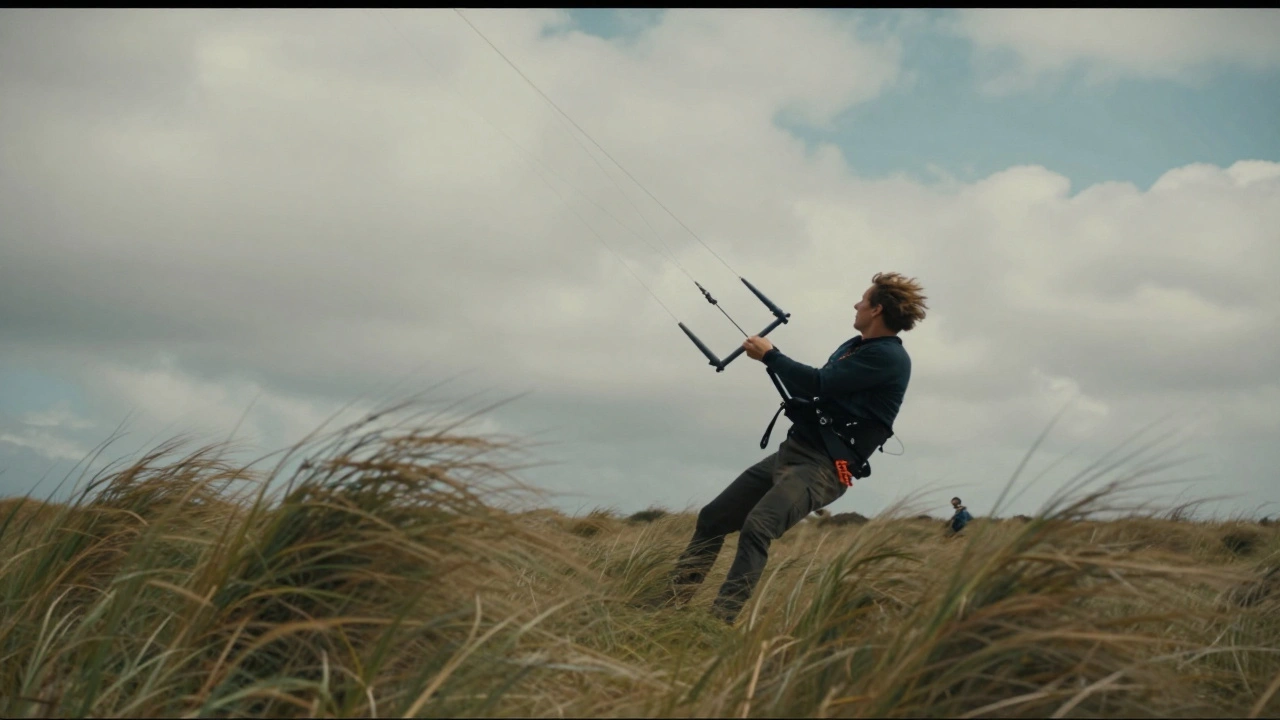
You know that feeling. You're standing on the grass, feeling a steady breeze, when suddenly your hand snaps back. The kiteis an aircraft made of fabric and frame material designed to generate lift from airflow yanks hard enough to twist your wrist. Most flyers blame their technique, but often the problem isn't you-it's the air itself. Understanding why a wing behaves erratically in gusts saves time and frustration.
We live through seasons where the forecast says "windy" but the sky feels chaotic. In places like Portland, we see weather fronts slam through the coast mountains every few days, creating pockets of wild motion. Knowing what happens when air gets messy helps you pick the right gear and stay safe.
What Is Wind Turbulence Really?
Many people think wind speed is the only thing that matters. If you have fifteen miles per hour, you fly. But speed is just one part of the equation. Wind turbulenceis the irregular fluctuation of wind velocity and direction over short distances and times. Imagine walking through a crowded hallway versus an empty corridor. In the empty hall, you move predictably. In the crowd, people bump into you, change direction, and slow you down unexpectedly.
Air works the same way. When wind hits buildings, trees, or hills, it creates eddies-swirling pockets of low pressure. These swirls detach from the surface and ride downstream. Your wing catches one of these swirling pockets, and its angle of attack shifts instantly. One second it glides; the next, it stalls or dives. This instability is often called shear, especially when the wind speed changes drastically just feet above the ground compared to higher up.
The Physics of Flight in Chaos
To understand the reaction, you need to look at the forces at play. Every object moving through air experiences two main opposing forces: lift and drag.
Liftis the aerodynamic force acting perpendicular to the direction of flight that keeps the wing airborne pushes the wing up. Dragis the resistance caused by the friction of air against the flying object pulls it backward. In smooth air, these forces balance nicely against the tension in your line. When the wind gusts, the lift coefficient spikes momentarily. Suddenly, the wing wants to climb too fast or flip over the top.
This brings us to the Center of Pressure. Think of this as the balance point of the sail. On a stable day, this point stays consistent. In turbulence, the pressure shifts across the fabric surface. If the wind hits the bottom of the wing harder than the top, the kite spins out. If the gust comes from the side, the yaw angle changes, and the wing veers off course. Good design manages these shifting forces so they cancel each other out rather than building momentum against you.
| Force Factor | Smooth Air Behavior | Gusty Air Behavior |
|---|---|---|
| Lift Generation | Consistent upward pull | Erratic spikes causing surges |
| Distribution | Even load across spine | Focal points create stress |
| Center of Pressure | Fixed relative position | Migrates rapidly during gusts |
Kite Design and Shape Stability
Not all wings are built to handle the punch. Some are meant for calm beach afternoons, while others thrive in the storm. The geometry determines how the wing absorbs energy.
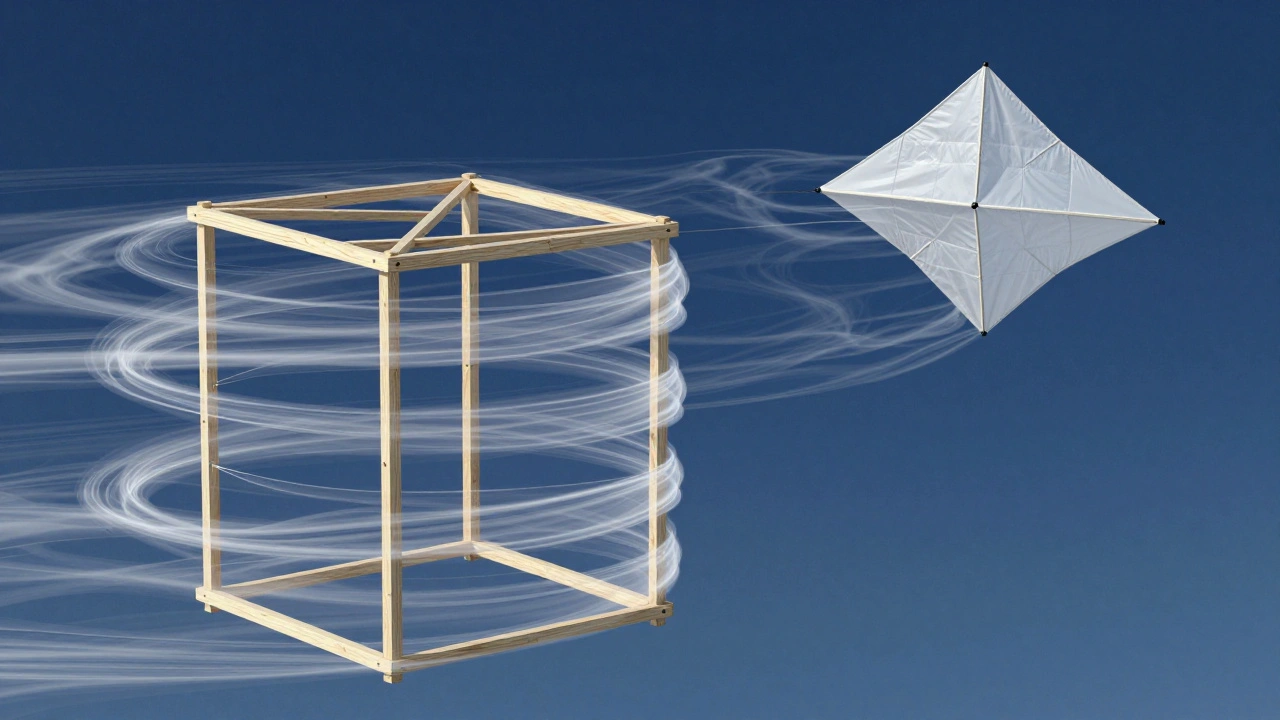
The classic diamond shape has very little volume. While great for light breezes, the flat profile means any shift in wind pressure immediately alters the angle of incidence. In contrast, a Box Kiteis a rigid three-dimensional framework structure that encloses air space holds its shape regardless of the external pressure. It acts almost like a parachute. The rigid spines distribute the load along the frame, preventing the material from collapsing inward during a vacuum.
Then there are soft parafoils or dual-line stunt kites. These rely on leading edge curves to maintain tension. High-aspect ratio wings (long and narrow) tend to be faster but less forgiving. They slice through air beautifully when clean but can fold up violently when turbulence distorts the flow. Low-aspect ratio wings (short and wide) have more chord length. They stall slower and recover easier because the internal volume of the cell structure resists deformation.
Bridle Systems as Shock Absorbers
If you own a stunt kite, you know the bridle lines matter. The bridle attaches the control lines to the wingtips. Adjusting these lines changes the pitch attitude. A critical feature in turbulent flying is the dynamic bridle system.
In some modern setups, the front line is slightly shorter than the rear line. This pulls the nose up slightly, creating a natural angle that sheds gusts. When a heavy gust hits, the wing rotates slightly downward, dumping lift before the material overstresses. It's essentially an automatic trimmer built into the setup. Without this slack management, the pilot has to manually fight every surge, leading to fatigue and line breaks.
Pilot Input and Physical Reaction
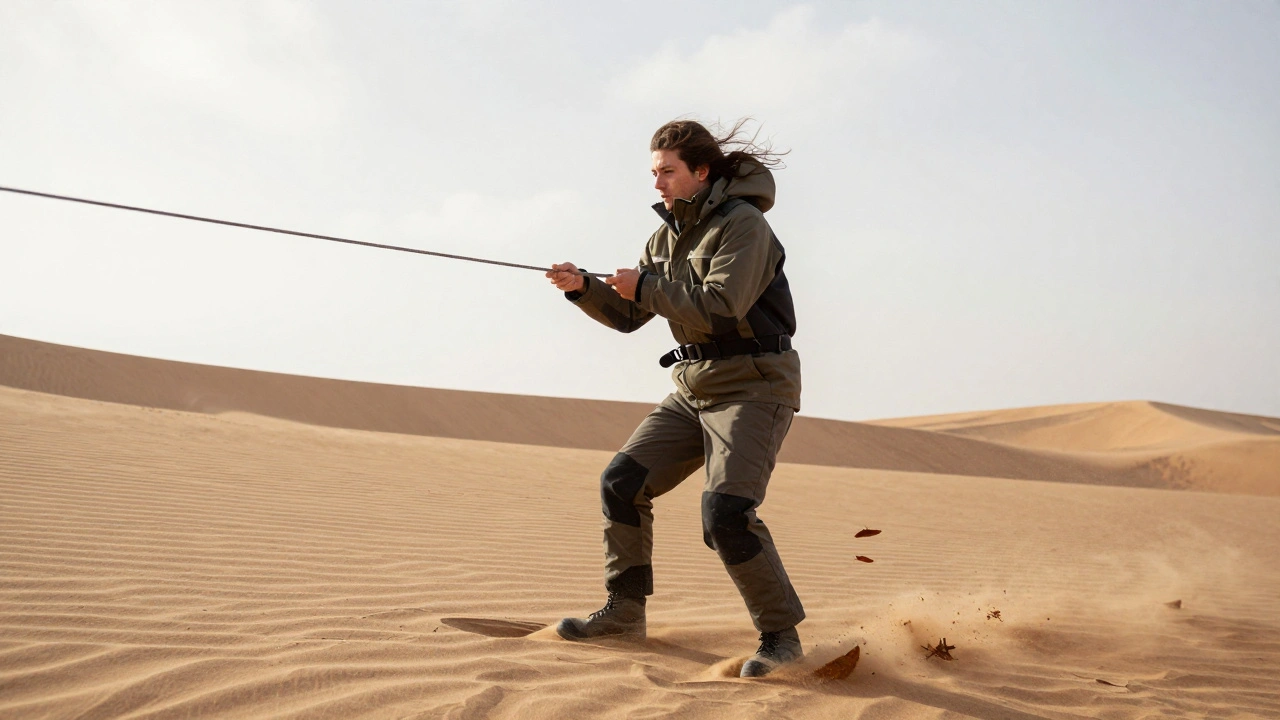
Your body plays a huge role. The kite transmits information through the line. If you hold the handles stiffly, every twitch transfers directly into the steering bar or handlebars. Instead, relax your arms. Allow the kite to surge forward and pull your hands slightly, then reel it back. This creates a pendulum effect rather than a collision.
Steering inputs also change in chaos. Small movements mean nothing when the wind is shaking the canopy. You need larger, deliberate inputs to redirect the wing. Wait for the lulls between gusts to make adjustments. Timing becomes more important than raw power. Watching the leading edge gives you seconds of warning before the impact arrives. If the tip dips, prepare to depower. If it climbs sharply, prepare to add brake pressure.
Safety Limits and Material Failure
There is a point where physics overrides skill. Every frame has a breaking strain rating. Monofilament line holds well until the snap, then goes limp. Nylon core braid stretches slightly, giving warning. When the wind exceeds the rated speed, do not try to prove the equipment's limit. Fly smaller surfaces. A smaller wing presents less area to the wind. Two square meters takes half the load of four square meters. Reducing the profile protects both the gear and the bystanders below.
Ground hazards multiply in high winds. Objects on the ground become projectiles. Always maintain distance from pedestrians and property lines. If the kite drops, let it crash rather than letting the line wrap around trees or power infrastructure. Retrieving it later is safer than fighting a tangled mess mid-air.
FAQ
Can I fly a diamond kite in gusty wind?
Yes, but standard single-spine diamonds are prone to spinning. Look for models with reinforced bridle points and extra cross-bracing to maintain alignment during erratic wind shifts.
Why does my kite spin wildly?
Spinning usually indicates asymmetry in tension. Check that both bridle lines are equal length. Uneven weight distribution causes the center of pressure to migrate uncontrollably toward the heavier side.
How do I reduce wind loading on my kite?
Lower the effective wing area by flying a smaller size. Alternatively, adjust the bridles to increase the angle of incidence, allowing more air to pass through rather than catching full resistance.
Is a delta kite better for storms?
Delta kites are generally robust due to their triangular shape. However, in extreme shear, soft sails may collapse. Rigid frame deltas offer superior stability when air quality is poor.
When should I stop flying in bad air?
Stop flying if you feel constant physical strain holding the lines. If the kite requires continuous correction every few seconds, the energy output exceeds safe recreational limits.