Before satellites, before weather balloons, before even the first airplane flew, scientists were flying kites to study the sky. Not for fun. Not for sport. But to pull data from the clouds.
In the 1700s, when the idea of measuring air pressure or temperature at high altitudes seemed impossible, a few bold researchers turned to something simple: a kite. It was cheap, it was available, and it could reach heights no tower or ladder ever could. The first major breakthrough came in 1749, when Scottish scientist John Robison tied thermometers to kites and recorded temperature changes as the kites climbed. He found that the air got colder the higher he went - a discovery that helped lay the foundation for modern meteorology.
Ben Franklin’s Kite and the Electric Sky
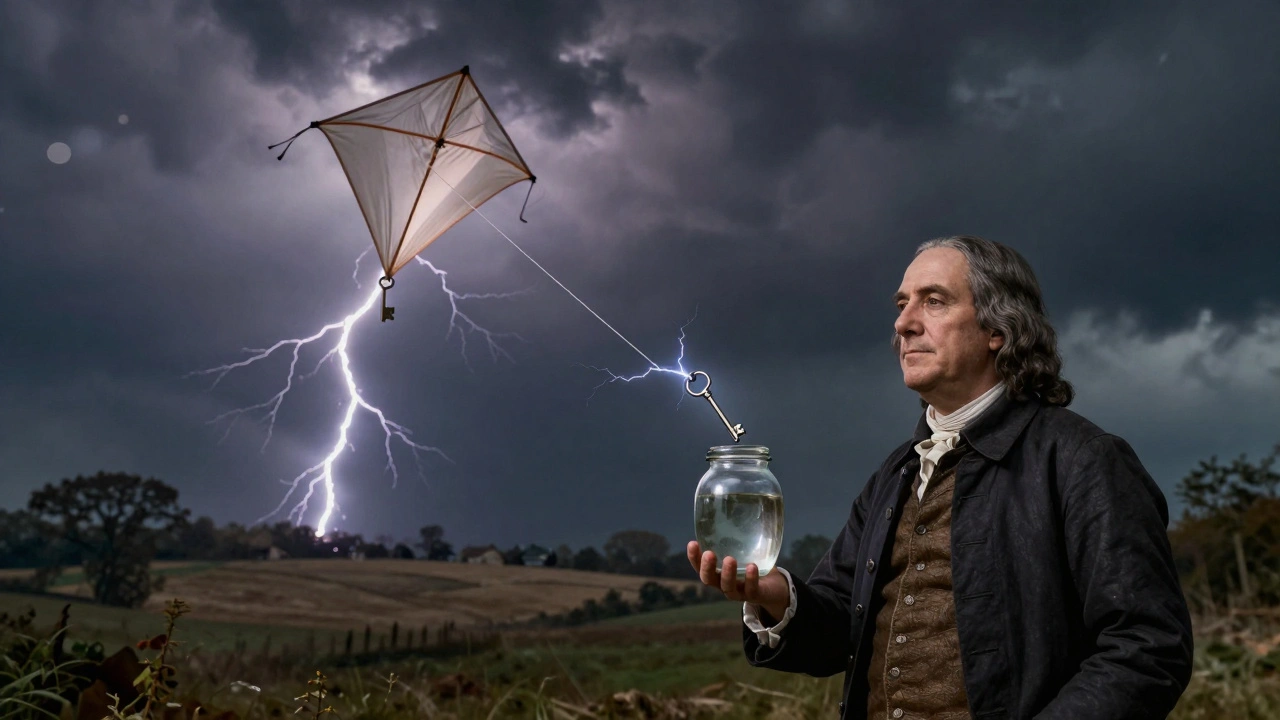
Most people know Benjamin Franklin’s kite story as a myth - a lightning strike, sparks flying, a key glowing. But the real science behind it was even more important. Franklin wasn’t trying to prove lightning was electricity. He was trying to prove that the atmosphere itself carried electrical charge. His 1752 experiment used a silk kite with a metal key tied to the string. When the kite flew into a storm cloud, the key collected static electricity. He could feel a spark. He could charge a Leyden jar. This wasn’t just a stunt. It was the first time anyone had directly measured atmospheric electricity. His work led to the invention of the lightning rod, which saved thousands of buildings from fire. And it proved that weather wasn’t just wind and rain - it was an electrical system.
The Kite as a Weather Lab
By the late 1800s, kite flying had become a serious scientific tool. In the U.S., the Weather Bureau (later the National Weather Service) used kites to carry instruments called kitesondes - small devices that recorded temperature, humidity, and wind speed. In 1894, a team in New York flew a kite over 3,000 feet high and collected data for over 90 minutes. That’s longer than most weather balloons could stay aloft back then. Kites were also used to sample air for dust, pollen, and even microbes. Scientists in England used them to study how pollution moved across cities. In 1902, a kite flight over London captured over 200,000 dust particles in just one hour. That data helped shape early air quality laws.
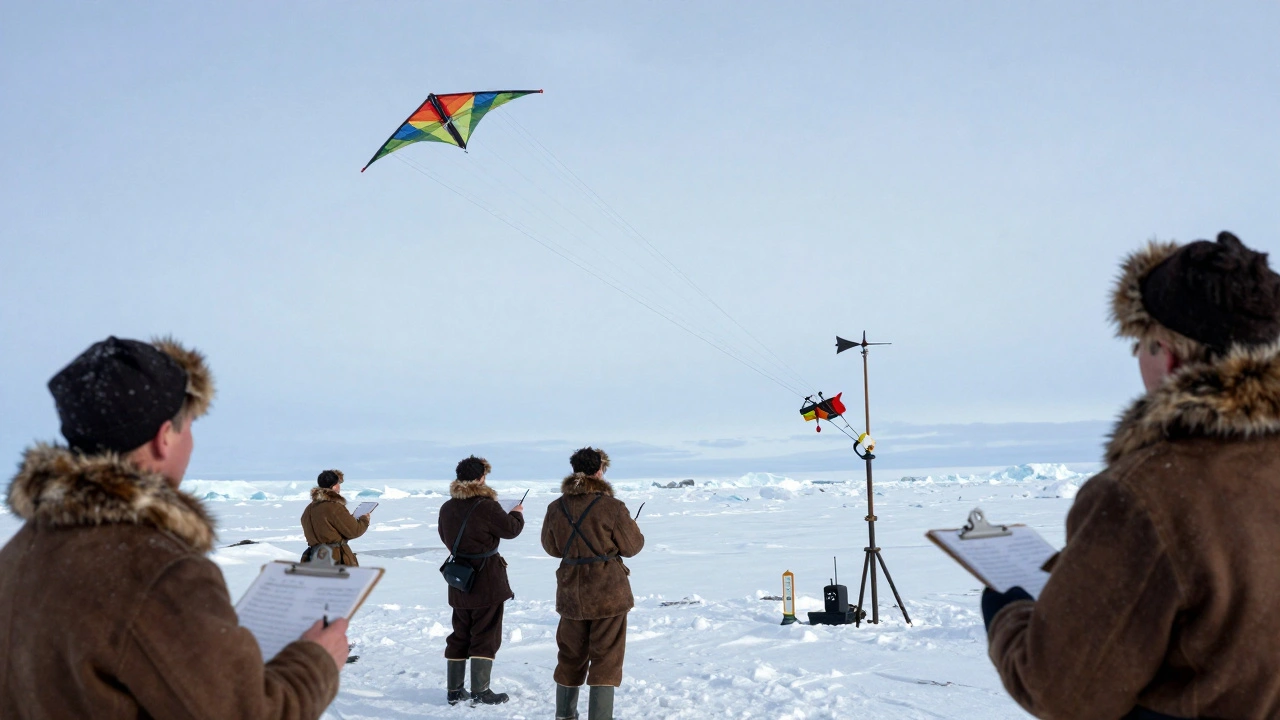
Kites were especially useful in places where balloons couldn’t fly - like over oceans, mountains, or in cold climates. In 1910, the U.S. Army Signal Corps used kites to measure wind patterns over Alaska. They needed to predict how storms would move across the Arctic. Kites were the only tool that could carry instruments into the upper air without expensive equipment. Even in 1920, when airplanes were becoming common, kites still outperformed them in one area: stability. A kite could hover in place for hours. A plane had to keep moving. That made kites perfect for long-term atmospheric sampling.
The Golden Age of Scientific Kites
The 1930s and 1940s were the peak. The U.S. government funded kite research through the Weather Bureau and the Army Air Corps. At the same time, the Soviet Union was using giant kites - some over 100 feet wide - to lift radio equipment into the stratosphere. In 1938, a Soviet team flew a kite to 12,000 feet and transmitted weather data back to the ground. That record stood for over a decade. In the U.S., researchers at the Scripps Institution of Oceanography used kites to study how ocean winds affected coastal weather. They flew kites off the coast of California, measuring humidity and pressure changes that helped predict fog patterns.
Kites were also used to test early radar systems. In 1941, scientists at MIT flew kites with metal strips attached to see how radar signals bounced off them. This helped develop the first weather radar. The same technique later became the basis for Doppler radar, which we still use today to track storms.
Why Kites Declined - and Why They’re Coming Back
By the 1950s, weather balloons and satellites started replacing kites. They could go higher. They could send data faster. Kites needed wind. They needed space. They needed people on the ground to monitor them. In a world racing toward automation, kites looked old-fashioned.
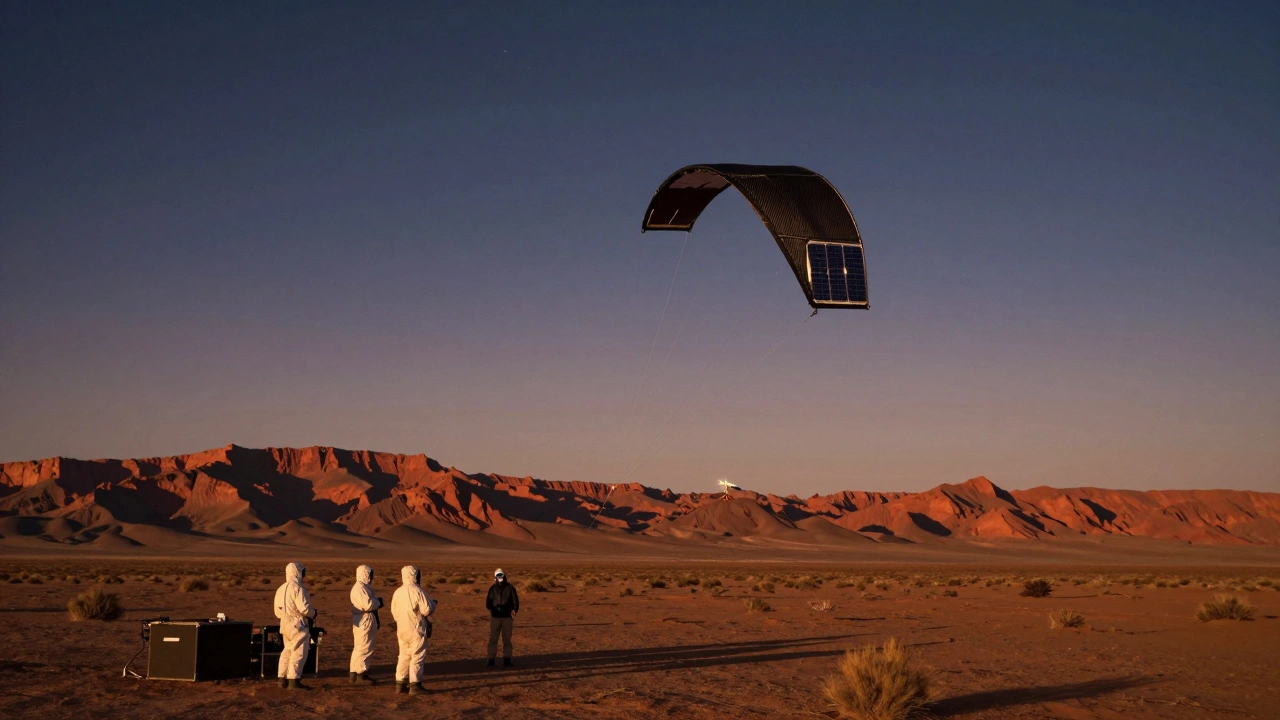
But in the 2010s, scientists began to reconsider. Modern kites - made with carbon fiber, lightweight plastics, and solar-powered sensors - are smarter than ever. In 2016, a team from the University of Colorado flew a kite over the Arctic Circle that collected atmospheric data for 72 hours straight. It was cheaper than a satellite launch and more precise than a drone. In 2020, researchers in Germany used kites to measure microplastic pollution in the upper atmosphere. They found more than expected - and proved that airborne microplastics could travel thousands of miles.
Today, kites are being used again in places where drones are too risky or too expensive. In remote parts of Africa and Southeast Asia, scientists use kites to monitor air quality and climate change. In 2024, a project in Kenya used kites to collect data on desert dust storms. The kites helped predict when the dust would reach Nairobi - and when people should stay indoors. In 2025, NASA tested a kite system on Mars analog sites in the Utah desert. The kite carried sensors to simulate how future Mars missions might sample the thin atmosphere.
What Kites Still Offer That Other Tools Can’t
Modern drones can fly high. Satellites can see the whole planet. So why still use kites?
- Cost: A research kite costs under $500. A weather balloon costs $2,000. A satellite costs millions.
- Stability: Kites hover. Drones drift. Balloons drift. Kites stay in one air mass for hours.
- Flexibility: You can launch a kite from a boat, a hill, a rooftop. No runway needed.
- Low impact: Kites don’t emit signals. They don’t interfere with wildlife or radio frequencies.
In 2023, a study in the journal Atmospheric Measurement Techniques found that kites were 40% more accurate than drones at measuring temperature gradients in the lower atmosphere. Why? Because kites move with the wind - not against it. Drones fight the wind to stay in place. Kites ride it. That makes their data cleaner.
The Future of Kite Science
Scientists aren’t just using kites to study the sky anymore. They’re using them to study the air we breathe. In 2025, a team in India used kites to map how smoke from crop fires spread over the Ganges Plain. The data helped local governments issue health warnings. In Canada, researchers are testing kites to track methane leaks from pipelines - something satellites can’t see well at low altitudes.
Even space agencies are paying attention. The European Space Agency is designing a kite system for Venus. The thick, turbulent atmosphere there makes balloons dangerous. A kite, they believe, could glide safely through the upper clouds and send back chemical data.
Kites are no longer just toys. They’re tools. Quiet, reliable, and surprisingly powerful. They’ve been part of science for over 275 years. And they’re still climbing.
Were kites really used to study weather before airplanes?
Yes. Long before airplanes, scientists used kites to collect data from high altitudes. In 1749, John Robison used kites to measure temperature changes in the atmosphere. By the 1890s, the U.S. Weather Bureau was regularly launching kites with instruments to record wind, humidity, and pressure. Kites were the only way to get data above 1,000 feet until weather balloons became common in the early 1900s.
Did Benjamin Franklin really fly a kite in a thunderstorm?
Yes, but not the way most people imagine. Franklin didn’t fly his kite during a lightning strike. He flew it into a storm cloud to collect static electricity from the air. He used a silk kite with a metal key and a Leyden jar to store the charge. The experiment proved that the atmosphere contained electrical energy - a discovery that led to the lightning rod. It was careful, controlled science, not a dangerous stunt.
What kind of instruments did scientists put on kites?
Scientists attached small, lightweight instruments called kitesondes. These included thermometers, hygrometers (for humidity), barometers (for air pressure), and wind vanes. Later, they added radios to send data back to the ground. In the 1930s, Soviet scientists even used kites to carry radio transmitters into the stratosphere. Modern kites now carry solar-powered sensors that record pollutants, temperature gradients, and even airborne DNA.
Are kites still used in science today?
Yes. In 2024, researchers in Kenya used kites to track desert dust storms. In 2025, NASA tested a kite system in Utah to simulate how future Mars missions might sample thin atmospheres. Kites are also used to monitor microplastics, methane leaks, and wildfire smoke. They’re cheaper, quieter, and more stable than drones in certain conditions, making them valuable for remote or sensitive research.
Why are kites better than drones for some atmospheric studies?
Kites don’t fight the wind - they ride it. That means they stay steady in one air mass for hours, giving cleaner, more consistent data. Drones have to constantly adjust to stay in place, which can distort measurements. Kites also cost far less, don’t need batteries, and can operate in areas where drones are banned or too risky. For long-term, low-altitude atmospheric sampling, kites still have a unique advantage.
From Franklin’s silk kite to today’s solar-powered sensors, the kite has never stopped evolving. It’s not a relic. It’s a quiet, overlooked tool that still has a place in science - especially where the sky is wild, remote, and full of secrets.