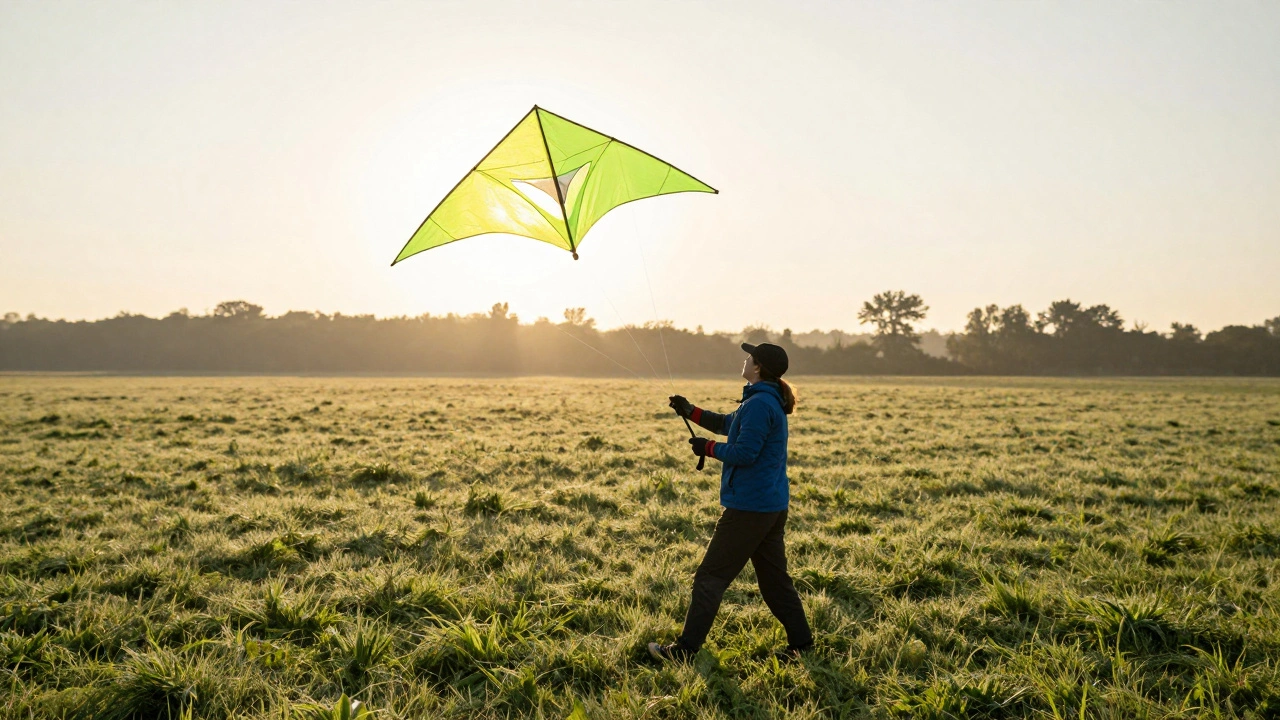
Most people think kites are just for kids on windy days at the park. But there’s a whole other world out there-where kites don’t just float. They spin, dive, flip, and dance like they’re alive. This is stunt kite flying. And yes, you can start doing it too, even if you’ve never held a kite in your hands before.
What Is a Stunt Kite?
A stunt kite is not your average diamond-shaped paper kite. It’s a two-line, lightweight, high-performance kite designed for precision control. Unlike single-line kites that just drift with the wind, stunt kites let you steer them left and right, pull them into loops, and even make them hover in place. You control them with two strings, one in each hand. Pull the right line, the kite turns right. Pull the left, it turns left. Pull both at the same time? It dives. Let go a little? It climbs. It’s like driving a car, but upside down in the sky.
Stunt kites are usually made from ripstop nylon or polyester, with carbon fiber or fiberglass spars. They weigh less than a pound, so even a light breeze will lift them. The most common design is the delta shape-a wide, triangular kite that’s stable and responsive. Brands like Prism, Winder, and Inception have been making these for decades, and they’re still the gold standard.
Why Start With a Stunt Kite?
If you’ve ever watched someone fly a stunt kite, you’ve probably thought, “That looks impossible.” But here’s the truth: it’s not. The trick isn’t strength. It’s timing. And patience. You don’t need to be athletic. You don’t need a background in engineering. You just need to want to learn.
Most beginners try to jump straight into complex moves-backflips, spins, figure eights. That’s like trying to ride a bike downhill before you’ve learned to pedal. Start with the basics. Learn to fly straight. Learn to turn smoothly. Learn to stop. Those are the foundation of every trick you’ll ever do.
Stunt kites also teach you something most hobbies don’t: how to read the wind. You’ll start noticing how it moves over rooftops, how it ripples across parking lots, how it drops suddenly behind trees. That’s not just useful for flying. It changes how you see the world.
What You Need to Get Started
You don’t need much. Here’s the bare minimum:
- A beginner stunt kite-Look for models labeled “beginner” or “easy control.” Prism Quantum or Winder Delta are solid choices. They’re durable, forgiving, and cost under $80.
- Two 100-foot lines-Most kites come with lines, but if not, get 75-100 lb test flying line. Avoid cotton or thin string. You need something that won’t snap or tangle.
- A pair of gloves-Yes, really. Even light winds can pull hard enough to burn your hands. Simple work gloves or fingerless flying gloves work fine.
- A wide-open space-A park, field, or empty parking lot. No trees, power lines, or people. At least 200 feet of clear space in every direction.
Don’t buy a $200 pro kite just because it looks cool. You’ll crash it. You’ll break it. You’ll get frustrated. Start simple. Upgrade later.
How to Launch Your First Kite
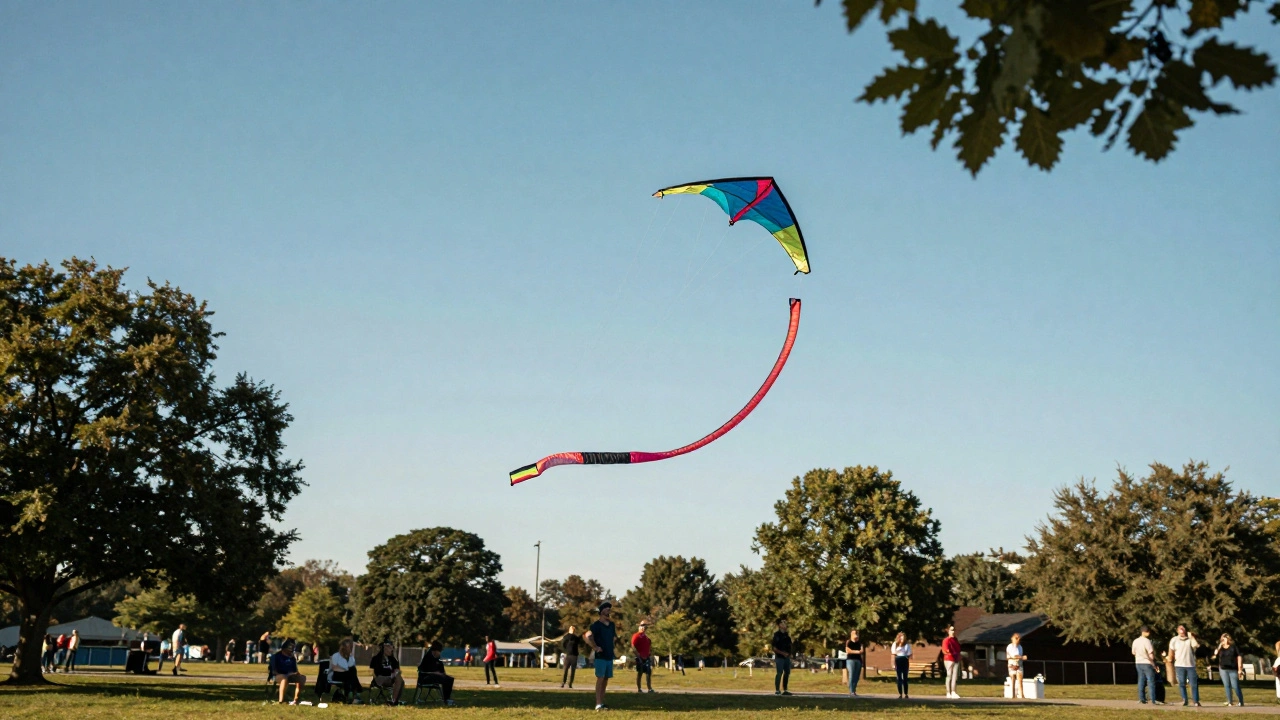
Launching is the hardest part for most people. Here’s how to do it right:
- Stand with your back to the wind. Hold the kite with both hands, one line in each hand. Let the kite rest on the ground in front of you.
- Hold the lines taut, but not tight. Let the kite sit flat on the ground.
- Take two steps backward. Then, with a smooth motion, lift the kite into the air. Don’t yank. Don’t jerk. Just lift.
- As it rises, let out line slowly. Keep the lines even. If the kite tilts to one side, gently pull the opposite line to level it.
- Once it’s 50 feet up, stop letting out line. Let it hover. That’s your goal for now.
If the kite dives or spins, don’t panic. That’s normal. Just pull both lines evenly to bring it back up. If it keeps spinning, walk forward a few steps to reduce tension. Wait for the wind to steady.
Basic Moves to Master First
Forget the fancy stuff. Focus on these three moves. Master them before you try anything else.
- The Box-Fly the kite forward 20 feet, turn right 90 degrees, fly down 20 feet, turn left 90 degrees, fly back 20 feet, turn left, fly up 20 feet, and return to start. It makes a square in the sky. Practice this until you can do it without thinking.
- The Figure Eight-Fly forward, turn right in a smooth arc, loop down and under, then turn left to complete the circle. It looks like a sideways infinity symbol. Keep your hands smooth. No jerks.
- The Hover-Fly the kite up to 30 feet. Then, gently pull both lines equally to stop it in midair. Hold it there for 5 seconds. It’s harder than it sounds. Most kites want to keep moving. Learning to stop teaches you control.
Do each of these every time you fly. Even for 10 minutes. Repetition is what turns clumsy movements into muscle memory.
Common Mistakes (And How to Fix Them)
Here’s what goes wrong for almost everyone:
- Using too much force-Stunt kites respond to finesse, not muscle. If you’re yanking the lines, you’re doing it wrong. Think of it like steering a boat-not a race car.
- Flying in gusty wind-Wind under 10 mph or over 20 mph is too unpredictable for beginners. Look for steady, consistent breeze. If leaves are rustling steadily, you’re good.
- Trying to fly alone in a crowded area-You’ll get distracted. You’ll panic. You’ll crash into someone’s car. Always fly where you have room to make mistakes.
- Ignoring line tangles-If your lines twist, stop. Don’t keep flying. Untangle them before you try again. Twisted lines ruin control.
Every crash is a lesson. Every tangle is a reminder. Every time you lose control and get it back? That’s progress.
When You’re Ready to Try Tricks
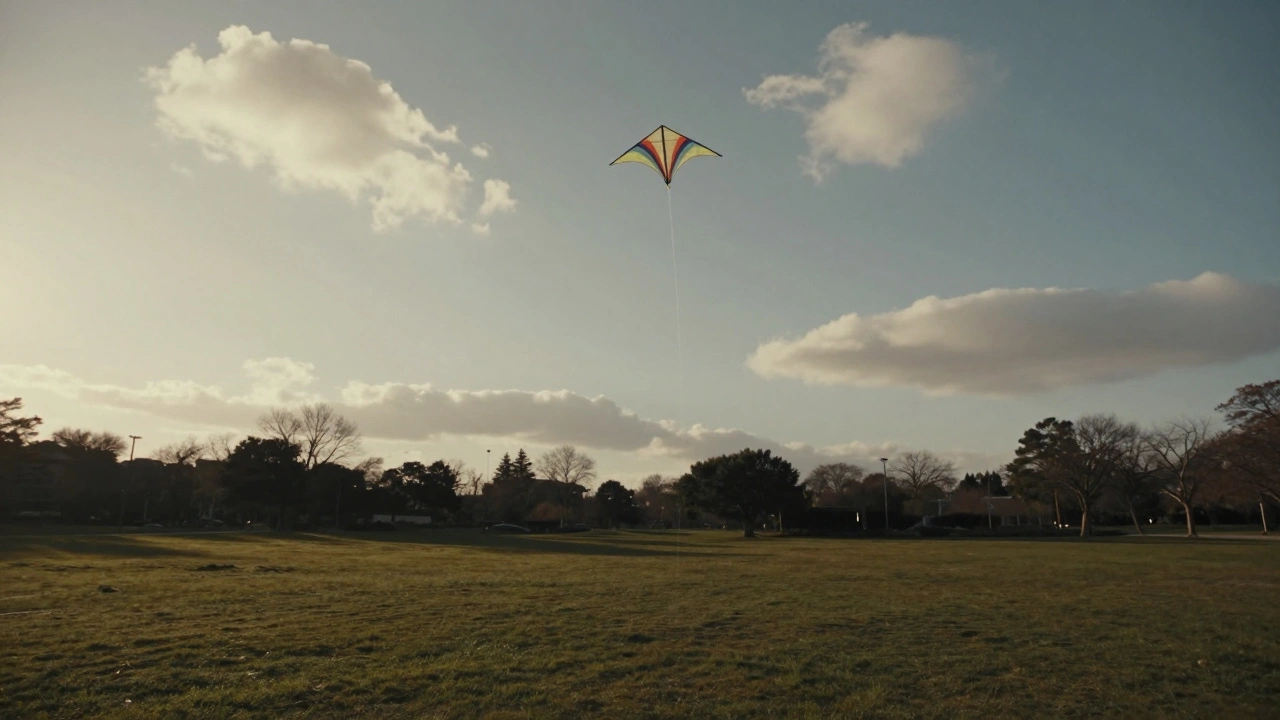
Once you can fly the box, figure eight, and hover without thinking, you’re ready to try real tricks. Start with:
- The Stall and Spin-Fly the kite up, then pull both lines hard to make it stall. Let it fall backward, then release one line to make it spin. It’s slow at first. That’s fine.
- The Loop-Fly forward, then pull one line sharply to make a half-circle. Don’t pull too hard. Too much speed and the kite will snap out of control.
- The Tail Slide-Fly the kite sideways, then let one line go slack. The kite will slide sideways like a sled. It looks like magic.
Watch videos. Not YouTube tutorials. Watch videos of experienced flyers at kite festivals. Notice how their hands move. How slow they are. How calm they look. That’s the secret. It’s not about how fast you move. It’s about how clear your intention is.
Where to Fly in Portland
If you’re in Portland, here are three great spots:
- Willamette Park-Wide open fields along the river. Low trees, no power lines. Perfect for beginners.
- Rock Creek Park-A bit more sheltered, but the wind funnels through the valley. Great on windy afternoons.
- Mount Tabor Park-The large open area near the reservoir. Watch out for hikers, but the wind is steady here.
Join the Oregon Kite Club. They meet every third Saturday at Willamette Park. You’ll meet people who’ve been flying for 30 years. They’ll help you. They’ll laugh with you. They’ll cheer when you finally nail that first loop.
What Comes Next?
Once you’ve got the basics down, you’ll start to see kites differently. You’ll notice how wind moves over buildings. You’ll feel it in your fingers before you see it. You’ll start to predict how a kite will react before you move your hands.
That’s when the real joy begins. Not because you’re doing tricks. But because you’ve learned to listen.
Stunt kite flying isn’t about showing off. It’s about connection. To the wind. To the sky. To yourself.
Grab a kite. Go outside. And let the sky teach you.
Can I fly a stunt kite in the rain?
No. Water makes the fabric heavy and the lines slippery. It can also damage the frame over time. Even light rain can ruin a stunt kite’s performance. Always fly in dry conditions.
How long does it take to learn kite tricks?
Most people can master the basic moves in 5 to 10 flying sessions. That’s about 5-10 hours total. Learning advanced tricks takes months or years. But you’ll start seeing progress in your first hour.
Do I need to buy expensive gear to start?
No. A good beginner stunt kite costs $60-$80. Lines and gloves add $20. You don’t need a carbon fiber frame or a custom tail. Stick with a reliable beginner model like the Prism Quantum. Upgrade only after you’ve flown hundreds of times.
What if my kite keeps spinning out of control?
If your kite spins, you’re pulling too hard or unevenly. Stop flying. Walk toward the kite to reduce line tension. Untangle the lines if needed. Then, restart slowly. Practice the hover and box moves until your inputs feel smooth.
Is stunt kite flying dangerous?
It’s safe if you follow basic rules. Never fly near power lines, roads, or crowds. Wear gloves. Don’t fly in storms or high winds. The kite won’t hurt you-it’s light. But the lines can sting if they snap or tangle. Stay aware, stay calm, and it’s one of the safest outdoor hobbies around.