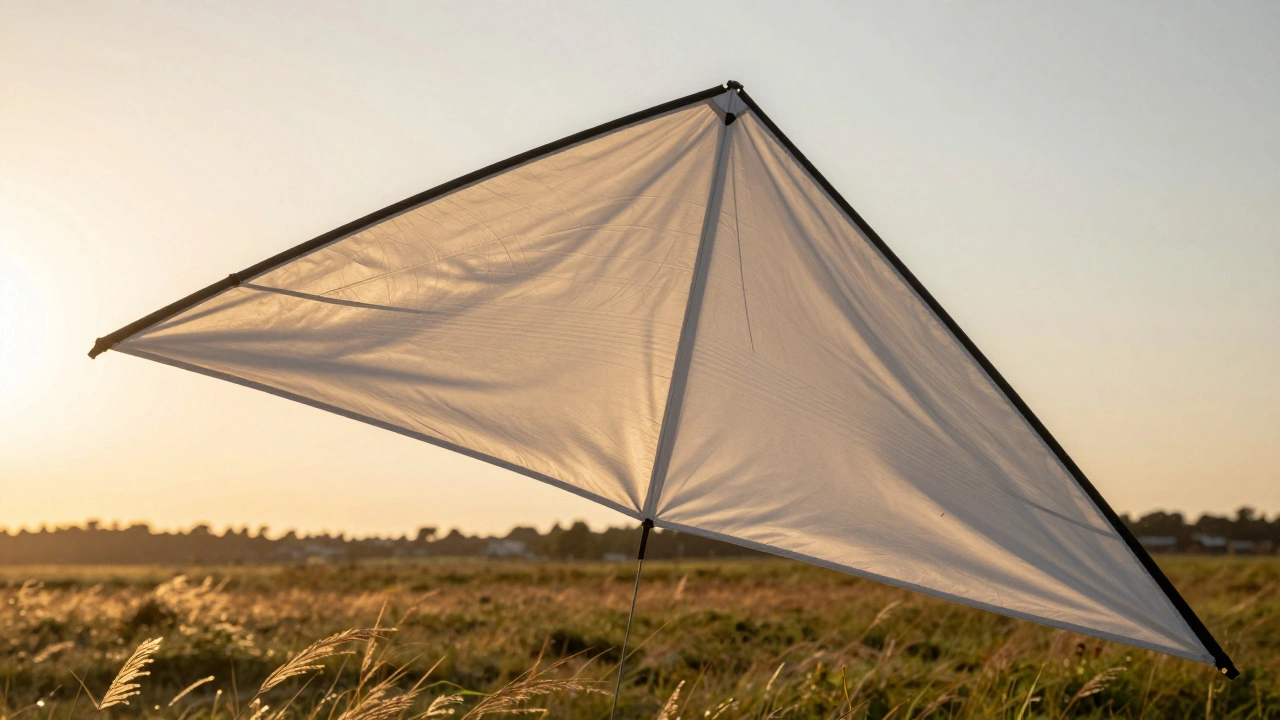
When you fly a kite, you’re not just chasing wind-you’re riding the edge of physics. The shape of the canopy, the tension in the lines, even the texture of the fabric-all of it shapes how air moves over the surface. And one of the most overlooked parts of that story is the boundary layer. It’s the thin slice of air right next to the kite’s surface, where things get messy, slow, and unpredictable. If you’ve ever seen a kite stall, wobble, or suddenly lose lift, the boundary layer is probably to blame.
What Is the Boundary Layer on a Kite Canopy?
The boundary layer is the layer of air that clings to the surface of the kite as it moves through the wind. Think of it like a slow-moving film sticking to the fabric. Right at the surface, the air isn’t moving at all-its speed is zero. But as you move away from the fabric, the air speeds up until it matches the free-stream wind. This transition doesn’t happen suddenly; it takes a few millimeters. That’s the boundary layer.
On a well-designed kite, this layer stays smooth and glued to the surface. That’s called a laminar boundary layer. But when things get rough-like when the kite changes angle, hits a gust, or has a wrinkled surface-the layer starts to churn. That’s turbulent flow. And if the wind pushes too hard against the shape, the layer can’t keep up. It peels away. That’s separation.
Why Drag Goes Up When the Boundary Layer Separates
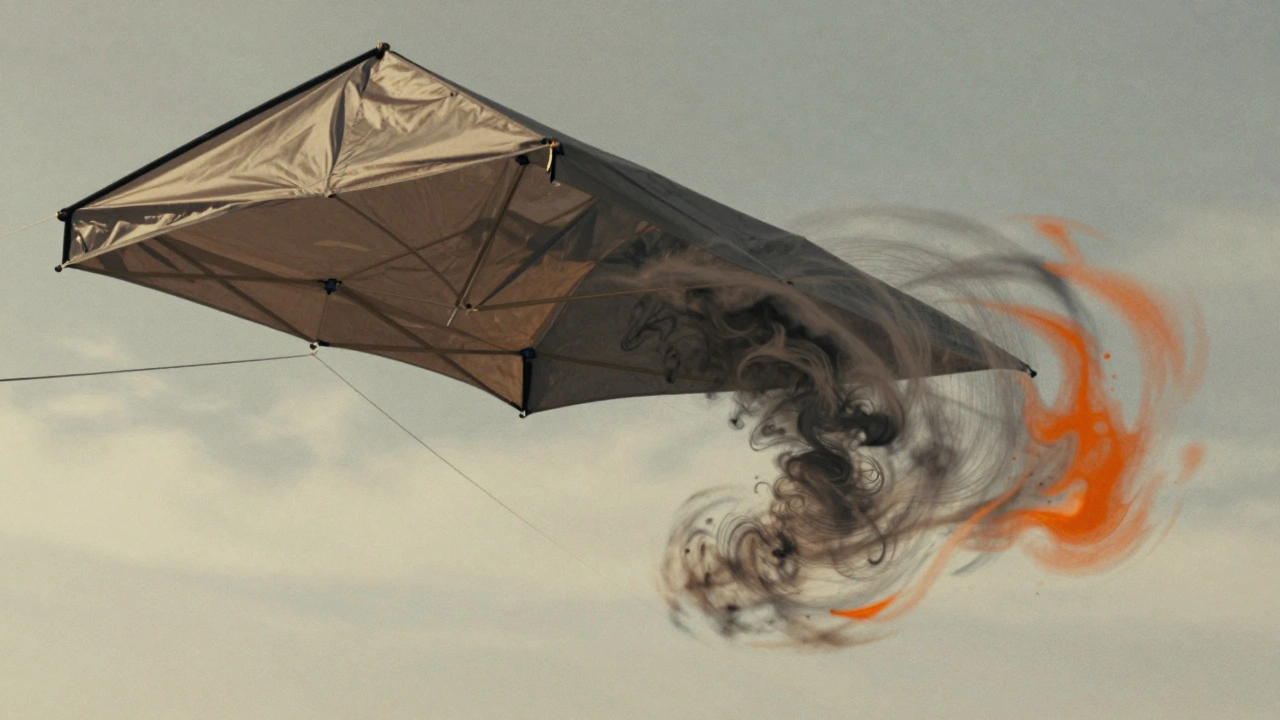
Drag isn’t just about how big the kite is. It’s about how well the air flows around it. A smooth, attached boundary layer lets air glide cleanly off the trailing edge. That’s low drag. But when the layer separates, it creates a wake behind the kite. That wake is full of swirling, chaotic air-like a tiny tornado trailing behind the kite. This wake pulls on the fabric, trying to drag it backward. That’s pressure drag, and it’s the main reason kites lose efficiency.
Real-world test data from kite aerodynamics labs shows that a separated boundary layer can increase drag by 30-50% compared to a fully attached one. That’s not a small difference. It means you need 30-50% more wind to get the same pull. For stunt kites, that’s the difference between sharp turns and sluggish response. For power kites, it’s the difference between climbing and stalling.
How Canopy Shape Controls Separation
Not all kites are built the same. A delta kite has a wide, curved leading edge. That shape gently accelerates air over the top, keeping the boundary layer attached. A box kite? Flat panels with sharp corners. Those corners are trouble spots. Air hits them, slows down hard, and peels away. That’s why box kites often need vents or staggered panels-to keep the airflow from crashing into itself.
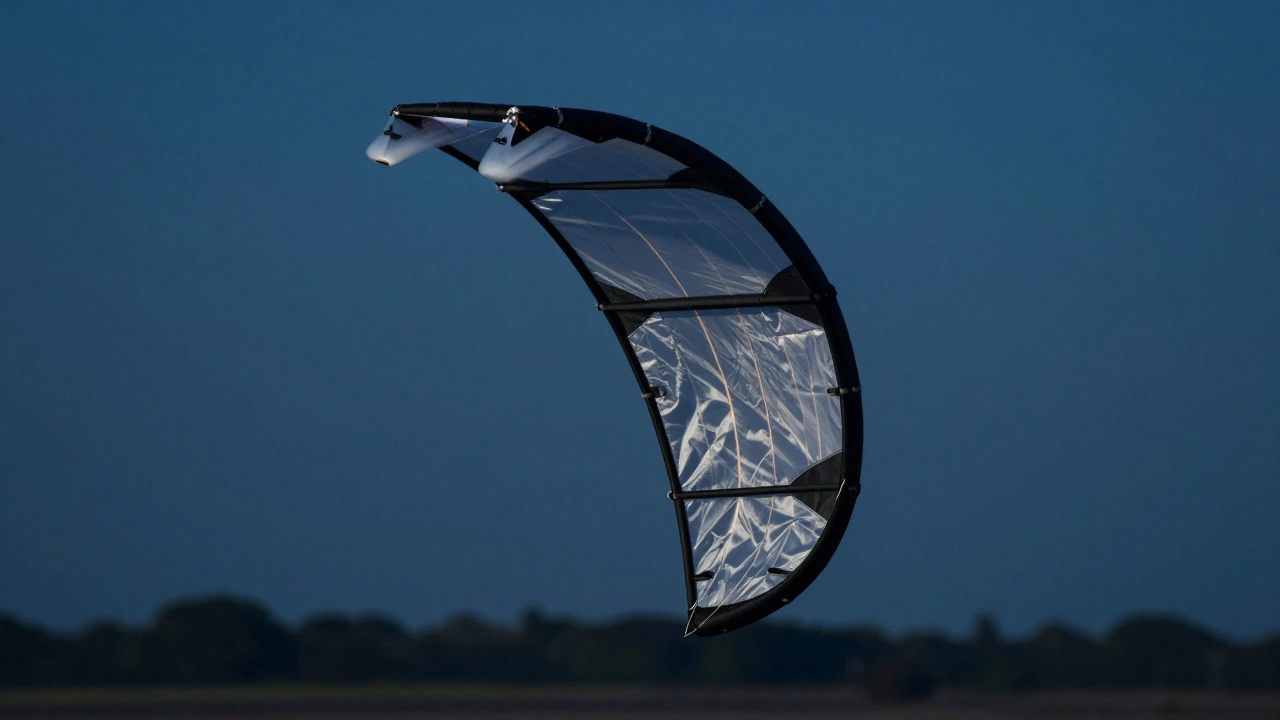
Modern high-performance kites use curved, 3D-shaped canopies with tensioned ribs. These aren’t just for looks. They’re designed to maintain a favorable pressure gradient-meaning air keeps speeding up as it flows over the surface, never slowing down enough to separate. The leading edge is rounded. The trailing edge is thin and angled. The whole surface is smooth, with no wrinkles or bulges. That’s not luck. That’s physics.
Wind Speed, Angle, and the Thin Line Between Lift and Stall
When you pull harder on the lines, you increase the angle of attack. The kite tilts more into the wind. That sounds good-it should generate more lift, right? But here’s the catch: as the angle increases, the air has to turn more sharply over the top of the canopy. The boundary layer has to follow that curve. If it can’t, it separates. And once it separates, lift drops fast. That’s a stall.
Most recreational kites stall between 15° and 20° angle of attack. High-performance kites can handle up to 25°, but only if the canopy is perfectly tensioned and the fabric is smooth. A kite with loose seams or a creased sail will stall at 10°. That’s why kite flyers who fly in variable winds carry spare lines and know how to adjust tension on the fly.
Material and Surface Texture Matter More Than You Think
Ever notice how some kites fly better when they’re brand new? That’s not just in your head. New fabric has a slightly rougher texture. That roughness-just a few micrometers high-actually helps keep the boundary layer attached. It creates tiny eddies that energize the airflow, delaying separation. But over time, as the fabric gets worn, polished by wind and sun, it becomes too smooth. Then the boundary layer slips off easier. That’s why older kites often feel sluggish in light wind.
Some manufacturers add micro-textured coatings to their canopies. These aren’t just for durability. They’re aerodynamic tools. A surface that looks smooth to the eye might be covered in tiny bumps, like golf ball dimples. Those bumps help turbulent flow stick longer, reducing drag and delaying stall. It’s the same trick used on airplane wings and golf balls.
What Happens in Gusts and Turbulent Air
On a calm day, airflow is predictable. But in the real world-over trees, hills, or buildings-wind is choppy. Gusts slam into the kite. Turbulence rattles the canopy. In those moments, the boundary layer gets thrown into chaos. It can’t adjust fast enough. Separation happens in pulses. The kite surges, then drops. It vibrates. It might even spin.
Power kite riders who fly in coastal or mountain zones know this well. They don’t just rely on kite design-they adjust their flying technique. They ease the bar slightly during gusts to reduce angle of attack. They use reflexed trailing edges to help the airflow reattach. They don’t fight the wind-they work with its instability.
Practical Tips for Better Kite Performance
- Check your canopy for wrinkles before every flight. Even one small fold can trigger early separation.
- Tension your lines evenly. Uneven tension distorts the canopy shape and creates dead spots where air stalls.
- Use lighter line materials. Thicker lines create more turbulence in the airflow around the kite, which can disturb the boundary layer.
- Replace old canopies. Fabric degradation isn’t just about fading-it’s about losing the aerodynamic texture that keeps airflow attached.
- For stunt kites, try a slightly more curved leading edge. It helps maintain attachment during aggressive maneuvers.
When Boundary Layer Behavior Saves the Day
Here’s something counterintuitive: sometimes, you want separation. In certain high-speed, high-angle maneuvers-like a fast spin or a sharp dive-engineers design kites with intentional separation zones. These zones act like air brakes. They reduce lift suddenly, letting the kite pivot faster. It’s not a flaw. It’s a feature.
Some competition kites have small vent holes near the trailing edge. These let air escape in a controlled way, preventing a sudden, uncontrolled separation. They’re not for ventilation-they’re for aerodynamic control.
Understanding boundary layer behavior doesn’t just make you a better flyer. It turns flying from guesswork into a conversation with the wind. You start to feel when the kite is about to stall before you see it. You know why your kite pulls harder in one gust than another. You learn to read the air-not just the sky.
What causes boundary layer separation on a kite canopy?
Boundary layer separation happens when the airflow over the kite canopy slows down too much and can’t follow the shape of the surface. This usually occurs when the angle of attack is too high, the surface is wrinkled or uneven, or the wind is turbulent. The air loses energy, detaches from the fabric, and creates a chaotic wake behind the kite, increasing drag and reducing lift.
Does fabric texture really affect kite performance?
Yes. A slightly rough surface helps keep the boundary layer attached by creating small, controlled turbulence that energizes the airflow. Over time, as fabric becomes smooth from sun and wind exposure, it loses this effect, making the kite more prone to stalling in light winds. Some high-end kites use micro-textured coatings specifically to maintain this advantage.
Why do some kites stall at lower wind speeds than others?
Kites with flat or poorly shaped canopies, loose seams, or high angles of attack are more likely to stall in light wind. The boundary layer separates early because the air can’t smoothly follow the surface. High-performance kites use curved shapes, tensioned ribs, and smooth surfaces to delay separation, allowing them to fly in winds as low as 3-5 mph.
Can I fix separation issues by tightening my lines?
Tightening lines can help-if the issue is a loose or sagging canopy. Proper tension keeps the shape intact, preventing wrinkles that trigger separation. But if you tighten too much, you increase the angle of attack, which can cause separation instead. The key is even, balanced tension across all lines, not just maximum tightness.
Do all kites benefit from micro-textured canopies?
Not necessarily. For light wind kites or slow-flying decorative kites, the effect is minimal. But for performance kites-especially those used in kiteboarding, stunt flying, or power lifting-micro-textured surfaces can reduce drag by up to 15% and improve low-wind response. It’s a detail that matters most when every ounce of efficiency counts.
Boundary layer behavior isn’t just for engineers and wind tunnel tests. It’s the hidden science behind every smooth glide, every sharp turn, every moment your kite hangs steady in the wind. Understand it, and you don’t just fly a kite-you ride the air itself.