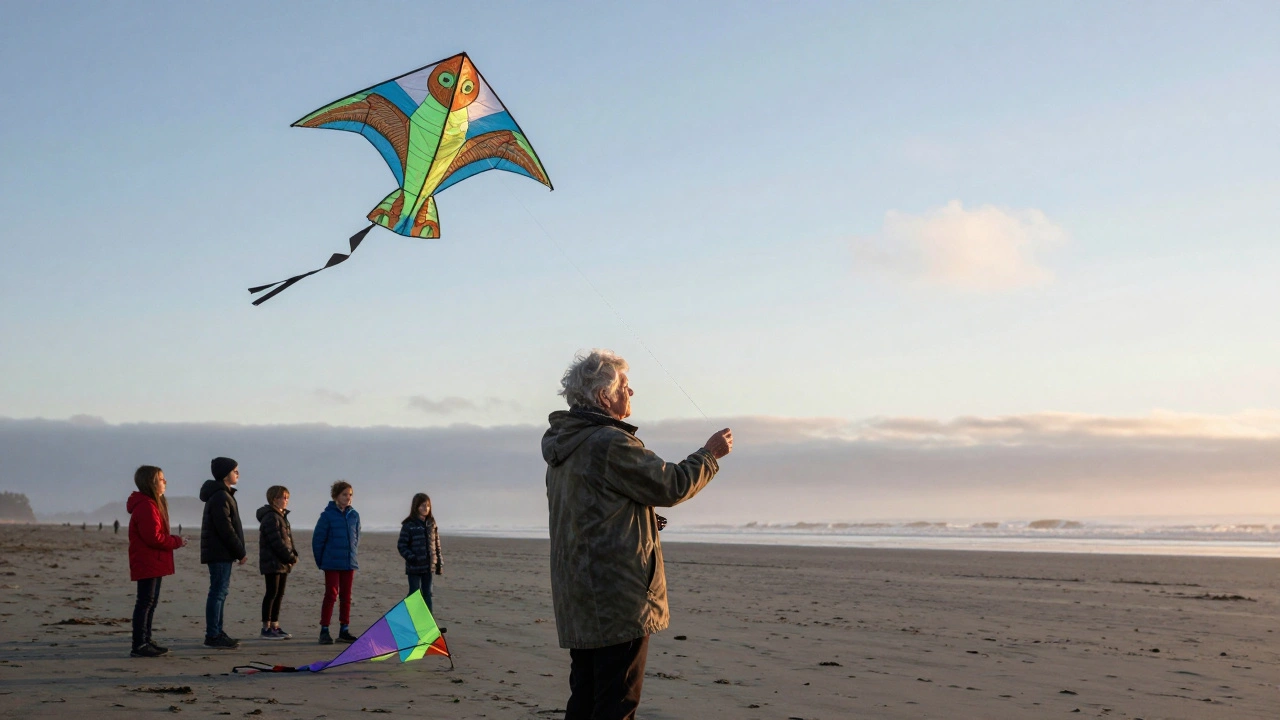
Every year, kite flyers around the world gather not just to launch their kites into the sky, but to be seen, to be remembered, and to be honored. The annual awards for kite flyers aren’t just about who flew the highest or stayed up the longest. They’re about the quiet hours spent building frames, the salt-stained hands from tuning lines, the early mornings at the beach when no one else was around. These awards exist because kite flying isn’t just a hobby-it’s a craft, a passion, and sometimes, a life.
What These Awards Really Celebrate
Most people think kite competitions are about wind speed and tail length. But the top awards go to people who’ve done something deeper. The Master Builder Award doesn’t just reward the prettiest diamond kite-it goes to the person who redesigned a traditional Japanese fighter kite using lightweight carbon fiber and still kept its historic flight pattern. The Community Spirit Award isn’t given to the person with the most followers on Instagram. It goes to the volunteer who taught 40 kids in a rural town how to make kites from recycled plastic bags and bamboo sticks.
These aren’t random prizes. They’re designed to honor the unsung roles that keep the kite community alive. There’s the engineer who fixes broken spars at midnight before a big launch. The artist who paints murals on silk kites that fly over festivals. The elder who still flies a 70-year-old handmade kite every spring, passed down from their grandparent. These are the people the awards were made for.
The Major Awards and Who Wins Them
There are five core awards given each year at the International Kite Festival in Bandon, Oregon-the largest gathering of kite flyers in North America. Each one has clear criteria, and winners are chosen by a panel of 12 veteran flyers, not judges with clipboards.
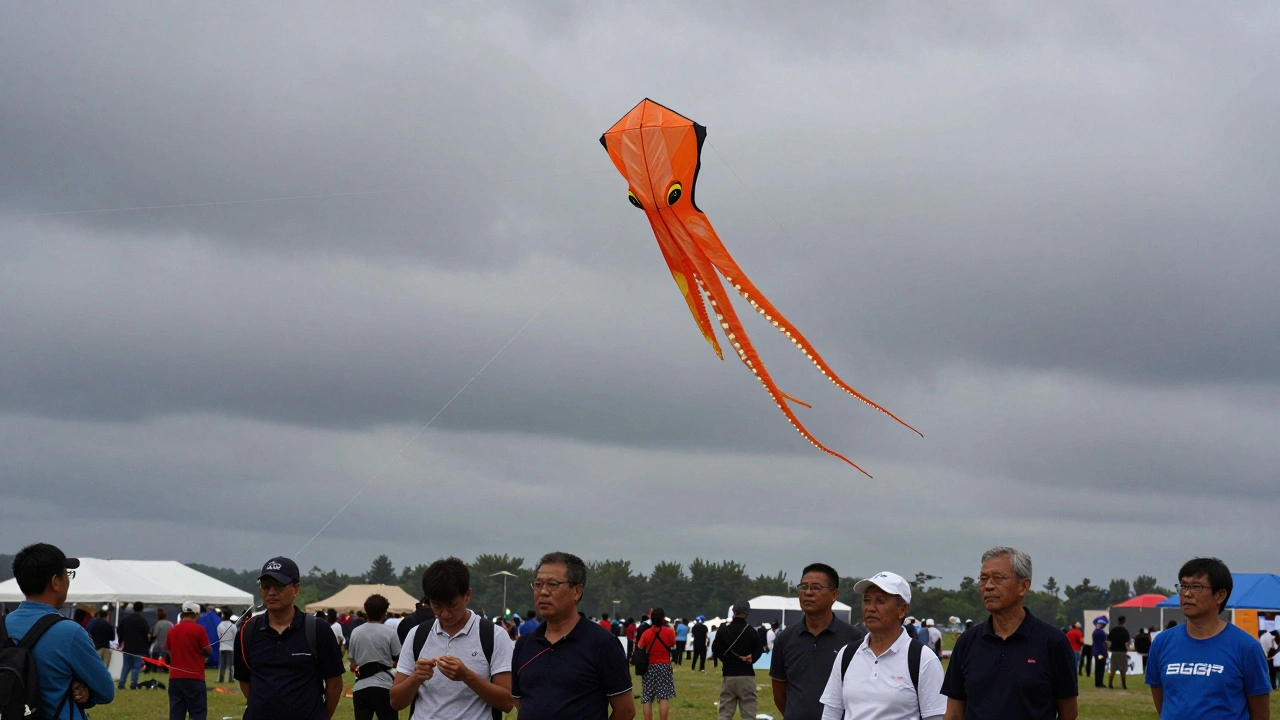
- Wind Whisperer Award: Given to the flyer who achieves the most stable, controlled flight in turbulent conditions. Last year’s winner flew a 12-foot octopus kite through gusts over 35 mph for 17 minutes straight-no crashes, no tangles.
- Art in the Sky Award: Honors kites that turn flight into visual storytelling. The 2025 winner was a hand-painted dragon that unfurled its wings mid-air, synchronized to music played through hidden speakers on the ground.
- Legacy Builder Award: For someone who’s spent 20+ years teaching, mentoring, or preserving kite traditions. This year, it went to a woman from New Mexico who revived the Navajo sky turtle kite, a design nearly lost after the 1980s.
- Young Innovator Award: For anyone under 21 who designs a new kite or technique. The 2025 recipient created a solar-powered LED kite that changes color based on wind speed, using Arduino and recycled phone batteries.
- Heart of the Community Award: The only award voted on by the public. It goes to the person who made the biggest difference in someone else’s life through kites. Last year, it was a veteran who started weekly kite sessions at a VA hospital-many patients who hadn’t spoken in months started laughing again after their first flight.
Why Recognition Matters More Than Prizes
The cash prize for the top award is $500. That’s less than a good set of kite lines. The real value? A hand-carved wooden plaque, a feature in the annual kite journal, and a seat at the next year’s planning table.
Most winners don’t keep the money. They use it to buy materials for kids’ workshops. Or to fix up a community kite shed. Or to fund a trip to teach in another country. One winner from Maine used her award to bring a group of teens from a food-insecure neighborhood to Bandon. They flew kites for the first time. Two of them now build kites full-time.
Recognition in this community isn’t about ego. It’s about validation. For years, many kite flyers were told their hobby was childish, impractical, or a waste of time. These awards say: You’re not just flying a kite. You’re keeping something alive.
How to Get Noticed-Without Trying Too Hard
You won’t win by showing up with a flashy drone kite. You won’t win by buying the most expensive materials. The people who get noticed are the ones who show up consistently, quietly, and with purpose.
- Volunteer at local events. Help set up lines. Teach a kid how to launch. Stay late to pack up.
- Document your process. Not for social media. For the community. Write down how you built your kite. Share your mistakes. Others learn from them.
- Preserve something old. Find an outdated kite design. Try to fly it. If it works, write about it. If it doesn’t, explain why. That’s how knowledge survives.
- Help someone who’s just starting. You don’t need to be an expert. Just be there. A single conversation can change someone’s path.
The awards aren’t a contest. They’re a mirror. They reflect who the community truly is.

The Ripple Effect of a Single Award
After the 2023 Legacy Builder Award was given to a man from Puerto Rico, his kite school in San Juan grew from 12 students to 80 in a year. A documentary followed. A grant came through. Now, schools in five islands teach kite-making as part of their cultural curriculum.
That’s the power of recognition. It doesn’t just honor one person. It lifts a whole tradition.
Every kite that flies carries a story. The awards make sure those stories aren’t lost to the wind.
What’s Next for Kite Awards
This year, organizers are adding two new categories: Climate Kite Award for kites made entirely from recycled ocean plastic, and Quiet Sky Award for the most peaceful, noise-free flight experience-no speakers, no lights, just kite and wind.
There’s also talk of a traveling exhibit, where past winners’ kites are displayed in libraries and museums-not as artifacts, but as living pieces of art that still fly. One kite from 1998, built from a grandmother’s sewing table, will be flown again in 2026 by her great-granddaughter.
The future of kite awards isn’t about bigger prizes. It’s about deeper roots.
Are annual kite awards only for professionals?
No. Most winners aren’t professionals. Many are teachers, retirees, parents, or hobbyists who fly in their spare time. The awards focus on impact, not skill level. A 12-year-old who taught 30 kids to fly kites from recycled materials has just as much chance as a seasoned builder.
Can I nominate someone for an award?
Yes. Nominations open every January and are accepted through the International Kite Festival website. You need to submit a short story-250 words or less-explaining why the person deserves it. Photos or videos help, but the story matters most. Last year, over 70% of winners were nominated by someone else.
Do I need to enter a competition to be considered?
Not at all. Some awards, like the Heart of the Community Award, have no competition component. Others, like Wind Whisperer, require you to fly during the festival. But many winners never entered a single event. They were recognized because of what they did outside the field.
What if I don’t win? Does that mean I’m not valued?
Winning is rare. But being seen isn’t. The festival publishes a full list of all participants who contributed in meaningful ways-not just winners. You’ll find names of people who fixed kites, helped with safety, or brought snacks for volunteers. Recognition isn’t just about trophies. It’s about being part of something that lasts.
Are there awards for non-competitive kite flying?
Absolutely. The Quiet Sky Award and Heart of the Community Award are specifically for non-competitive contributions. Even the Legacy Builder Award often goes to people who never competed-just taught, built, or preserved traditions. The community values quiet dedication as much as flashy flights.