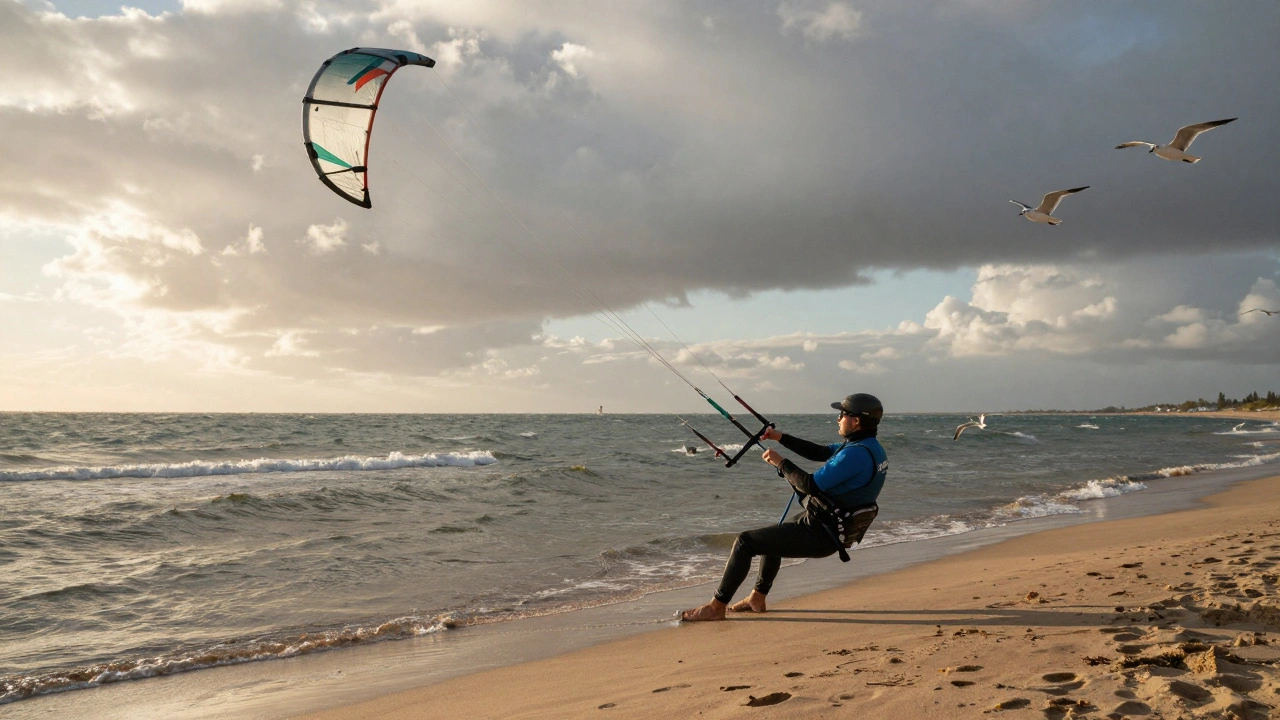
Winning a kite competition isn’t just about how well you fly-it’s about how well you read the sky. One minute, the wind is smooth and steady. The next, a gust slams into your line like a truck. If you’re not ready, your kite stalls, tumbles, or worse-crashes into the ground while the crowd watches. In professional kite contests, the difference between first and fifth place often comes down to one thing: how you handle wind changes. This isn’t guesswork. It’s strategy.
Understanding Wind Patterns in Kite Competitions
Not all wind is created equal. In kite contests, judges look for smooth, controlled flight. But real-world wind? It’s messy. You’ve got laminar flow-steady, even pressure-then there’s turbulence, eddies, and sudden gusts that can hit 20 mph in under two seconds. At the International Kite Festival in Hood River, Oregon, wind speeds vary by 15 mph within minutes. Competitors who don’t adapt lose points fast.
Wind speed matters, but so does consistency. A steady 12 mph is better than 10 mph with constant spikes to 25 mph. Why? Because your kite’s design has a sweet spot. Most competition kites perform best between 8 and 18 mph. Outside that range, control drops. A gust over 20 mph can overload a light-frame kite, causing it to flip or snap lines. A wind under 6 mph? Your kite won’t lift properly. You’ll look like you’re dragging a brick across the sky.
How Gusts Destroy Performance
Gusts are the silent killers of kite routines. They don’t just blow harder-they change the angle, speed, and direction of lift. A 15 mph gust hitting your kite at 45 degrees doesn’t just lift it higher. It yanks the line sideways, throwing off your timing. If you’re mid-trick, like a spin or a loop, that gust can twist your kite into a tangled mess. One competitor in the 2025 U.S. Kite Championships lost 30% of his score because three gusts in a row forced him to abort three complex maneuvers.
Here’s the brutal truth: you can’t react fast enough to a gust once it hits. Human reflexes are too slow. The best pilots anticipate. They watch the water. They watch the trees. They watch the clouds. A ripple on the lake? That’s a gust coming. A sudden darkening patch in the sky? That’s a pressure drop. You don’t wait for the wind to change-you read the signs before it does.
Building Your Wind Strategy
Top competitors don’t fly one kite. They bring three. Each one is tuned for a different wind range. Here’s how they split them:
- Light wind kite: Large surface area, lightweight frame, 4-12 mph range. Made for early morning or calm days.
- Medium wind kite: Balanced design, standard line strength, 10-18 mph. The workhorse. Used in 70% of contests.
- High wind kite: Smaller, reinforced frame, stronger lines, 15-25 mph. For when the sky gets wild.
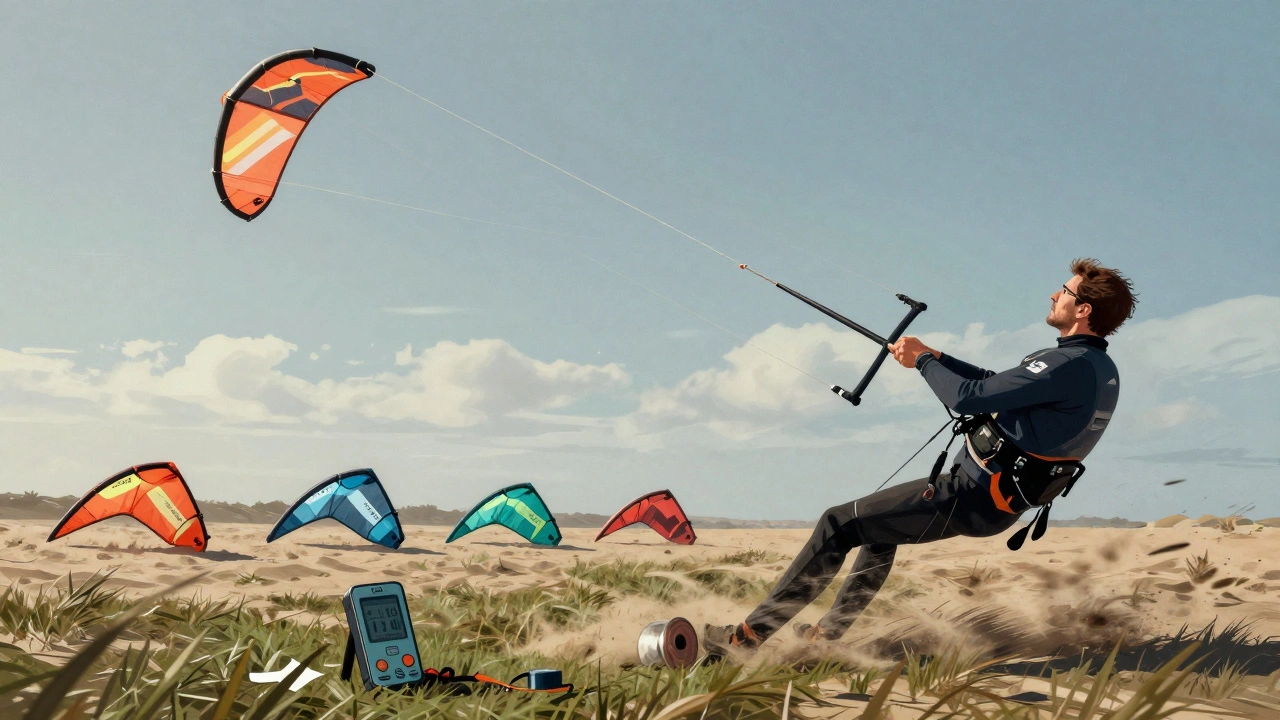
Before the competition starts, they test each kite in the actual conditions. Not on the practice field. Not in the hotel parking lot. On the contest beach, with the same line length and wind direction they’ll fly in. They measure how long it takes each kite to stabilize after a gust. They time how long it takes to recover from a stall. They record this. They don’t guess.
Backup Plans: More Than Just Extra Kites
Having a backup kite isn’t enough. You need a backup system. That means:
- Line redundancy: Always carry extra spools. A single knot in a line can ruin your run. Use color-coded lines so you don’t mix up strengths.
- Quick-change harness: A harness that lets you swap kites in under 90 seconds. Practice this blindfolded. In a real contest, you might have 60 seconds between rounds.
- Wind shift plan: If the wind shifts 30 degrees, your flight path changes. Map your routine for three wind directions. Know which tricks work when the wind comes from the left vs. right.
- Weather app backup: Don’t rely on your phone. Use a handheld anemometer. The WindMeter Pro 3000 is the standard. It’s waterproof, silent, and gives real-time gust alerts.
One champion from Germany lost his 2024 title because he didn’t check his line tension after a gust. His kite spun out, and he didn’t notice until it was too late. He had the right kite. He just didn’t check the hardware.
Real-World Example: The 2025 Pacific Northwest Classic
At the 2025 Pacific Northwest Classic, the forecast said 12 mph, steady. The actual wind? 8 mph at start, then a 22 mph gust hit at minute 12. Half the competitors panicked. They switched kites too late-or didn’t switch at all. Only three pilots had their high-wind kite ready and pre-rigged. One of them was from Portland. He didn’t win the overall, but he nailed his routine under the gust and scored the highest single performance of the day.
What did he do differently? He’d flown in similar conditions the week before at Sauvie Island. He’d practiced switching kites in 45 seconds. He’d mapped his routine for three wind angles. He knew the exact moment the gust was coming because the seagulls stopped flying. He didn’t react. He was already there.
What to Do When the Wind Dies
Wind isn’t just a problem when it’s too strong-it’s a problem when it disappears. A lull is just as dangerous as a gust. Your kite drops. You lose altitude. You lose rhythm. And if you’re in the middle of a choreographed sequence, you look like you froze.
Here’s what works: when you feel the wind fading, don’t pull. Don’t jerk. Don’t panic. Let the kite glide. Slow down your movements. Use your body to create small air currents. Lean back slightly. Shift your weight. Sometimes, just a 5-degree change in your stance can keep your kite aloft for another 10 seconds. That’s enough to finish your trick.
And if the wind stays gone? You’ve got 30 seconds to pack up and switch kites. Or you forfeit. No second chances.
Training for Unpredictable Wind
You can’t train for every wind condition. But you can train to adapt. Here’s how:
- Practice in three different locations. Each has unique wind patterns-coastal, river, open field.
- Record every flight. Note wind speed, gust timing, and how your kite reacted.
- Use a wind simulator app. Some apps, like KiteSim Pro, mimic real gust patterns. Train with them for 15 minutes daily.
- Practice blindfolded line swaps. Your hands need to know the feel of each kite’s attachment point.
- Watch videos of top competitors. Notice how they move their hands before a gust hits. They’re always one step ahead.
Don’t just fly. Study. Every gust is a lesson. Every lull is a clue.
Final Tip: The 5-Second Rule
Before every flight, ask yourself: What’s the one thing that could ruin this? Is it the gust? The line? The kite? The wind shift? Then fix it before you launch.
Top pilots don’t rely on luck. They rely on preparation. They know the wind won’t be perfect. So they prepare for three versions of it. They carry backups. They test everything. They watch the sky like a chessboard.
When you step onto the field, you’re not just flying a kite. You’re flying a plan. And the best plan? The one that works even when the sky doesn’t cooperate.
What wind speed is ideal for kite competitions?
Most competition kites perform best between 8 and 18 mph. Below 6 mph, kites struggle to stay aloft. Above 20 mph, most standard kites become unstable or risk damage. Top competitors carry multiple kites to cover this entire range.
How do I know when a gust is coming?
Watch the water-ripples appear 5-10 seconds before a gust hits. Look for dark patches in the sky, which indicate pressure drops. Birds suddenly stopping flight or changing direction is another early sign. Experienced pilots use these cues to prepare before the wind changes.
Do I need three different kites for competition?
Yes, if you want to compete at a high level. One kite won’t handle everything. A light-wind kite (4-12 mph), medium-wind kite (10-18 mph), and high-wind kite (15-25 mph) give you the flexibility to adapt. Many top pilots use the same frame with interchangeable sails to save space and cost.
What’s the fastest way to switch kites mid-contest?
Use a quick-change harness with pre-rigged lines and color-coded connectors. Practice swapping kites in under 90 seconds until you can do it blindfolded. Many competitors train with timers and record their times. The goal is 60 seconds or less under pressure.
Can I use my phone to measure wind during a competition?
It’s risky. Phone apps are inaccurate in windy, open areas and can die from moisture or cold. Top competitors use handheld anemometers like the WindMeter Pro 3000. They’re waterproof, silent, and give real-time gust alerts without needing a signal. Always carry one as backup.