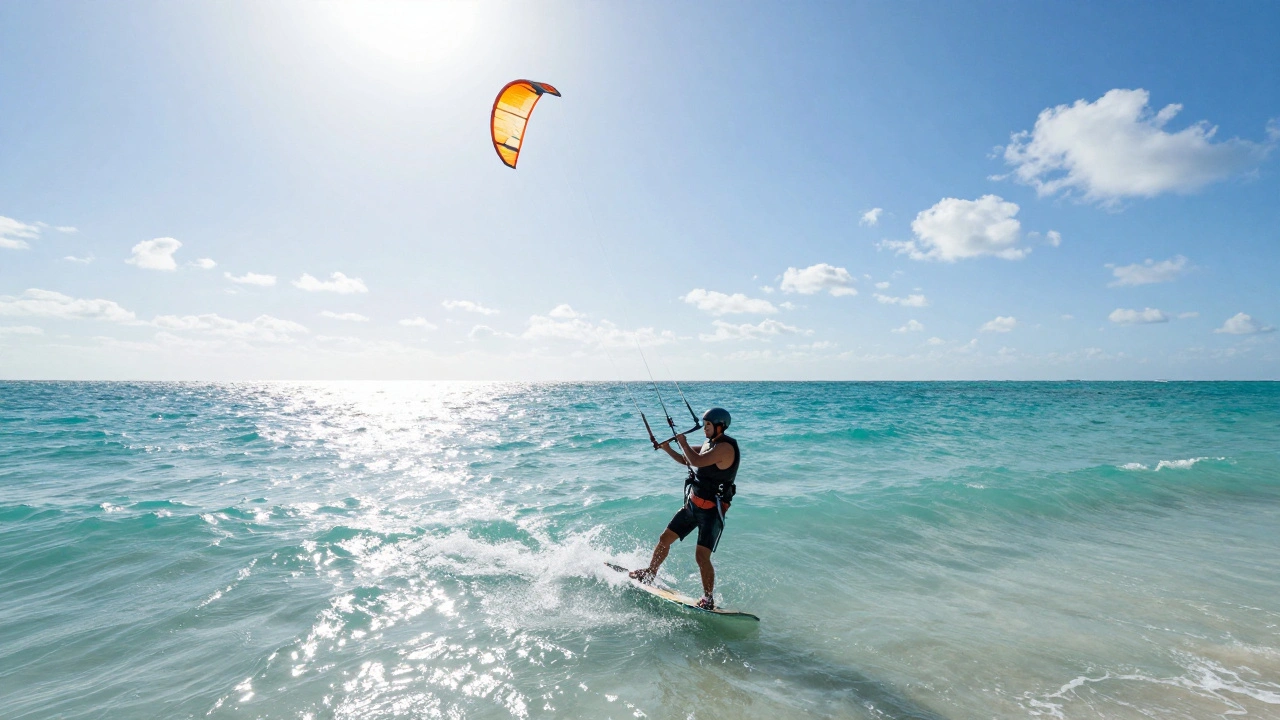
There is a specific moment when the kite drops, the board bites into the face of a breaking wave, and gravity takes over. It feels less like steering and more like negotiating with the ocean itself. If you have spent time on flat water, you know that kite surfing there is about generating your own speed and rhythm. But out in the swell, the rules change completely. The ocean provides the power; your job is to manage it.
Riding waves on a kiteboard requires a shift in mindset from "pumping" for speed to "reading" the water for flow. You are no longer just fighting the wind; you are using the wind to position yourself for the wave, then letting the wave do the heavy lifting. This guide breaks down the technical adjustments and strategic thinking needed to transition from flat-water cruising to confident wave riding.
The Gear Shift: From Twintip to Directional
You cannot ride waves effectively on a standard twintip board. While some beginners try to hack it by riding sideways on a larger twintip, you will quickly hit a ceiling. To truly surf waves, you need a directional board. These boards are designed with a distinct nose and tail, similar to a traditional surfboard but with fins and often a strap system.
| Feature | Twintip (Flat Water) | Directional (Wave Riding) |
|---|---|---|
| Shape | Symmetrical, wide waist | Tapered nose, narrow tail, rocker profile |
| Fins | Small center fin or none | Thruster (3-fin) or quad setup for grip |
| Foot Straps | Dual straps for power transfer | Single strap (front foot) or strapless |
| Maneuverability | High edge hold for carving jumps | Loose pivot for quick turns and bottom turns |
The single strap setup is crucial. On a twintip, both feet are locked in, which helps you generate force against the water. On a directional board, you only strap in your front foot. Your back foot remains free to slide forward and backward along the board. This allows you to adjust your stance dynamically as the wave changes shape. When you need to accelerate up the wave face, you slide your back foot forward. When you need to slow down or prepare for a cutback, you slide it back. This subtle movement is the secret to controlling speed without relying solely on the kite.
Reading the Wind and Tide
Before you even launch your kite, you need to understand the interaction between the wind and the tide. In flat water, wind direction matters mostly for launching safety. In wave riding, wind direction dictates the type of waves you will get. Offshore winds blow from the land toward the sea, creating clean, hollow waves that peel slowly. Onshore winds blow from the sea toward the land, creating messy, chaotic waves that close out quickly. Sidewind creates the most consistent lines for long rides.
If you are looking for quality waves, aim for offshore or light sidewind conditions. However, be cautious with strong offshore winds. They can push you far out to sea, making it difficult to return to shore. Always check the tidal charts. High tide usually means bigger, more powerful waves, while low tide might expose reefs or shallow sandbars that can ruin your day-or your board. Understanding these environmental factors saves you from wasting energy chasing bad waves.
Positioning: The Art of the Upwind Edge
The biggest mistake new wave riders make is trying to catch every wave they see. This leads to exhaustion and missed opportunities. Instead, focus on positioning. You want to stay slightly upwind of the breaking section. This gives you two advantages. First, if you miss a wave, you can easily turn upwind to catch the next one. Second, staying upwind allows you to drop into the wave with authority rather than scrambling to keep up with it.
Think of the wave as a conveyor belt. You don't need to run faster than the belt; you just need to step onto it at the right spot. Position yourself where the wave starts to break, not where it has already broken. This requires patience. Wait for the set. Watch the pattern. Waves often come in groups, followed by a lull. Use the lulls to reposition yourself upwind, so you are ready when the next set arrives.
The Drop-In: Committing to the Face
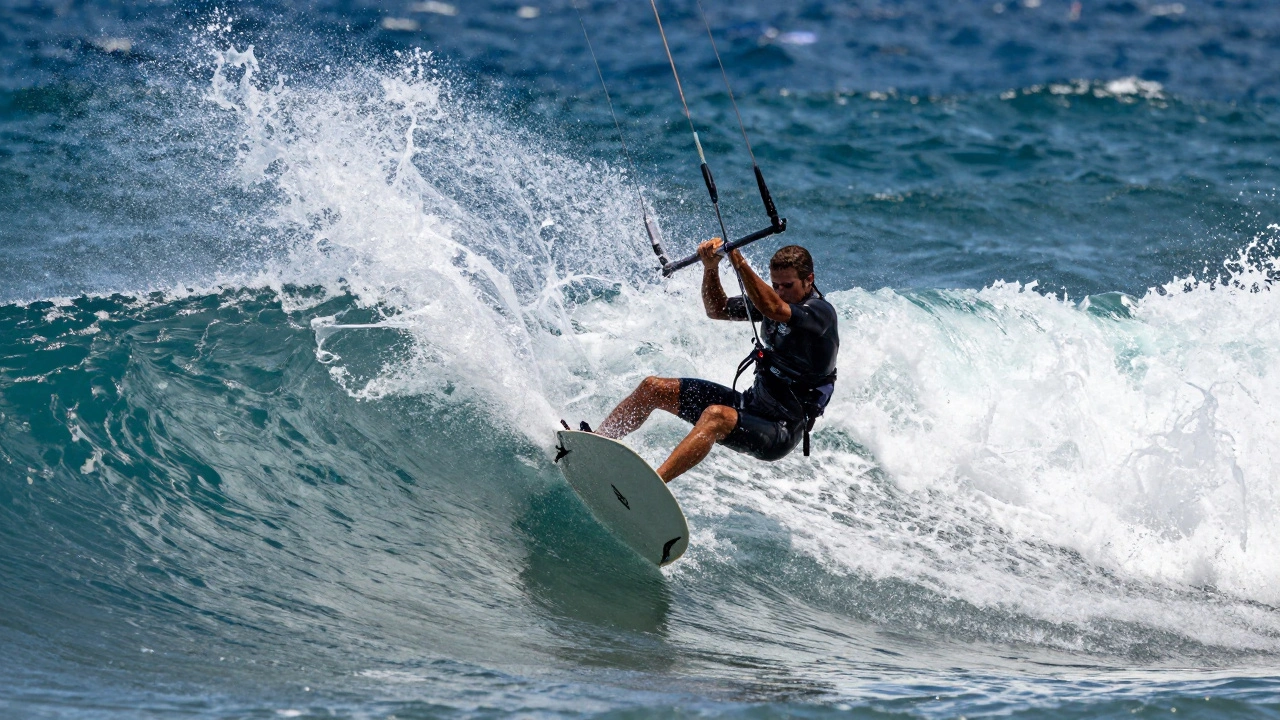
Catching a wave on a kiteboard looks different from catching one on a surfboard. You are already moving, thanks to the kite. The goal is to align your board with the wave's path and let the wave pull you. As the wave approaches, steer your kite to the side opposite the wave's break. If the wave is breaking left, fly your kite to the right. This pulls you across the wave face, allowing you to drop in smoothly.
Keep your weight on your back foot during the approach. This lifts the nose of the board and prevents it from pearling (digging into the water). As you feel the wave start to push you, shift your weight forward slightly to engage the rail. Do not fight the wave. Let it carry you. The kite should be relatively neutral, providing just enough tension to keep you stable, not enough to pull you off the line. This balance is delicate. Too much kite power, and you'll be pulled out of the wave. Too little, and you'll stall.
Bottom Turns and Top Turns
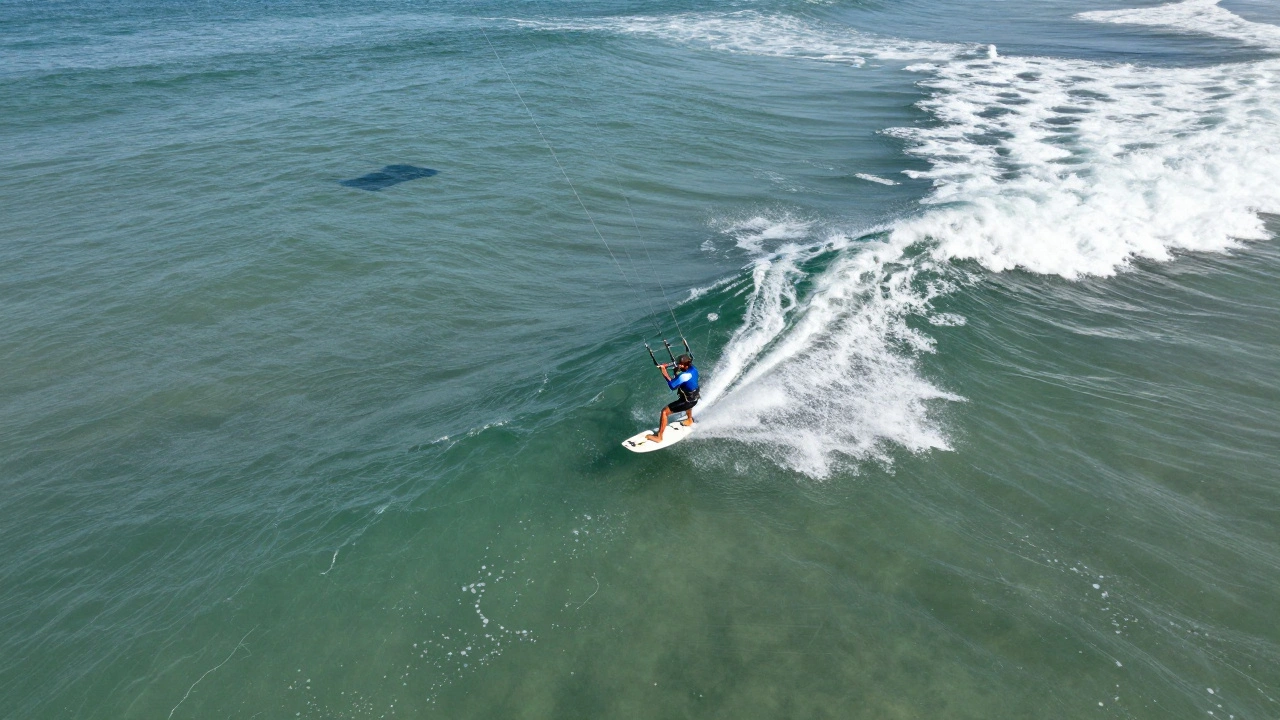
Once you are on the wave, the fun begins. The bottom turn is your primary tool for generating speed. As you reach the trough of the wave, carve hard against the water, using your knees and hips to absorb the pressure. This stores energy like a spring. As you exit the bottom turn, release that energy by extending your legs and pointing the board up the face of the wave.
The top turn, or cutback, is used to regain speed and reset your line. At the lip of the wave, rotate your shoulders and hips, turning the board back toward the whitewater. This maneuver keeps you in the pocket-the most powerful part of the wave-where the energy is highest. Practice these turns separately before combining them. Start with simple bottom turns on small waves, focusing on smooth arcs rather than sharp angles. Gradually add top turns as you gain confidence.
Air Moves and Style
Once you are comfortable riding the face, you can start adding air moves. The easiest way to get air on a wave is to use the lip of the wave as a ramp. Approach the lip with speed, pop off the top, and pull down on the kite bar to lift yourself higher. Keep your body compact in the air, and spot your landing before you commit. Landing back on the wave requires precision. Aim for the unbroken face, not the whitewater, to maintain momentum.
More advanced riders can combine wave riding with freestyle tricks, such as loops or rolls. However, always prioritize control over style. A crashed trick on a wave can lead to dangerous situations, especially if you are near other riders or obstacles. Focus on clean, controlled airs first. Build your repertoire gradually. The ocean rewards patience and skill, not recklessness.
Safety and Etiquette
Wave riding introduces new risks. You are dealing with breaking waves, which can hold you under, and other water users who may not expect a kiteboarder to appear suddenly. Always wear a impact vest and a helmet. Check your equipment thoroughly before entering the water, paying special attention to the leash connection and the kite's depower system.
Etiquette is just as important as safety. Give right of way to surfers and paddleboarders. Avoid dropping in on someone else's wave. If you are unsure, wait. Communication is key. Use hand signals or verbal cues to let others know your intentions. Respect the local culture and rules of the break. Every spot has its own unwritten code. Observe experienced riders and follow their lead.
What size kite should I use for wave riding?
For wave riding, you generally want a smaller kite than for flat water. Smaller kites are more responsive and easier to depower, which is crucial for maintaining control on steep wave faces. A good rule of thumb is to choose a kite that is 1-2 sizes smaller than your go-to flat water kite. For example, if you use a 12m kite for flat water, try an 8m or 9m for waves. This allows you to rely more on the wave's power and less on the kite's pull.
Can I ride waves on a twin-tip board?
While it is possible to ride small waves on a twin-tip, it is not ideal. Twin-tips are designed for symmetrical riding and high-speed carving, not for the dynamic maneuvers required in wave riding. You will find it difficult to perform bottom turns and top turns effectively. For serious wave riding, invest in a directional board. It will transform your experience and allow you to progress much faster.
How do I avoid getting held underwater by a wave?
If you fall and a wave holds you under, stay calm and protect your head. Swim upward aggressively as soon as the wave releases you. Always wear a leash to keep your board nearby, but be aware that the leash can also tangle around you. Practice falling safely and swimming up through whitewater in a controlled environment before attempting large waves. An impact vest can provide buoyancy and help you surface faster.
What is the best wind direction for learning wave riding?
Sidewind or slight offshore wind is best for learning. Sidewind creates consistent, predictable waves that peel cleanly, allowing you to practice your lines without dealing with closing-out sections. Offshore wind can create cleaner waves but may push you further out, making it harder to recover if you lose your gear. Avoid strong onshore winds, as they create messy, unpredictable waves that are challenging for beginners.
Do I need a harness for wave riding?
Yes, a harness is essential for comfort and efficiency. It transfers the kite's pull from your arms to your core, reducing fatigue and allowing you to focus on your board control. Waist harnesses are popular for their freedom of movement, while seat harnesses offer more support for longer sessions. Choose a harness that fits well and feels secure, as you will be relying on it for stability during dynamic maneuvers.