Getting to a kite competition isn’t like packing for a weekend hike. You’re not just bringing clothes and snacks-you’re hauling fragile, expensive gear that can’t afford to get bent, crushed, or lost. If you’ve ever shown up to a field only to realize your leader lines are tangled beyond repair or your frame snapped in transit, you know how high the stakes are. This isn’t about being fancy. It’s about showing up ready to fly, not fix.
Packing Your Kite Gear Right
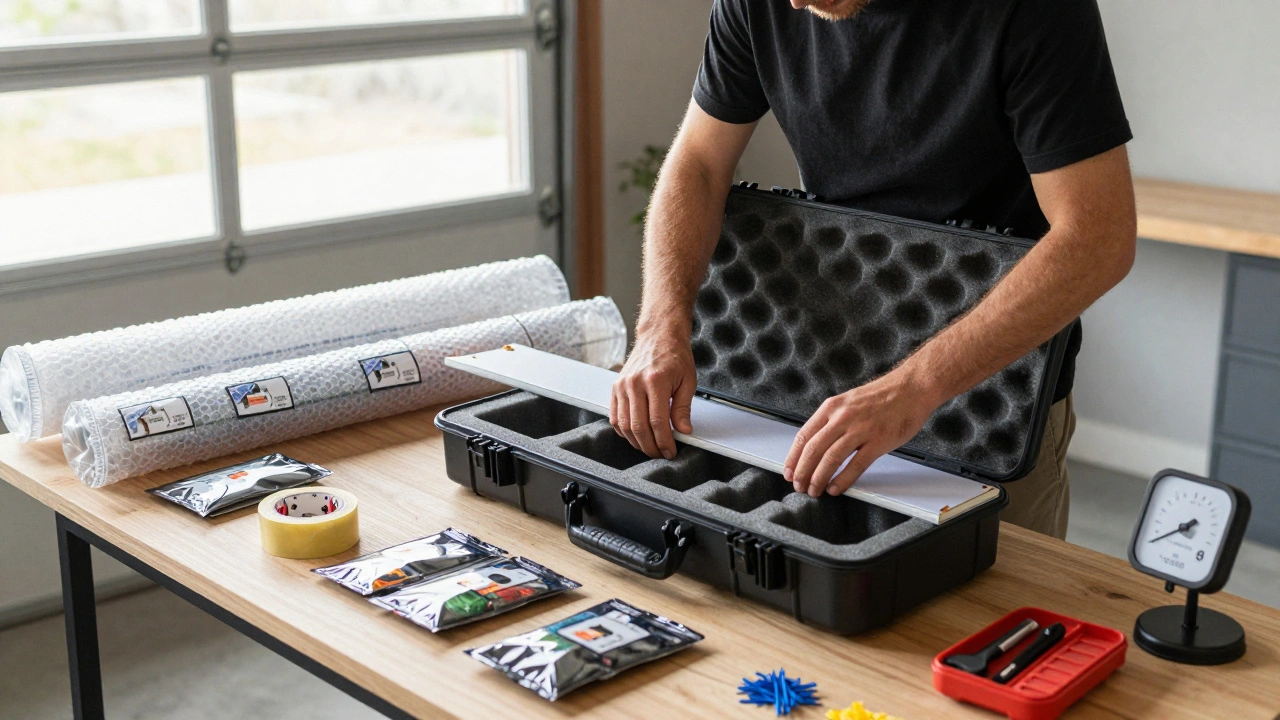
Start by sorting your gear into three piles: flyable, spares, and tools. Flyable means what you’ll use the day of the event. Spares are backups for the parts that break more often than you’d like-extra lines, replacement bridles, a spare kite or two, and a few extra keels. Tools? That’s your duct tape, line cutter, small screwdriver, and a roll of heat-shrink tubing. Don’t forget zip ties. They’re not glamorous, but they’ll save your set in a pinch.
Use hard-shell cases for your frames. Soft bags won’t cut it. Even the sturdiest kite frames can warp if stacked under a suitcase or squeezed into a cargo hold. Look for cases with foam inserts that hold each section snug. If you can’t afford a custom case, build your own: wrap each frame section in bubble wrap, slide it into a PVC pipe cut to length, and cap the ends with foam plugs. It’s low-tech, but it works.
Lines and reels? Never coil them tight. Over-tight winding creates memory kinks that turn into tangles mid-flight. Instead, use figure-eight wraps and store them loosely in breathable mesh bags. Label each set with your kite’s name and line weight. You’ll thank yourself when you’re racing against the wind and need to swap lines fast.
Transporting Kite Gear Across Town or Across the Country
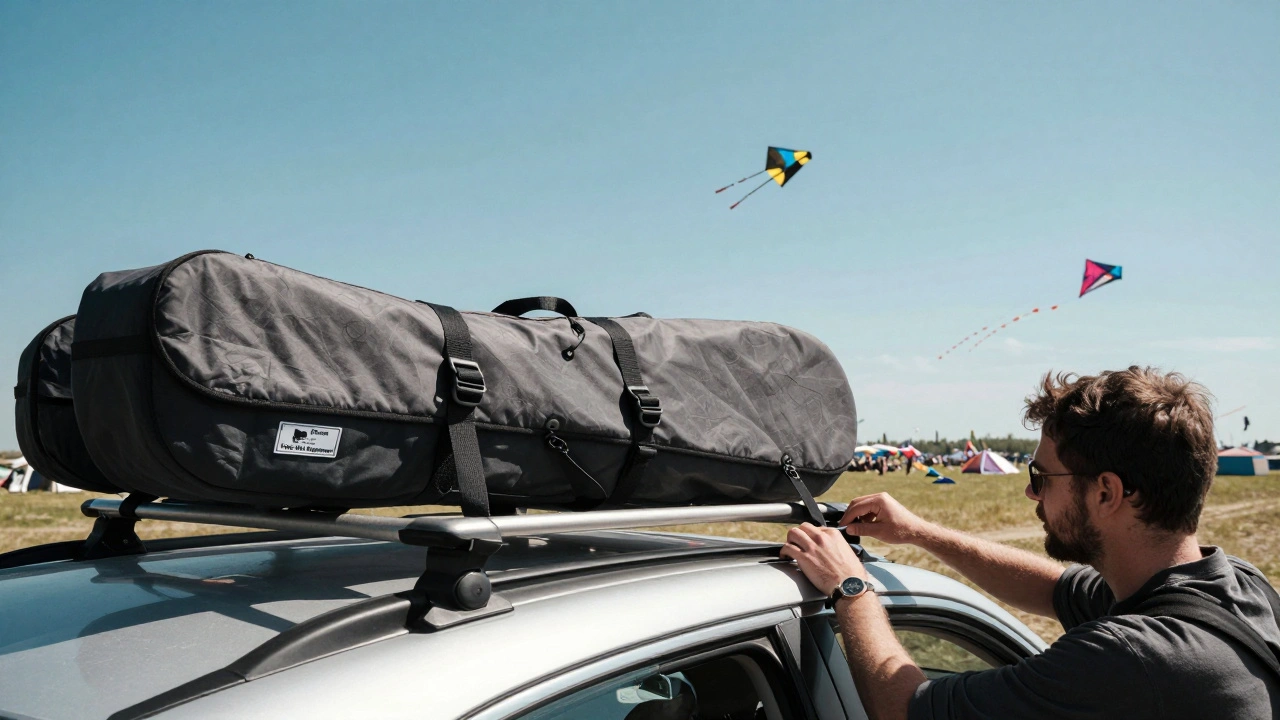
If you’re driving, load your gear last. Put it on top of everything else, not under suitcases. The weight of heavy bags can crush your frame sections. Use bungee cords to keep cases from sliding around. A roof rack with a padded carrier is ideal, but if you don’t have one, strap your cases to the roof with thick padding underneath-towels or foam mats work fine. Always check your straps before you hit the highway.
Flying? This is where things get tricky. Airlines treat kite gear like luggage, not sports equipment. Most consider your kite a checked bag, even if it’s just a single frame. Some travelers report success with gate-checking frames as oversized sports gear, but it’s not guaranteed. Call ahead. Ask if they classify kites as "sports equipment" under their policy. If they say no, pack your main kite in a hard case and check it. Bring your backup kite as a carry-on. That way, if your main gets lost, you still have a chance to compete.
Never check your lines or reels. They’re too easy to lose or damage. Slip them into your personal item bag. Same with your winch, gloves, and harness. If you’re flying internationally, keep your line spools in their original packaging. Customs agents might mistake them for fishing gear. A printed note saying "Kite Competition Equipment-Not for Fishing" can help.
Insurance: What You Need and What You Don’t
Most people assume their homeowner’s or renter’s insurance covers their kite gear. It doesn’t. Not unless you’ve specifically added a rider for sports equipment. Standard policies cap coverage for individual items at $1,500-enough for a phone, not enough for a $3,000 competition kite. And if your kite gets damaged during transport? That’s usually excluded.
There are two solid options. One: get a specialized sports equipment policy. Companies like SportRider is a U.S.-based insurance provider that offers coverage for competitive sports equipment, including kites, surfboards, and mountain bikes cover damage, theft, and even accidental loss during travel. Their basic kite package starts at $95 a year and covers up to $5,000 in gear.
Two: check if the competition organizer offers event insurance. Many large events, like the International Kite Festival in Hawaii or the Windborne Classic in Oregon, include a rider that covers damage to registered competitors’ gear. It’s not comprehensive-it won’t cover lost luggage-but it does help if your kite is crushed during transport or damaged on-site. Always ask for the insurance details before you register.
Either way, take photos of your gear before you leave. Store them in the cloud and email a copy to yourself. If something breaks, you’ll need proof of value for a claim. Include serial numbers if your kite has them. Some high-end models do.
What to Bring Beyond the Kite
People forget the little things that make or break a competition day. Here’s what you actually need:
- Wind meter-your eyes lie. A handheld anemometer tells you if conditions are legal for your class.
- Line tension gauge-knowing your line tension saves hours of tuning.
- Small folding chair-competitions last all day. You’ll need a place to sit and adjust lines.
- Sunscreen and lip balm-kite fields are open, exposed, and often windy. You’ll burn fast.
- Reusable water bottle and snacks-no one wants to be the person who runs out of energy at 3 p.m.
- Portable power bank-your wind meter and phone need juice.
- Small notebook and pen-write down wind conditions, kite settings, and what worked. You’ll forget it by tomorrow.
What Not to Bring
Leave the following at home:
- Extra kites you haven’t flown in six months-unless you’re competing in multiple classes, stick to your top two.
- Old, frayed lines-don’t risk a mid-air snap because you were too lazy to replace them.
- Non-essential gadgets-your drone might look cool, but it’s not allowed on the competition field.
- Too many people-bring one helper max. More than that just gets in the way.
On the Ground: What to Do When You Arrive
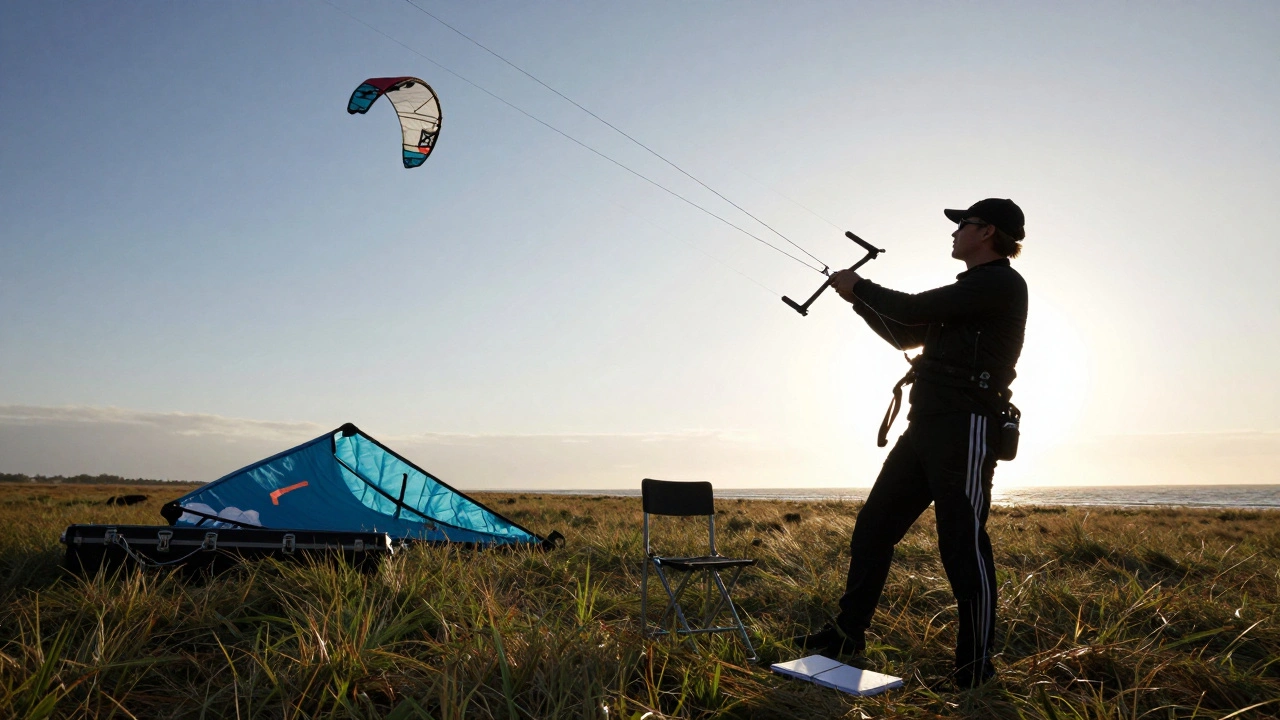
Don’t unpack right away. Wait for the official briefing. Often, rules change from year to year. Maybe they’ve switched from 100m lines to 80m. Maybe they’ve banned certain materials. Show up early. Talk to the organizers. Ask if there are any last-minute changes. Then, set up your gear in a quiet corner. Let it acclimate to the temperature. If you flew in from a cold city to a warm coastal site, give your kite 30 minutes to adjust. Condensation can ruin your lines.
Test your lines before you launch. Pull them taut. Look for frays. Check the knots. Tie a backup knot on each end. Use a quick-release on your harness. Competitors who skip these steps end up on the ground, not in the air.
Final Rule: Always Have a Backup Plan
Even the best-laid plans fail. Your kite gets damaged. Your flight slot gets canceled. The wind dies. You’re not alone. Every top competitor has a backup plan. Maybe it’s a second kite. Maybe it’s a different line setup. Maybe it’s just knowing how to adjust your bridle on the fly. Practice it before you leave home. Don’t wait until you’re standing in the field with 50 people watching.
Traveling for kite competitions isn’t about showing off your gear. It’s about showing up ready to fly, no matter what. The best flyers aren’t the ones with the most expensive kites. They’re the ones who packed smart, planned ahead, and didn’t panic when things went wrong.
Can I check my kite as luggage on a plane?
Yes, but it’s risky. Most airlines allow you to check kite frames as oversized baggage, but they don’t guarantee they won’t be crushed. Always use a hard-shell case and label it "Fragile Kite Equipment." Consider flying your backup kite as a carry-on to avoid total loss.
Do I need special insurance for my competition kite?
Standard homeowner’s or renter’s insurance usually won’t cover kite damage during travel. For full protection, get a specialized sports equipment policy like SportRider, or check if the event offers event insurance. Always document your gear with photos and serial numbers before you travel.
What’s the most common mistake kite flyers make when traveling?
Packing lines too tightly. Over-wound lines develop permanent kinks that cause tangles and poor flight performance. Always use figure-eight wraps and store them in loose mesh bags. Also, forgetting to check local wind rules-many competitions have strict limits on line length and kite size that vary by region.
How do I protect my kite frame during road trips?
Wrap each frame section in bubble wrap, then slide it into a PVC pipe cut to length. Cap the ends with foam plugs. Secure the pipes in your vehicle with bungee cords so they don’t roll. Never stack heavy items on top of your gear. If you’re using a roof rack, pad the contact points with thick towels or foam mats.
Should I bring spare parts to a competition?
Yes. Always bring at least two sets of replacement lines, a spare bridle, and a few keels. Bring duct tape, a line cutter, and zip ties. These aren’t luxuries-they’re survival tools. Many competitors have won events because they fixed a broken line on the spot while others sat out.