There is a specific sound that only a well-built Bamboo Kite makes. It is not the whistle of plastic or the hum of carbon fiber. It is a rhythmic creaking, a gentle snap against the wind, a voice that has been carried across generations in China, India, Japan, and Southeast Asia. For centuries, these weren't just toys; they were tools for agriculture, signals for war, and symbols of spiritual release. Today, while modern materials dominate the sky, the bamboo frame remains the gold standard for understanding how kites actually fly.
When you look at a commercial kite, you see a finished product. When you look at a traditional bamboo kite, you see a process. The difference lies in the material's memory. Bamboo is alive in a way that fiberglass isn't. It bends, it stores energy, and it returns it. This article breaks down exactly how this heritage construction works, why the flight traits are so distinct, and what you need to know if you want to build one yourself.
The Material Advantage: Why Bamboo Still Wins
You might think modern materials like carbon fiber or fiberglass have made bamboo obsolete. In high-speed racing kites, maybe. But for traditional shapes like the diamond or the delta, bamboo offers something synthetic materials struggle to replicate: consistent elasticity. A bamboo spine doesn't just hold its shape; it flexes under load and snaps back, absorbing turbulence that would shake a rigid frame apart. This flexibility translates directly into smoother flight in gusty conditions.
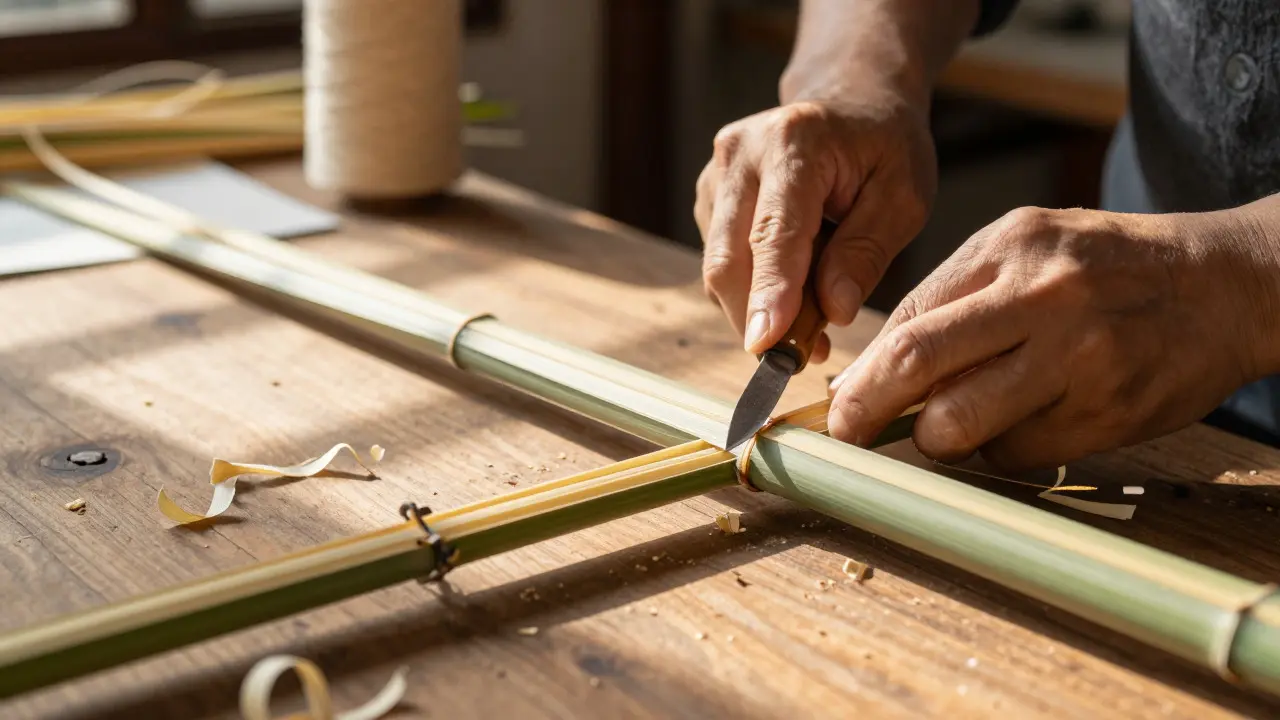
The key to using bamboo correctly is understanding its grain. You aren't just cutting sticks; you are selecting structural members. The outer layer of the bamboo culm (the stalk) is denser and stronger than the inner pith. Traditional makers split the bamboo lengthwise rather than sawing it crosswise. This keeps the fibers aligned with the stress points of the kite frame. If you cut across the grain, the stick will splinter under tension. If you split along the grain, it behaves like a spring. This simple geometric choice is the foundation of every successful heritage kite.
| Attribute | Bamboo | Fiberglass | Carbon Fiber |
|---|---|---|---|
| Flexibility | High (absorbs shock) | Moderate | Low (rigid) |
| Weight-to-Strength Ratio | Very High | Good | Excellent |
| Repairability | Easy (field repair possible) | Difficult | Impossible in field |
| Aesthetic | Natural, organic | Industrial | Sleek, technical |
| Cost | Low | Moderate | High |
Anatomy of Heritage Construction
Building a traditional kite is less about following a blueprint and more about balancing forces. The structure consists of two primary components: the spar (the main vertical or diagonal bones) and the bridle (the string system that connects the kite to the line). Getting the spar geometry right determines lift; getting the bridle right determines stability.
In a classic Chinese diamond kite, the spars are often asymmetric. The upper part of the spine is slightly shorter than the lower part. This shifts the center of gravity forward, which helps the kite nose into the wind naturally. If you make the spars equal length, the kite tends to yaw side-to-side. This subtle adjustment, known as the "head" of the kite, is a hallmark of heritage design. It’s a physical cheat code written into the wood itself.
The covering material also plays a critical role in flight traits. Traditional kites used rice paper, mulberry bark paper, or thin silk. These materials are lightweight but porous. Unlike modern ripstop nylon, which can trap air and create drag pockets, paper allows air to pass through slightly. This reduces the overall weight of the assembly and prevents the kite from becoming too heavy when wet. However, it means you must treat the paper carefully. A single tear can compromise the entire surface area needed for lift.
Flight Traits: How They Move in the Sky
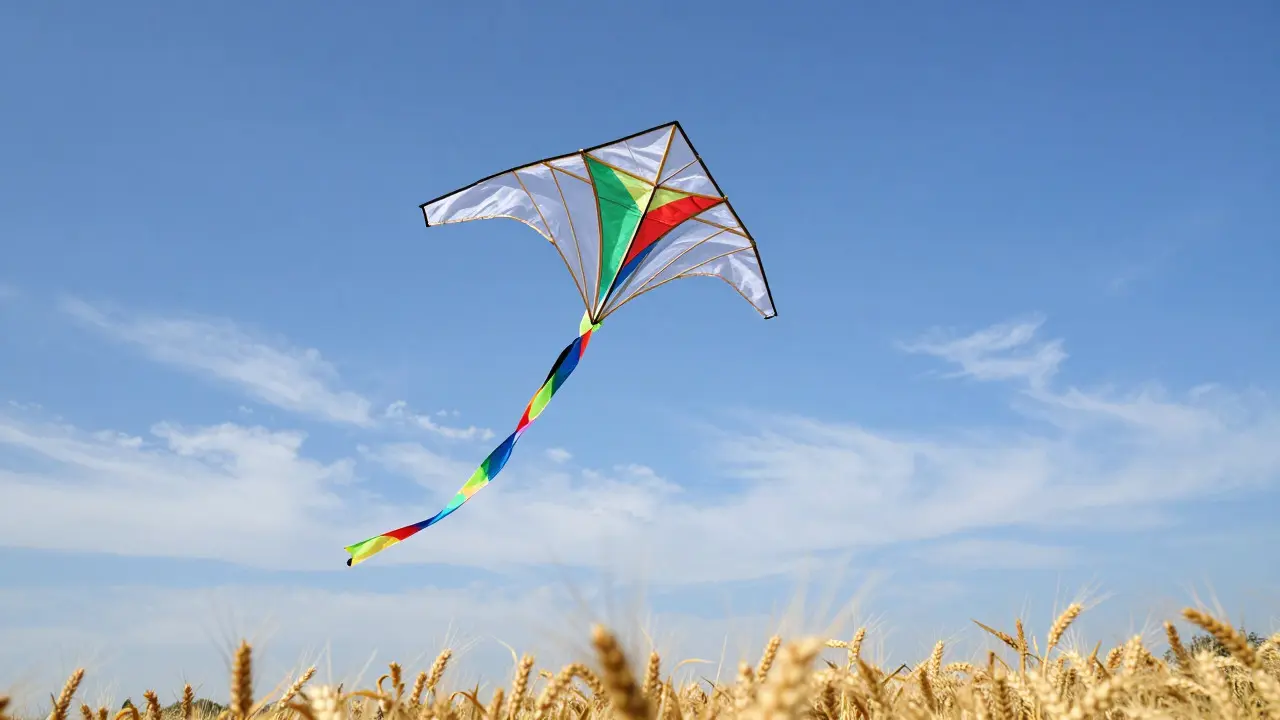
Once airborne, a bamboo kite behaves differently than a plastic one. Because the frame is flexible, the kite oscillates gently in response to wind changes. This movement is often mistaken for instability by beginners, but it is actually a feature. The oscillation acts as a damper. When a gust hits, the frame bends, storing kinetic energy. As the gust passes, the frame straightens, releasing that energy smoothly. A rigid carbon fiber kite, by contrast, transfers that energy directly to the line, causing sudden jerks that can break the tether or scare the flyer.
The sound is another distinct trait. The vibration of the bamboo spars creates a harmonic resonance. In many cultures, small gongs or bells are attached to the tail or the spine. The wind passing over the paper skin creates a low-frequency hum, while the gongs add a higher-pitched chime. This acoustic signature is unique to each kite size and shape. A large delta kite sounds deep and resonant; a small diamond kite sounds sharp and bright. Pilots often identify kites in the distance by their song before they even see them.
Stability in crosswinds is where heritage designs shine. Traditional kites usually have long tails. These aren't just decorative. The tail adds drag behind the center of pressure, creating a stabilizing force that keeps the kite pointing into the wind. Without the tail, a bamboo kite in turbulent air will spin out. With it, the kite locks into a steady position, allowing the flyer to manage the line with minimal effort. The length of the tail is typically three to five times the height of the kite, a ratio refined over hundreds of years of observation.
Cultural Significance and Regional Variations
You cannot talk about bamboo kites without talking about culture. In China, the kite is associated with the festival of Qingming, where people fly kites to let go of bad luck. Some traditions involve cutting the line to send the kite away into the void, carrying misfortune with it. In India, particularly in Gujarat, kite flying is a competitive sport during the Makar Sankranti festival. Here, the bamboo frames are reinforced with thicker spines to withstand the abrasive glass-coated lines used to cut rival kites. The flight trait here is durability and agility, not just graceful soaring.
In Japan, the *Koinobori* (carp streamers) are technically kites, but they are flown vertically on poles. However, flat bamboo kites called *Tako* are flown horizontally. The Japanese approach emphasizes precision and symmetry. The paper is often colored with intricate patterns that align with the wind direction, ensuring the best visual impact. The construction is meticulous, with joints glued and wrapped in thread for maximum strength. This attention to detail results in kites that can fly in very light winds, a trait highly valued in urban settings where space is limited.
These regional variations show that there is no single "correct" way to build a bamboo kite. The core principles remain the same-lightweight frame, balanced bridle, stable tail-but the execution adapts to local wind patterns, cultural rituals, and available materials. A kite built for the coastal winds of Kerala will have a different spar thickness than one built for the inland breezes of Kyoto.
Step-by-Step: Building Your First Heritage Kite
If you want to experience these flight traits yourself, you don’t need a workshop. You need a few basic tools and some patience. Here is a simplified guide to building a traditional diamond kite.
- Select your bamboo: Choose young, green bamboo or dried bamboo that is straight and free of knots. Split the culms into strips roughly 3mm wide and 1mm thick. Sand them smooth to prevent tearing the paper.
- Cut the spars: For a 60cm tall kite, cut the spine to 65cm and the cross-spar to 45cm. Remember the asymmetry rule: the top section of the spine should be slightly shorter than the bottom section to shift the center of gravity.
- Create the joints: Cross the spars near the top third of the spine. Wrap the intersection tightly with cotton thread. Use a drop of wood glue to secure it, but let the thread do most of the work. The joint needs to be strong but allow for slight flex.
- Apply the paper: Cut a piece of rice paper or lightweight craft paper to fit the frame, leaving a 2cm margin. Glue the edges to the spars. Ensure the paper is taut but not stretched to the point of distortion. Wrinkles reduce lift efficiency.
- Attach the bridle: This is the most critical step. Tie two strings from the top tip and two from the bottom tip. Bring them together at a single point on the main line. The bridle length should be approximately 70% of the kite's height. Adjust this point until the kite flies level in a gentle breeze.
- Add the tail: Attach a ribbon or string tail that is at least 180cm long. Tie it to the bottom tip of the spine. The tail provides the necessary drag to stabilize the kite in turbulent air.
Test your kite in light winds first. If it dives, shorten the bridle attachment point on the main line. If it stalls, move the point further down. This iterative process is where the real learning happens. You are not just building an object; you are tuning an instrument.
Common Pitfalls and How to Avoid Them
Even experienced builders make mistakes. The most common error is using spars that are too thick. Thicker bamboo is heavier, and excess weight kills lift. You need the thinnest strip that can support the paper without bending permanently. Another mistake is neglecting the bridle symmetry. If the left and right bridle strings are unequal in length, the kite will bank continuously to one side. Measure twice, tie once.
Weather is another factor. Bamboo absorbs moisture from the air. If you leave your kite outside in humid conditions, the spars will swell, changing the frame geometry. Store your kites in a dry place. If you get them wet, let them dry slowly at room temperature. Rapid drying can cause cracking. Finally, don't ignore the paper. Cheap printer paper is too heavy and tears easily. Invest in proper kite paper or lightweight tissue. The quality of the covering directly impacts how long your kite stays aloft.
Frequently Asked Questions
What kind of bamboo is best for kites?
Young, green bamboo or fully dried, straight culms are ideal. The key is consistency. Avoid bamboo with large nodes or cracks. The strips should be uniform in thickness to ensure even stress distribution across the frame.
Why does my bamboo kite keep spinning out of control?
Spinning usually indicates a stability issue. Check your tail length-it should be at least three times the kite's height. Also, verify your bridle symmetry. If the bridle point is too high, the kite may pitch up and stall. Lower the bridle attachment point on the main line to fix this.
Can I use regular craft paper instead of rice paper?
Yes, but choose the lightest option available. Standard printer paper is often too heavy for small kites. Lightweight tissue paper or specific kite paper works better. The goal is to minimize weight while maintaining enough strength to withstand wind pressure without tearing.
How do I repair a broken bamboo spar in the field?
Carry a spare strip of bamboo and some tape. Align the broken ends, overlap them by 2-3 cm, and wrap tightly with electrical tape or cloth tape. This temporary fix holds well enough to land the kite safely. Do not try to glue it in the field unless you have quick-drying adhesive.
What wind speed is suitable for a traditional bamboo kite?
Most traditional diamond kites fly best in winds between 5 and 15 mph (8-24 km/h). Lighter kites can fly in 3-5 mph winds, but they require precise bridle tuning. Stronger winds above 15 mph may require a larger kite or a heavier frame to maintain stability.