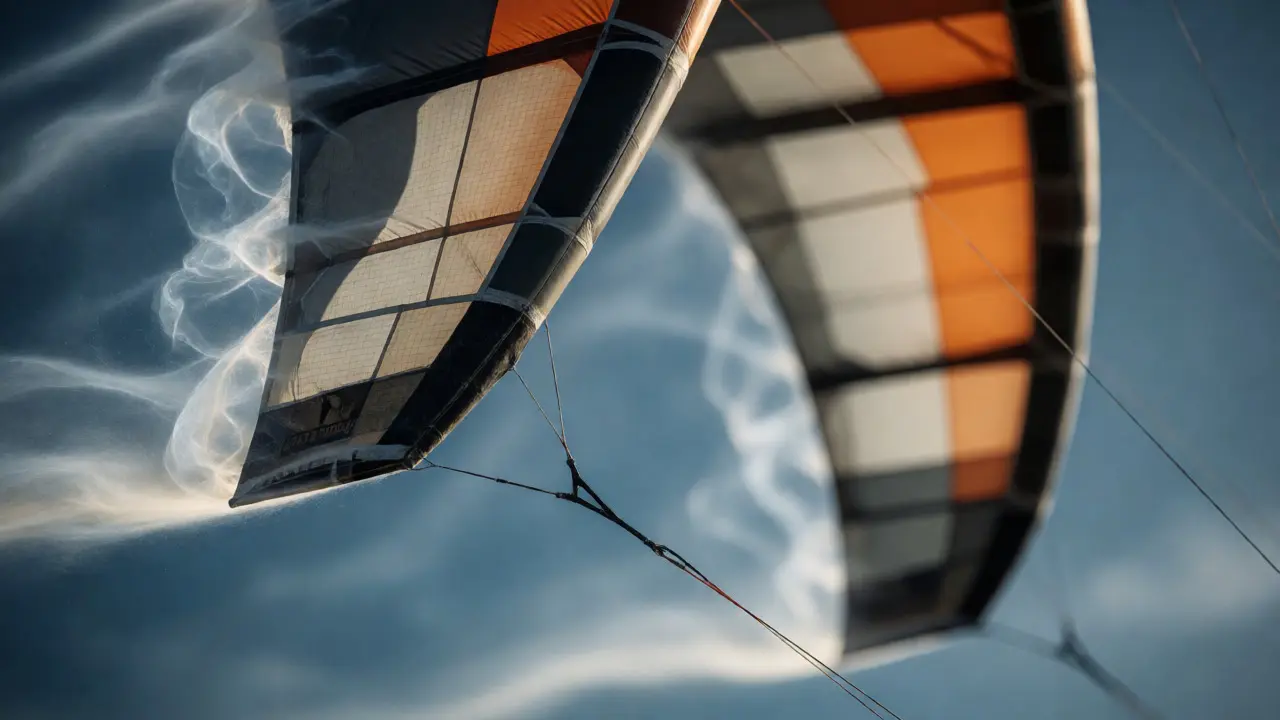
You’ve probably seen it happen. You launch a high-performance parafoil or a delta kite, and instead of climbing steadily into the wind window, it wobbles. The tips flutter violently, creating a chaotic mess of air that saps your lift and makes line control a nightmare. This isn’t just bad luck or a cheap build; you are fighting tip vortices, swirling masses of air that form at the ends of wings due to pressure differences between the top and bottom surfaces. These vortices act like invisible brakes, dragging energy away from your kite every second it’s in the sky.
The fix often lies in two simple additions: winglets and tails. While they look different-one is a rigid or semi-rigid vertical extension, the other a flexible streamer-they both target the same enemy. But do they work the same way? Do you need both? And does adding them actually slow your kite down by increasing drag? Let’s break down the physics of aerodynamic efficiency in kites so you can stop guessing and start flying smarter.
Why Tip Vortices Kill Your Lift
To understand why these swirls matter, you have to look at how a kite generates lift. Air moves faster over the curved upper surface of the kite than under the flatter lower surface. This speed difference creates low pressure on top and high pressure underneath, pushing the kite upward. Nature hates pressure imbalances, so the high-pressure air from below tries to sneak around the tip to the low-pressure zone above. As this air curls over the edge, it spins up into a vortex.
These vortices aren’t harmless. They create induced drag, which is essentially the cost of making lift. In aircraft design, induced drag can account for nearly half of total drag during takeoff and climb. For kites, especially those with short spans relative to their area (like box kites or small deltas), this effect is exaggerated. The vortices also destabilize the airflow, causing the tips to collapse or flutter, which ruins the smooth laminar flow needed for efficient soaring. If your kite feels "mushy" in light winds, tip vortices are likely stealing your energy.
Winglets: The Aircraft Solution Adapted for Kites
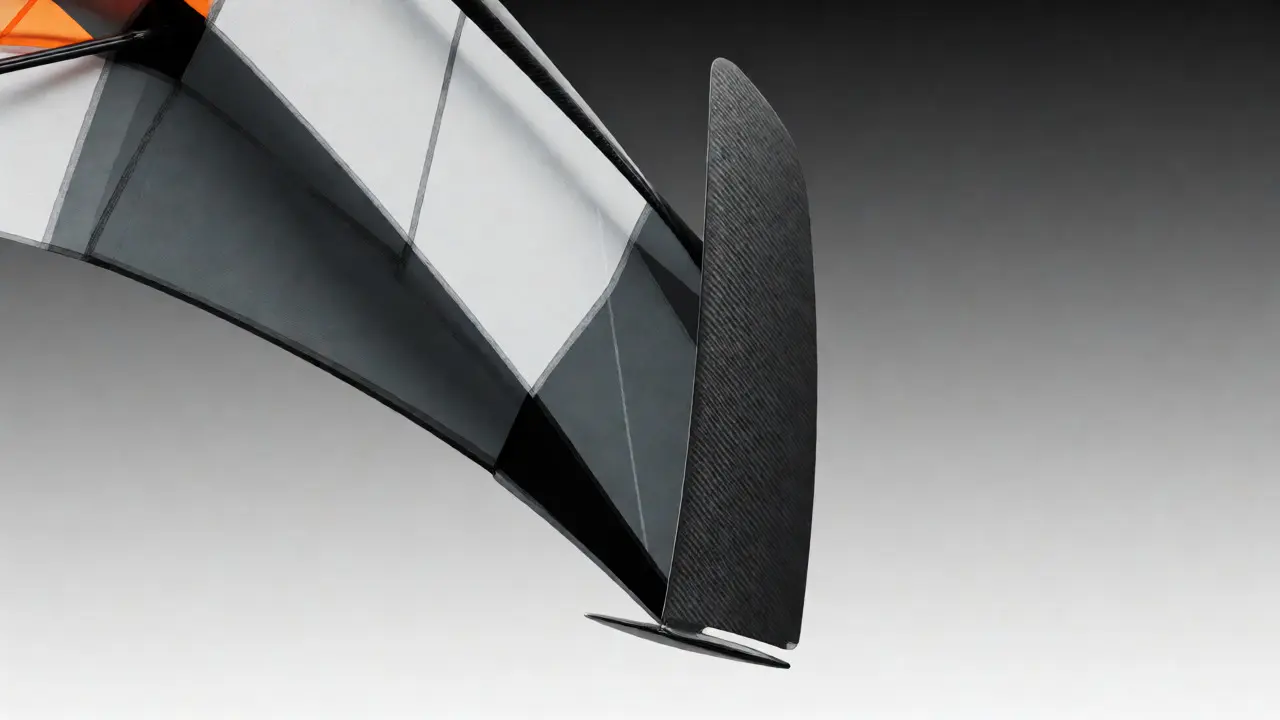
Winglets are vertical extensions added to the wingtips. You see them on commercial airliners, but they’ve migrated to high-end stunt kites and large traction kites too. Their job is straightforward: they block the air from curling over the tip. By creating a physical barrier, winglets reduce the strength of the vortex and minimize the mixing of high- and low-pressure zones.
In kite design, winglets serve a dual purpose. First, they improve the aspect ratio effectively. A higher aspect ratio (longer span relative to chord) generally means less induced drag. Since you can’t always make a kite wider without hitting local regulations or storage limits, winglets let you keep a compact footprint while mimicking the efficiency of a longer wing. Second, they add structural rigidity. On soft parafoils, reinforced winglet pockets help maintain the correct angle of attack at the tips, preventing the leading edge from folding inward during gusts.
However, winglets aren’t free. They add weight and increase frontal area, which raises parasitic drag. If your winglets are too heavy or poorly shaped, they might cancel out the gains from reduced induced drag. The sweet spot usually involves lightweight materials like carbon fiber rods or stiffened fabric pockets that weigh less than 5% of the kite’s total mass.
Tails: Stabilizers That Also Manage Flow
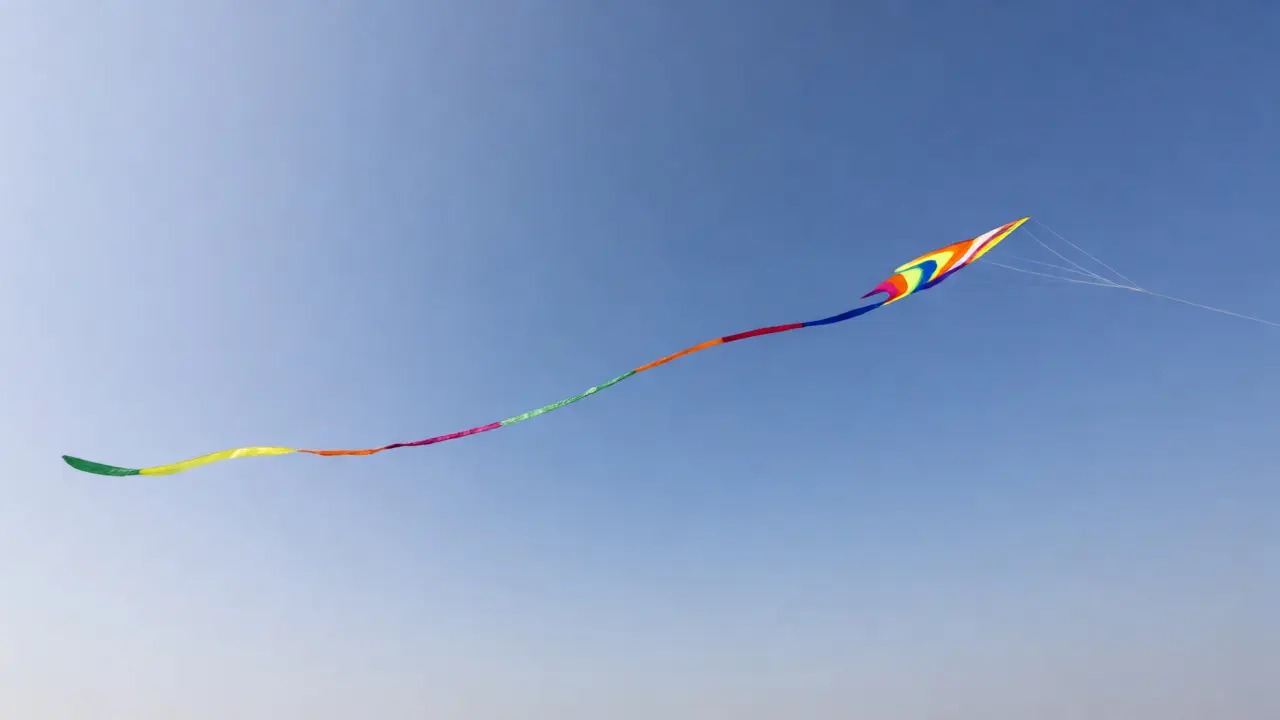
If winglets are the engineers’ solution, tails are the traditionalist’s answer. Historically, tails were used to stabilize diamond-shaped kites by lowering the center of gravity and adding drag behind the center of pressure. This keeps the nose pointed into the wind. But recent studies and practical experience show tails do more than just prevent spinning.
A long tail creates a wake that disrupts the formation of coherent tip vortices. Instead of one strong, organized swirl at each tip, the turbulent air shed by the tail breaks up the vortex structures. This doesn’t eliminate induced drag entirely, but it reduces its impact on stability. More importantly, tails provide immediate feedback. When a kite starts to lose efficiency, the tail droops or swings wildly, alerting the pilot before the crash happens. For beginners, this visual cue is invaluable.
There’s a trade-off here, though. Tails add significant drag. A 10-foot tail on a small diamond kite can reduce its maximum glide ratio by 15-20%. This means you’ll sink faster when you try to crosswind fly or perform aerial maneuvers. So, if you’re chasing distance or speed, a tail might be a liability. If you’re chasing stability and ease of launch, it’s an asset.
Comparing Efficiency Gains: Winglets vs. Tails
Which one should you choose? It depends on your kite type and flying goals. Below is a breakdown of how each modification affects performance metrics based on common kite designs.
| Kite Type | Primary Benefit of Winglets | Primary Benefit of Tails | Drag Penalty | Best For |
|---|---|---|---|---|
| Delta Stunt Kite | Improved turn precision, reduced tip flutter | Minimal benefit, adds unnecessary weight | Low (Winglets) | Precision flying, light winds |
| Diamond Kite | Rarely used, hard to attach securely | Stability, prevents spinning | High (Tails) | Beginners, static display |
| Parafoil Traction Kite | Higher power-to-weight ratio, better drift | Can interfere with bridle lines | Moderate (Winglets) | Kiteboarding, land yachting |
| Box Kite | Reduces lateral oscillation | Adds visual flair, minor stabilization | Very High (Both) | Photography, observation |
Notice the pattern? Winglets excel where precision and efficiency matter most, such as in stunt flying or traction sports. Tails shine where simplicity and stability are key, like casual backyard flying. Box kites are a special case; they already have high drag, so adding either feature yields diminishing returns unless you’re trying to dampen specific oscillations.
DIY Modifications: Adding Winglets to Your Existing Kite
You don’t need to buy a new kite to test these concepts. Many experienced pilots retrofit older models. Here’s a quick guide to adding simple winglets to a delta or parafoil kite.
- Identify the Tips: Locate the outermost points of the leading edge. Mark the spot where the sail curves downward.
- Cut the Fabric: Use scrap ripstop nylon to cut two triangular pieces. The base should match the width of the kite tip, and the height should be about 10-15% of the kite’s wingspan.
- Reinforce: Sew a small sleeve along the bottom edge of each triangle to hold a dowel or carbon rod. This gives the winglet structure.
- Attach: Glue or sew the winglets vertically to the tips, ensuring they point straight up (or slightly outward). Avoid angling them backward, as this increases drag.
- Test: Launch in moderate wind. Watch for smoother tip behavior. If the kite becomes sluggish, shorten the winglets.
For tails, the process is even simpler. Tie a lightweight ribbon or tassel to the center of the trailing edge. Start short-about 3 feet-and lengthen it only if the kite remains unstable. Remember, excess tail length equals excess drag.
Common Pitfalls and Troubleshooting
Even with the right modifications, things can go wrong. One common mistake is using winglets that are too flexible. If the material flops around in the wind, it creates more turbulence than it solves. Always use stiff backing. Another issue is asymmetric attachment. If one winglet is angled differently than the other, the kite will pull to one side, forcing you to constantly correct with your hands.
With tails, beware of tangling. Long tails can wrap around the bridle lines, especially during launches or crashes. Keep tails made of smooth, non-fraying material like satin or lightweight polyester. Avoid cotton ribbons, which absorb moisture and become heavy in humid conditions-a real problem in places like Portland, Oregon, where morning fog lingers.
Finally, consider the wind range. Winglets tend to help more in lighter winds where induced drag dominates. In very strong winds, parasitic drag from the winglets themselves might outweigh the benefits. Experiment with removing them in gale-force conditions to see if your kite handles better.
Do winglets really save fuel or energy in kites?
In the context of kites, "fuel" translates to wind energy capture. Yes, winglets can improve the lift-to-drag ratio by reducing induced drag from tip vortices. Studies on model aircraft suggest winglets can improve efficiency by 5-10%, and similar principles apply to larger kites, particularly those with shorter wingspans.
Can I add a tail to a stunt kite?
You can, but it’s rarely recommended. Stunt kites rely on precise balance and minimal drag for fast turns. A tail adds drag and shifts the center of pressure, making the kite feel sluggish and harder to maneuver. Only add a tail if your stunt kite is consistently unstable in light winds and you prioritize stability over agility.
How long should a kite tail be?
A good rule of thumb is 3 to 5 times the height of the kite for diamond shapes. For example, a 2-foot tall diamond kite needs a 6-10 foot tail. Longer tails provide more stability but significantly increase drag. Start shorter and adjust based on observed stability.
Are winglets legal in kite competitions?
It depends on the class. Most open classes allow modifications, but strict classes like IKA (International Kite Association) racing may have specific rules about dimensions and attachments. Always check the current rulebook before modifying a competition kite.
Why does my kite still wobble even with winglets?
Winglets address tip vortices, not all instability sources. Wobbling can also come from incorrect bridle tuning, uneven wind gusts, or a misaligned spine. Check your bridle angles first; if the tow point is off-center, no amount of aerodynamics will fix the pull.