
How the Wind Became a Fishing Tool
The basic problem for any coastal fisherman is distance. If you cast a line from the shore, you're limited by your own strength. But if you attach that line to a Kite, the wind does the heavy lifting. By using the lift generated by the wind, fishermen could launch their hooks over the breaking surf and into the calm, deep waters where larger predators hang out.
This technique wasn't just about distance, though. It was about stealth. A boat engine or the splashing of a swimmer scares fish away. A kite, hovering silently high above the surface, allows a hook to drift naturally with the current. In places like Papua New Guinea and parts of Melanesia, this method was perfected over generations, turning the sky into a launchpad for the sea.
The Engineering of Traditional Kites
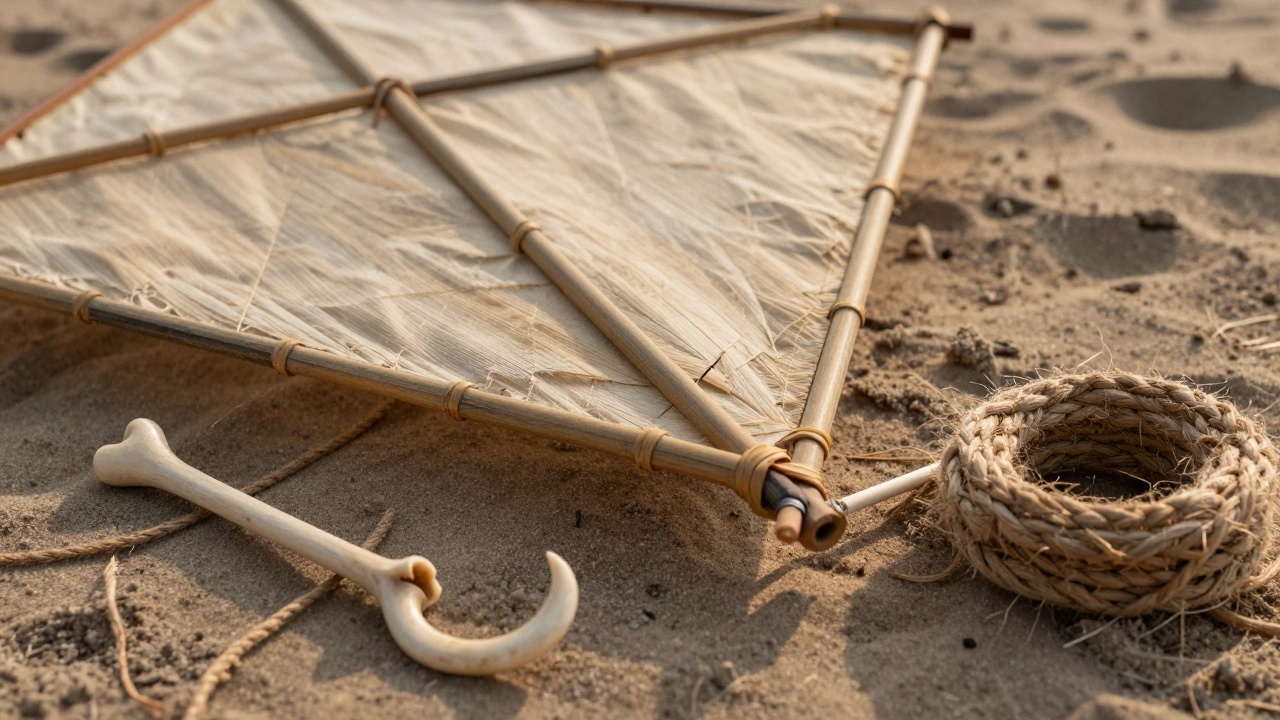
You can't just use a store-bought plastic kite for this. The materials had to be local, durable, and capable of handling the tension of a fighting fish. Most traditional kites were constructed from Bamboo or sturdy reeds for the frame. For the skin, they used woven Pandanus leaves or treated bark cloth, which was lightweight yet strong enough to catch the steady trade winds.
The balance was critical. If the kite flew too high, the line would snap under the tension. If it dipped too low, it would crash into the waves. Fishermen developed a keen understanding of aerodynamics long before the term existed. They used specific shapes-often crescent or diamond-to ensure the kite remained stable even when a heavy fish began to pull on the line.
| Component | Material Used | Purpose/Attribute |
|---|---|---|
| Frame | Bamboo / Rattan | Flexibility and structural strength |
| Sail/Skin | Pandanus / Bark Cloth | Wind resistance and lightweight buoyancy |
| Line | Braided Coconut Fiber (Sennit) | High tensile strength and saltwater resistance |
| Hook | Bone / Shell / Hardwood | Sharpness and durability in coral environments |
Cultural Significance and Secret Knowledge
In many Pacific cultures, kite fishing wasn't just a chore; it was a rite of passage. The ability to "read the wind" and keep a kite stable while battling a fish was a mark of a skilled provider. This knowledge was often guarded closely. Specific designs for the kites or secret blends of bait were passed down from father to son, creating a lineage of expertise within specific clans.
There was also a spiritual element. The connection between the sky (the realm of ancestors and spirits) and the sea (the source of life) was physically represented by the kite line. In some rituals, the launching of a kite was accompanied by prayers for a bountiful catch, acknowledging that the wind was a gift from the gods that allowed the community to eat.
Targeting the Big Game: Strategy and Species
What exactly were they catching? While small reef fish were common, the real goal was often larger pelagic species. Tuna, Mahi-mahi, and various species of Trevally were the primary targets. These fish cruise the edges of the reefs and the deeper drops of the continental shelf-areas that are often too dangerous for a small canoe to enter during rough weather.
The strategy was simple but effective: the kite would carry the lure far out, and the fisherman would then "walk" the kite back toward the shore by adjusting the line tension. This created a zig-zagging movement in the water that mimicked a wounded baitfish, an irresistible lure for a hungry predator. Once the fish struck, the fisherman had to dive the kite-pulling it closer to the water-to reduce the wind resistance and prevent the line from snapping.
The Decline and Modern Revival
The arrival of industrial fishing gear and motorized boats in the 20th century pushed traditional kite fishing to the margins. Why spend hours crafting a bamboo kite when you can buy a nylon net or a fiberglass rod? As Commercial Fishing took over, many of the specific technical skills associated with kite angling began to vanish.
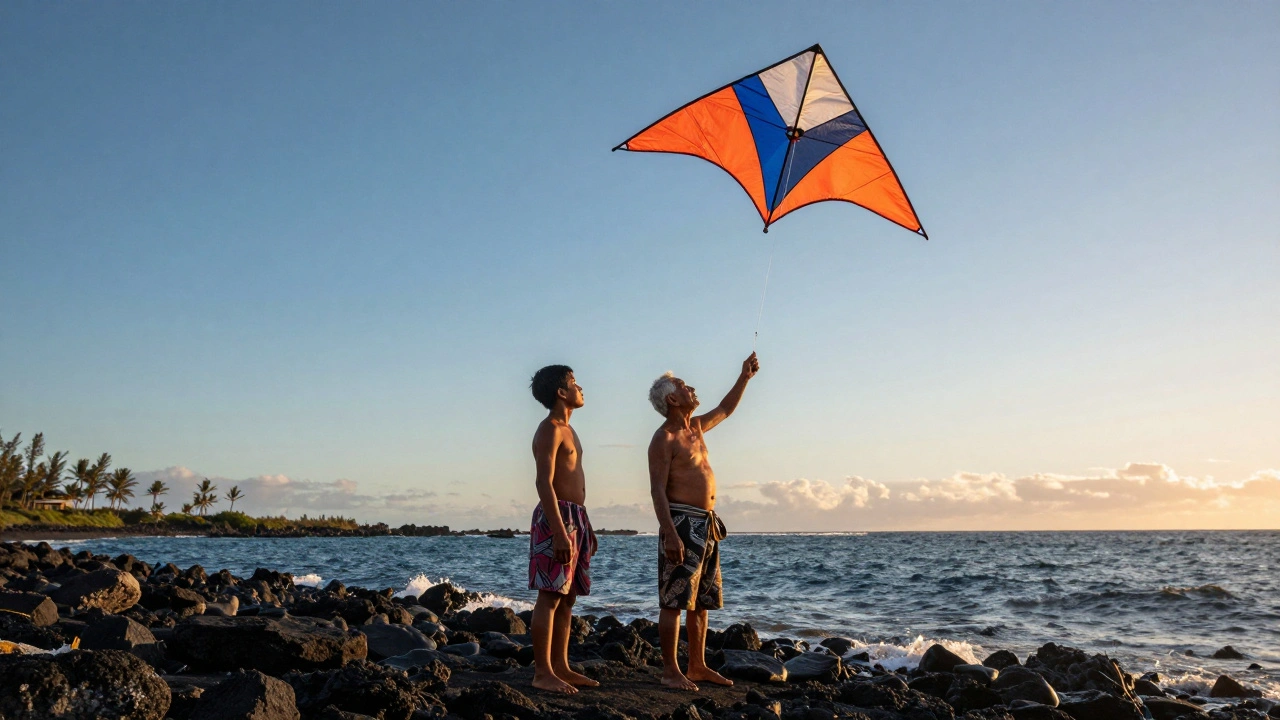
However, we are seeing a shift. There is a growing movement toward "heritage fishing" across the Pacific. Young generations are returning to these methods, not necessarily because they need to for survival, but to reconnect with their ancestors. Modern materials, like carbon fiber and ripstop nylon, are being blended with traditional designs, creating a hybrid form of angling that honors the past while utilizing the present.
Lessons for Modern Anglers
Even if you've never flown a kite on a beach, there are things we can learn from these ancient Pacific techniques. The most important is the concept of "low-impact fishing." Kite fishing doesn't require fuel, it doesn't disturb the seabed with heavy anchors, and it relies entirely on the natural environment. In an era where we are desperate to protect our oceans, looking back at these sustainable practices is more than just a history lesson-it's a blueprint for the future.
If you ever find yourself in a coastal region, try to think about the invisible lines that once connected the sky to the sea. The next time you see a kite in the air, remember that for some of the most skilled navigators in human history, that colorful shape in the clouds was a lifeline to the deep.
Is kite fishing still practiced today?
Yes, although it is much rarer than it once was. It survives primarily as a cultural heritage practice in parts of Melanesia and Polynesia, and it has seen a small revival among traditionalists and eco-conscious anglers who want to avoid using motorized boats.
How does a kite actually help catch fish?
The kite acts as a delivery system. By using wind lift, it carries the fishing line and hook far beyond the surf zone and into deeper water. It also allows the lure to drift naturally and silently, making it less likely to spook fish compared to a loud boat engine.
What were the most common materials used for these kites?
Traditional kites were made from natural, locally sourced materials. This included bamboo or rattan for the structural frame, and woven pandanus leaves or bark cloth for the sail. The lines were typically made from braided coconut fiber, known as sennit, which is incredibly strong and resists rot in saltwater.
Were there specific types of fish targeted with this method?
Kite fishing was primarily used for pelagic fish-those that live in the open ocean. Common targets included tuna, mahi-mahi, and trevally. These species often roam the edges of reefs and deep-water drops, which are the exact areas the kite could reach from the shore.
Why did kite fishing decline in popularity?
The primary cause was the introduction of modern technology. Motorized boats, nylon nets, and commercial fishing gear made it possible to catch larger quantities of fish with less manual labor and time than the meticulous process of building and flying a kite.