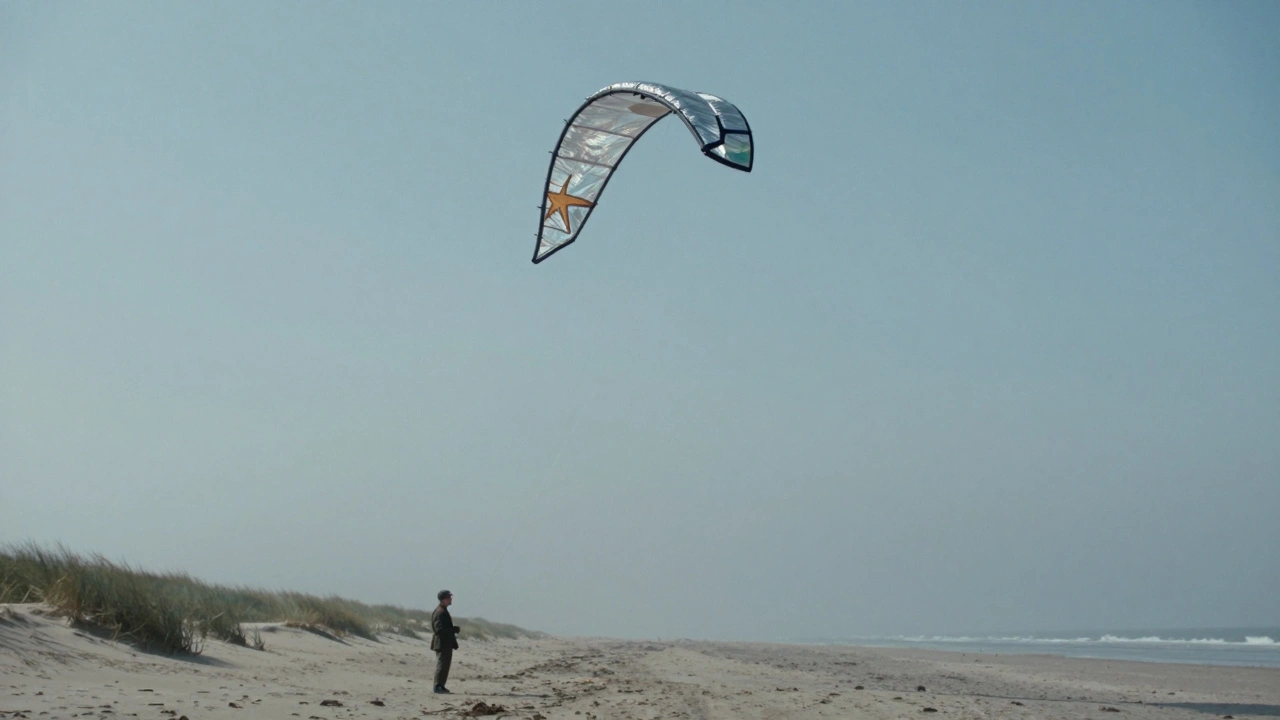
Quick Facts on Cold War Aerial Kites
- Primary Use: Signal interception, radio relay, and meteorological data collection.
- Key Advantage: Low cost and zero acoustic signature compared to early aircraft.
- Main Limitation: Dependence on consistent wind and vulnerability to weather.
- Legacy: Paved the way for high-altitude balloons and early UAVs.
The Secret War for Signals Intelligence
The core problem for intelligence agencies in the 1950s was the horizon. Radio waves, especially high-frequency ones, travel in straight lines. If you wanted to listen to a broadcast from a distant city, you needed your antenna to be as high as possible to clear the curve of the earth. This is where Signals Intelligence (SIGINT) entered the kite game. SIGINT is the interception of signals and communication to gather intelligence. By lofting a wire antenna via a kite, operators could essentially create a temporary, mobile radio tower that could reach altitudes of 2,000 to 5,000 feet.
These Cold War kite projects weren't just about height. They used specialized conductive materials to ensure the antenna didn't lose signal strength. Imagine a team in West Berlin trying to catch a glimpse of East German military chatter. A fixed antenna might be spotted and sabotaged, but a kite launched from a backyard or a disguised van was far less suspicious. It allowed the NSA (National Security Agency) and its counterparts to map out enemy communication networks without ever crossing a physical border.
Surveillance and the Pre-Satellite Era
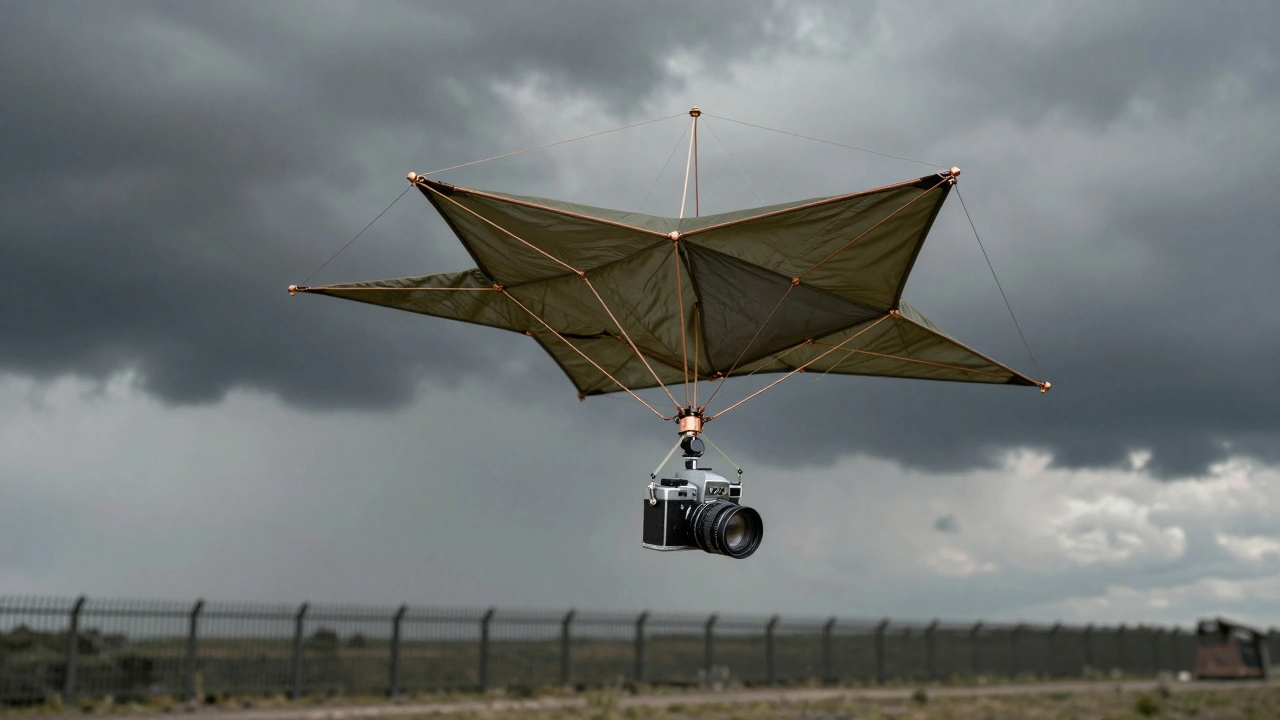
Before the launch of Sputnik in 1957, the only way to get a high-angle photo of a restricted base was via a plane or a balloon. However, planes like the U-2 aircraft were expensive and high-risk. Kites offered a "low-slow" alternative for tactical surveillance. By attaching lightweight, modified cameras to stable, large-frame kites, military researchers could conduct short-range reconnaissance over border fences.
The trick was stability. A shaking camera produces a blur, not intelligence. This led to the development of "box kites" and cellular structures that could remain rock-steady even in gusty winds. These platforms allowed for the first experiments in remote-triggering cameras, a precursor to the modern drone camera. If a kite was shot down or crashed, there was no pilot to capture and interrogate-only a piece of fabric and a lens that could be written off as a civilian accident.
| Feature | Intelligence Kites | Weather Balloons | U-2 Spy Plane |
|---|---|---|---|
| Cost | Very Low | Medium | Extremely High |
| Stealth | High (Low Profile) | Medium (Visible) | Low (Radar Trace) |
| Control | Tethered/Direct | Wind-Driven | Pilot-Controlled |
| Altitude | Low to Mid | Very High | Extreme High |
Atmospheric Experiments and Nuclear Fallout
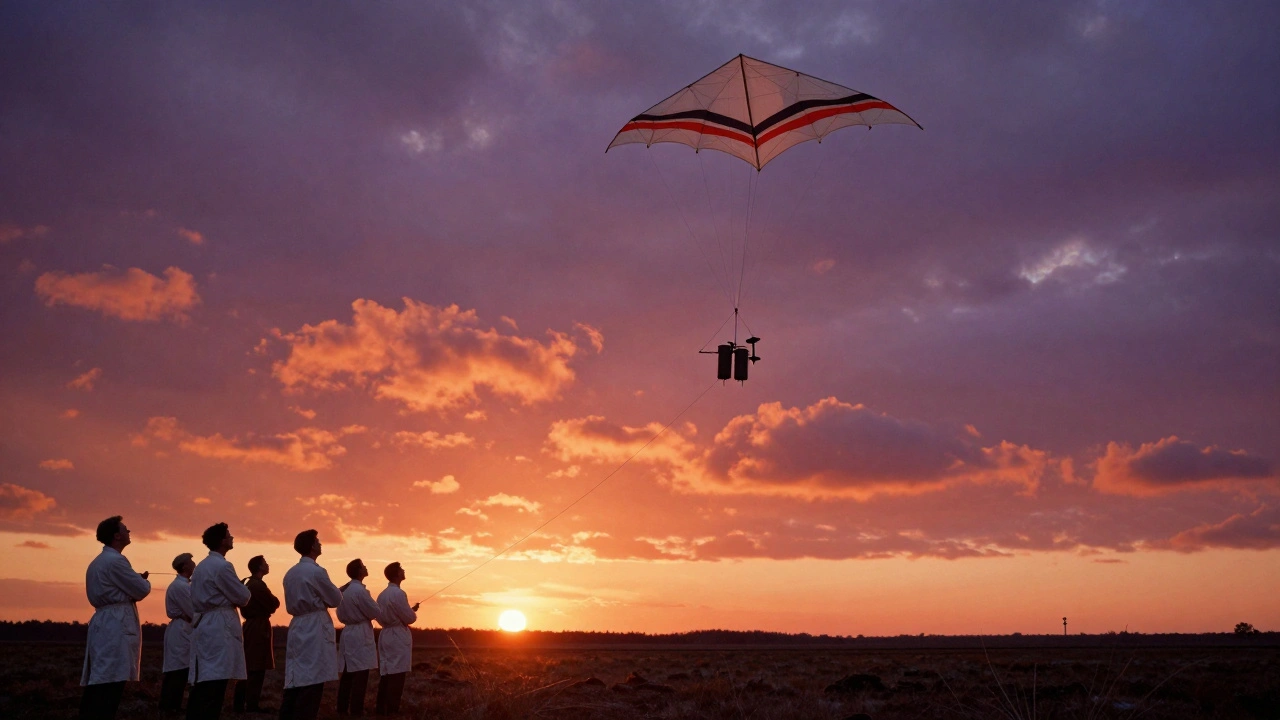
It wasn't all about spying. The Cold War was also a race to understand the upper atmosphere, partly to know how to launch missiles and partly to track the effects of nuclear testing. Meteorological Kites were used to carry sensors into the troposphere to measure temperature, humidity, and wind speed at specific intervals. This was far more precise than a balloon, which simply floats wherever the wind takes it.
When the US and USSR began atmospheric nuclear testing, scientists needed to know where the radioactive fallout was drifting. Kites were deployed to capture air samples at varying altitudes. These samples were then analyzed to determine the chemical signature of the blast, helping intelligence agencies figure out the yield and sophistication of an opponent's nuclear weapon. The Troposphere-the lowest layer of the atmosphere-became a critical zone of study, and the kite was the most reliable tool for sampling it without the unpredictability of a free-floating balloon.
The Physics of the "Spy Kite"
Why a kite and not just a long pole? Because of the inverse square law of signal decay and the need for a wide aperture. A kite antenna can be hundreds of feet long, creating a massive "capture area" for radio waves. The materials used were often a mix of ripstop nylon and thin copper wiring. To prevent the kite from diving in high winds, engineers used sophisticated bridle systems that could adjust the angle of attack in real-time.
The challenge was the "tether." A heavy rope would pull the kite down, but a thin string would snap. This led to the use of high-tensile strength synthetic fibers, some of which were developed during the same era as the first nylon parachutes. These tethers also served as the conduit for the signals, meaning the wire had to be integrated into the string without adding too much weight or creating electrical interference.
Transition to the Digital Age
As the 1960s rolled into the 70s, the era of the kite as a primary spy tool began to fade. The introduction of Satellite Imagery and the development of the first UAVs (Unmanned Aerial Vehicles) made tethered systems look primitive. Why fly a kite in a storm when you can have a satellite in geosynchronous orbit? However, the lessons learned from kite stability and signal capture were directly applied to the design of early drones.
Even today, you can see the ghost of these projects in the use of "tethered drones" for temporary cell towers at music festivals or disaster zones. The concept is identical to the 1950s spy kite: use the wind (or a propeller) to get an antenna high enough to clear the horizon, then feed that data back down a wire to a ground station. The Cold War may have ended, but the physics of getting a signal into the air remains the same.
Were these kites actually used in combat?
Mostly, they were used for intelligence gathering and surveillance rather than direct combat. Their primary value was in the "gray zone"-collecting data without officially violating airspace in a way that would trigger a war. They were tools of stealth and observation, not weaponry.
How did they hide the kites from the enemy?
Kites were often launched from remote areas, forests, or disguised as civilian leisure activities. Because a kite is just fabric and string, it doesn't show up on radar like a metal airplane does. This made them nearly invisible to the air defense systems of the time.
What happened to the technology?
The technology evolved into the high-altitude balloons used by NASA and the modern drone industry. The specific use of tethers for power and data transmission is still used in specialized military and emergency communication drones today.
Could anyone have flown these kites?
While the basic act of flying a kite is simple, the military versions required significant engineering. Balancing a heavy radio antenna while maintaining aerodynamic lift requires a deep understanding of fluid dynamics and structural engineering.
Did the Soviets use kites too?
Yes. Both sides of the Cold War engaged in similar atmospheric and signal research. The USSR had an extensive history of using kites for meteorological research and early aeronautical experiments long before the US perfected their SIGINT kites.
Next Steps for History Buffs
If you're fascinated by this intersection of low-tech tools and high-stakes espionage, start by looking into the history of the Cayley kite, which laid the groundwork for early aviation. You might also want to explore the records of the CIA's Project Genetrix, which, while using balloons instead of kites, shared the same goal of clandestine aerial surveillance. For those interested in the physics, experimenting with a simple radio-frequency (RF) antenna on a modern stunt kite (safely and legally!) can show you exactly why height is everything in the world of signals.