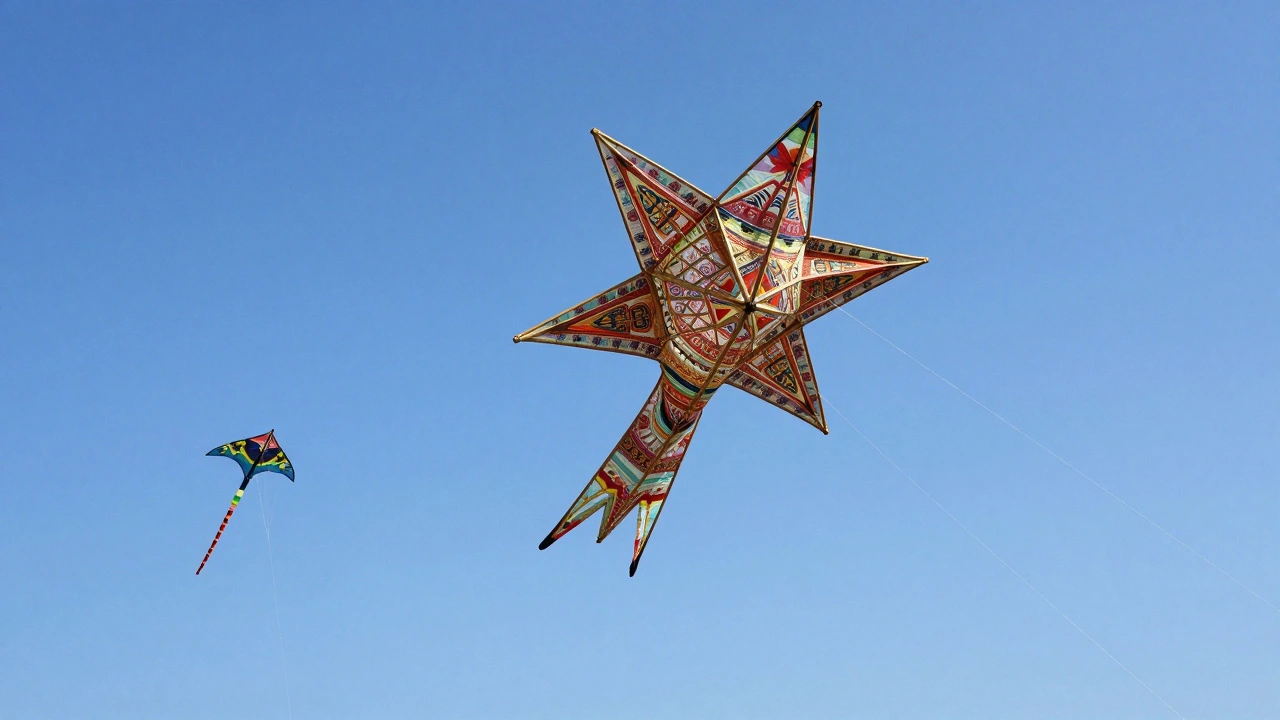
Imagine looking up at a clear blue sky and seeing a massive, intricately decorated star-shaped kite battling a small, nimble disc. It looks like a dance, but it's actually a centuries-old competition. In Thailand, kite flying isn't just a childhood hobby; it's a high-stakes cultural event that marks the transition from the dry season to the rainy season. If you've ever wondered why the skies over Bangkok suddenly fill with giant shapes every April and May, you're looking at a tradition that dates back to the Sukhothai era.
Quick Highlights for the 2026 Season
- Peak Window: Mid-April to June 2026.
- Main Event: The National Kite Festival at Sanam Luang.
- Key Styles: The heavy-hitting Chula is a combat-style kite, while the Pakhaoang is the agile defender.
- Best Experience: Visit the coastal regions for wind-heavy festivals.
The Art of Combat: Chula vs. Pakhaoang
To understand the Thai kite flying season, you have to understand the rivalry. It's not about who can fly the highest; it's about who can bring the other kite down. Chula is a large, star-shaped kite made from bamboo and paper, often weighing up to several kilograms. It acts as the aggressor, using its size and power to pull the opponent from the sky.
Opposing the giant is the Pakhaoang, which is a smaller, more aerodynamic kite known for its speed and agility. While the Chula uses brute force, the Pakhaoang uses quick maneuvers to dodge and trip up the larger kite. It's a classic David vs. Goliath scenario happening thousands of feet in the air.
| Attribute | Chula Kite | Pakhaoang Kite |
|---|---|---|
| Shape | Large Star | Small Diamond/Round |
| Role | Attacker (The Giant) | Defender (The Agile) |
| Materials | Bamboo, Paper, String | Light Bamboo, Thin Paper |
| Flight Style | Stable, Powerful | Fast, Erratic |
National Kite Festival at Sanam Luang
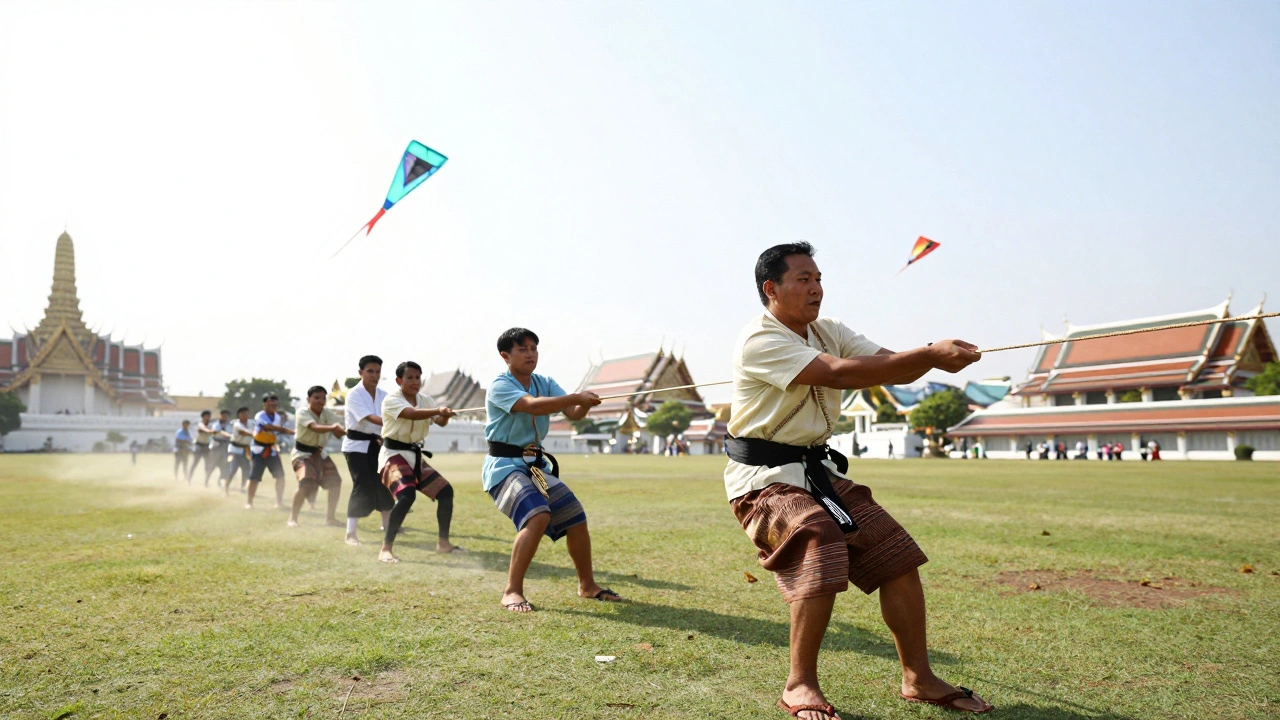
The heart of the Thai kite flying season is the National Kite Festival held at Sanam Luang, the royal ceremonial ground in Bangkok. For 2026, the main competitions are scheduled from late April through May. This isn't just a gathering of hobbyists; it's a professional sport. Teams consist of multiple people-some to hold the heavy line, others to steer, and a captain to call the strategy.
The wind at Sanam Luang is famously consistent during these months, making it the perfect arena. If you visit, look for the "string-cutters." These are specialized lines coated in crushed glass or abrasive materials designed to slice through the opponent's string. The roar of the crowd when a Chula finally snaps a Pakhaoang's line is something you won't forget.
Regional Festival Highlights Across Thailand
While Bangkok gets the fame, the regional festivals offer a more intimate look at how different provinces interpret the craft. In the South, the wind is stronger, leading to kites that are built for durability rather than just aesthetics.
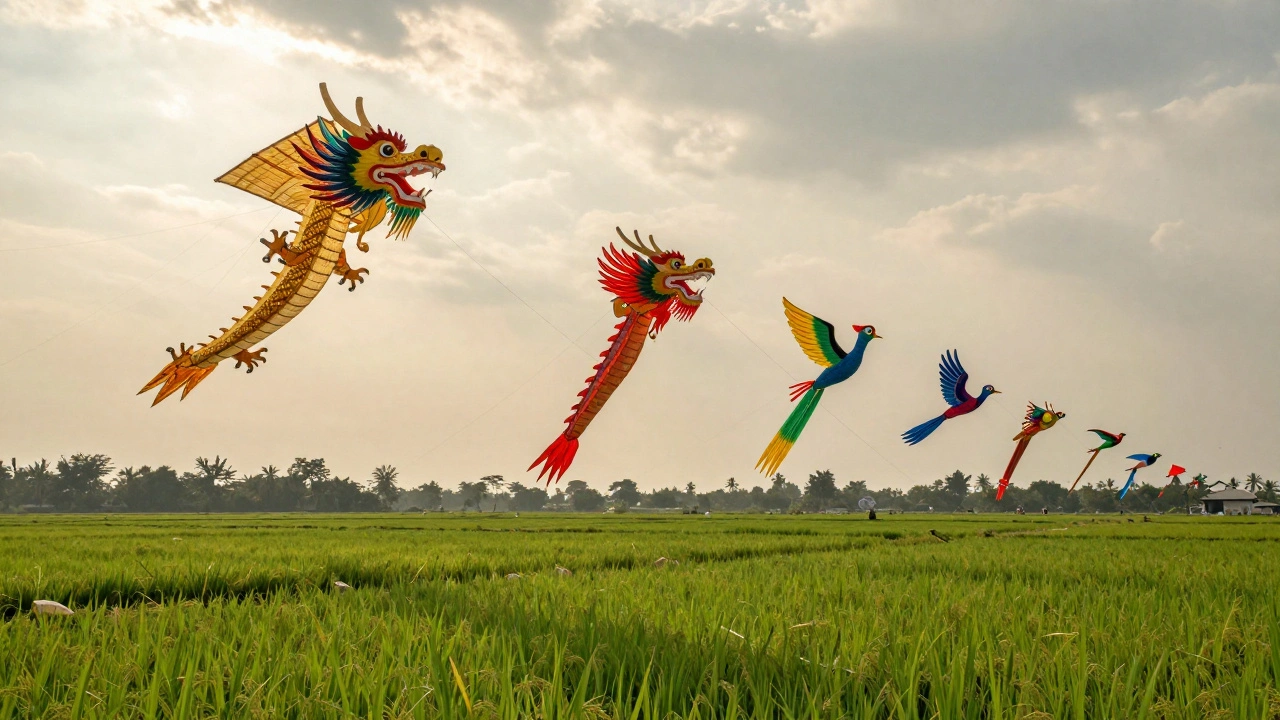
In the Northeast (Isan), festivals often merge with agricultural rites. Here, you'll see "Animal Kites"-massive structures shaped like birds, fish, or dragons. These aren't for combat; they are for spectacle and are often flown to bring rain for the upcoming planting season. The Songkran festival in April often serves as the unofficial kickoff for these local events, as families gather to fly kites after the traditional water celebrations.
The coastal areas of Chonburi and Rayong also host beach-side festivals throughout May. Because the wind coming off the Gulf of Thailand is so steady, these festivals attract international competitors who bring high-tech nylon kites, creating a fascinating contrast between ancient bamboo traditions and modern synthetic materials.
The Science of the Season: Why April and May?
You might wonder why these festivals happen specifically during this window. It's all about the Monsoon transition. Before the heavy rains of June hit, Thailand experiences a specific wind pattern. The air is warm and the pressure shifts, creating the steady, strong breezes required to lift a 5kg bamboo kite.
Local experts use a rule of thumb: if the humidity starts to rise but the rain hasn't yet saturated the ground, the "kite wind" is at its peak. This window is short, which is why the festivals are so condensed. If you miss the May window, you'll likely find the skies too stormy for safe flying for the rest of the year.
Pro Tips for Visiting a Thai Kite Festival
If you're planning to head to Sanam Luang or a regional beach festival, a few things can make your trip much better. First, arrive early. The best spots to watch the combat are near the flight lines, and these fill up fast. Second, bring plenty of water and a high-SPF sunscreen; the April sun in Bangkok is unforgiving, and there isn't much shade on the open fields.
If you want to try your hand at it, don't try to bring a professional combat kite from home. Instead, look for local vendors selling small, pre-made bamboo kites. They'll usually show you the specific "Thai flick" technique used to launch the kite into a gust. Just be careful where you fly-flying a kite too close to power lines or in restricted royal zones can lead to some awkward conversations with local authorities.
When exactly is the best time to visit for kite festivals?
The prime window is from mid-April to the end of May. The National Kite Festival in Bangkok typically peaks in May, coinciding with the strongest pre-monsoon winds.
Are there entry fees for the Sanam Luang festivals?
No, the public festivals at Sanam Luang are generally free to watch. You can simply walk into the area and enjoy the competitions.
Can tourists participate in the kite combat?
Professional combat is usually reserved for established teams, but there are often amateur areas or smaller community festivals where visitors can fly and experiment with traditional styles.
What materials are traditional Thai kites made of?
They primarily use bamboo for the frame and a specific type of thin, strong paper or treated cloth for the sail. The strings are often reinforced with abrasives for combat.
Where can I find regional festivals outside of Bangkok?
Check the coastal provinces of Chonburi and Rayong, or the Isan region (Northeast), where local agricultural festivals often feature massive decorative kites in April.
What to do next
If you're in Thailand during the season, start by checking the local news for the official announcement of the National Kite Festival dates, as they can shift slightly based on wind conditions. For those who want a deeper dive, consider visiting a local bamboo craft workshop in the outskirts of Bangkok to see how the frames are meticulously carved. If you've already seen the kites, the next logical step is exploring the water-based festivals that follow the kite season, as the rainy season brings a whole new set of traditions centered around the rivers and canals.