Key Takeaways for Kite Curators
- Environmental control is the first line of defense against fabric decay.
- Mounting techniques must balance visual impact with structural support.
- Documentation of a kite's flight history is as valuable as the object itself.
- Digital archiving helps preserve the "soul" of a kite's movement.
The Struggle of Preserving Fragile Materials
Preserving a kite isn't as simple as putting it in a glass box. You're dealing with a mix of organic and synthetic materials that react differently to the environment. A Kite is a tethered aircraft capable of flight using the wind, usually consisting of a frame and a sail. The sail might be made of traditional Washi paper, silk, or modern ripstop nylon, while the frame often uses bamboo, carbon fiber, or fiberglass.
The biggest enemy in a museum setting is UV light. If you've ever seen an old flag fade in the sun, you know what happens to kite silk. Light breaks down the chemical bonds in dyes, turning a vibrant red dragon into a pale pink ghost. To stop this, curators use UV-filtering films on windows and keep lighting levels low-often below 50 lux for sensitive textiles. Then there's the issue of humidity. If it's too dry, bamboo frames crack; if it's too damp, organic glues fail and mold grows in the fabric folds.
Curating the Sky: Selecting What Stays
Not every kite that flies is museum-quality. Curation is about storytelling. A curator looks for pieces that represent a shift in technology or culture. For example, a Saka Kite from Japan represents a specific regional identity and centuries of craftsmanship. When selecting pieces, museums focus on three pillars: historical significance, artistic innovation, and provenance.
Provenance is where the real magic happens. A standard diamond kite isn't interesting, but a diamond kite flown by a famous meteorologist in the 1800s to study lightning is a treasure. Curators spend hours interviewing donors and researching flight logs to ensure the object has a narrative. Without a story, a kite is just a piece of fabric; with a story, it's a witness to human curiosity.
| Material | Common Use | Primary Risk | Preservation Method |
|---|---|---|---|
| Bamboo | Frame/Spars | Splitting/Pests | Controlled Humidity (45-55%) |
| Silk/Paper | Sails/Canopies | UV Fading/Tearing | Low-Lux Lighting & Acid-free backing |
| Ripstop Nylon | Modern Sport Kites | Polymer Degradation | Cool, dark storage |
| Carbon Fiber | High-performance frames | Brittle fracturing | Stress-free mounting |
The Art of Display: Defying Gravity
The most difficult part of running a kite museum is the display. A kite is meant to be seen in motion, against a blue sky. Putting it flat against a wall kills the energy of the piece. However, hanging a heavy kite from a ceiling creates "tension stress" on the fabric. Over time, the weight of the kite pulls on the mounting points, leading to permanent stretches or rips.
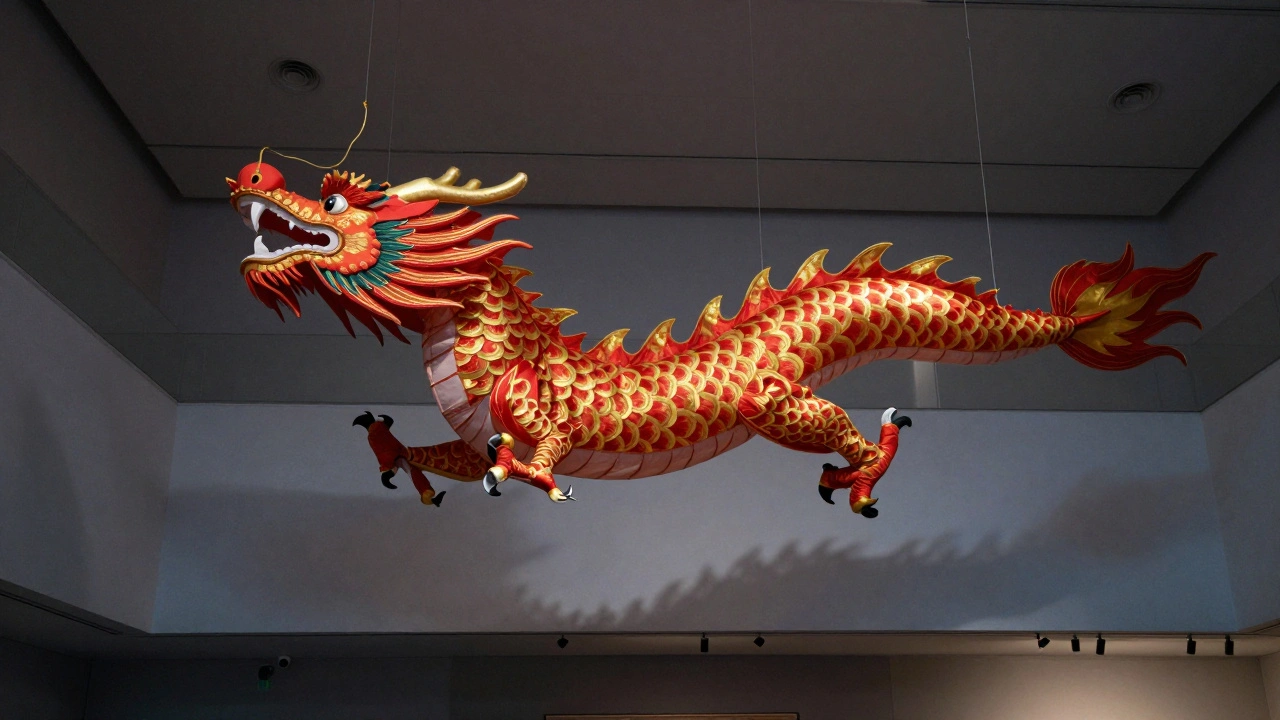
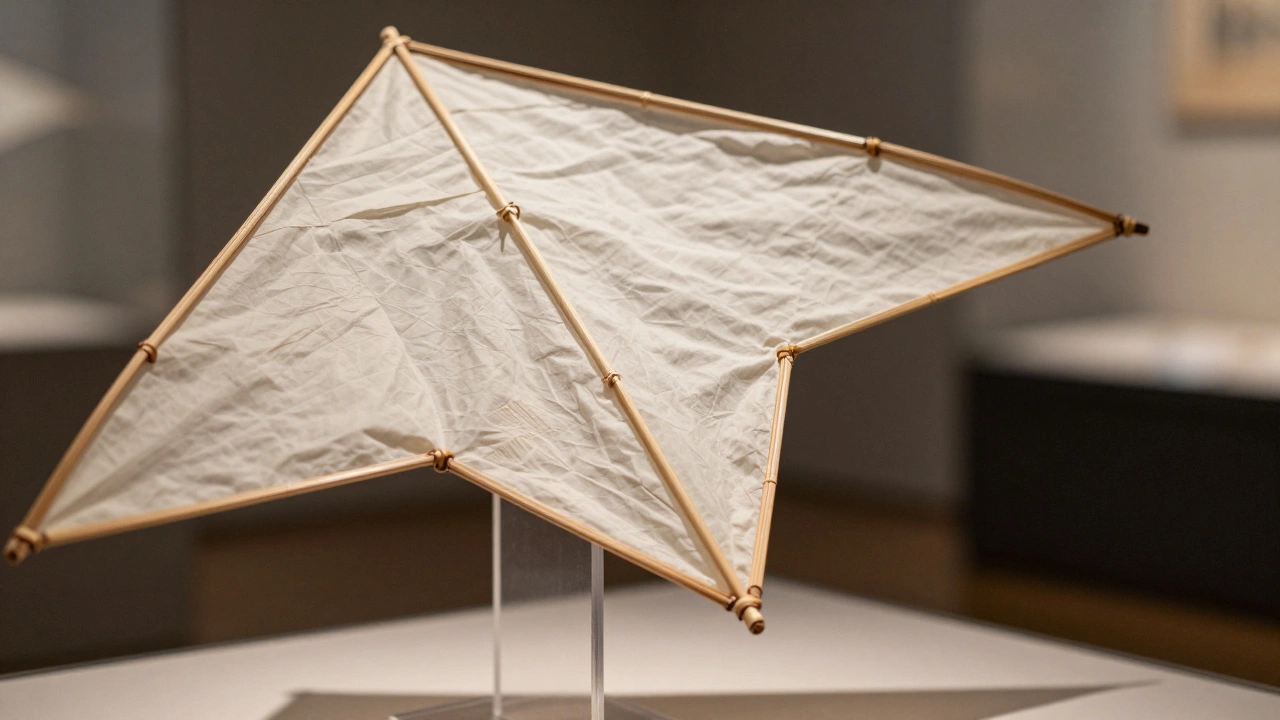
To solve this, modern museums use custom-built internal supports. Instead of hanging a kite by its bridle, curators might insert lightweight Acrylic Supports which are clear plastic structures used to hold an object's shape without visible wires. This allows the kite to look like it's floating while the acrylic takes the weight. For larger installations, like giant octopus kites, a series of invisible monofilament lines are used to distribute the weight across multiple ceiling points, mimicking the way wind supports the fabric during actual flight.
Documenting the Invisible: Flight History
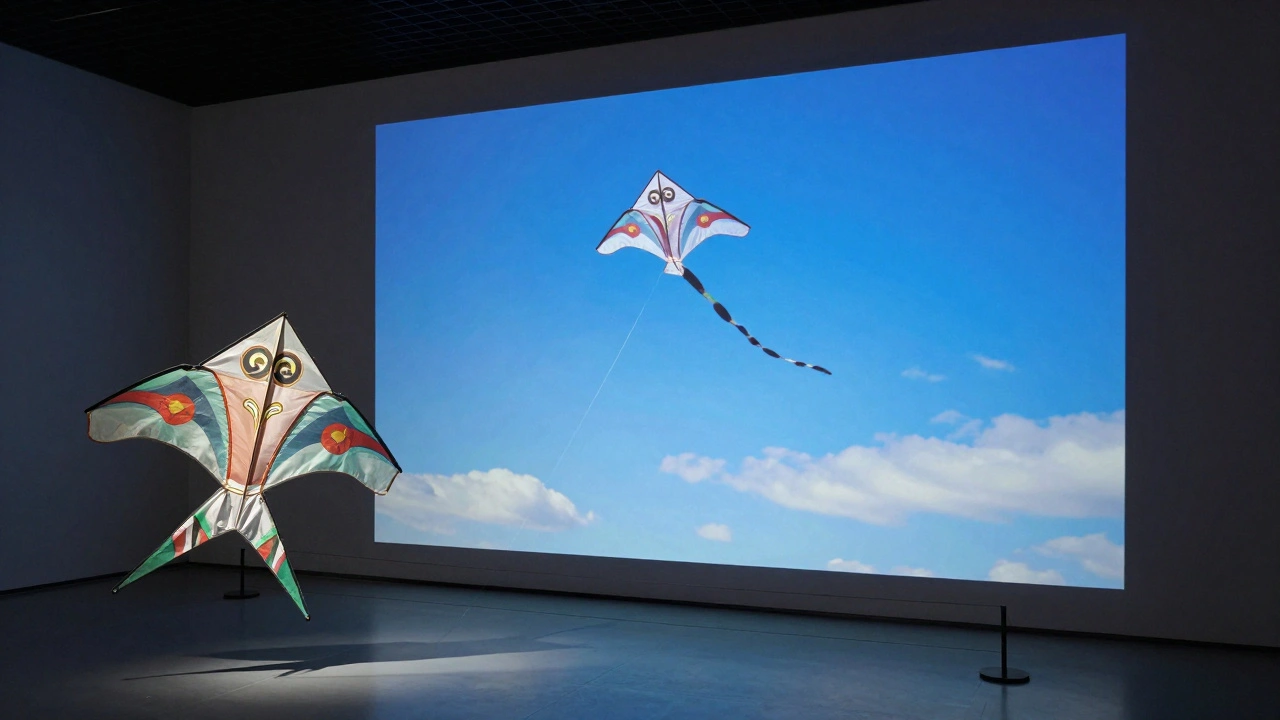
A static kite in a gallery is only half the story. To truly preserve kite art, museums must document how the object behaved in the air. This is where Digital Archiving comes in. By using high-speed cameras and drones, museums can record the "dance" of a kite before it is retired to a permanent collection. These videos are then projected next to the physical kite, giving visitors a sense of the scale and movement that a stationary display lacks.
Furthermore, the Bridle System-the set of strings that attach the kite to the flying line-is a critical piece of engineering. Curators carefully map these strings, as the exact angle of the bridle determines the kite's stability and flight characteristics. Changing a knot by half an inch can be the difference between a stable flight and a crashing wreck, making the technical drawing of the bridle as important as the kite's visual design.
Dealing with Damage and Restoration
Kites often arrive at museums in rough shape. A kite that has spent twenty years in a garage might have "foxing" (brown spots on paper) or brittle fabric. The golden rule of Textile Conservation is reversibility. Whatever a conservator does must be able to be undone without damaging the original piece.
If a silk sail is torn, a conservator won't just sew it shut. They might use a fine silk gauze and a specialized adhesive like Klucel-G (a hydroxypropyl cellulose) to bridge the gap. This stabilizes the tear without changing the look of the fabric. For bamboo frames that have warped, they use controlled steaming to gently bring the wood back to its original curve, a process that requires patience and a deep understanding of botanical structures.
Can you fly a museum-quality kite?
Generally, no. Once a kite is accepted into a museum collection, it is considered a historical artifact. The risk of a sudden gust of wind tearing the fabric or a crash breaking a rare bamboo frame is too high. Any "flight demonstrations" are usually done with high-quality replicas created from the original's patterns.
What is the rarest type of kite found in museums?
The rarest pieces are usually ancient ceremonial kites from Asia, particularly those used for spiritual rituals or military signaling. Because they were often made of biodegradable materials like thin paper and bamboo, very few have survived the humidity and pests of the last few centuries.
How do museums prevent pests from eating kite frames?
Bamboo and wood are prone to powder-post beetles and termites. Museums use Integrated Pest Management (IPM), which includes pheromone traps to monitor insect activity and, in extreme cases, anoxia treatment-replacing the oxygen in a sealed chamber with nitrogen to suffocate pests without using harmful chemicals.
Why is UV light so dangerous for kite art?
UV radiation triggers a process called photodegradation. It breaks the molecular bonds of the polymers in synthetic fabrics and the organic dyes in silk. This not only fades the colors but makes the material brittle, meaning the kite could literally crumble if touched.
How are giant kites stored when not on display?
Large kites are often stored in oversized, acid-free textile boxes or on custom rolling racks. They are carefully folded along original seam lines to avoid creating new creases, and layers of acid-free tissue paper are placed between folds to prevent the dyes from bleeding into other parts of the fabric.
Moving Forward: The Future of Kite Collections
As we move toward more immersive exhibits, the way we experience kite art is changing. We're seeing a shift toward Augmented Reality (AR), where a visitor can point a tablet at a stationary kite and see a digital overlay of it flying in its original environment. This solves the eternal conflict between preservation and presentation.
For those looking to start their own collection or donate to a museum, the best advice is to document everything now. Take photos of the kite in flight, record the wind conditions, and save the original sketches of the frame. The physical object is only half the art; the other half is the air it moved through. By combining strict conservation science with digital storytelling, we can make sure these winged masterpieces don't just survive, but continue to inspire the next generation of flyers.