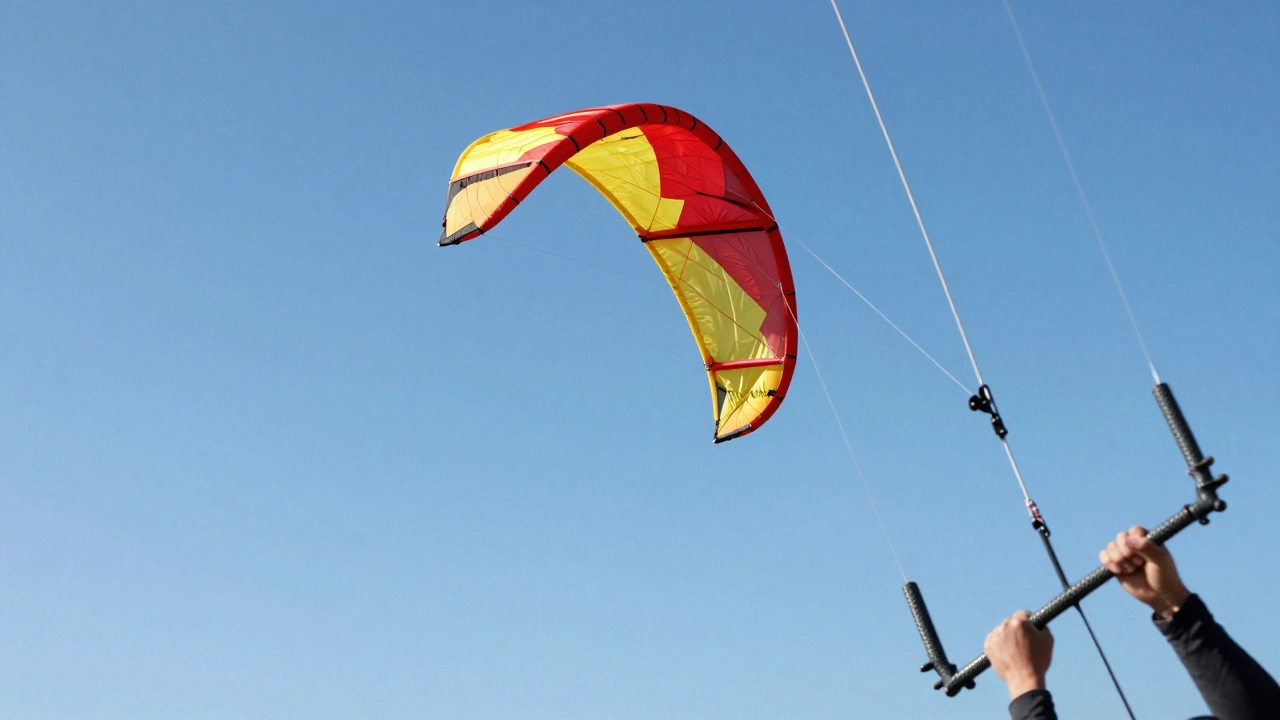
Watching a sport kite dance across the sky is mesmerizing. The pilot throws loops, spins, and figure-eights with such fluidity that it looks like magic. But behind those graceful arcs lies a rigid system of judgment. If you have ever wondered how judges decide who wins at a major event like the World Championships or a local club contest, the answer isn't just "who flew the coolest moves." It is a complex blend of mathematics, strict adherence to FAI (Fédération Aéronautique Internationale) standards, and subjective artistic interpretation.
Sport kite scoring evaluates pilots based on three main pillars: technical execution, routine choreography, and precision. This guide breaks down exactly what judges look for, how points are calculated, and why a small mistake can cost you the entire round. Whether you are a beginner looking to enter your first competition or an experienced flyer refining your technique, understanding these scoring mechanics is crucial.
The Three Pillars of Sport Kite Judging
To understand scoring, you first need to understand the structure of a competition routine. Most modern sport kite competitions, particularly in the Freestyle category which is the most popular, divide the score into two distinct phases: Technical and Artistic. However, the underlying metrics remain consistent across categories like Dual Control and Stunt.
Let’s look at the core components that make up your final score:
- Technical Execution: How cleanly you perform specific required maneuvers.
- Choreography (Artistic): How well your routine flows, uses space, and matches music.
- Precision: The accuracy of your lines, symmetry, and control throughout the flight.
In many international competitions governed by the World Kite Federation (WKF), the Technical phase accounts for 50% of the total score, while the Artistic phase makes up the other 50%. This balance ensures that pilots aren’t just flashy performers but also technically proficient flyers.
Technical Execution: The Foundation
The Technical phase is where the rubber meets the road. Judges here are looking for perfection. You are typically required to fly a set list of maneuvers defined by the FAI. These might include simple elements like rolls and loops, progressing to complex sequences like triple loops, vertical rolls, and tight figure-eights.
Scoring in this section is deductive. You start with a perfect score (often 100 points or a maximum per maneuver), and judges subtract points for errors. Here is what causes deductions:
- Sagging Lines: If your kite drops because you lost tension, points are deducted. Tension is king in sport kiting.
- Asymmetry: A loop should be perfectly round. If one side is tighter than the other, it’s a penalty.
- Loss of Control: Crashing or needing to reset your position results in significant point loss or disqualification depending on severity.
- Incorrect Maneuver: Flying a double loop when the rule calls for a single loop is a major error.
For example, if a judge sees a slight wobble during a vertical roll, they might deduct 0.5 points. A complete failure to execute the move could cost 2-3 points. Because these deductions add up quickly, consistency is more important than attempting overly difficult moves that you cannot master.
Choreography and Artistic Expression
This is where the "sport" becomes art. In the Artistic phase, you choose your own music and design your own routine. There are no mandatory moves, but there are strict guidelines on duration (usually 2 minutes) and safety zones.
How do judges score something as subjective as art? They use a rubric based on several key factors:
- Musicality: Does the kite’s movement match the beat, rhythm, and mood of the music? A sharp spin on a drum hit scores higher than a slow drift during a crescendo.
- Use of Space: Do you utilize the entire wind window? Pilots who stay in one corner of the sky lose points. Judges want to see dynamic movement from left to right, high to low.
- Complexity and Variety: Are you repeating the same three moves? A diverse routine with smooth transitions between different types of maneuvers (e.g., switching from fast rolls to slow hovering) demonstrates higher skill.
- Originality: While less weighted than technical skill, unique choreography that stands out from the pack can earn bonus points in some judging panels.
A common pitfall for new competitors is trying to do too much. A routine packed with moves that leaves no room for expression often scores lower than a simpler routine executed with perfect timing and flair. Think of it like dancing; the connection to the music matters more than the number of steps.

Precision: The Invisible Metric
Precision is the thread that ties technical execution and choreography together. It refers to the pilot’s ability to maintain exact control over the kite’s position and speed. In competitive terms, precision is often measured by how close you can get to a target or how symmetrical your patterns are.
In specific disciplines like Target Kiting or Precision Racing, this metric is even more literal. You might be timed flying through gates or judged on how close you land to a marked spot. In Freestyle, precision is observed in:
- Line Tension Management: Keeping lines taut without stalling the kite.
- Recovery Speed: How quickly you can regain control after a complex maneuver.
- Smoothness: Jerky inputs result in jerky flight. Smooth inputs create fluid motion.
Judges watch your hands as much as the kite. Visible struggle or frantic hand movements suggest a lack of precision, even if the kite looks okay from a distance. Professional pilots practice "invisible steering," where the kite moves effortlessly while their hands remain calm and controlled.
Understanding the Deduction System
To truly grasp scoring, you need to look at the math. Most competitions use a panel of 3-5 judges. Each judge gives a score, and then the highest and lowest scores are often dropped to eliminate bias. The remaining scores are averaged.
| Error Type | Severity | Typical Point Loss |
|---|---|---|
| Minor Sag / Loss of Tension | Low | 0.1 - 0.5 points |
| Asymmetric Loop/Roll | Medium | 0.5 - 1.0 points |
| Missed Musical Cue | Medium | 0.5 - 1.5 points |
| Kite Crash / Reset | High | 2.0 - 5.0 points or DQ |
| Violation of Safety Zone | Critical | Disqualification |
Note that "DQ" stands for Disqualification. Safety violations, such as flying too close to spectators or entering restricted airspace, result in immediate removal from the competition. Always check the local rules before competing.

Equipment and Environmental Factors
Your gear plays a huge role in your score. A dual-line sport kite designed for freestyle will behave differently than one built for racing. High-end kites feature lighter materials like ripstop nylon and carbon fiber rods, allowing for faster response times and tighter turns.
Wind conditions also impact scoring indirectly. Judges expect you to adapt your style to the wind. In light wind, slower, larger movements are preferred. In strong wind, smaller, sharper maneuvers prevent line breakage and maintain control. Failing to adjust your technique to the current conditions is often penalized under "execution" because it shows a lack of situational awareness.
Additionally, the type of line you use matters. Dyneema or Spectra lines are standard because they stretch minimally. Stretchy lines absorb your input, making precise control nearly impossible. Ensure your lines are trimmed correctly for the wind speed; improper trim leads to inconsistent flight paths, which directly hurts your precision score.
Tips for Improving Your Score
If you want to move up the leaderboard, focus on these actionable strategies:
- Record Yourself: Fly your routine and record it from the judge’s perspective (ground level). Watch it back critically. You’ll notice sagging lines and asymmetries you didn’t feel while flying.
- Practice Transitions: The easiest way to lose points is during the switch between moves. Make your transitions seamless. A roll should flow naturally into a loop without hesitation.
- Learn the Music: Don’t just memorize beats. Understand the emotion of the track. Let the music dictate the size and speed of your moves.
- Drill Basic Maneuvers: Spend 80% of your practice time on basic loops, rolls, and figure-eights. Perfect these until they are automatic. Complexity comes from combining perfect basics, not from inventing new moves.
Frequently Asked Questions
What is the maximum score in a sport kite competition?
The maximum score varies by organization. In many FAI-sanctioned events, the Technical and Artistic phases are each scored out of 100, resulting in a total possible score of 200. Some local clubs may use a scale of 10 or 100 for the entire routine. Always check the specific rules of the event you are attending.
How does wind affect my score?
Wind doesn’t change the scoring criteria, but it affects execution. Judges expect you to adapt your flying style to the wind conditions. For example, using smaller, tighter maneuvers in high winds is rewarded, while large, slow loops might cause loss of control and lead to deductions. Failure to adjust to wind gusts is considered a lack of precision.
Can I use any music for my artistic routine?
Yes, you can generally use any music, provided it is appropriate for the venue and audience. Avoid tracks with explicit lyrics or offensive content. The key is choosing music with a clear rhythm and dynamic changes that allow you to demonstrate musicality. Instrumental tracks or electronic music are popular choices among top competitors.
What happens if I crash my kite during the routine?
If you crash, you will receive significant point deductions for loss of control and interruption of the routine. In some strict competitions, a crash may result in disqualification from that round. You must recover the kite and resume flying if allowed by the rules, but the continuity of your performance is broken, which hurts your artistic score.
Is sport kite scoring different for beginners?
Most formal competitions do not have separate scoring systems for beginners, but they often have "Novice" classes. In these classes, judges may be more lenient on minor technical errors and place greater emphasis on effort and basic control. However, the fundamental principles of execution, choreography, and precision still apply.
Who sets the rules for sport kite competitions?
The global governing body is the Fédération Aéronautique Internationale (FAI), specifically its Commission de Vol Libre (CIVL). National bodies, such as the American Kiteflying Society (AKS) in the US or the British Kite Flyers Association (BKFA) in the UK, adopt and adapt these rules for local events. Always refer to the latest rulebook from the organizing body of your specific competition.