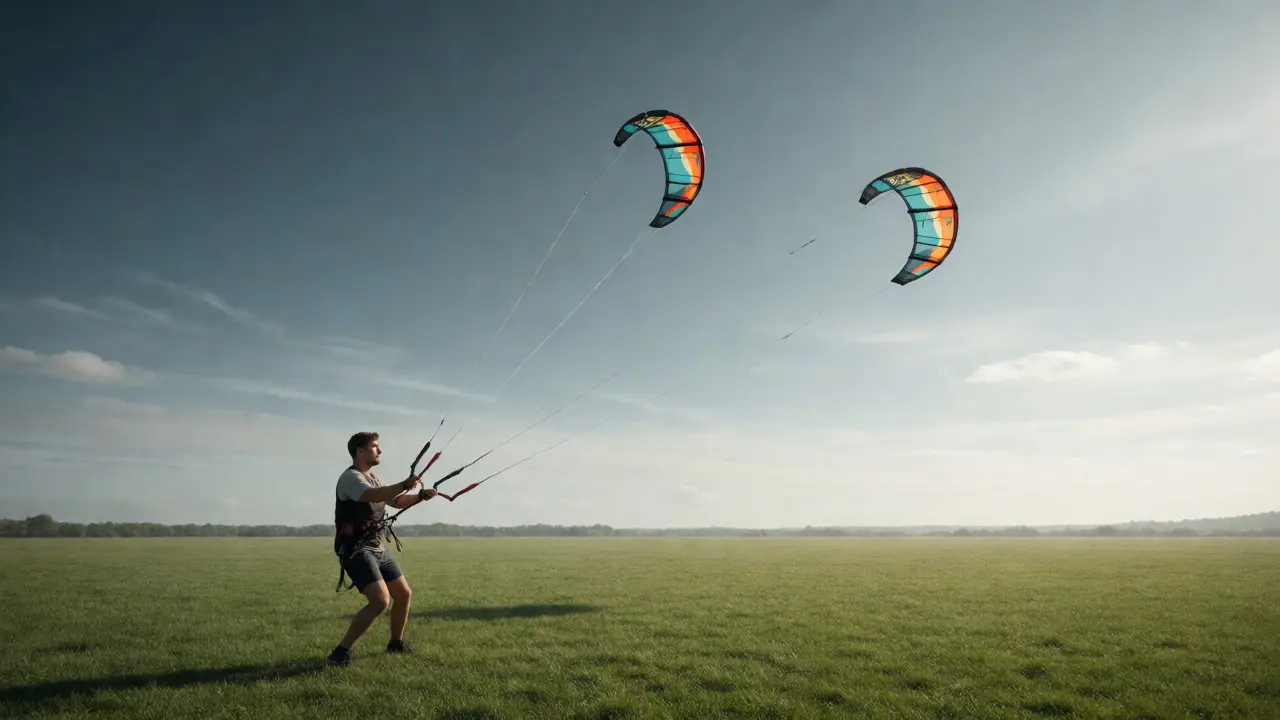
You’re standing on a grassy field in Portland, the wind is picking up, and you see someone controlling a dual-line kite with such precision that it looks like they’re painting shapes in the sky. You might think, "That’s just flying," but for the people involved, it’s a high-stakes sport governed by strict rules, specific disciplines, and competitive formats. If you’ve ever wondered how these competitions work, or if you’re thinking about trading your backyard hobby for a competition license, this guide breaks down exactly what happens in sport kite competitions and why they are more complex than they look.
The Core Disciplines of Competitive Kiting
Not all kite flying is the same. When you step into a competition arena, you’ll encounter distinct categories, each requiring different skills and equipment. Understanding these is the first step to choosing your path.
Precision Flying is often considered the entry point for serious competitors. This discipline focuses on individual skill. Pilots fly pre-choreographed routines called "sequences" against a backdrop of clear sky. Judges score them on accuracy, smoothness, and timing. Think of it as figure skating in the air. The most common aircraft here are dual-line stunter kites, which offer the control needed for tight loops and stalls. If you enjoy mastering mechanics and perfecting muscle memory, this is your lane.
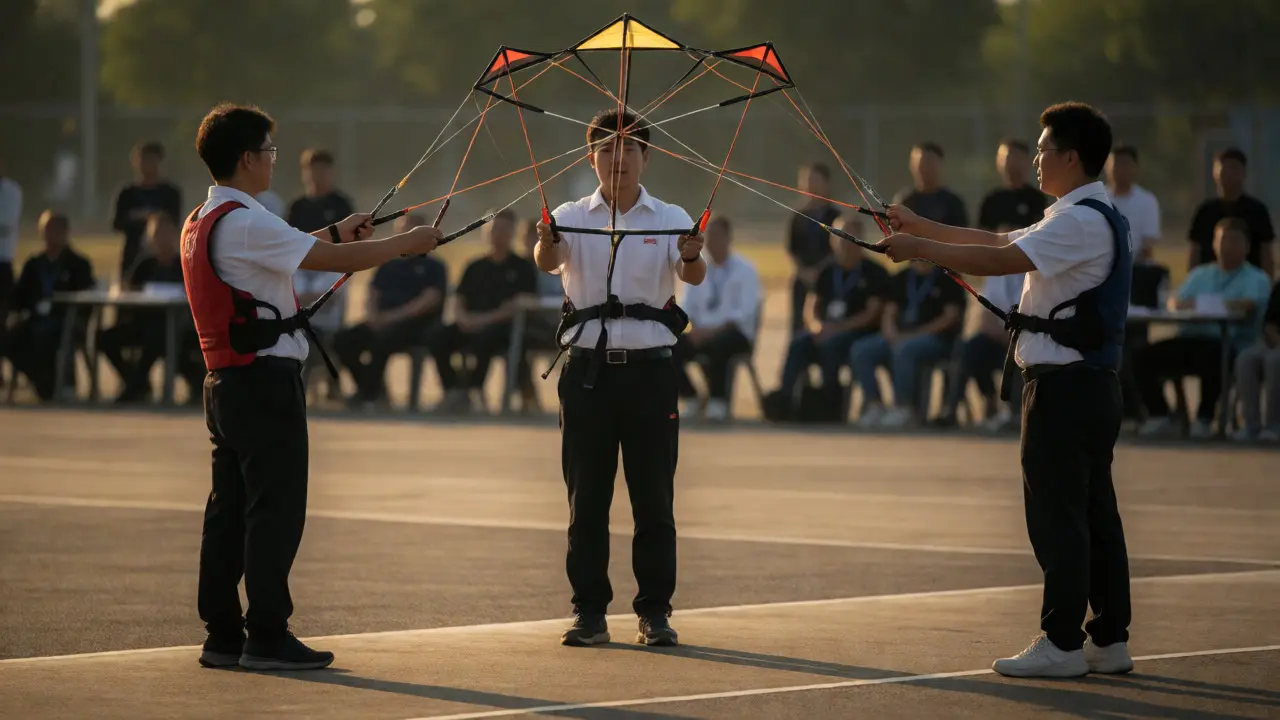
Team Choreography takes precision to the next level. Instead of one pilot, teams of two to four flyers perform synchronized routines. The challenge isn’t just hitting your marks; it’s hitting them at the exact same time as your partners while maintaining safe distances. A single miscommunication can lead to tangled lines or a collision. Teams often use quad-line kites for even greater control, allowing for stationary hovering and rapid direction changes that dual-liners struggle with. This format rewards communication and trust over pure individual talent.
Kite Fighting is where things get aggressive. Unlike the graceful arcs of precision flying, this discipline is about survival. Competitors fly single-line kites equipped with abrasive string (often coated in glass powder or metal dust). The goal? Cut the opponent’s line or force them out of bounds. It’s fast, chaotic, and incredibly popular in countries like India, Brazil, and Japan. In Western competitions, this often falls under "Line Fighting" or "Battle Kiting," where points are awarded for successful cuts and defensive maneuvers.
| Discipline | Primary Goal | Typical Equipment | Skill Focus |
|---|---|---|---|
| Precision Flying | Execute sequences accurately | Dual-line Stunter | Control, Timing, Consistency |
| Team Choreography | Synchronized group performance | Quad-line or Dual-line | Coordination, Spatial Awareness |
| Kite Fighting | Cut opponent's line | Single-line Battle Kite | Reflexes, Strategy, Durability |
| Speed Flying | Complete course fastest | High-speed Delta/Sled | Aerodynamics, Wind Reading |
Understanding Competition Formats and Scoring
Once you know the discipline, you need to understand how winners are decided. Most international competitions follow guidelines set by the Sport Kite Association (SKA) or similar national bodies. These organizations maintain standardized rulebooks to ensure fairness across events.
In Precision classes, scoring is mathematical. Each maneuver in a sequence has a designated value. If you miss a loop or drift off-center, judges deduct points based on the severity of the error. There are usually three rounds: a mandatory sequence (everyone flies the same moves), an optional sequence (you design your own routine), and sometimes a freestyle round. Consistency beats flashiness here. A simple routine flown perfectly will always score higher than a complex routine with visible errors.
Team events add a layer of complexity. Judges look for synchronization percentages. Did all kites turn left at the same second? Was the spacing consistent throughout the routine? Mistakes are penalized heavily because they disrupt the visual harmony. Teams practice hundreds of times to achieve sub-second synchronization. If you’re joining a team, expect long hours of rehearsal and video analysis.
For Kite Fighting, scoring is binary and immediate. You either cut the line, or you don’t. Matches are typically head-to-head tournaments. Pilots enter a designated "fighting zone." Once inside, they attempt to engage opponents. Points are awarded for cuts, forcing an opponent to land, or making them leave the zone. Defensive play is equally important; dodging attacks and preserving your own line integrity counts toward your final score.

Essential Gear and Preparation
You cannot show up to a competition with any old toy store kite. The gear matters, and so does its condition.
- The Kite: For precision, you need a well-balanced dual-line stunter with carbon fiber spars. Popular brands include Prism, Revolution, and Skyburner. Check your spars for cracks before every event. A broken spar mid-routine means zero points for that round.
- The Lines: Use braided polyester or Dyneema lines. They stretch less than nylon, giving you better feedback. Keep them clean and free of knots. Dirty lines create drag and unpredictable flight paths.
- Wrist Leashes: Never fly without them. If you let go of your handles during a high-wind gust, your kite becomes a projectile. Leashes keep the kite attached to you, preventing disqualification or injury.
- Wind Meter: While organizers provide wind data, having your own handheld anemometer helps you gauge gusts. Precision flying requires steady winds between 8-15 mph. Too little wind, and you can’t generate lift; too much, and you lose control.
Preparation goes beyond gear. You need to know the local wind patterns. A competition in coastal Oregon behaves differently than one in inland Kansas. Practice in variable conditions, not just perfect days. Judges don’t care if the wind died halfway through your routine; you still have to finish it.
How to Enter Your First Competition
Starting out can feel intimidating, but most communities welcome beginners. Here’s a realistic roadmap.
- Find a Local Club: Search for SKA-affiliated clubs in your area. Attend their open flying sessions. Ask questions. People in this hobby love sharing tips.
- Get Certified: Many competitions require pilots to hold a basic proficiency card. This involves demonstrating safe takeoff, landing, and basic maneuvers to a certified judge. It’s not hard, but it ensures you won’t crash into spectators.
- Choose the Right Class: Don’t jump into Open Precision immediately. Look for "Novice," "Beginner," or "Sportsman" classes. These have simpler sequences and lower expectations, letting you learn the pressure of judging without embarrassment.
- Register Early: Slots fill up fast, especially for team events. Register online weeks in advance. Pay fees promptly to secure your spot.
- Arrive Early: Set up your station, check your gear, and watch other pilots. Observe how experienced competitors handle wind shifts. Learn from their mistakes and successes.
Common Pitfalls for New Competitors
Even skilled flyers fail when they ignore these common traps.
Ignoring Wind Conditions: Trying to fly a heavy kite in light wind is frustrating. Switch to a lighter frame or larger sail area if the breeze dies. Conversely, in strong wind, shorten your lines slightly to gain more control.
Overcomplicating Routines: Beginners often try to impress judges with flashy moves. But if you drop your kite twice, you lose more points than you gained from the trick. Stick to what you can do flawlessly. Perfection scores higher than potential.
Neglecting Line Maintenance: Frayed lines snap under tension. Inspect them after every session. Replace them at the first sign of wear. A snapped line ends your run instantly.
Underestimating Mental Game: Nerves cause shaky hands. Breathe deeply before launching. Visualize your sequence. If you make a mistake, don’t panic. Continue smoothly. Judges notice recovery attempts. A graceful recovery from an error shows professionalism.
Frequently Asked Questions
Do I need expensive gear to start competing?
No. You can start with a decent beginner dual-line kite costing $50-$100. As you progress, investing in higher-quality frames and lines improves performance, but skill matters more than price tags initially.
What wind speed is ideal for competitions?
Most precision events prefer steady winds between 8 and 15 mph. Organizers may cancel or pause events if winds exceed 20 mph due to safety concerns and difficulty in controlling kites.
Can I compete solo in team events?
Generally, no. Team events require registered groups of 2-4 pilots. However, some competitions offer "open team" slots where individuals can be paired randomly if they lack a permanent team.
How long are competition routines?
Individual precision routines typically last 60-90 seconds. Team choreographies are longer, often 2-3 minutes, to allow for complex formations and transitions.
Is kite fighting dangerous?
It carries risks, primarily from sharp lines and sudden kite movements. Participants must wear gloves and eye protection. Spectators must stay behind marked safety barriers to avoid being hit by falling kites or lines.