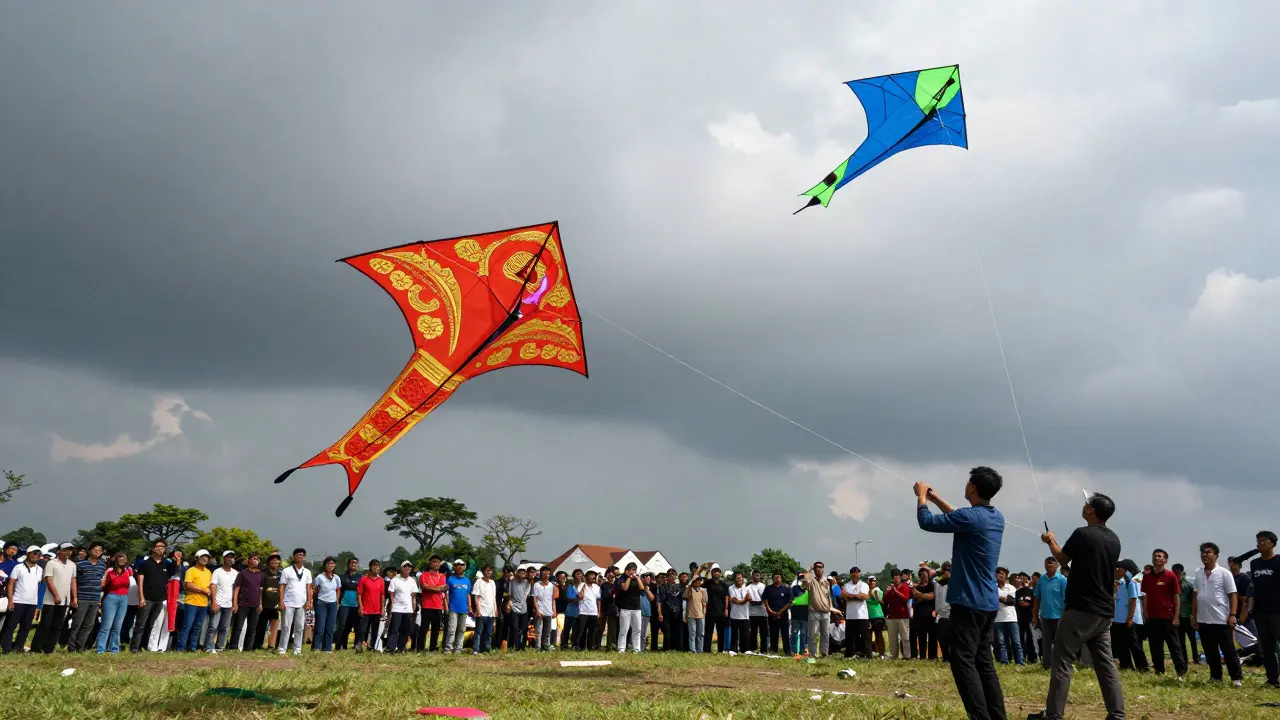
Imagine two massive kites hovering in a humid Jakarta sky. They aren't just flying; they are hunting. One kite dives sharply, its string cutting through the air like a razor blade. The other snaps back, trying to escape. This isn't a game of tag-it is Indonesian kite fighting, a centuries-old tradition where skill, luck, and engineering collide. If you have ever watched a match, you know the tension is palpable. But what makes these kites so dangerous? And how do players decide who wins when there is no referee with a whistle?
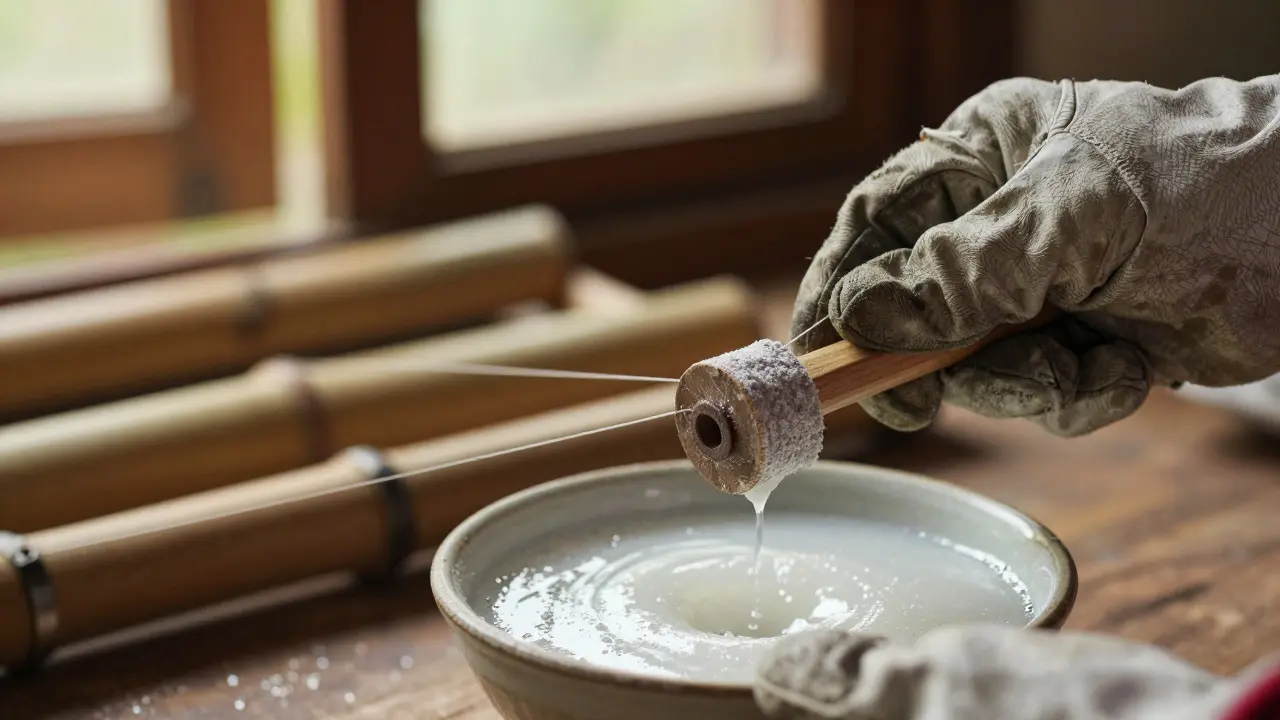
The heart of this sport lies in the string. Specifically, the coating that turns a simple thread into a weapon. We call this Gelasan is a mixture of rice flour and glass powder applied to kite strings to create a sharp, abrasive edge capable of slicing through rival lines. Without it, the kites would just float harmlessly. With it, every pass becomes a potential victory or defeat.
What Makes Gelasan Dangerous?
Rice flour serves as the binder for the gelasan mixture. You mix it with water to create a paste, then add Glass powder, which is finely ground silica. The ratio matters. Too much glass, and the line becomes brittle and snaps under tension. Too little, and it lacks the cutting power needed to sever an opponent's string. Experienced flyers often test their gelasan on a piece of paper before heading to the field. If it cuts cleanly without tearing the paper, it is ready.
The application process is meticulous. Flyers wind the string around a spool and dip it repeatedly into the mixture. As it dries, the glass particles embed themselves into the fibers. A well-prepared gelasan line feels rough to the touch but remains flexible enough to handle high winds. However, handling it requires care. A stray cut can leave deep lacerations, so most serious competitors wear thick leather gloves during setup and flight.
The Anatomy of a Fighting Kite
Not all kites are built for combat. Indonesian fighting kites, known locally as Layang-layang, are engineered for agility and strength. The frame is typically made from Bamboo, chosen for its lightweight nature and natural flexibility. Bamboo bends rather than breaks when the kite hits a gust, allowing it to recover quickly.
The covering material is usually thin tissue paper or plastic film. It must be light enough to catch the wind but strong enough to withstand the stress of aerial maneuvers. The shape varies by region, but the diamond form is the most common. Some designs feature a tail, not just for aesthetics, but to stabilize the kite during rapid turns. A stable kite is harder to slice because it maintains consistent altitude and direction.
| Component | Traditional Approach | Modern Approach |
|---|---|---|
| Frame Material | Natural Bamboo | Treated Bamboo or Carbon Fiber |
| Covering | Tissue Paper | Polyester Film |
| String Coating | Homemade Rice Flour & Glass | Commercially Prepared Gelasan Paste |
| Reel | Wooden Spool | Aluminum Flywheel with Brake |
How Combat Rules Determine Victory
You might wonder how a match ends if there is no official scorekeeper. In traditional settings, the rule is simple: cut the opponent's string, and you win. When a line snaps, the defeated kite loses control and falls to the ground. The flyer who retrieves their intact kite claims the victory. There is no partial credit. If your string breaks, even if you were leading, you lose.
In more organized tournaments, especially those held in cities like Yogyakarta or Solo, additional rules apply. Matches are often time-limited, such as 10 or 15 minutes. If no string is cut within the time limit, judges evaluate based on several criteria:
- Air Time: How long each kite stayed aloft.
- Agility: The ability to change direction quickly.
- Altitude: Maintaining height against wind resistance.
- Style: The aesthetic appeal of the kite's movements.
This structured approach ensures fairness while preserving the spirit of the competition. Judges look for technical proficiency, not just luck. A flyer who consistently keeps their kite stable and responsive demonstrates superior skill, even if they don't land a decisive cut.
The Role of Wind and Weather
Kite fighting is entirely dependent on weather conditions. Flyers monitor wind speed and direction meticulously. Ideal conditions involve steady winds between 10 and 20 kilometers per hour. Stronger winds make the kites difficult to control, increasing the risk of accidental self-slicing. Lighter winds result in sluggish movement, making it hard to generate the tension needed for gelasan to work effectively.
Humidity also plays a role. High humidity can cause the gelasan mixture to dry unevenly, affecting its consistency. Rainy days are a no-go, as wet strings lose their cutting ability and become heavier. Most matches take place in the late afternoon when thermal updrafts provide consistent lift. This timing allows for extended flight times and dramatic aerial duels.
Safety Considerations for Participants
Despite its ancient origins, kite fighting carries real risks. The primary danger comes from the gelasan-coated strings. These lines can cut skin deeply if they snap or recoil unexpectedly. Spectators standing too close to the action are particularly vulnerable. Organized events now enforce safety perimeters, keeping crowds at least 50 meters away from the active flight zone.
Flyers also face physical strain. Holding a heavy reel against strong winds requires significant upper body strength. Overuse injuries in the shoulders and wrists are common among regular participants. Proper warm-up routines and ergonomic reel designs help mitigate these issues. Additionally, wearing protective eyewear prevents debris from entering the eyes during intense exchanges.

Cultural Significance Beyond Competition
Kite fighting is more than a sport; it is a cultural ritual. In many Indonesian villages, the season kicks off with community gatherings where families prepare kites together. Children learn to weave bamboo frames and mix gelasans from older relatives, passing down techniques across generations. The event fosters social cohesion, bringing neighbors together in shared anticipation and excitement.
Artistic expression is central to the tradition. Each kite is unique, decorated with vibrant patterns, symbols, and names. Some flyers incorporate local folklore or personal stories into their designs. The visual spectacle of dozens of colorful kites filling the sky creates a communal experience that transcends the competitive aspect. It is a celebration of craftsmanship, creativity, and connection to the natural elements.
Frequently Asked Questions
Is gelasan safe to handle bare-handed?
No, gelasan-coated strings should never be handled bare-handed. The embedded glass particles can cause deep cuts and abrasions. Always wear thick leather gloves when winding, dipping, or retrieving lines to protect your skin.
What is the best wind speed for kite fighting?
Ideal wind speeds range from 10 to 20 kilometers per hour. Winds below 10 km/h lack the force needed for effective combat, while winds above 20 km/h make kites difficult to control and increase the risk of breakage.
How long does it take to prepare a gelasan string?
Preparing a single spool of gelasan string can take anywhere from 30 minutes to two hours, depending on the length of the line and the drying method used. Air drying is standard, but some flyers use fans to speed up the process slightly.
Are there age restrictions for participating in kite fights?
There are no universal age restrictions, but younger children typically fly smaller, less aggressive kites. Full-scale combat matches are generally reserved for adults due to the physical demands and safety risks associated with gelasan strings.
Can you reuse a gelasan string after it has been cut?
Rarely. Once a gelasan string is cut, the remaining portion often has compromised integrity. The coating may be uneven or damaged, reducing its effectiveness. Most flyers discard cut strings and prepare new ones for subsequent matches.