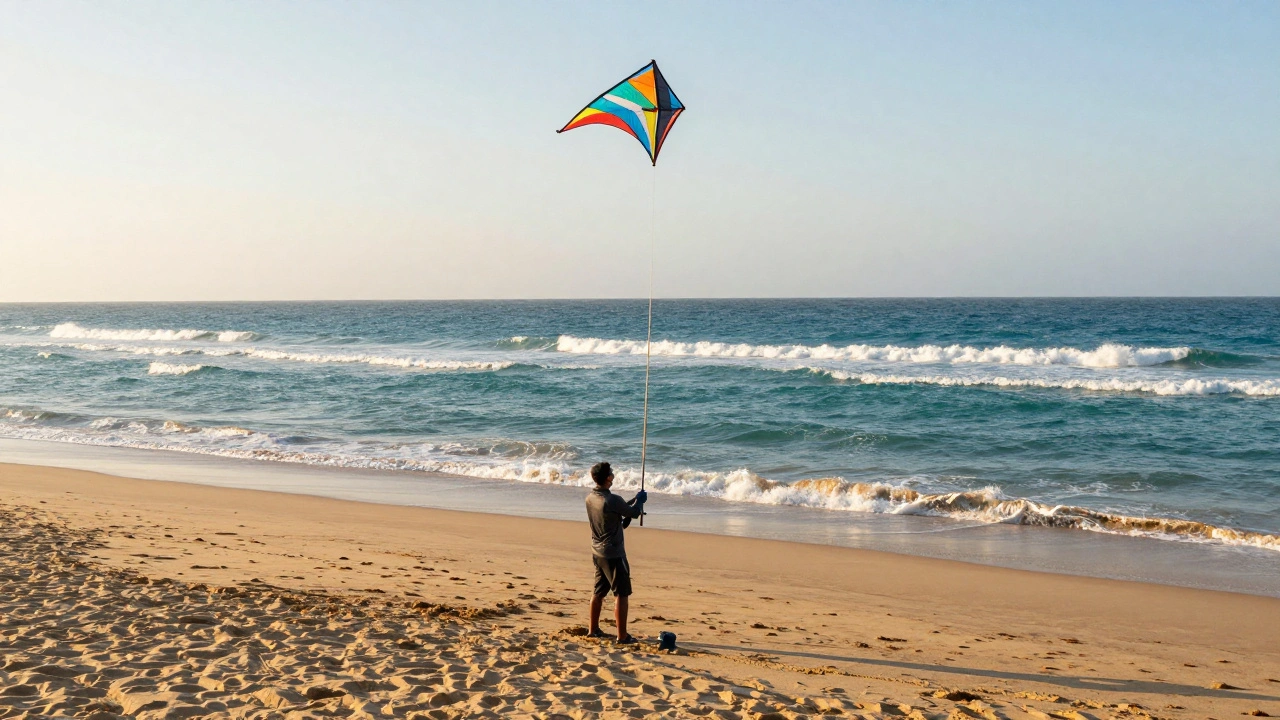
Imagine standing on the sand, watching your bait drift over water you couldn't possibly reach with a standard rod. That is the magic of kite fishing, a technique that uses wind power to extend your casting range far beyond the breakers. For anglers stuck on land-whether due to boat costs, weather restrictions, or simple preference-it opens up deep-water species like mahi-mahi, wahoo, and tuna without leaving the shore.
However, this isn't just tying a line to a toy. It requires understanding aerodynamics, beach geography, and serious safety protocols. If you get the setup wrong, you lose gear. If you ignore safety, you risk injury. Let’s break down how to master beach launches, maximize your casting distance, and stay safe while doing it.
The Core Concept: Why Kites Beat Rods for Shore Angling
Traditional surfcasting has limits. Even with a heavy-duty rod and perfect timing, most anglers can’t throw past the first set of breaking waves consistently. Once your lure hits the white water, it loses depth control and visibility. Kite fishing solves this by lifting your rig into the air and letting the wind carry it horizontally.
Kite fishing relies on a specialized delta or parafoil kite that generates lift and drag to pull bait away from the shore. Unlike recreational kites, these are built for high tensile strength and stability in gusty conditions. The key advantage is precision. You can position your bait exactly where the fish are feeding, often 50 to 150 yards offshore, and keep it there against the current.
This method also reduces line tangles. Since the line runs vertically from the kite to the water, there’s less chance of snagging on rocks or debris compared to a long horizontal leader lying on the seabed. For species that chase prey near the surface, this presentation looks incredibly natural.
Choosing the Right Gear for Shore Launches
Your success starts with selecting equipment designed for the specific demands of beach fishing. A generic hobby kite will snap under the tension of a fighting tuna or fail to launch in light winds. You need a system built for load-bearing.
| Component | Recommended Specification | Why It Matters |
|---|---|---|
| Kite Type | Dual-line Delta or Parafoil (4-6 ft wingspan) | Provides stable lift and allows directional control via steering lines |
| Fishing Line | 30-50 lb braided main line; 80-100 lb fluorocarbon leader | Braid offers low stretch for sensitivity; fluoro resists abrasion from teeth and coral |
| Rod | 7-9 ft medium-heavy action, fast taper | Length helps clear the kite line; action absorbs shock from sudden strikes |
| Reel | Saltwater spinning reel, size 4000-6000 | Must handle high drag loads and have smooth retrieval for setting hooks |
| Launch Pole | Telescopic carbon fiber pole (8-12 ft) | Allows you to lift the kite above head height for easier catch of wind |
A common mistake beginners make is using monofilament for the main line. Monofilament stretches too much, making it hard to feel subtle bites and increasing the risk of line snap during a fight. Braided line is non-negotiable here. Also, ensure your kite has reinforced attachment points. Standard plastic grommets won’t survive the stress of a large pelagic run.
Mastering Beach Launch Techniques
Launching a kite from sand is different than launching from a flat field. Sand shifts, dunes create turbulence, and the ocean breeze can be unpredictable. The goal is to get the kite airborne quickly and steadily without tangling the fishing line.
Start by positioning yourself upwind of your target area. Stand on firm, packed sand if possible-soft sand makes it difficult to brace against the pull. Attach your fishing rod to the kite line using a quick-release clip. This allows you to detach the rod instantly if the kite dives or if you need to adjust your position.
- Pre-flight check: Ensure all lines are untangled and the bridle is adjusted for neutral trim. The kite should fly straight when pulled gently.
- Use a launch pole: Raise the kite on the pole to about 10 feet high. This gives the wind something to grab before you release it.
- Face the wind: Turn your back to the direction you want the kite to travel. Slowly lower the pole while letting out slack on the control lines.
- Steady ascent: As the kite catches wind, pull the control lines evenly to guide it upward. Avoid jerky movements which can cause loops in the line.
- Establish altitude: Once at desired height (usually 30-50 feet), lock off the control lines to maintain position. Then, begin paying out the fishing line.
If the wind is light, consider using a larger kite or waiting for a stronger gust. Trying to force a launch in dead air usually results in tangled lines and frustration. Patience pays off here.
Maximizing Casting Distance Without Losing Control
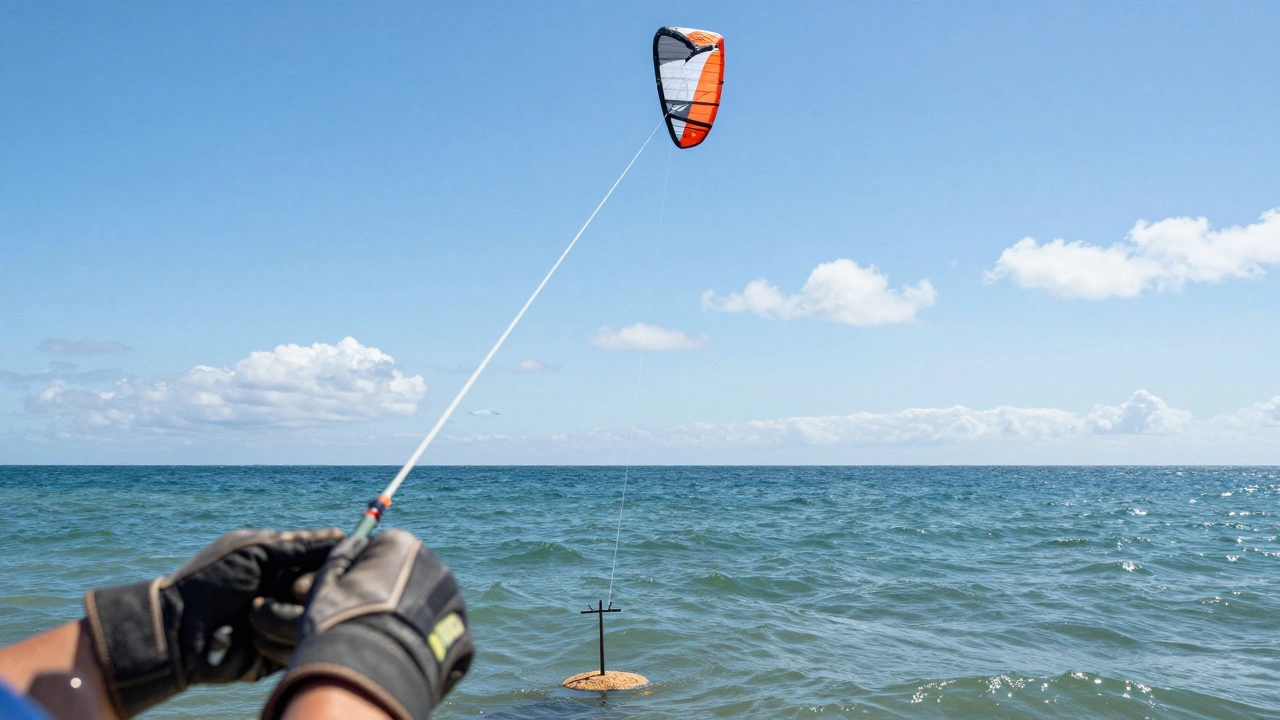
Distance is the primary benefit of kite fishing, but more distance isn’t always better. You need enough reach to place bait outside the breakers, but not so much that you lose sensitivity or control. The sweet spot for most shore scenarios is between 60 and 120 yards.
To achieve this, understand the relationship between wind speed and kite angle. In strong winds (15-20 mph), you can fly the kite higher and further out. In lighter winds (8-12 mph), keep the kite lower and closer to shore to maintain lift. Flying too high in light wind causes the kite to stall and drop.
Use a kite board or a dedicated anchor point to manage line tension. Many experienced anglers use a small stake or sand anchor to hold the control lines steady, freeing their hands to manage the fishing rod. This setup allows you to focus on bite detection rather than constantly adjusting the kite.
Another pro tip: pay out line slowly. Rapidly releasing line creates slack that can lead to tangles around the kite’s bridle. Instead, let the wind do the work. Watch the angle of the line entering the water. A steep angle indicates good tension and direct contact with the bait. A shallow angle suggests the line is dragging or the kite is drifting too far downwind.
Safety Protocols You Cannot Ignore
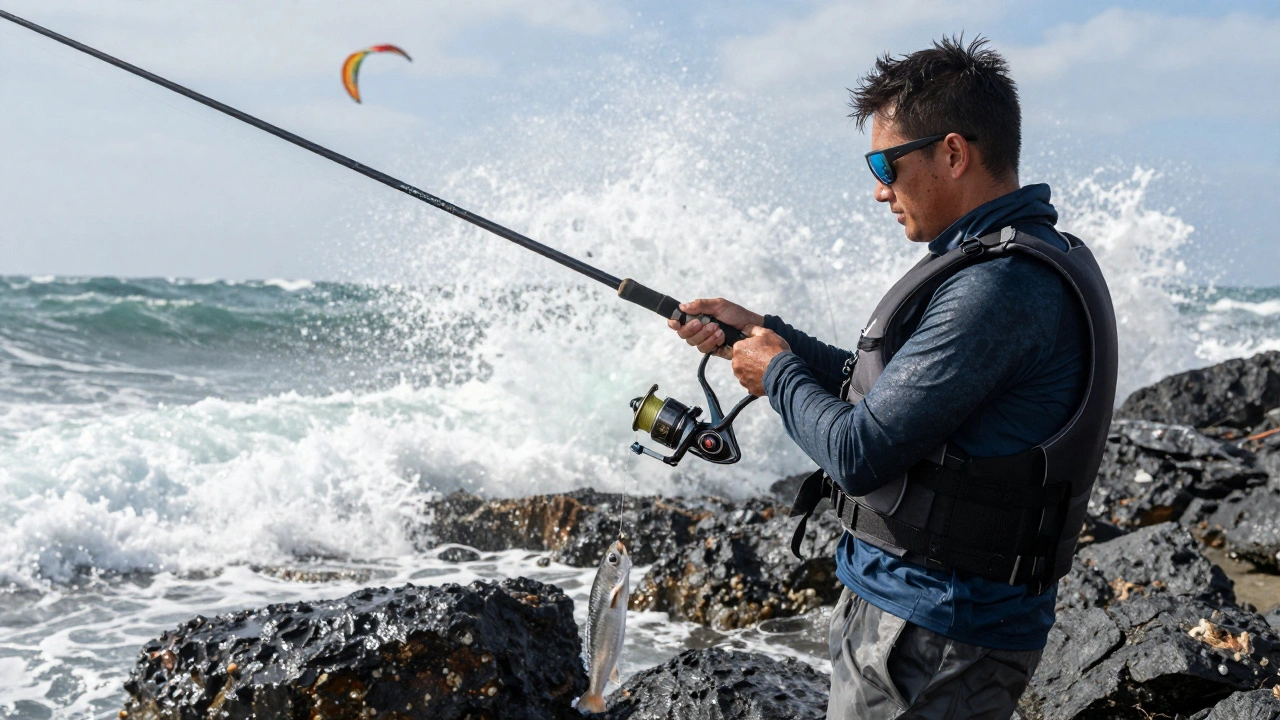
Kite fishing involves high-tension lines, sharp hooks, and powerful marine animals. Ignoring safety protocols can lead to serious injury. Always treat the line as live wire until it’s secured.
- Wear gloves: Thin nitrile or leather gloves protect your hands from line burns and hook pricks. Never touch bare line with bare skin when under tension.
- Eye protection: Sunglasses or safety glasses prevent accidental eye injuries from snapping lines or flying debris.
- Clear landing zone: Ensure no one stands behind or directly below the kite. A falling kite can strike with significant force.
- Check weather forecasts: Avoid fishing during thunderstorms or rapidly changing wind conditions. Lightning poses a severe risk when holding conductive lines.
- Secure your rod: Use a rod holder or secure grip when reeling in. A slipping rod can become a dangerous projectile.
Also, be aware of local regulations. Some beaches restrict kite usage or require permits for commercial fishing activities. Check with local authorities before heading out.
Troubleshooting Common Issues
Even experienced anglers face challenges. Here’s how to handle the most frequent problems.
Kite stalls and drops: This usually happens in turbulent wind or when the kite is flown too close to the ground. Adjust the bridle length to change the center of pressure. Shortening the bridle moves the center forward, making the kite more responsive. Lengthening it stabilizes the flight but reduces maneuverability.
Line tangles: Prevent this by keeping the fishing line separate from the control lines. Use a swivel at the connection point to allow free rotation. If tangles occur, don’t pull hard. Gently work them out by rotating the kite and easing tension.
Poor bite detection: If you’re not feeling bites, your line might be too loose or the bait moving unnaturally. Tighten the line slightly and ensure the bait is drifting naturally with the current. Adding a small float or bobber can help keep the bait at the right depth and improve visibility.
Next Steps for New Kite Fishers
Start small. Practice launching and controlling the kite without any fishing gear attached. Get comfortable with the feel of the wind and the responsiveness of the controls. Once you can reliably launch and land the kite, add the rod and practice retrieving line smoothly.
Join local fishing forums or clubs. Many areas have groups dedicated to kite fishing who share tips on local spots, wind patterns, and species behavior. Learning from others’ experiences accelerates your progress significantly.
Finally, respect the environment. Clean your catch, minimize bycatch, and leave the beach as you found it. Sustainable practices ensure that kite fishing remains viable for future generations.
What is the best wind speed for shore-based kite fishing?
Ideal wind speeds range from 10 to 20 mph. Below 10 mph, kites struggle to generate enough lift. Above 25 mph, control becomes difficult and safety risks increase. Consistent winds are better than gusty ones for precise bait placement.
Can I use a regular recreational kite for fishing?
No, recreational kites lack the structural integrity and load-bearing capacity needed for fishing. They may tear under tension or fail to maintain stable flight in variable winds. Always use kites specifically designed for fishing applications.
How far can I cast with a kite from the shore?
Typical distances range from 50 to 150 yards, depending on wind conditions and kite size. With optimal wind and a large parafoil kite, some anglers report reaching up to 200 yards. However, maintaining control and sensitivity becomes harder beyond 120 yards.
Is kite fishing legal on all public beaches?
Not necessarily. Regulations vary by location. Some beaches prohibit kites entirely, while others require permits. Always check local ordinances and marine fishing regulations before attempting shore-based kite fishing.
What types of fish can be caught with kite fishing?
Kite fishing excels at targeting pelagic species such as mahi-mahi, wahoo, yellowfin tuna, blackfin tuna, and barracuda. These fish often feed near the surface where kite-presented bait mimics natural prey movement effectively.