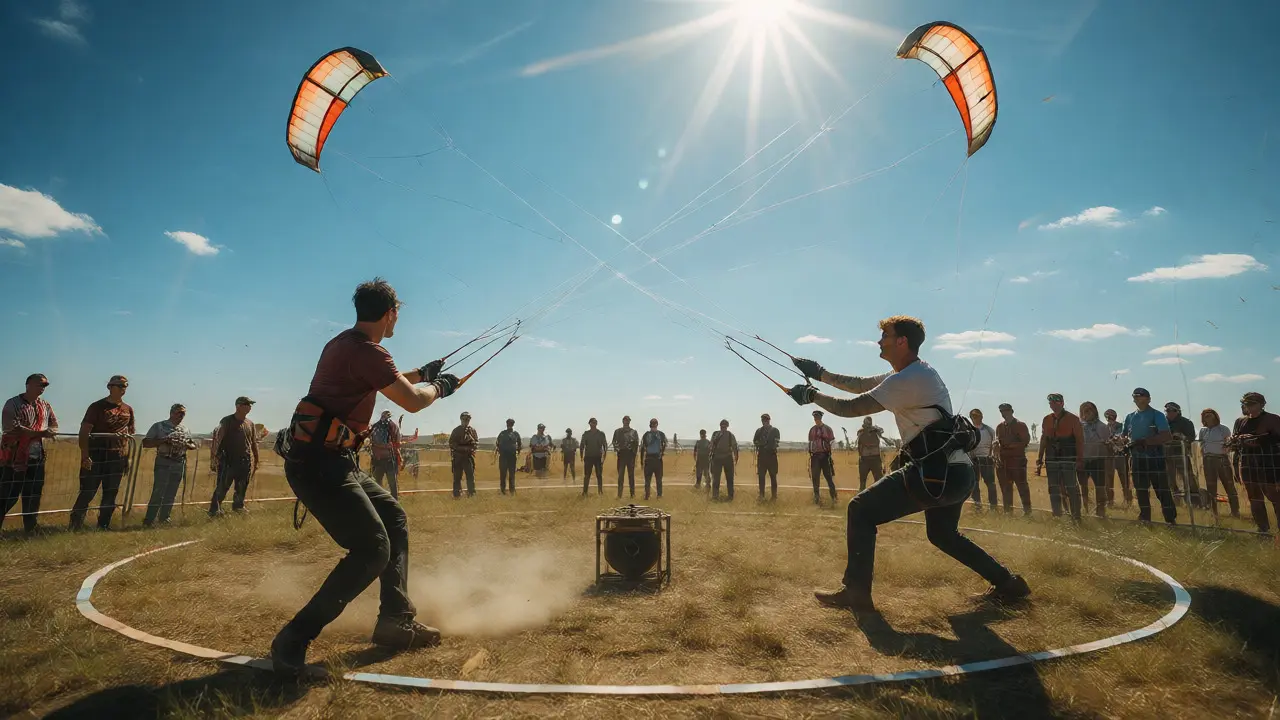
You know that feeling when the crowd suddenly goes silent? It’s not because they’re mesmerized by a perfect cut. It’s because someone just stepped into the kill zone. In kite fighting, especially during high-stakes festivals like those in Kabul, Lahore, or even local competitions here in Portland, the difference between a thrilling match and a trip to the emergency room is often just three feet of empty grass.
We tend to think of kite flying as a gentle, pastoral hobby. But competitive kite fighting is a combat sport played at 200 feet in the air with lines sharp enough to slice skin. If you’re organizing an event, participating as a flyer, or just bringing your family to watch, understanding the geometry of safety isn’t optional-it’s mandatory. Let’s break down exactly where people should stand, why the "safe zone" moves, and how to keep spectators from becoming collateral damage.
The Physics of Danger: Why Distance Matters
Before we draw lines on the ground, you need to understand what’s actually happening above your head. A modern competition kite line, typically made of braided polyester or nylon coated with glass powder (known as Manja or abrasive coating), has a tensile strength capable of holding up to 50 pounds of force. When two kites engage in a duel, the tension spikes. If one line snaps, it doesn’t just fall; it whips. That whip can travel horizontally across the field at speeds exceeding 60 miles per hour.
This creates a primary hazard for spectators: the snap-back radius. If a flyer is standing at the edge of the active arena and their line breaks, the recoil can extend back toward the crowd. Most accidents don’t happen because a kite crashes into a person; they happen because a broken line slices through the air where no one was looking. This is why static boundaries are dangerous. The safe zone must account for dynamic movement.
Defining the Three Critical Zones
To manage risk effectively, event organizers and experienced flyers divide the space into three distinct areas. Ignoring these distinctions is the leading cause of minor injuries at amateur tournaments.
| Zone Name | Distance from Center | Who Is Allowed | Primary Risk Factor |
|---|---|---|---|
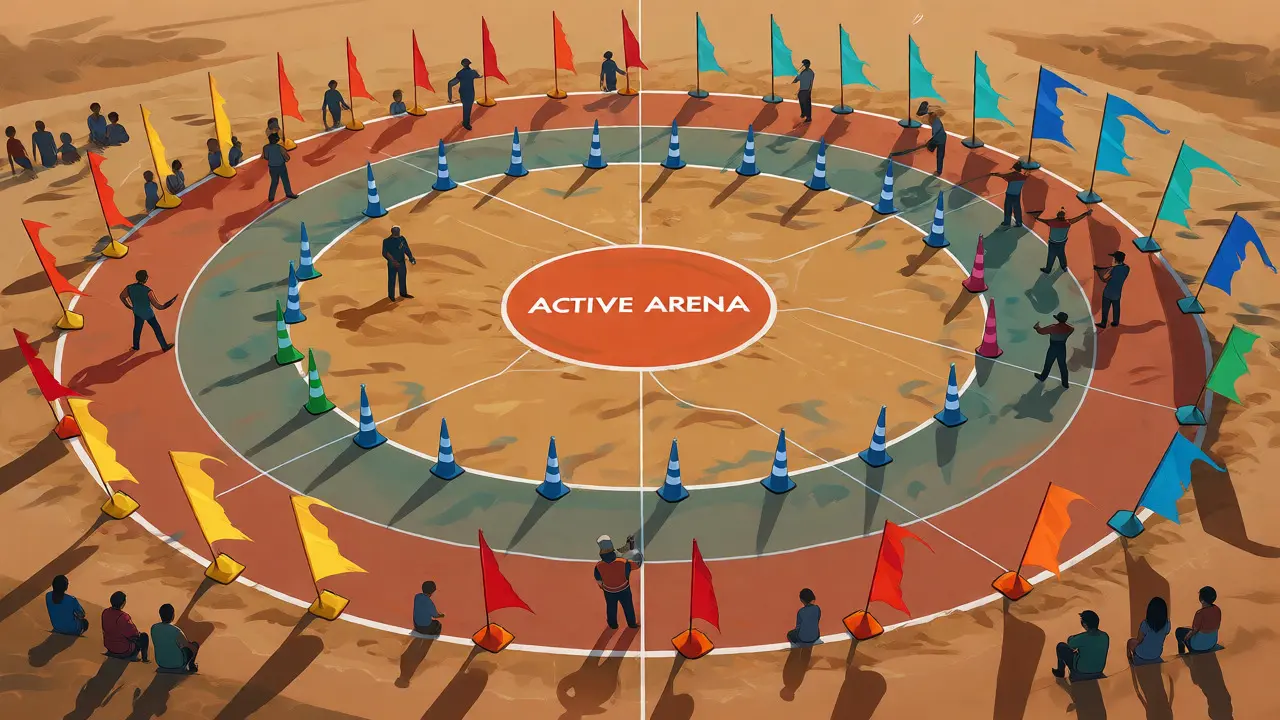
| Active Arena | 0-15 meters | Competitors only | Direct collision, line entanglement |
| Buffer Zone | 15-30 meters | Judges, Medics, Volunteers | Snap-back, falling debris |
| Spectator Zone | 30+ meters | General Public | Falling kites, noise, sun exposure |
The Active Arena is where the magic happens, but it’s also where the chaos lives. Only trained competitors with proper footwear and protective gear belong here. The Buffer Zone is often overlooked. This is the critical transition area. It exists to catch any equipment that flies out of bounds before it hits a child watching from the sidelines. If you’re a volunteer handing out water, do not step into the Buffer Zone without permission from the head referee. You are invisible to a flyer focused on keeping their kite airborne.
The Moving Boundary Problem
Here is the part most beginners miss: the boundary isn’t fixed. In a dogfight involving multiple kites, the center of gravity shifts. If two top-tier flyers drift toward the north side of the field, the danger zone expands in that direction. A spectator standing safely behind a rope line on the south side might be perfectly fine, while someone on the north side is now within the snap-back range of a high-tension duel.
Experienced organizers use a technique called "dynamic zoning." They place movable markers-often brightly colored cones or flags-that staff adjust every few minutes based on wind direction and competitor positioning. If the wind is blowing east, the downwind side requires a larger buffer because a lost kite will drift there faster. Always watch the flags, not just the ropes. The flags tell you where the danger is moving.
Protective Gear for Flyers and Front-Row Fans
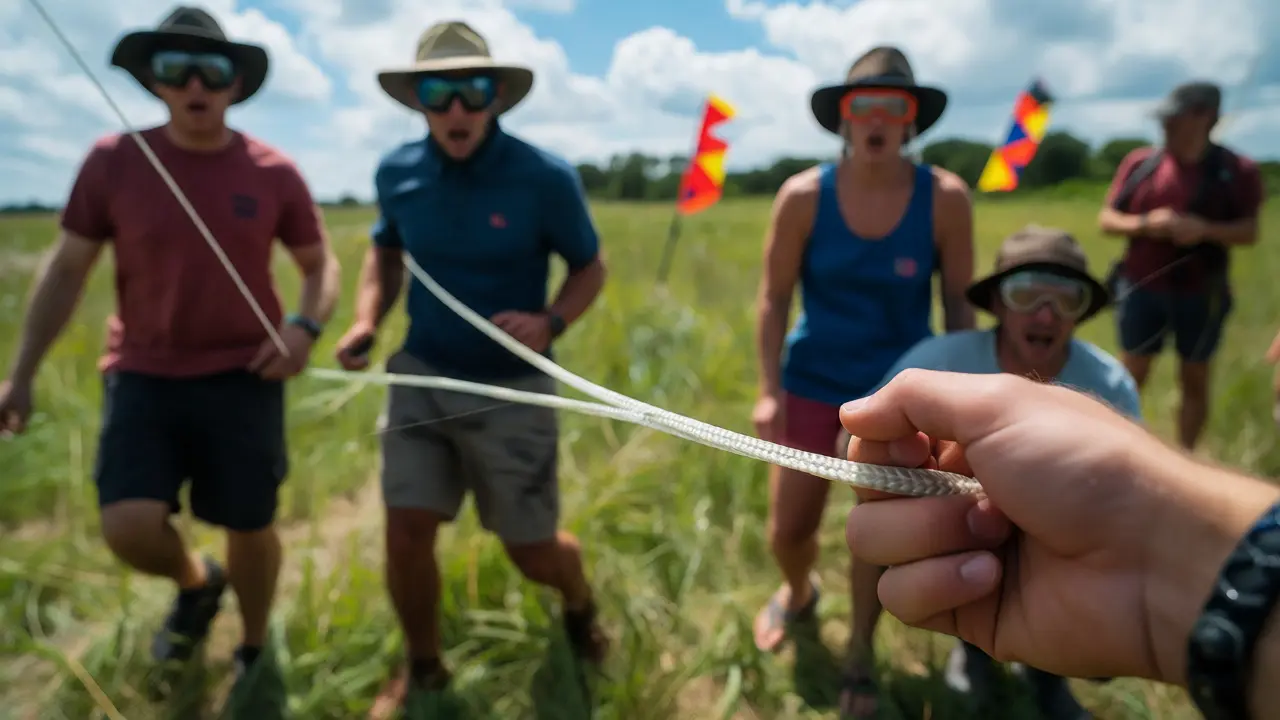
If you are competing, your personal protective equipment (PPE) is non-negotiable. But what about the guy sitting ten feet away from the action? He needs protection too. The most common injury in kite fighting isn’t a deep laceration; it’s an eye injury. A microscopic shard of glass-coated line can embed itself in the cornea if a line snaps near a face.
- Gloves: Essential for flyers. Use fingerless gloves with reinforced palms to prevent "line burn," which occurs when friction heats the line against your skin.
- Eye Protection: Polycarbonate glasses are recommended for anyone within 20 meters of the action. Regular sunglasses offer little impact resistance.
- Hats: Wide-brimmed hats protect against falling kites. While rare, a heavy stunt kite dropping from 100 feet can cause a concussion.
At recent events I’ve attended, including the annual Oregon Kite Festival, organizers have started providing disposable safety goggles to front-row spectators. It sounds excessive until you see a line snap three inches from someone’s cheekbone. Then it seems like a bargain.
Communication Signals: How to Warn the Crowd
In the heat of battle, flyers cannot stop to yell "Move!" They are busy managing spool tension and steering. Therefore, standardized hand signals are vital for communicating danger to spectators. These signals bridge the gap between the intense focus of the competitor and the relaxed attention of the audience.
- Open Palm Up: Indicates "All clear." The line tension is normal.
- Closed Fist: Indicates "High Tension." Do not approach. The line is under extreme stress and may snap.
- Pointing Down: Indicates "Kite Dropping." Move away from the projected landing spot immediately.
- Waving Arm: Indicates "Line Snapped." Seek cover or move perpendicular to the line of flight.
Make sure these signals are posted visibly around the perimeter of the event. Better yet, have a commentator explain them over the PA system before the first match begins. An informed crowd is a calm crowd.
Legal and Liability Considerations
If you’re hosting a private tournament or a community gathering, liability is a real concern. Standard waivers often fail to cover specific aerial sport risks unless explicitly stated. You need language that acknowledges the inherent dangers of flying objects and sharp lines. Furthermore, insurance providers for outdoor events often require proof of designated spectator barriers. Temporary fencing isn’t just decorative; it’s a legal requirement in many jurisdictions to demonstrate that reasonable care was taken to separate participants from observers.
Consider hiring professional marshals. Unlike volunteers who might get distracted chatting, paid marshals are trained to enforce the 30-meter rule strictly. Their presence alone reduces accidental incursions by nearly 40%, according to data from major international kite leagues.
Troubleshooting Common Spectator Issues
Even with perfect planning, things go wrong. Here’s how to handle the most frequent scenarios:
The Dog Pile: Sometimes, spectators bring pets. Dogs love chasing kites. A dog running into the Active Arena can tangle in a line, causing a multi-kite crash and potential injury to the animal. Enforce a strict "No Pets in Buffer Zone" policy. If a dog gets loose, pause the match immediately. Do not try to grab the dog while lines are live.
Wind Shifts: Sudden gusts can push kites unpredictably. If the wind changes direction mid-match, the "downwind" side becomes the new danger zone. Staff must physically move the barrier or ask spectators on the old downwind side to shift positions. Don’t rely on verbal warnings alone; physical barriers work better than shouts.
Entangled Lines: If two kites get tangled, do not pull hard. This increases tension and raises the risk of snapping. Instead, follow the "slack and wait" protocol. Let the kites descend slowly. Spectators should remain still until the kites touch the ground and are secured by officials.
How far should spectators stand from kite fighters?
The minimum recommended distance is 30 meters (approximately 100 feet) from the center of the active arena. This buffer accounts for line snap-back and falling kites. For smaller backyard gatherings, ensure at least 15 meters of clearance, but always prioritize more space if possible.
What happens if a kite line snaps?
When a line snaps, it recoils violently. The immediate action for everyone nearby is to drop low or move perpendicular to the line's path. Never try to catch a snapping line with bare hands. Notify the referee immediately so they can pause the match and inspect the remaining equipment.
Are children allowed near the kite fighting area?
Children should generally stay outside the 30-meter spectator zone. Due to their height and tendency to run unexpectedly, they are at higher risk of tripping into the buffer zone. If they must be closer, they should wear protective eyewear and remain seated behind a physical barrier.
Do different types of kite lines require different safety distances?
Yes. Traditional cotton lines are less dangerous but weaker. Modern Dyneema or Spectra lines are incredibly strong and thin, making them harder to see and more likely to cause severe cuts. High-performance synthetic lines require stricter adherence to the 30-meter rule compared to traditional materials.
Who is responsible if a spectator is injured?
Liability depends on local laws and event waivers. Generally, if a spectator violates the marked boundaries, they assume the risk. However, organizers are responsible for maintaining clear signage and adequate barriers. Always check the specific terms of the event waiver before entering the venue.