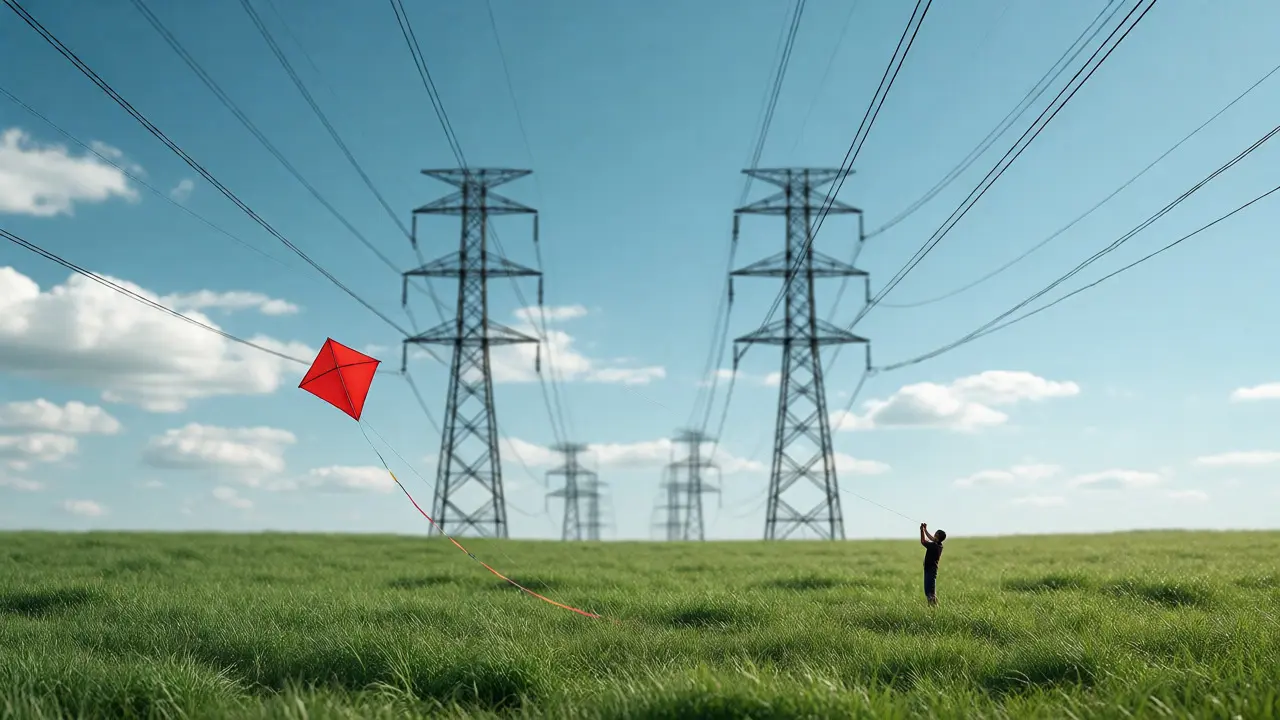
It looks like a harmless afternoon activity. The wind is steady, the sky is clear, and you’re standing in an open field with a colorful kite ready to take off. But there’s an invisible danger lurking just out of sight, waiting to turn a fun day into a medical emergency. It’s not the wind gusts or the tangled string that poses the biggest threat-it’s the high-voltage wires humming above your head.
Every year, thousands of people learn this lesson the hard way. While kites are lightweight toys, they interact with electricity in ways that defy common sense. A nylon string might seem like nothing, but when it gets wet or coated in dust, it becomes a conductor. And if that string touches a power line? The results can be fatal. This guide breaks down exactly why proximity to power lines is non-negotiable, what happens during an electrical contact event, and how to pick spots that keep you safe while keeping your kite high.
The Invisible Threat: How Electricity Finds Your Kite
You don’t need to touch a power line directly to get shocked. That’s the first misconception many hobbyists have. Electricity wants to find a path to the ground, and your kite setup often provides the perfect bridge. When you fly a kite near overhead lines, you create a potential difference between the wire (which carries thousands of volts) and your grounded body. If the kite or its tail drifts close enough, an arc can jump across the gap. This is called arcing, and it doesn’t require physical contact.
Think about the last time you saw lightning. It didn’t touch the cloud and the ground simultaneously; it jumped through the air. Power lines do the same thing on a smaller scale. High voltage creates an electric field around the wire. If your kite enters this field, especially if it’s damp from morning dew or recent rain, the current can travel down the string, through your hands, and into your feet. The National Electric Safety Code recommends staying at least 10 feet away from low-voltage distribution lines, but for high-voltage transmission lines, which can carry up to 765,000 volts, that distance needs to be significantly larger-often over 100 feet.
Why Nylon Strings Are Not Insulators
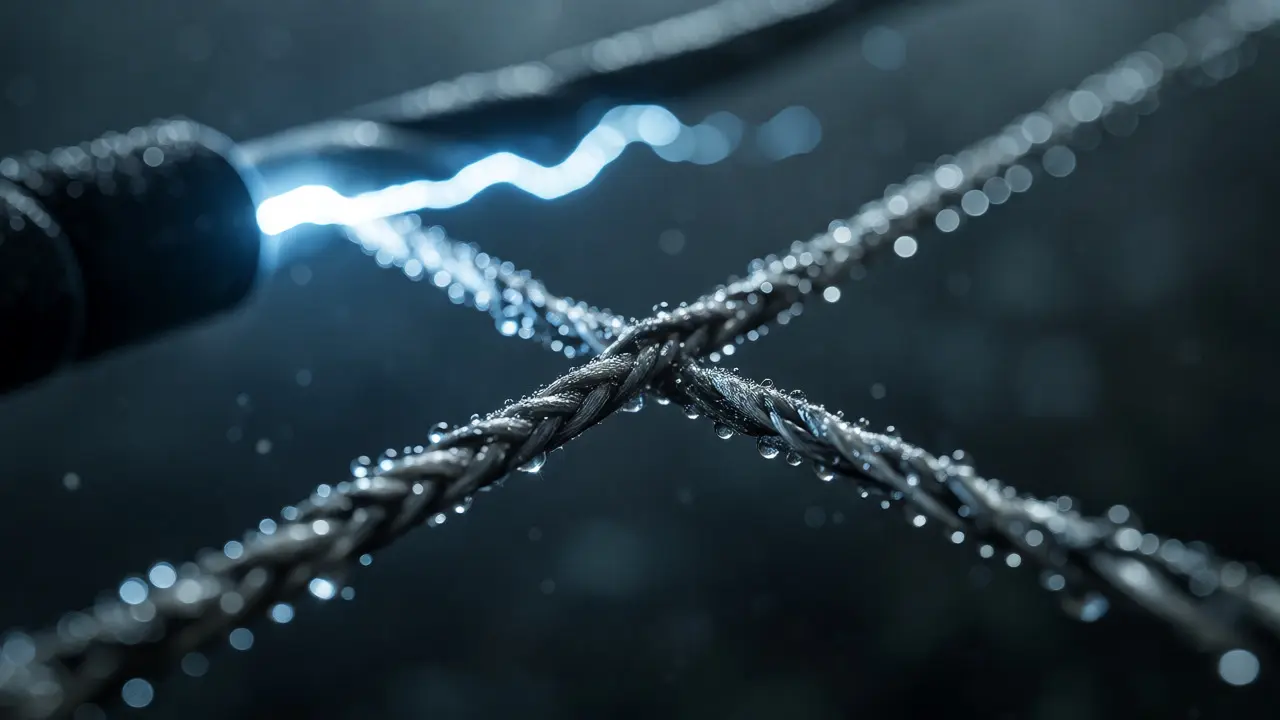
Most modern kites use braided polyester or nylon lines because they are strong and light. You might assume these materials are plastic, so they must be safe insulators. Here is the catch: dry nylon resists electricity reasonably well, but real-world conditions are rarely dry. Humidity, sweat from your hands, rain, and even airborne pollution coat the string. Water is an excellent conductor, especially when mixed with impurities. Once your string gets damp, its resistance drops dramatically, turning a safety barrier into a conduit for lethal current.
| Material | Dry State Risk | Wet/Damp State Risk | Recommendation |
|---|---|---|---|
| Nylon/Polyester | Low | High | Avoid power lines entirely |
| Cotton/Hemp | Moderate | Very High | Not recommended for beginners |
| Fiberglass Rods | High | Extreme | Never use near wires |
| Carbon Fiber | Very High | Extreme | Strictly prohibited near power |
Notice the column for rods. Many frameless kites or large delta kites use fiberglass or carbon fiber spars. Unlike string, these materials conduct electricity even when completely dry. Carbon fiber, in particular, is a semi-metal. If a carbon spar brushes against a live wire, the circuit closes instantly. There is no warning spark, no gradual tingle. Just immediate, severe injury. If you are flying a complex stunt kite with rigid frames, your safety margin shrinks drastically compared to a simple diamond kite made of bamboo and paper.
Identifying Danger Zones Before You Launch
Choosing a location is 90% of your safety strategy. In urban and suburban areas, power lines are everywhere. They run along streets, cross backyards, and dip under bridges. Before you unpack your gear, scan the horizon. Look for utility poles. Follow the wires. Are they sagging? Do they cross the open space where you plan to stand?
- The "Sag" Factor: Wires sag when hot or under heavy load. What looks like a safe height at 8 AM might drop lower by noon as temperatures rise and demand increases. Always assume the lowest point of the wire is closer than it appears.
- Substation Proximity: Flying near electrical substations is dangerous due to electromagnetic fields and the sheer density of equipment. Stay far away from fenced-off transformer yards.
- Trees and Obstructions: Don’t let trees fool you. If your kite gets stuck in a tree branch that is touching a power line, pulling the string can pull the branch into the wire, causing a short circuit or electrocuting you through the branch.
A good rule of thumb is the "Two-Pole Rule." If you can see two utility poles defining the span of wires over your intended flying area, move until those poles are clearly behind you and far away. If you are in a park, check signage. Many municipalities explicitly prohibit kite flying within 500 feet of power infrastructure.
What To Do If Your Kite Gets Tangled
This is the moment panic sets in. Your kite has drifted too close, caught a branch, or wrapped itself around a wire. Your instinct is to yank the string hard to free it. Stop. Do not pull. Pulling tightens the loop and increases the chance of the string slipping onto the live conductor. If the kite is merely near the wire, gently reel it in. Keep tension low. If it is already touching or entangled, leave it alone.
If you cannot retrieve the kite without risking contact, abandon it. It is better to lose a $30 toy than to sustain third-degree burns or cardiac arrest. Never attempt to climb a pole or ladder to retrieve a kite yourself unless you are a certified utility worker with insulated tools. Even then, professionals use specific protocols. For you, the protocol is simple: cut the string if possible, walk away, and call the local utility company if the debris poses a risk to others.
Weather Conditions That Increase Risk
Wind isn’t the only variable. Moisture changes everything. As mentioned earlier, wet strings conduct better. But weather also affects visibility and kite control. Fog reduces your ability to judge the distance between your kite and the wires. Rain makes the lines slippery and harder to manage, leading to accidental releases or tangles.
Furthermore, static electricity builds up in the atmosphere before storms. You might feel a tingling sensation in your fingers while holding the handle. This is a warning sign. If you feel static discharge, the atmospheric charge is high. Get the kite down immediately. Lightning doesn’t always strike directly; side flashes can occur nearby. Flying a tall object like a kite during pre-storm conditions turns you into a lightning rod experiment gone wrong.
Protective Gear and Best Practices
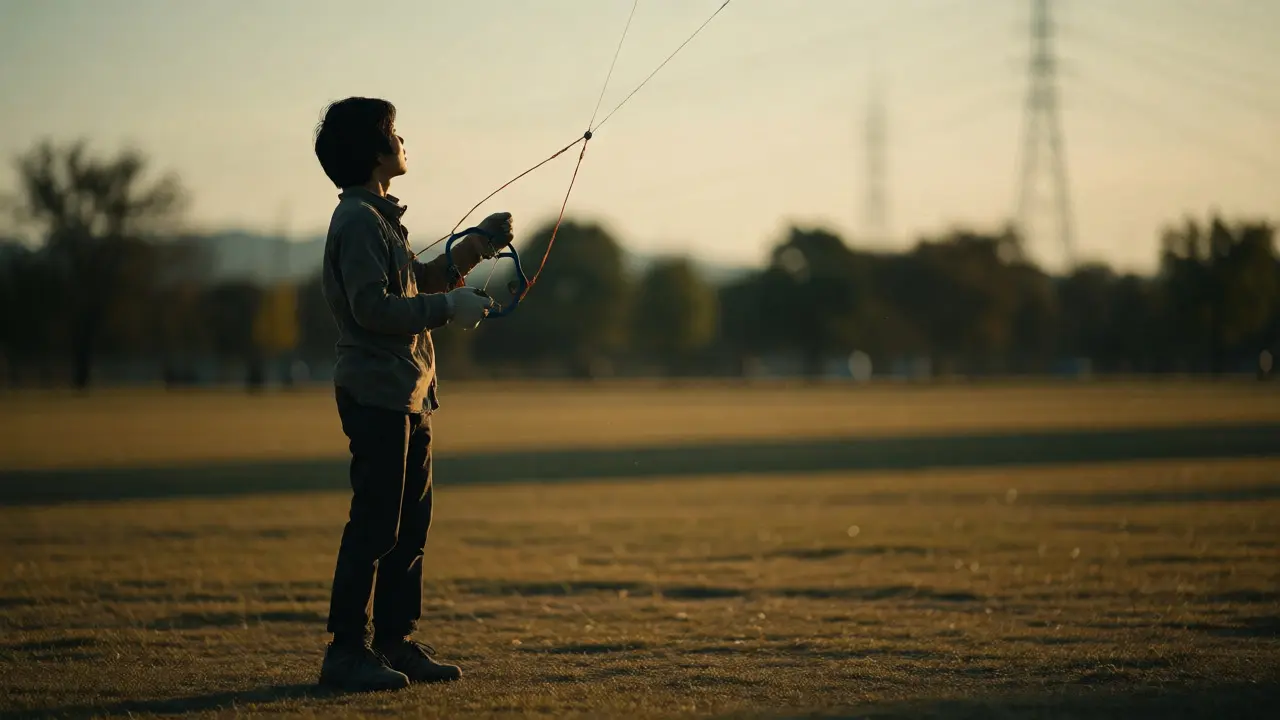
You don’t need a hazmat suit to fly a kite safely, but smart choices help. Wear closed-toe shoes to protect your feet if you accidentally step on a fallen line or trip while managing the string. Gloves provide a layer of insulation, though they won’t save you from a direct hit. More importantly, gloves improve grip, reducing the chance of dropping the winder or losing control.
Keep your kite small when learning new locations. Large kites generate more lift and are harder to steer precisely around obstacles. Start with a modest-sized single-line kite. Master the art of landing it quickly before graduating to multi-line stunt kites that require constant attention. Remember, a kite that is easy to land is a kite that stays out of trouble.
Frequently Asked Questions
Can I fly a kite near power lines if my string is dry?
While dry synthetic strings offer some resistance, it is not reliable enough to guarantee safety. Dust, humidity, and microscopic imperfections can allow current to pass. Additionally, the kite itself (especially if it has metal parts or carbon fiber) may conduct. The safest practice is to maintain a significant distance regardless of moisture levels.
How far away should I stay from power lines?
For residential distribution lines (the ones on wooden poles), stay at least 10-15 feet away horizontally and vertically. For high-voltage transmission lines (large steel towers), the safe distance is much greater, often recommended as 100 feet or more. Always err on the side of caution and choose open fields away from any visible wiring.
What happens if my kite touches a power line?
Electricity will travel down the string to your hands and through your body to the ground. This can cause severe burns, muscle contractions that prevent you from letting go, heart arrhythmias, or death. If the kite wraps around the line, do not pull it. Leave it and notify the power company.
Are metal kites more dangerous than fabric ones?
Yes. Metal frames or components create a direct conductive path. Even if the sail is fabric, a metal spar touching a wire completes the circuit instantly. Fabric-only kites with natural wood frames are slightly safer, but still risky if the string gets wet.
Is it safe to fly kites after rain?
Flying after rain is generally safe if the ground is dry and there are no storm clouds approaching. However, ensure your string is completely dry before launching. Wet strings conduct electricity more readily, increasing the risk if you inadvertently drift near a wire. Also, avoid flying in foggy conditions as visibility of power lines is reduced.