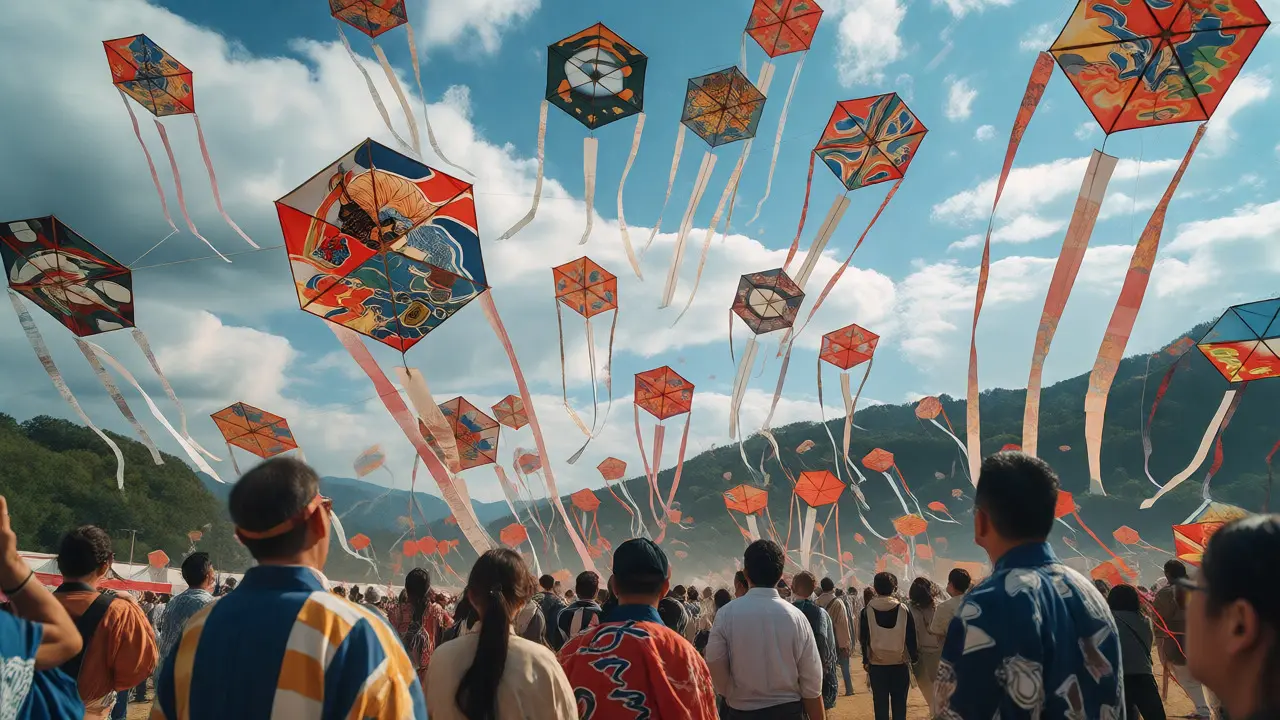
Imagine standing on a windy hill in Niigata, Japan. The sky is crowded with hundreds of hexagonal shapes dancing against the clouds. Suddenly, one kite dives, its string slicing through another’s line. A sharp snap echoes, and a fallen kite spirals to the ground. This isn’t just a hobby; it’s Rokkaku Kite Combat, a traditional Japanese competitive sport where participants use rigid-frame kites to cut down opponents' lines. If you’ve ever wondered how these geometric gliders dominate the skies, or if you’re looking to join your first team battle, this guide breaks down everything from the physics of the cut to the unwritten etiquette of the arena.
| Aspect | Key Detail |
|---|---|
| Kite Shape | Hexagonal (6-sided) with a rigid cross-spine |
| Goal | Cut opponent's line or force them out of bounds |
| Line Material | Abrasive cotton or nylon coated with glass powder |
| Team Size | Typically 2-4 flyers per team in battles |
| Origin | Edo Period Japan (1603-1868) |
The Anatomy of a Rokkaku Kite
Before you step onto the battlefield, you need to know what’s flying above you. The term "Rokkaku" literally translates to "six angles," referring to the kite’s distinctive hexagonal shape. Unlike the soft diamond kites you might see at a park, a Rokkaku is a beast of engineering. It features a rigid spine running vertically and two horizontal spars that create tension across the fabric. This structure gives it incredible stability and speed, which are critical for combat.
Why does the shape matter? In kite fighting, the ability to maneuver quickly and maintain tension on the line determines who wins. The Rokkaku’s flat surface acts like a wing, generating lift even in moderate winds. When you pull the line, the kite doesn’t just rise; it banks sharply, allowing you to dive toward an opponent or evade an attack. Most competition Rokkakus range from 30 centimeters to over 1 meter in height. Smaller kites are faster and more agile, perfect for quick cuts, while larger ones offer more power but turn slower.
You’ll notice most Rokkakus have a long tail, often made of paper streamers. While decorative, the tail serves a functional purpose: it adds drag to stabilize the kite’s flight path, preventing it from spinning wildly when hit by wind gusts. However, in high-level competitions, some flyers shorten their tails to reduce drag and increase speed, trading stability for aggression.
Rules of Engagement: How to Win
If you think kite fighting is just about pulling as hard as you can, you’re missing the strategy. There are specific ways to win, and they aren’t all about cutting strings. Understanding the scoring system is crucial whether you’re watching a tournament or competing yourself.
- The Cut: The most common victory condition. You must sever your opponent’s line using the abrasive friction of your own line. Once their line snaps, their kite falls. You win the point.
- Grounding: If you force your opponent’s kite to touch the ground without cutting their line, you still win. This often happens during aggressive dives or when an opponent loses control.
- Out of Bounds: Many competitions define a "kill zone." If a kite flies outside this designated area, it’s considered disqualified or lost. This rule prevents endless chasing matches.
- Tangle: If both kites become entangled and fall together, it’s usually a draw or requires a re-fly, depending on local rules.
One thing that surprises newcomers is the lack of protective gear. In some modern Western-style box kite leagues, gloves are mandatory. But in traditional Japanese Rokkaku combat, many veterans fly bare-handed. Why? Because feeling the vibration of the line tells you exactly when contact is happening. If you feel a sudden jerk followed by silence, you likely just cut someone. If you feel a grinding sensation, your lines are rubbing against each other. Wearing thick gloves mutes this feedback loop, making precise timing harder.
Mastering the Line: The Secret Weapon
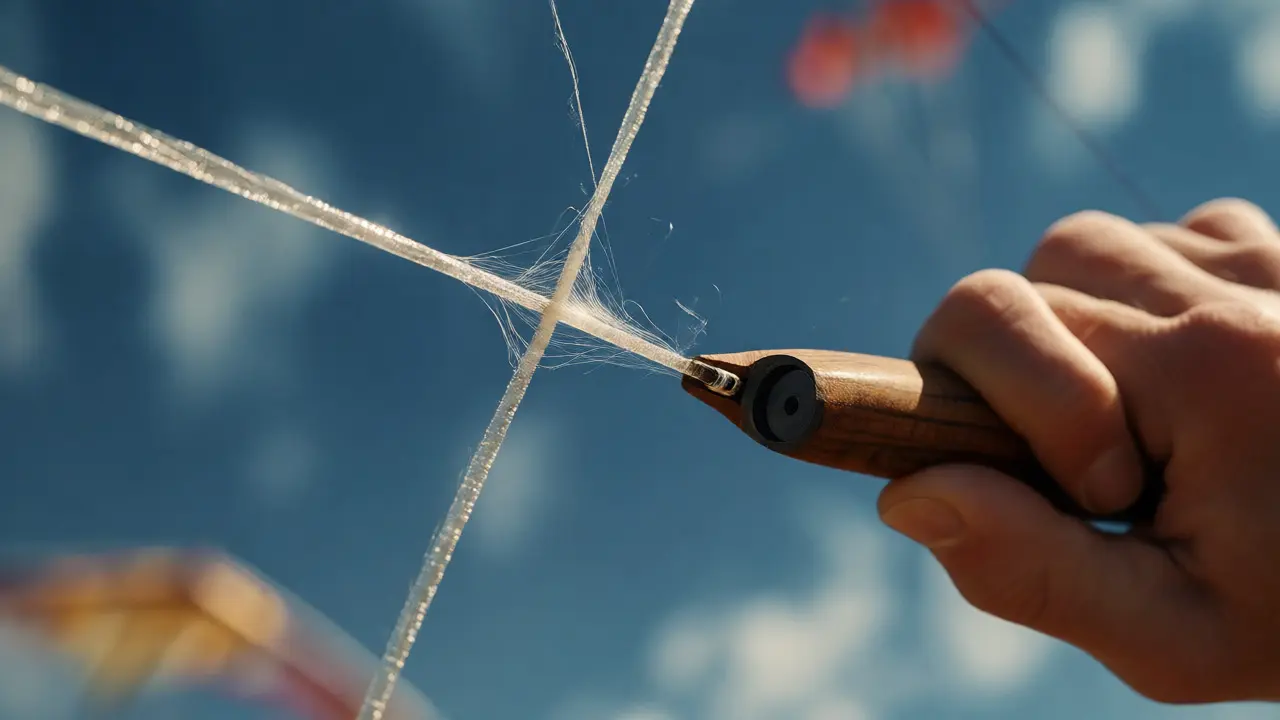
In Rokkaku combat, the kite is only half the equation. The line is your sword. Standard fishing line won’t work here-it’s too smooth and slippery. To win, you need a line that bites. Traditionalists use cotton thread treated with a mixture of glue and crushed glass or aluminum oxide powder. This coating turns the line into a saw blade.
Modern competitors often switch to braided nylon or polyester lines for durability, but they still apply abrasive coatings. Here’s the trick: the abrasiveness needs to be balanced. Too rough, and your line will snap under its own tension before you even reach an opponent. Too smooth, and you’ll spend hours rubbing against a rival’s line without making a dent. Experienced flyers test their line strength regularly. They look for "weak spots"-areas where the coating has worn off or the fibers are fraying. A single bad knot or a frayed section can lose you a match in seconds.
How do you handle the line? You don’t just hold it. You wrap it around a wooden or plastic winder called a reel, a handheld spool used to manage the length and tension of the kite line. Keeping the right amount of slack is vital. Too tight, and you have no room to maneuver. Too loose, and you can’t generate enough friction to cut. Pros keep a few meters of slack in their hands, ready to yank the line taut at the exact moment of contact.
Team Battles: Coordination Over Chaos
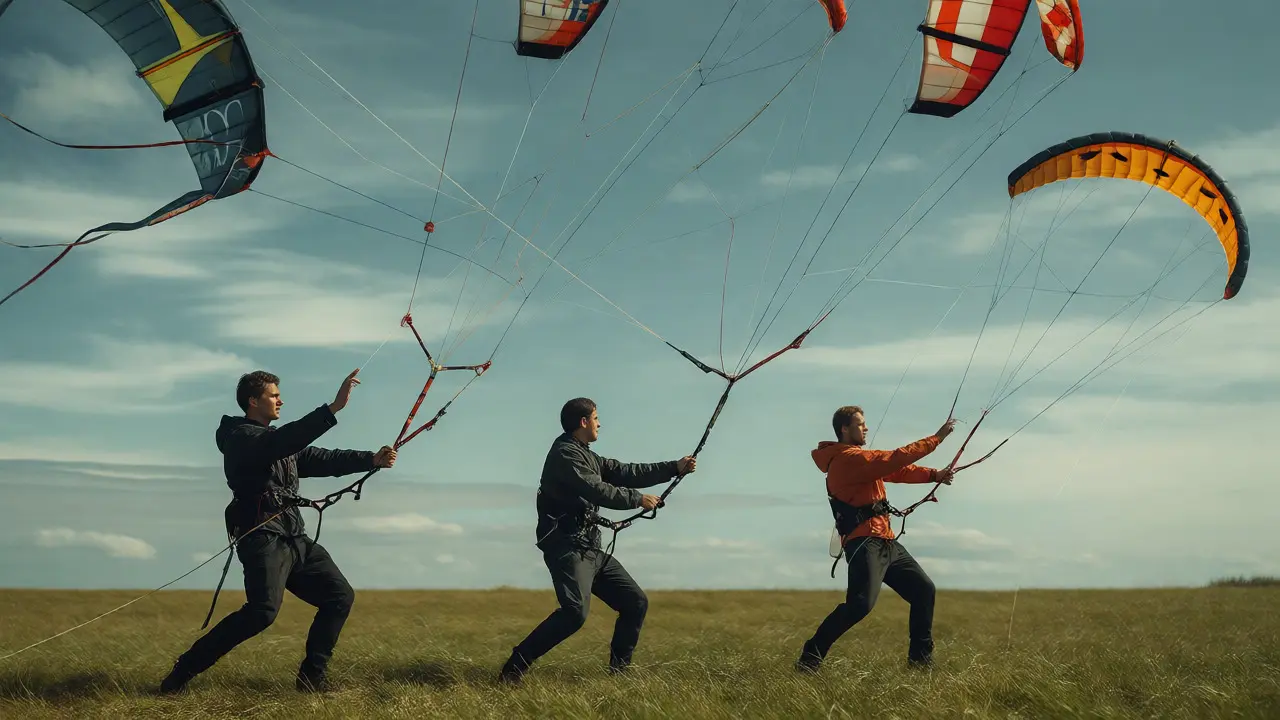
Solo fights are intense, but team battles are where Rokkaku combat becomes a spectator sport. Imagine three flyers on your side versus three on theirs. The sky becomes a chaotic web of crossing lines. In these scenarios, individual skill matters less than communication and positioning.
Teams typically assign roles. One flyer might act as the "hunter," aggressively seeking out opponents to engage. Another plays defense, protecting the hunter’s blind spots. The third might act as support, helping to untangle lines or distracting enemies. Communication is key. Since you can’t hear each other well over the wind, teams develop hand signals or pre-agreed maneuvers. For example, a raised arm might mean "I’m engaging," prompting teammates to back off to avoid tangling.
Positioning is everything. In a team fight, you want to approach opponents from angles where they can’t easily retreat. If you’re directly below an opponent, you have limited leverage. But if you position yourself upwind and slightly to the side, you can dive down, forcing them to react defensively. Teams practice synchronized movements, almost like a dance. They learn to read each other’s body language. If a teammate leans left, you know they’re preparing to bank left, so you adjust your position accordingly.
Tactics: Dive, Grind, and Escape
So, how do you actually execute a cut? It’s not about brute force. It’s about geometry and timing. The primary tactic is the "dive." You steer your kite above your opponent, then suddenly drop the nose. As your kite plunges, you pull your line tight. Your line crosses over theirs at a steep angle. The friction grinds against their line. If you time it right, you snap theirs before they can react.
But diving is risky. If you miss, you might end up tangled. That’s why evasion is just as important. When attacked, don’t just run away. Counter-steer. If an opponent dives at you from the left, bank your kite hard to the right. This changes the angle of intersection between your lines, reducing friction. You’re essentially sliding past their attack rather than meeting it head-on.
Another advanced move is the "grind." Instead of a quick cut, you lock your lines together and slide along them. This allows you to travel across the sky, dragging your opponent with you. It’s useful for pushing an enemy out of bounds. However, grinding is dangerous because it increases the chance of a mutual cut. If both lines break, nobody wins. Veterans use this tactic sparingly, usually when they have a stronger line or a better position.
Etiquette and Culture: Respect the Sky
Rokkaku combat isn’t just a sport; it’s deeply rooted in Japanese culture. During the Edo period, kite flying was associated with good fortune and warding off evil spirits. Today, that reverence remains. Even in heated competitions, there’s a code of conduct.
If you accidentally cut a beginner’s kite, you apologize. If you help someone retrieve their fallen kite, you shake hands. Losing gracefully is part of the game. You don’t mock your opponent. You analyze what went wrong. Was your line too weak? Did you misjudge the wind? This mindset fosters a community where knowledge is shared freely. Older flyers often mentor younger ones, teaching them how to tie knots or coat lines properly.
Festivals like the Hamamatsu Kite Festival or the Niigata Kite Tournament showcase this cultural aspect. These events attract thousands of spectators. The atmosphere is festive, with food stalls and traditional music playing in the background. Competitors wear matching happi coats, identifying their teams. It’s a visual spectacle, blending athletic prowess with artistic expression. The kites themselves are often painted with intricate designs, featuring samurai, dragons, or calligraphy. Winning is great, but flying a beautiful kite is equally respected.
Getting Started: Gear and Practice
Ready to try it? You don’t need to buy a $500 professional Rokkaku immediately. Start with a basic kit. Look for a small, rigid-frame kite made of ripstop nylon or plastic. Avoid paper kites for combat-they tear too easily. Buy a reel with at least 50 meters of line. Then, get some abrasive powder. You can mix white glue with fine sand or specialized kite line powder.
Practice solo first. Learn to launch the kite smoothly. Get comfortable controlling it in varying wind speeds. Try to make it hover, dive, and climb on command. Once you’re confident, find a partner. Start with gentle line crossings. Feel the vibration. Learn how much pressure it takes to cut a thin string versus a thick one. Gradually increase the intensity.
Join a local club. In the US, groups like the American Kitefliers Association host events where you can meet Rokkaku enthusiasts. Online forums are also helpful for troubleshooting issues like line twist or frame breakage. Remember, patience is key. Cutting lines consistently takes months of practice. Don’t get discouraged if you break your kite. Frames break. Lines snap. It’s part of the learning process.
What is the best material for Rokkaku kite lines?
The best materials are braided nylon or polyester threads coated with an abrasive substance like crushed glass or aluminum oxide. Cotton thread is traditional but less durable. The coating is essential for creating the friction needed to cut opponents' lines.
Do I need special gloves for kite combat?
Not necessarily. Many experienced flyers prefer bare hands to feel the line's vibrations and detect contact instantly. However, beginners should wear thin leather or synthetic gloves to prevent severe cuts from the abrasive lines until they master line management.
How big should a Rokkaku kite be for beginners?
Beginners should start with a medium-sized Rokkaku, approximately 40-60 cm in height. Larger kites require stronger winds and more strength to control, while smaller kites are more sensitive to turbulence. Medium sizes offer a balance of stability and maneuverability.
Can you fly Rokkaku kites in any weather?
No. Rokkaku kites perform best in steady winds between 10 and 20 mph. Light winds make maneuvering difficult, while strong winds can damage the rigid frame or cause loss of control. Rain is generally avoided as wet lines lose abrasiveness and heavy fabric drags poorly.
Is Rokkaku combat dangerous?
It carries minor risks. The primary danger is cuts from the abrasive line, which can slice skin like a razor. Falling kites can also cause minor bumps. Always fly in open areas away from crowds and power lines to ensure safety.