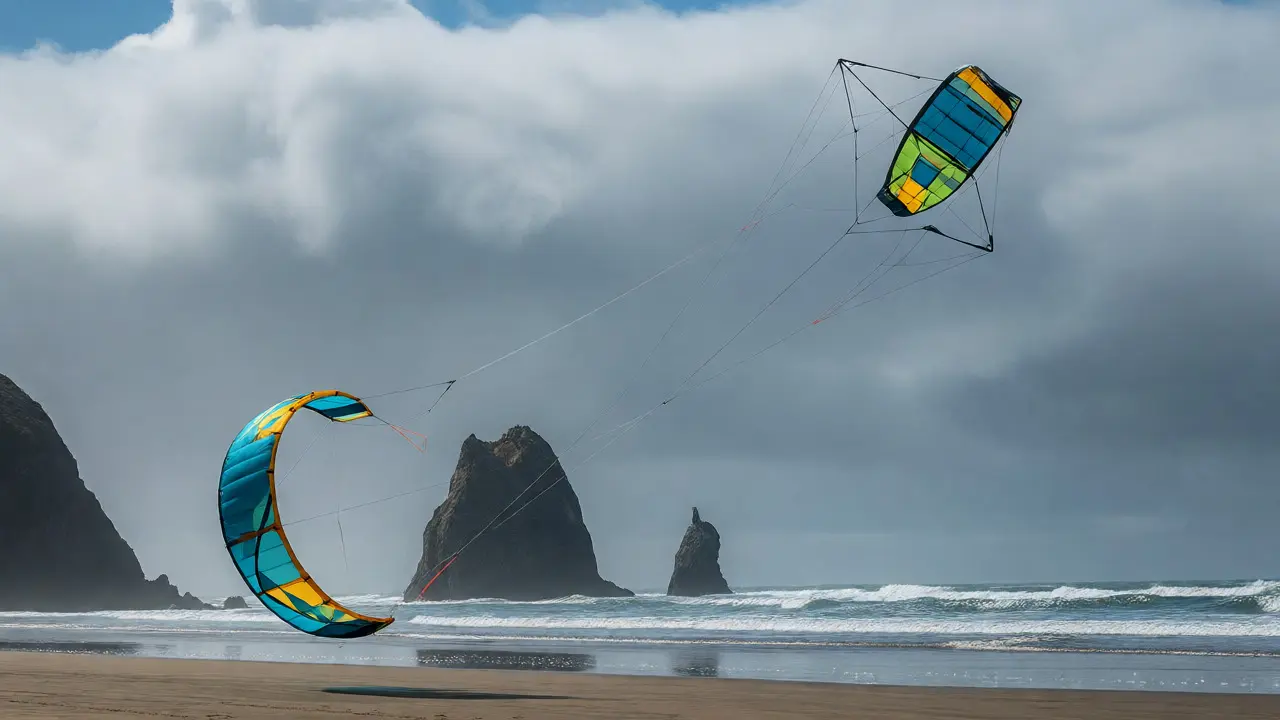
You’re standing on a windy beach in Cannon Beach, Oregon, watching two kites dance in the sky. One loops gracefully with simple, rhythmic movements. The other snaps into sharp angles, hovers mid-air, and performs complex figures that look like aerial ballet. What’s the difference? It’s not just skill-it’s the hardware. Quad-line kites and dual-line kites represent two distinct tiers of stunt kiting, each offering unique challenges and rewards.
If you’ve ever wondered whether to start with the simplicity of two lines or jump straight into the complexity of four, you’re asking the right question. This isn’t just about counting strings; it’s about how much control you want over your flight path, what tricks you can pull off, and how steep your learning curve will be. Let’s break down exactly what separates these two types so you don’t waste money on gear that doesn’t match your goals.
The Core Difference: Lines and Leverage
At its most basic level, the number of lines dictates how you steer. A dual-line kite is a type of sport kite controlled by two lines attached to the wingtips. You steer by pulling one line or the other, creating differential tension that turns the kite left or right. Think of it like driving a car with only a steering wheel-you can go forward, turn, and loop, but you can’t stop dead in the air or reverse easily without losing momentum.
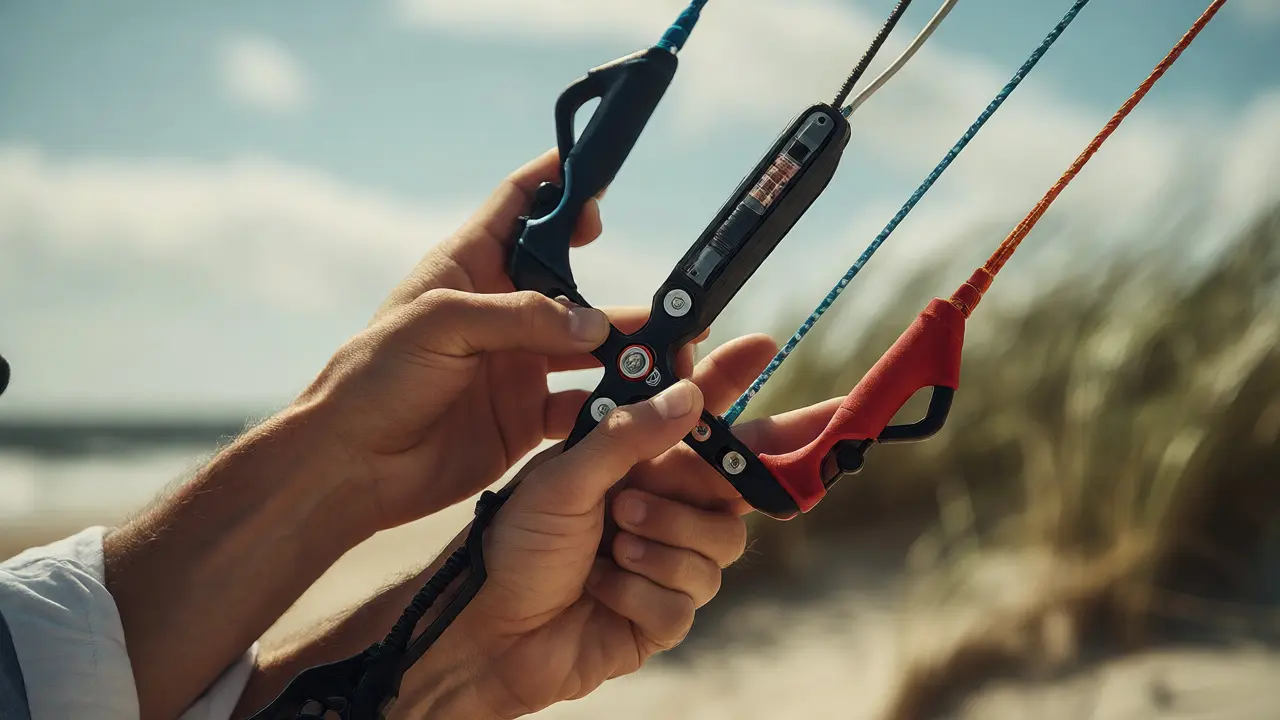
In contrast, a quad-line kite uses four lines-two for the leading edge (the front) and two for the trailing edge (the back). This setup gives you independent control over both the angle of attack and the direction. You can pitch the kite up or down, yaw it left or right, and even brake it to a complete hover. It’s less like driving a car and more like piloting a helicopter. The mechanical advantage here is massive. With four points of attachment, you have leverage over every axis of movement.
| Feature | Dual-Line Kite | Quad-Line Kite |
|---|---|---|
| Control Axes | Yaw (Left/Right) | Yaw, Pitch, Roll (Full 3D) |
| Hovering Ability | Limited; requires constant motion | Excellent; can hold position in wind |
| Wind Range | Narrower; sensitive to gusts | Wider; stable in varied conditions |
| Learning Curve | Moderate; intuitive basics | Steep; requires coordination practice |
| Trick Complexity | Loops, spins, figure-8s | Hovers, stalls, axels, flips, synchronized patterns |
Precision Control: Why Four Lines Win
Precision isn’t just a buzzword; it’s the defining feature of quad-line performance. When you fly a dual-line kite, you are constantly trading altitude for speed. If you pull hard to turn, you lose height. If you let out slack to gain height, you lose speed. It’s a zero-sum game unless the wind is perfect.
Quad-line flyers break this trade-off. By adjusting the rear lines independently from the front lines, you can change the kite’s angle relative to the wind without changing its direction. This means you can slow the kite down dramatically while keeping it pointed where you want. Imagine trying to thread a needle while running versus doing it while standing still. That’s the difference between dual and quad control.
This precision allows for maneuvers that are physically impossible on two lines. Take the "hover." On a quad-line, you can park the kite in a specific spot in the sky, holding it there against moderate wind, and then launch it again. Try that on a dual-line, and you’ll likely crash. The ability to stall the kite intentionally-stopping it mid-flight and restarting-is a hallmark of advanced quad-line flying. It transforms the kite from a projectile into a tool you can manipulate with surgical accuracy.
Trick Potential: Expanding the Repertoire
Dual-line kites are fantastic for dynamic, high-energy moves. They excel at fast loops, wide circles, and synchronized team flying where multiple pilots move in unison. The simplicity of the controls means you can focus on timing and rhythm. Many beginners find joy in mastering clean figure-8s and consistent loops within their first few weekends.
But when you graduate to quads, the trick list explodes. Because you can control the roll (tilting the wings), you can perform axial rolls where the kite spins around its center point while staying stationary. You can do "axels," which combine a flip with a loop. You can execute "stalls" where the kite drops vertically and catches itself. These aren’t just flashy additions; they require a fundamentally different understanding of aerodynamics.
Consider the "infinity loop." On a dual-line, it’s a large, sweeping circle. On a quad-line, you can shrink it down to a tiny circle directly above your head, controlling the radius with millimeter precision. Or take the "flip." A dual-line flip relies on momentum and gravity. A quad-line flip can be initiated from a dead stop, using pure lift generated by the sudden change in angle of attack. The potential for creativity scales exponentially with the added control inputs.
The Learning Curve: Is It Worth the Struggle?
Here’s the honest truth: quad-line kites are harder to learn. Your brain has to process four inputs instead of two. Early flights often feel clumsy. You might accidentally twist the lines because you pulled the wrong combination of handles. There’s a phenomenon called "line wrap" that happens frequently when new quad pilots try to cross their hands or make tight turns without proper technique.
However, many experienced flyers argue that the initial struggle pays off faster than expected. Once you grasp the concept of "independent steering"-where pulling the left rear line pulls the left wingtip down, turning the kite left while pitching it up-the mechanics click. After about ten to fifteen hours of dedicated practice, most people reach a comfort level where they can fly safely and enjoyably. Compare that to dual-lines, where you can get competent in an hour, but hit a ceiling of complexity sooner.
If you’re patient and enjoy problem-solving, the quad-line journey is rewarding. If you want instant gratification and casual fun, stick with duals. But if you crave mastery and technical challenge, the quad-line is the superior long-term investment.

Choosing Your First Stunt Kite
So, which should you buy? It depends on your background and goals.
- Choose a Dual-Line if: You are completely new to stunt kiting, want to fly casually with friends, prefer lower costs, or plan to join a synchronized team immediately. Brands like Prism or Revolution offer excellent starter models under $100.
- Choose a Quad-Line if: You have some experience with dual-lines, enjoy technical hobbies (like video games or musical instruments), want to fly solo with maximum artistic expression, or live in an area with variable wind conditions. Expect to spend $150-$300 for a quality beginner-to-intermediate quad.
Don’t underestimate the importance of wind conditions. Quad-lines generally handle low wind better than dual-lines because you can generate lift through aggressive pitching. In Portland, where winds can be inconsistent, a quad-line might actually give you more flying days per month. Dual-lines need steady, predictable breeze to stay aloft during tricks. Quads can work in lighter, gustier air by actively managing the angle of attack.
Common Pitfalls and Pro Tips
New quad-line pilots often make the mistake of treating the rear lines as brakes only. They aren’t just brakes; they are primary steering tools. If you only use them to stop, you’ll never unlock the full potential of the kite. Practice "neutral flying" where you maintain altitude while turning using only rear line adjustments.
Another tip: check your line length. Standard quad-line setups come with 100-foot lines. Shorten them to 75 feet if you’re struggling with control. Shorter lines reduce the lever arm, making the kite respond faster and reducing the chance of tangles. As you improve, you can switch back to longer lines for smoother, larger-scale maneuvers.
Finally, invest in good gloves. Quad-line flying puts significant strain on your fingers and wrists, especially during high-tension maneuvers. Cheap cotton gloves won’t cut it. Look for fingerless gardening gloves or specialized kite-flying gloves with grip padding. Your wrists will thank you after a three-hour session.
Can I convert a dual-line kite to a quad-line?
No, you cannot simply add lines to a standard dual-line kite. Quad-line kites have a specific frame geometry with attachment points for the leading edge lines near the nose. Dual-line kites lack these structural anchor points. Attempting to rig extra lines usually results in poor balance and unpredictable flight characteristics. You need a purpose-built quad-line kite.
Which is easier to transport?
Both types typically fold into similar-sized bags, ranging from 18 to 24 inches long. However, quad-line kites often have slightly more complex bridle systems that require careful packing to avoid tangling. For backpackers, some compact dual-line designs are marginally smaller, but modern folding quads are highly portable. Weight differences are negligible for most users.
Do quad-line kites cost significantly more?
Yes, quad-line kites generally cost 30% to 50% more than comparable dual-line kites. This is due to the additional materials (four lines, more sail fabric, complex bridles) and manufacturing precision required. A decent beginner dual-line costs $60-$90, while a comparable beginner quad starts around $120-$180. High-end competition models can exceed $300 for either type.
Is quad-line flying dangerous?
Stunt kites of any type can cause injury if mishandled, particularly to eyes and faces. Quad-lines can generate higher loads due to their stability and power in strong winds. Always wear eye protection when flying near others, keep spectators at least 50 feet away, and never fly near power lines. Proper harnesses or wrist leashes are essential to prevent losing control of the handles.
How long does it take to master quad-line basics?
To achieve safe, controlled hovering and basic figure-8s, expect 10-20 hours of practice. Mastery of advanced tricks like stalls, axels, and precise landings takes several months of regular flying. Consistency matters more than duration; short, frequent sessions help muscle memory develop faster than occasional long outings.