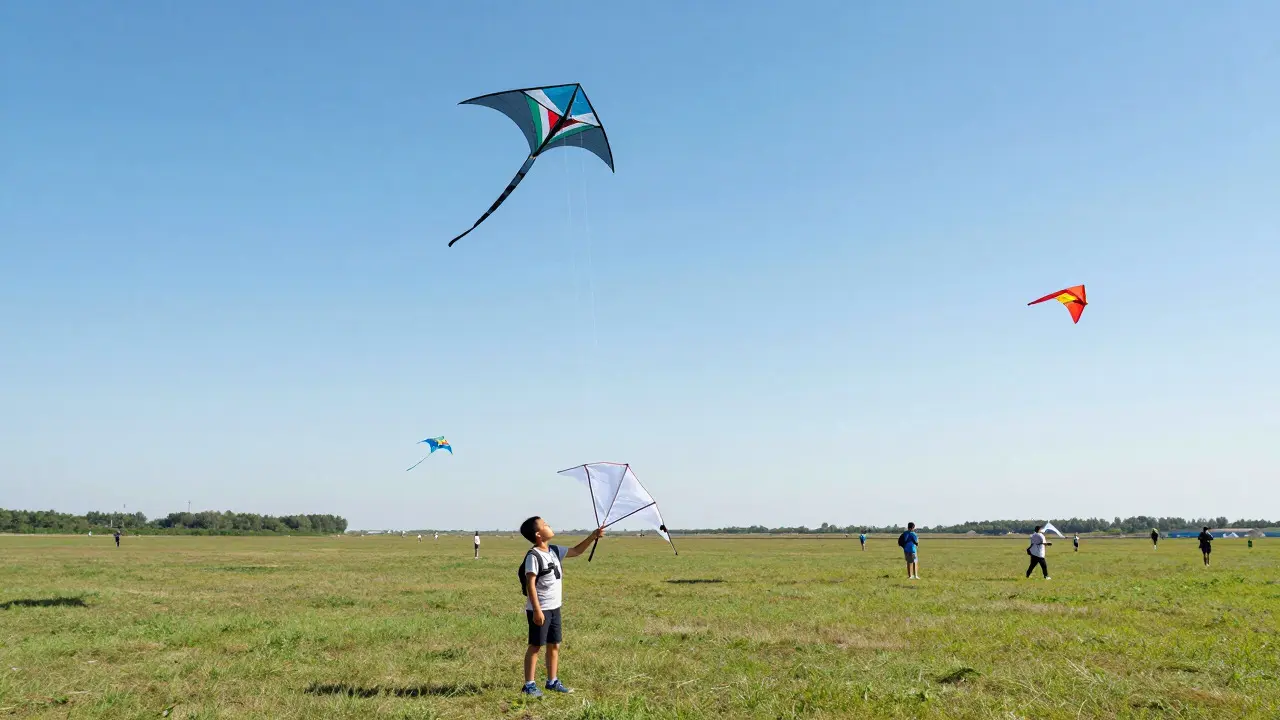
Imagine this: you finally get your quad-line stunt kite up in the air. It’s dancing perfectly in the wind. Then, out of nowhere, a single-line diamond from the neighbor field snaps across your path. You feel that sharp tug, hear the snap of lines, and suddenly your perfect afternoon is over. This is the reality for many new flyers who don’t know the unwritten rules of the field.
Kite etiquette is the set of social norms and safety protocols used by kite flyers to share airspace safely and avoid collisions between lines. It isn’t just about being polite; it’s about physics. When two kites cross, their lines can tangle, break, or worse, cause injury. For beginners, understanding these rules is the difference between a fun hobby and a frustrating mess.
The Golden Rule: Who Has Priority?
The most common question on any flying field is, "Who moves?" The answer depends entirely on the type of kite you are flying. There is a clear hierarchy in kite aviation, much like traffic laws on a road.
- Quad-line (Stunt) Kites: These have full control. They can move left, right, up, and down instantly. Because they are agile, they usually have the lowest priority in terms of space but the highest responsibility to yield. If you are flying a quad-line, you must always watch for other kites and be ready to dodge.
- Dual-line Kites: These can steer left and right but not as precisely as quads. They sit in the middle of the hierarchy.
- Single-line Kites: These are at the mercy of the wind. They cannot steer around obstacles easily. Therefore, they have the highest priority. Other flyers should generally give them wide berth.
If you are a beginner flying a simple single-line diamond, you have the right of way. However, if you are trying out a new dual-line or quad-line kite, assume everyone else has the right of way until you prove otherwise with smooth, predictable maneuvers.
Understanding Line Crosses and Tangles
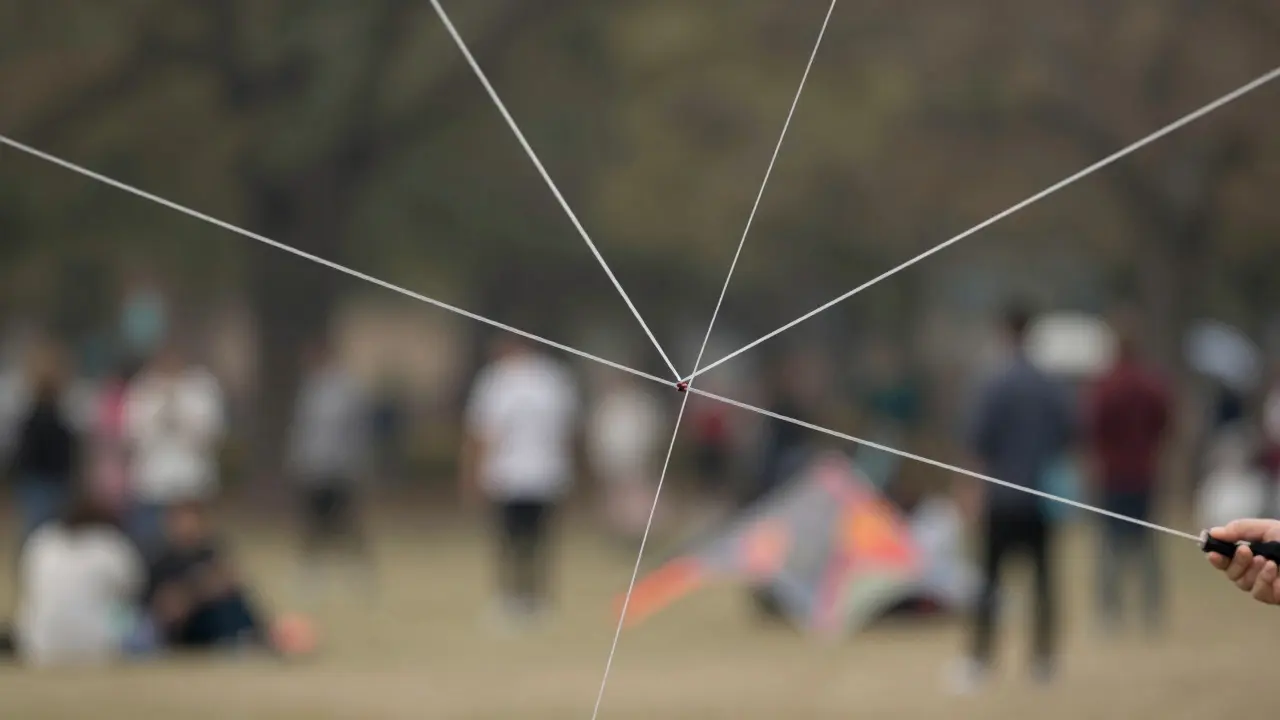
A line cross happens when the flight paths of two kites intersect. In mild cases, the lines just brush. In bad cases, they knot. A knot in kite line is a nightmare because kite line is thin, strong, and often invisible against the sky.
Here is how to prevent them:
- Scan the Sky First: Before you launch, look up. Where are the other kites? Are they moving toward you?
- Launch High: Always launch your kite higher than the others if possible. Altitude is your best friend. If you are high above the crowd, you are safe.
- Stay in Your Lane: Think of the field as having lanes. Stay in your designated area. If you see a large gap, fly there. Don’t wander into the center of a busy field unless you are an expert.
- Communicate: If you need to pass someone, call out! A simple "Coming through!" gives the other flyer time to react. Silence causes accidents.
Choosing the Right Field for Beginners
Not all flying spots are created equal. As a beginner, you want a field that offers safety and space. Here is what to look for:
- Open Space: Look for beaches, large parks, or open fields with no trees, power lines, or buildings within 500 feet.
- Wind Consistency: Gusty winds make kites unpredictable. Steady breezes of 8-15 mph are ideal for learning.
- Low Traffic: Weekdays or early mornings are best. Weekend afternoons are packed with experienced flyers who may not wait for you.
In Portland, Oregon, places like Cannon Beach or Tom McCall Waterfront Park offer great spaces, but you must check local regulations. Some parks restrict kite sizes or require specific zones.
Common Mistakes New Flyers Make
Even with good intentions, beginners often trip up. Avoid these pitfalls:
- Flying Too Low: Staying near the ground increases the risk of hitting people or getting tangled in grass. Keep your kite at least 30 feet off the ground.
- Ignoring the Wind Shift: Wind direction changes constantly. If the wind shifts, your kite will drift. Watch the flags or leaves to anticipate this.
- Over-Controlling: If you are flying a multi-line kite, resist the urge to jerk the lines. Smooth inputs keep the kite stable and predictable to others.
- Leaving the Field Suddeny: When you leave, take your kite down completely. Don’t just walk away with the kite still flying. It might crash into someone’s setup.
How to Handle a Collision
Despite your best efforts, things happen. If your lines cross with another flyer’s, stay calm. Panic leads to more tangles.
- Stop Flying: Freeze your controls. Let the kites settle.
- Assess the Damage:** Check if the lines are knotted or just crossed.
- Coordinate:** Walk toward the other flyer. Do not pull hard on your lines. Pulling tightens knots.
- Untangle Together:** Usually, one person needs to back up while the other advances slowly. Communication is key here. Say "I’m backing up" so they know what to expect.
- Coordinate:** Walk toward the other flyer. Do not pull hard on your lines. Pulling tightens knots.
If the lines are badly knotted, you might need to cut them. Carry small scissors or a line cutter in your pocket. It’s better to lose a section of line than to spend an hour untangling a complex knot.
Respecting the Community
Kite flying is a community activity. Experienced flyers often mentor newcomers. Be open to advice. If someone tells you to move, listen. They’ve likely seen what happens when lines cross.
Also, respect the environment. Pick up your trash. Avoid flying near sensitive wildlife areas. And remember, the goal is shared enjoyment. If you’re having too much fun and blocking others’ view, maybe find a quieter spot.
| Kite Type | Control Level | Priority in Airspace | Best for Beginners |
|---|---|---|---|
| Single-line Diamond | None (wind-driven) | Highest | Yes |
| Dual-line Delta | Moderate (left/right) | Medium | With practice |
| Quad-line Stunt | High (full 3D) | Lowest (must yield) | No (advanced) |
Final Thoughts on Safe Flying
Learning kite etiquette takes time. Start with simple kites in open spaces. Observe how experienced flyers interact. Ask questions. And always prioritize safety over style. The sky is big enough for everyone, provided we all follow a few simple rules.
What should I do if my kite line gets tangled with another flyer's?
Stop flying immediately. Approach the other flyer calmly. Do not pull hard on the lines, as this tightens knots. Coordinate with the other person to slowly back up or advance to loosen the tangle. If necessary, use a line cutter to sever the line.
Which type of kite has the right of way?
Single-line kites have the highest right of way because they cannot be steered. Multi-line kites (dual or quad) have lower priority and should yield to single-line kites and other controlled kites.
How high should I keep my kite to avoid accidents?
Keep your kite at least 30 feet off the ground. Higher is better, especially in crowded fields. Altitude reduces the risk of collision with people and other low-flying kites.
Is it okay to fly a kite in a city park?
It depends on local regulations. Many cities allow kites in designated areas but prohibit them near playgrounds or busy walking paths. Always check local rules before flying in urban parks.
What tools should I carry for kite flying?
Carry a line cutter or small scissors for emergencies. A spare line spool is also useful. A whistle can help communicate with other flyers in windy conditions where voices carry poorly.