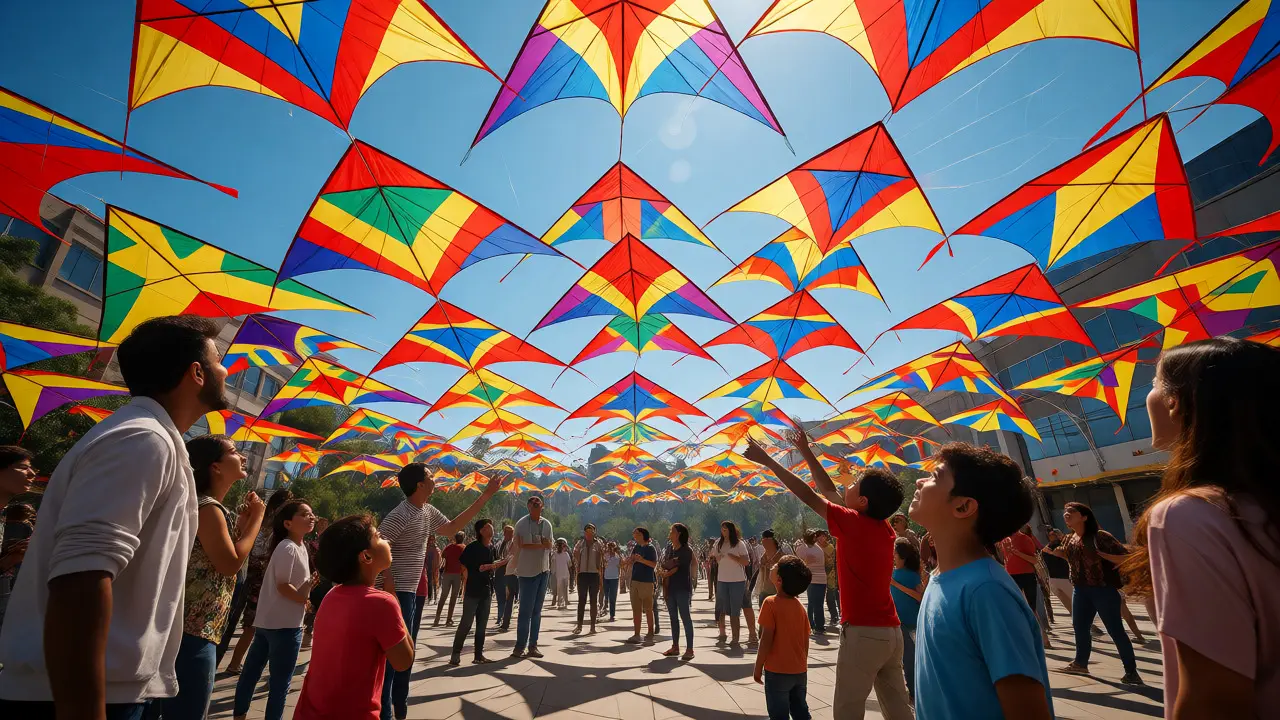
Imagine looking up from your morning coffee and seeing a massive, geometric sculpture floating silently against the sky. It’s not a drone, and it’s definitely not a cloud. This is public art with kites, a form of temporary or permanent installation that uses wind power to create visual spectacle in shared spaces. For decades, cities have struggled to activate dead zones-empty plazas, underutilized parks, and grey concrete blocks. Traditional statues are static. Murals are flat. But kites? They move. They breathe. They force people to look up and interact.
If you’re an event planner, a local artist, or just someone tired of the same old block party banners, this might be your secret weapon. We’re talking about transforming passive observers into active participants. When a giant kite goes up, people don’t just watch; they gather. They point. They take photos. They ask questions. That spark is what urban designers call "placemaking," and kites do it cheaper and faster than most alternatives.
Why Kites Work Where Other Art Fails
Let’s be real about the limitations of traditional public art. A bronze statue costs thousands to cast and install. If it gets vandalized, cleaning it is a nightmare. And unless it’s iconic, people walk right past it. Kite art solves the visibility problem by occupying the vertical space above the crowd. It creates a focal point that can be seen from blocks away. Think of the difference between a billboard at eye level and a hot air balloon drifting overhead. One is background noise; the other is an event.
Beyond visibility, there’s the factor of impermanence. Paradoxically, knowing something won’t last forever makes people value it more. This is the "scarcity principle" in action. When a city announces a weekend kite festival, attendance spikes because people know they’ll miss it if they wait until next month. Permanent installations often suffer from "art fatigue." You stop noticing the fountain after six months. You never stop noticing a 50-foot dragon soaring over the downtown district.
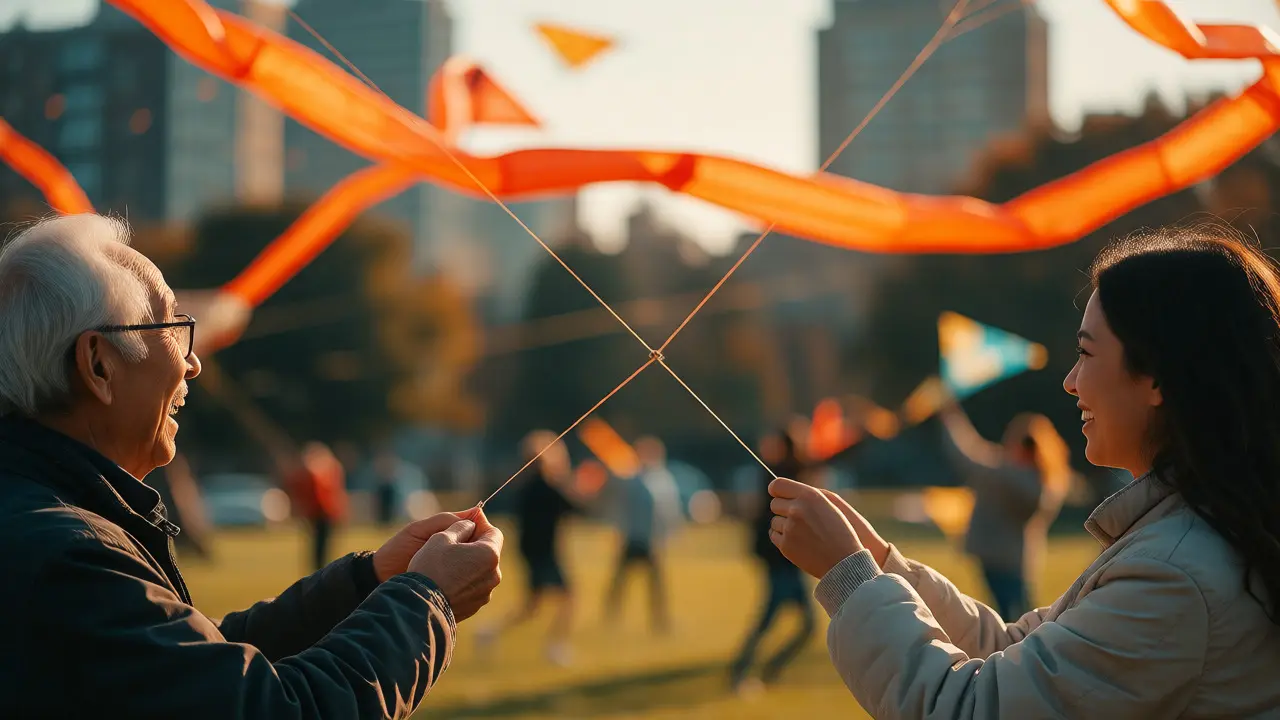
Then there’s the interactive element. Most public art says, "Do not touch." Kite festivals say, "Come fly one." This shift from spectator to participant is crucial for community engagement. It breaks down social barriers. Strangers talk when they’re both trying to keep a line steady in gusty winds.
Types of Kite Installations for Urban Spaces
Not all kites are created equal, especially when you’re planning a city event. You need to match the type of kite to the venue and the goal of the gathering. Here is a breakdown of the most effective formats for municipal projects.
| Kite Type | Best Use Case | Engagement Level | Wind Requirement | Setup Time |
|---|---|---|---|---|
| Delta Kites | Large scale aerial displays, high visibility | Medium (Visual) | Low to Moderate | Fast |
| Sky Dancers | Fun, family-friendly areas, low altitude | High (Interactive) | Very Low | Moderate |
| Box Kites | Architectural integration, stable platforms | Low (Structural) | Moderate | Slow |
| Parafoils | Colorful mass displays, synchronized flying | High (Spectacle) | High | Fast |
Delta kites are the workhorses of large-scale public art. Their triangular shape provides excellent lift-to-drag ratios, meaning they stay up easily even in light breezes. They are ideal for creating a "canopy" effect over a park. You can string dozens of them together to create a moving ceiling of color. Because they are lightweight, they are safer around crowds than rigid structures.
On the other hand, Sky Dancers are inflatable tubes that undulate like sea snakes. They don’t require strong wind, making them perfect for sheltered urban canyons where tall buildings block airflow. These are fantastic for engaging children and families. The movement is hypnotic and playful, encouraging kids to run underneath and chase the tails.
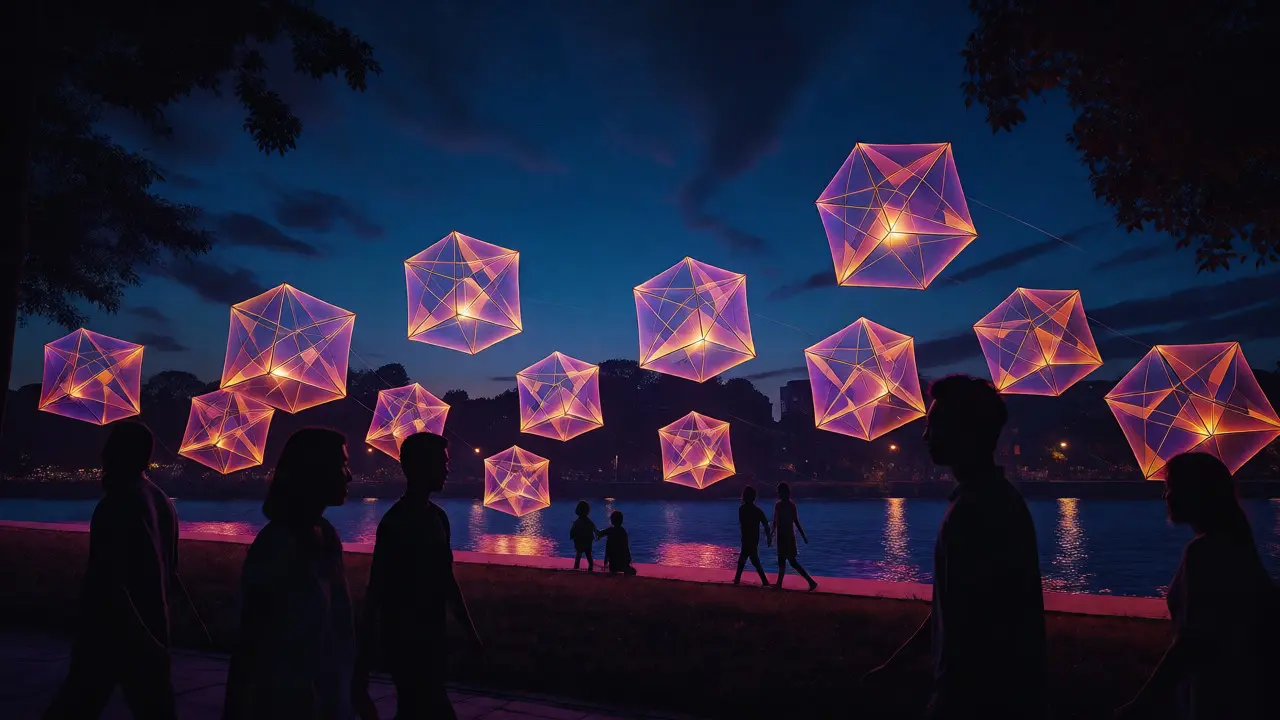
For a more architectural approach, consider box kites. These are rigid frames covered in fabric. They are heavier and harder to launch, but they offer stability. Artists use them to hang lights or smaller decorative elements, turning the kite itself into a mobile chandelier. This works well for evening events where illumination is part of the art piece.
Designing for Wind and Weather
You cannot plan a successful outdoor event without respecting the weather. In Portland, where I live, the rain is inevitable, but so is the wind. The biggest mistake organizers make is ignoring wind direction and speed data. A kite that looks beautiful in a 10 mph breeze becomes a dangerous projectile in 25 mph gusts.
Before booking a venue, check historical wind patterns for that specific time of year. Most cities have open data portals showing average wind speeds by hour. Aim for locations with consistent, laminar flow rather than turbulent gusts. Turbulence happens near corners of buildings or narrow streets. Open parks and waterfronts are usually safer bets.
Material choice matters too. Ripstop nylon is the industry standard for a reason-it tears less easily than polyester and dries quickly. If you are using custom-printed banners on kites, ensure the ink is UV-resistant. Sunlight fades colors fast, and nothing ruins a vibrant display like washed-out hues after three days of exposure.
Always have a contingency plan for calm days. What happens if the wind drops to zero? Have ground-based components ready. Maybe the kites double as flags on poles, or perhaps you have backup inflatables that don’t rely on wind. Flexibility saves the day when Mother Nature doesn’t cooperate.
Logistics and Safety Protocols
Launching large kites in a populated area requires strict safety protocols. This isn’t just about keeping the art intact; it’s about liability and public trust. One snapped line can cause serious injury.
- Zoning: Establish clear "launch zones" and "landing zones." Keep spectators behind rope lines at least 50 feet from the anchor points.
- Line Management: Use bright, visible line material. Invisible braided Dyneema is strong but hard to see. Consider adding small streamers every few feet to make the line visible to birds and people.
- Anchor Points: Never tie kites to trees or light poles without padding. Chafing can break the line unexpectedly. Use dedicated sandbags or weighted stakes designed for high-tension loads.
- Communication: Launch teams need radios. If a kite starts diving, the pilot needs to warn the ground crew immediately.
Insurance is non-negotiable. Check with your local municipality regarding permits for aerial objects. Some cities restrict flight heights near airports or hospitals. Even if you aren’t near an airport, FAA regulations in the US generally limit recreational kites to 400 feet, but commercial installations may require waivers. Start this paperwork weeks in advance.
Case Study: The Bergen International Festival
To understand how this scales, look at Norway. The Bergen International Festival has incorporated large-scale kite installations into its program for years. Why? Because Bergen is rainy and gray for much of the year. Bright, moving colors in the sky combat seasonal affective disorder and draw tourists out of their hotels.
Their approach was simple: commission local artists to create site-specific designs that reflected Norwegian folklore. The result wasn’t just pretty pictures; it was cultural storytelling. Visitors reported higher satisfaction rates with the festival overall, citing the "magic" of the sky displays as a highlight. This proves that kite art isn’t just decoration; it’s a narrative tool.
Another example closer to home is the Washington State Kite Festival. While primarily a competition, they integrated a "community build" section where residents could decorate pre-made kites. This turned passive attendees into co-creators. The sense of ownership led to higher volunteer retention rates for the following year.
How to Start Your Own Kite Initiative
You don’t need a million-dollar budget to start. Begin small. Identify a neglected public space-a median strip, a schoolyard, or a library plaza. Partner with a local school or scout troop. Provide them with basic diamond kites and paint kits. Let them design the visuals.
Host a "fly-in" day. Invite the community to bring their own kites. Offer prizes for "Most Creative Design" or "Highest Flight." This generates buzz and tests the location’s viability. Take photos and videos. Share them on social media with a specific hashtag. Tag your local council members. Visual proof of happy crowds is powerful ammunition for future funding requests.
Once you have momentum, reach out to corporate sponsors. Local businesses love sponsoring events that generate foot traffic. A hardware store might donate ropes and anchors. A print shop might sponsor the kite fabrics. In exchange, they get logo placement on the kites themselves-a unique advertising medium that floats above the competition.
Remember, the goal isn’t just to fill the sky. It’s to fill the space below it with people who feel connected to their city. Kites are just the catalyst. The real art is the community you build while watching them fly.
What is the best wind speed for flying large public art kites?
Most large public art kites perform best in wind speeds between 8 and 15 miles per hour. Below 5 mph, they struggle to lift off. Above 20 mph, control becomes difficult and safety risks increase. Always check local forecasts and have a "no-fly" threshold established for your event.
Do I need a permit to fly kites in city parks?
Yes, usually. Most municipalities require a special event permit for gatherings involving equipment setup and potential crowd management. Additionally, if the kites exceed certain heights (often 400 feet), you may need aviation clearance. Contact your local Parks and Recreation department early in the planning process.
How long do kite art installations typically last?
This depends on the structure. Soft-body kites like parafoils are usually single-day or weekend events due to wear and tear. Rigid box kites or semi-permanent tethered installations can last several weeks if made with durable materials like ripstop nylon and aluminum frames. However, weather exposure significantly reduces lifespan.
Can kite art help reduce urban heat islands?
Indirectly, yes. Large canopy-style kite installations can provide shade for pedestrians below, reducing perceived temperature. More importantly, by activating spaces, they encourage walking and outdoor activity, which reduces reliance on air-conditioned indoor venues. However, they do not cool the ambient air temperature like trees do.
What are common safety hazards for public kite events?
The primary hazards are entangled lines causing tripping, snapping lines injuring bystanders, and kites crashing into spectators or property. Mitigation strategies include using visible line materials, establishing strict buffer zones, employing trained spotters, and having a rapid takedown protocol for sudden wind shifts.