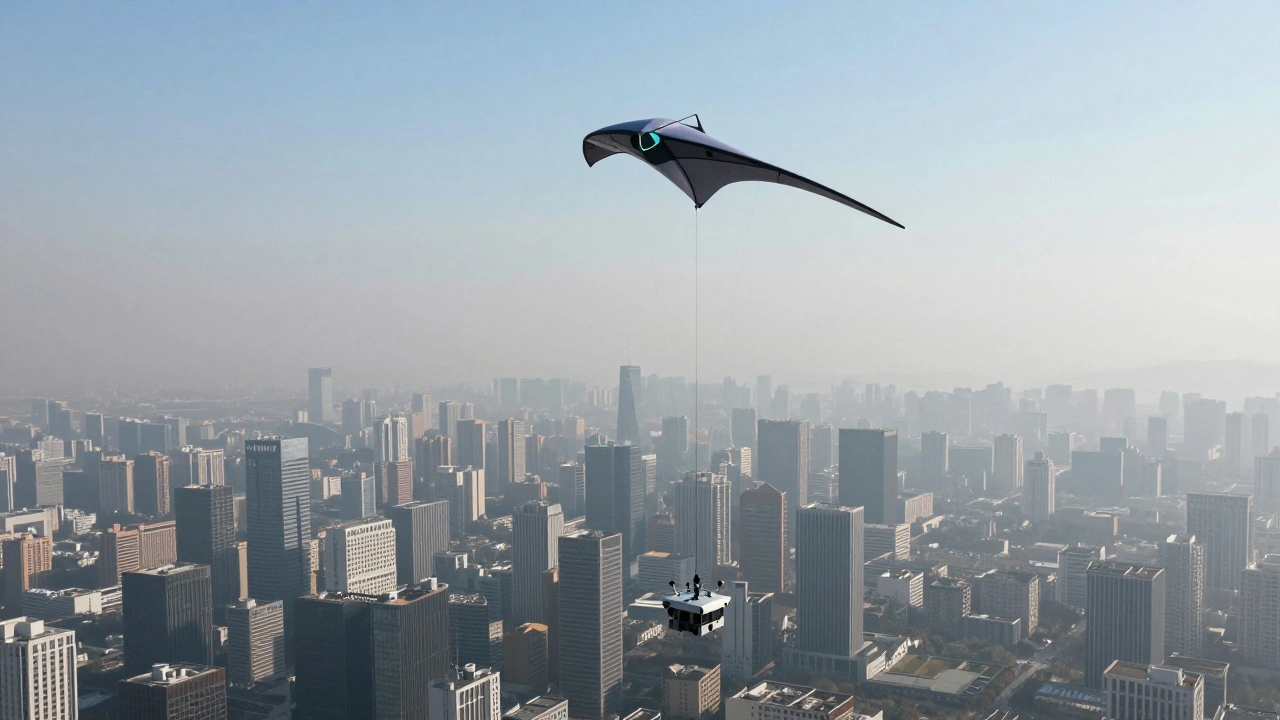
Imagine a tool that can stay in the air for days, reach altitudes that drones can't touch, and cost a fraction of a satellite launch. We aren't talking about a new military jet or a high-end weather balloon. We're talking about kites. While most people associate kites with beach holidays or childhood memories, researchers are now using them as sophisticated platforms for
Quick Takeaways
- Kites bridge the data gap between ground stations and satellites.
- Low energy requirements allow for longer flight times than most battery-powered drones.
- Ideal for monitoring urban air pollution, counting animal migrations, and high-res mapping.
- Tethered power options enable continuous, real-time data streaming without landing.
Why Kites Outperform Traditional Drones
When you first think of aerial data, drones (UAVs) usually come to mind. But drones have a fundamental flaw: battery life. Most commercial quadcopters can only fly for 30 to 40 minutes before they need a recharge. A Kite is a tethered aircraft that utilizes wind energy for lift, meaning it can theoretically stay aloft as long as the wind blows.
Because a kite doesn't need to carry a massive battery to stay airborne, that weight budget is shifted to the payload. You can carry heavier, more accurate sensors. Plus, the tether isn't just a safety string; it can be a copper wire. This allows for a constant flow of electricity from the ground to the sensor, enabling high-power imaging equipment or long-term atmospheric monitoring that would kill a drone's battery in minutes.
Cleaning Up the Air: Precision Atmospheric Monitoring
Air quality isn't uniform. If you stand on a street corner in a city, you're measuring the air at six feet. But pollutants behave differently at 500 feet or 1,000 feet. This is where Air Quality Sensors are electronic devices that measure concentrations of particulate matter and gases in the atmosphere come into play. By lofting these sensors on a kite, scientists can create a 3D map of a city's smog.
For instance, in urban heat island studies, researchers use kites to measure the vertical profile of Nitrogen Dioxide (NO2) and Particulate Matter (PM2.5). In a real-world scenario, a kite can be flown over an industrial zone to see if pollutants are staying trapped near the ground or dispersing into the upper atmosphere. This provides a level of granularity that ground-based stations simply cannot capture.
| Feature | Ground Station | Drones (UAVs) | Kite-Borne Sensors | Satellites |
|---|---|---|---|---|
| Altitude | Fixed (Low) | Medium | Medium to High | Very High |
| Endurance | Permanent | Short (Minutes) | Long (Hours/Days) | Permanent |
| Cost | Low | Medium | Low | Extreme |
| Resolution | Hyper-Local | Very High | High | Medium/Low |
Tracking Wildlife from the Clouds
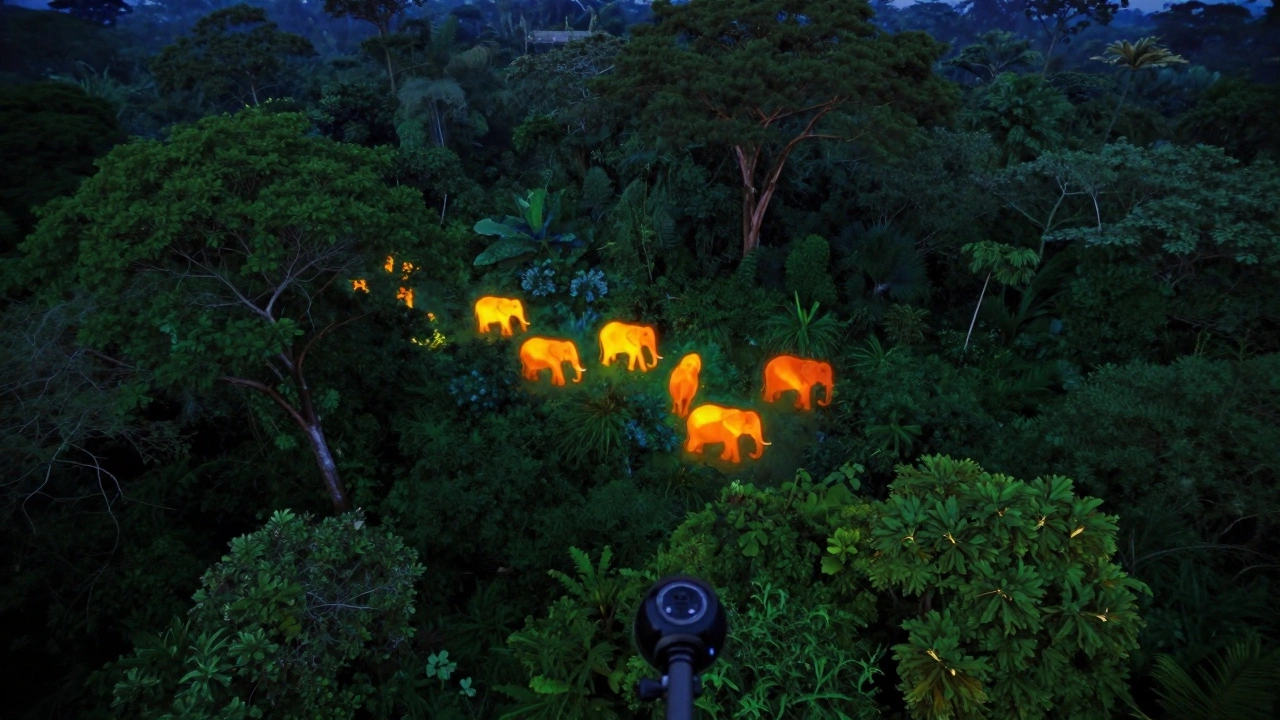
Tracking animals often requires a trade-off between distance and detail. Satellites can see where a herd of elephants is moving, but they can't tell you the health of the calves. Ground teams can see the calves, but they can't find the herd in a dense jungle. Wildlife Tracking is the process of monitoring animal movements and behaviors using remote sensing technology via kites offers a middle ground.
By using thermal imaging cameras attached to kites, biologists can spot heat signatures of animals through thick canopies without the loud noise of drone rotors, which often scares animals away. Kites are virtually silent once they are in the air. Imagine counting sea turtle nests on a remote beach; a kite can hover at 300 feet, providing a steady, wide-angle view for hours, allowing researchers to count populations without disturbing the nesting sites.
High-Resolution Imaging and Mapping
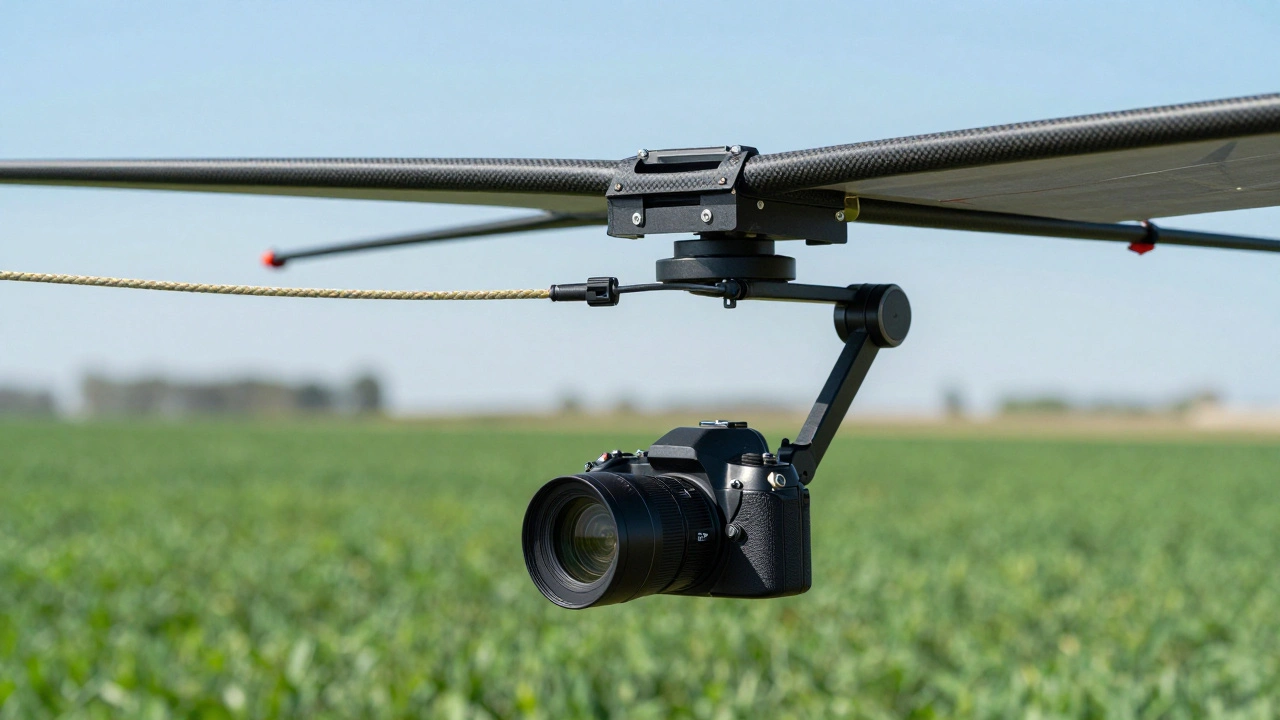
Imaging from a kite isn't just about taking a pretty picture; it's about Photogrammetry, which is the science of making measurements from photographs to create 3D models. When you attach a stabilized camera gimbal to a kite, you get a platform that can map hundreds of acres of land in a single session.
This is incredibly useful for agriculture. A farmer can use a kite-borne multispectral camera to check for crop stress. Because the kite can reach higher altitudes than most consumer drones, it covers more ground per image. This allows for the creation of "orthomosaics"-massive, high-resolution maps that show exactly where water is pooling or where pests are attacking a crop. Since the kite is tethered, there is zero risk of the expensive camera flying away due to a signal loss, which is a common nightmare for drone pilots.
Overcoming the Challenges of Tethered Flight
It isn't all smooth sailing. The biggest hurdle with kite-borne sensors is stability. A kite dances in the wind, and if you're trying to take a high-resolution photo, a dancing camera leads to blurry images. To fix this, engineers use active gimbal systems-essentially motorized mounts that counteract the kite's movement to keep the sensor perfectly level.
Then there is the wind itself. You need enough wind to keep the kite up, but too much wind can snap the tether or put too much stress on the sensors. Professional setups often use Kevlar Tethers or high-strength polymers to ensure the equipment doesn't plummet. Additionally, the steering is often managed by a winch system on the ground, allowing the operator to raise or lower the sensor to specific altitudes to sample different layers of the atmosphere.
The Future of Pseudo-Satellites
We are moving toward a world of "High Altitude Pseudo-Satellites" (HAPS). While some HAPS use solar gliders, the humble kite is a precursor to this. By using automated kites that can adjust their own surface area and angle of attack, we can create persistent surveillance or communication hubs. Imagine a kite-borne cellular relay providing internet to a disaster zone where towers have been knocked down. It's cheaper than a satellite and more reliable than a drone that has to land every hour.
Do kites really collect more accurate data than drones?
In terms of duration, yes. Because kites don't rely on batteries for lift, they can remain at a specific altitude for days. This allows for "time-series" data, meaning you can see how air quality changes over a full week rather than just a 30-minute snapshot.
Isn't it dangerous to fly kites with expensive sensors?
There is always a risk, but the tether actually makes it safer than a drone. If a drone loses power, it falls. If a kite loses wind, it descends slowly. Using high-strength tethers and reinforced housing for the sensors minimizes the risk of equipment failure.
Can kite-borne sensors be used in the rain?
Yes, provided the sensors are weather-proofed. Many air quality sensors are designed for outdoor use and can handle moisture. However, high-wind storms are usually avoided to prevent the tether from snapping.
How do you get the data from the kite to the ground?
There are two main ways: via the tether (using a physical wire for instant data transmission) or via wireless radio telemetry. Tethered data is preferred for high-bandwidth tasks like 4K video streaming.
Are there legal restrictions on flying sensing kites?
Yes. Depending on the country, flying above a certain altitude may require coordination with aviation authorities (like the FAA in the US) to avoid interfering with manned aircraft. Most research flights operate in designated low-altitude airspaces.
Next Steps for Implementation
If you're looking to start a project with kite-borne sensors, don't start with the most expensive camera. Start with a simple atmospheric sensor-like a temperature and humidity logger-to understand how the kite behaves at different altitudes. Once you've mastered the "flight envelope" (the range of wind speeds and altitudes your kite can handle), you can move toward more complex payloads like thermal cameras or gas analyzers. For those in urban areas, remember to check local ordinances regarding tethered flight to ensure you aren't violating any airspace restrictions.