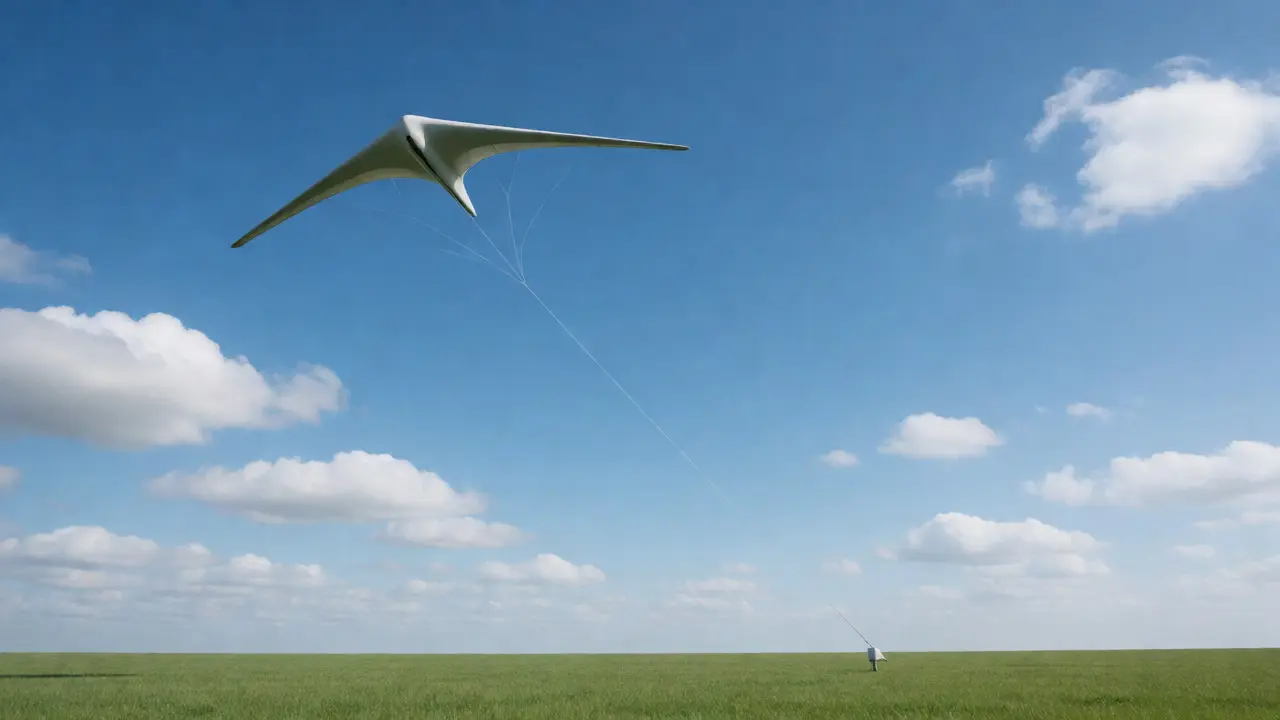
You might think the biggest breakthroughs in green energy are happening in massive offshore wind farms or sprawling solar fields. But some of the most promising experiments are floating a few hundred meters above your head, tethered by a thin cable. Airborne Wind Energy (AWE) is a technology that uses kites and gliders to harvest kinetic energy from high-altitude winds. Unlike traditional turbines stuck on towers, these systems fly where the wind is stronger, steadier, and more consistent.
If you’ve ever held a strong kite in a gusty storm, you know it pulls hard. Now imagine harnessing that pull to spin a generator. That’s the core idea. It sounds like science fiction, but companies across Europe and the US have been testing prototypes for over a decade. The goal? To cut the cost of wind energy by using less material and accessing better wind resources.
Why Go Up When You Can Stay Down?
Traditional wind turbines hit a ceiling-literally. Most modern turbines stand about 100 to 150 meters tall. Beyond that height, building steel towers becomes prohibitively expensive and structurally difficult. But the wind doesn’t stop at 150 meters. In fact, wind speed increases significantly with altitude due to reduced friction from the ground. This is known as the wind shear effect.
At 300 to 600 meters up, the wind is often twice as fast as it is near the ground. Since the power available in wind scales with the cube of its speed, doubling the wind speed means eight times more power. A small kite flying at 400 meters can potentially generate as much electricity as a massive turbine on the ground, but with a fraction of the materials. No giant concrete foundations, no heavy steel blades, no cranes needed for assembly.
This isn’t just theoretical. Studies from institutions like Delft University of Technology have shown that airborne systems can achieve higher capacity factors because they operate in regions where the wind blows almost continuously. For grid operators, this consistency is gold.
The Physics: Crosswind vs. Yoyo
Not all kites work the same way. There are two main methods used to convert wind motion into electricity: the "Yoyo" method and the "Crosswind" method. Understanding the difference helps explain why one might be chosen over the other.
The Yoyo Method relies on the direct pull of the kite against the wind. Think of it like a tug-of-war. The kite flies directly into the wind, pulling the tether out. Once the tether reaches its limit, the system reels the kite back in. While this generates power during the pull-out phase, reeling it back in consumes energy. Net gain exists, but it’s modest.
The Crosswind Method is far more efficient for large-scale power generation. Here, the kite flies perpendicular to the wind direction, tracing figure-eight patterns across the sky. By moving sideways through the wind stream, the kite effectively multiplies its apparent wind speed. If the real wind is 10 mph, the kite might experience an apparent wind of 50 mph as it swoops across. This creates massive lift forces, pulling the tether with tremendous tension. That tension drives a drum or winch on the ground, spinning a generator.
| Feature | Yoyo Method | Crosswind Method |
|---|---|---|
| Mechanism | Direct pull (linear) | Perpendicular flight (rotational) |
| Efficiency | Lower (energy lost in reel-in) | Higher (continuous power stroke) |
| Complexity | Simple control logic | Advanced autonomous piloting required |
| Best Use Case | Small-scale, remote sensors | Grid-connected megawatt plants |
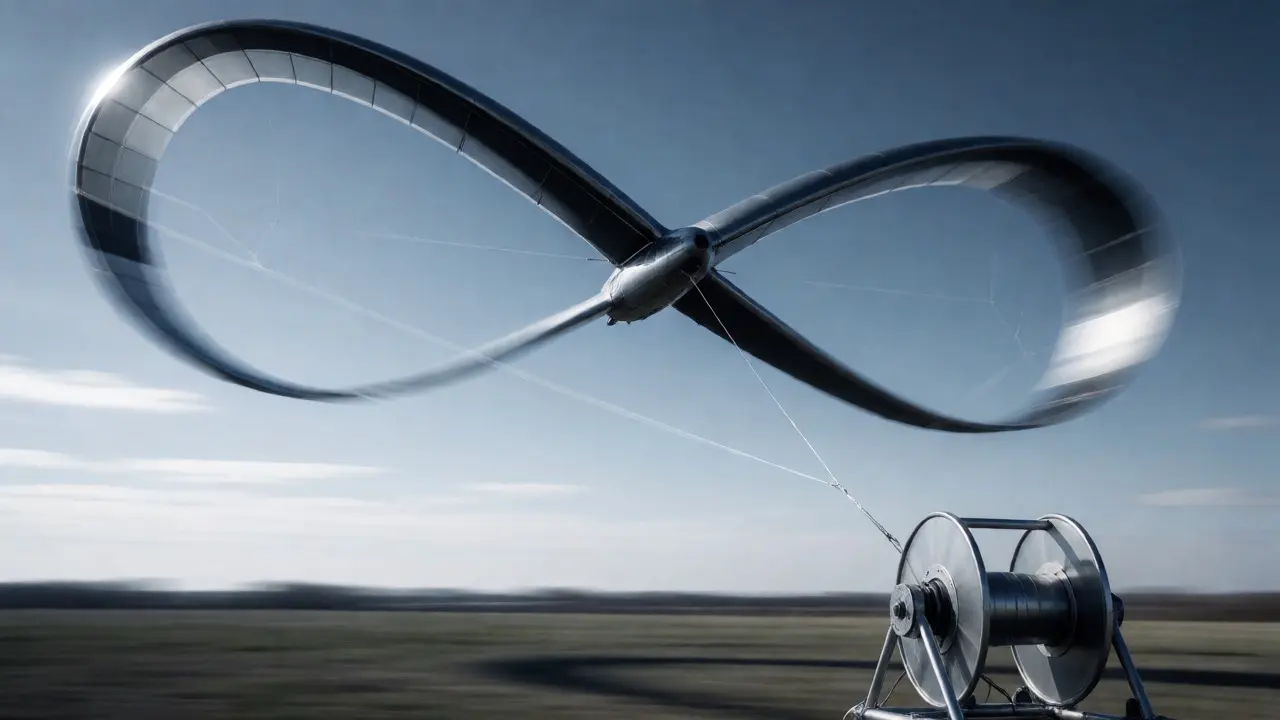
The Hardware: Kites, Tethers, and Winches
The heart of any Airborne Wind System is the high-strength tether connecting the flying device to the ground station. These aren’t your backyard kite strings. They are typically made from Dyneema or similar ultra-high-molecular-weight polyethylene fibers. These materials offer strength-to-weight ratios superior to steel. A tether capable of holding tons of force weighs only a few kilograms per kilometer.
The flying devices themselves vary. Some use rigid wings, similar to hang gliders, which provide stability and precise control. Others use soft kites, which are lighter and easier to launch but harder to steer in turbulent air. Rigid wings are currently favored for commercial projects because their predictable aerodynamics allow for tighter flight paths and higher efficiency.
On the ground, you’ll find a mobile unit called a ground station. This houses the winch, the electric generator, and the computer controls. The system must be autonomous. A human pilot cannot react fast enough to adjust the kite’s angle of attack every second. Algorithms process data from GPS, accelerometers, and wind sensors to keep the kite in the optimal part of the wind window-the area where lift is maximized.
Real-World Challenges and Safety
Flying a power-generating kite isn’t just about physics; it’s about logistics and safety. One major hurdle is airspace regulation. Traditional wind farms don’t interfere with aircraft. A kite flying at 500 meters could intersect with low-flying planes, drones, or birds. Developers must coordinate with aviation authorities to define safe zones. Many systems include automatic fail-safes that lower the kite immediately if communication with the ground station is lost.
Another concern is maintenance. Traditional turbines require technicians to climb 100-meter towers. With airborne systems, the generator is on the ground. If a part breaks, you fix it in a garage, not at dizzying heights. However, the tether itself is a wear item. Constant vibration and UV exposure degrade the fiber. Replacing kilometers of high-tech rope costs money, though still less than maintaining a steel tower.
Weather extremes also pose risks. Hurricanes and severe storms can destroy equipment. Most systems are designed to detect extreme weather and land the kite safely before damage occurs. But in unpredictable climates, downtime can affect return on investment.
Who Is Leading the Charge?
Several startups have moved beyond theory. Companies like Makani (acquired by Google) experimented with airborne turbines that carried generators on the kite itself, eliminating the need for a heavy tether to transmit mechanical force. However, transmitting electricity via lightweight cables proved challenging, so many current leaders focus on ground-based generation using the tether’s tension.
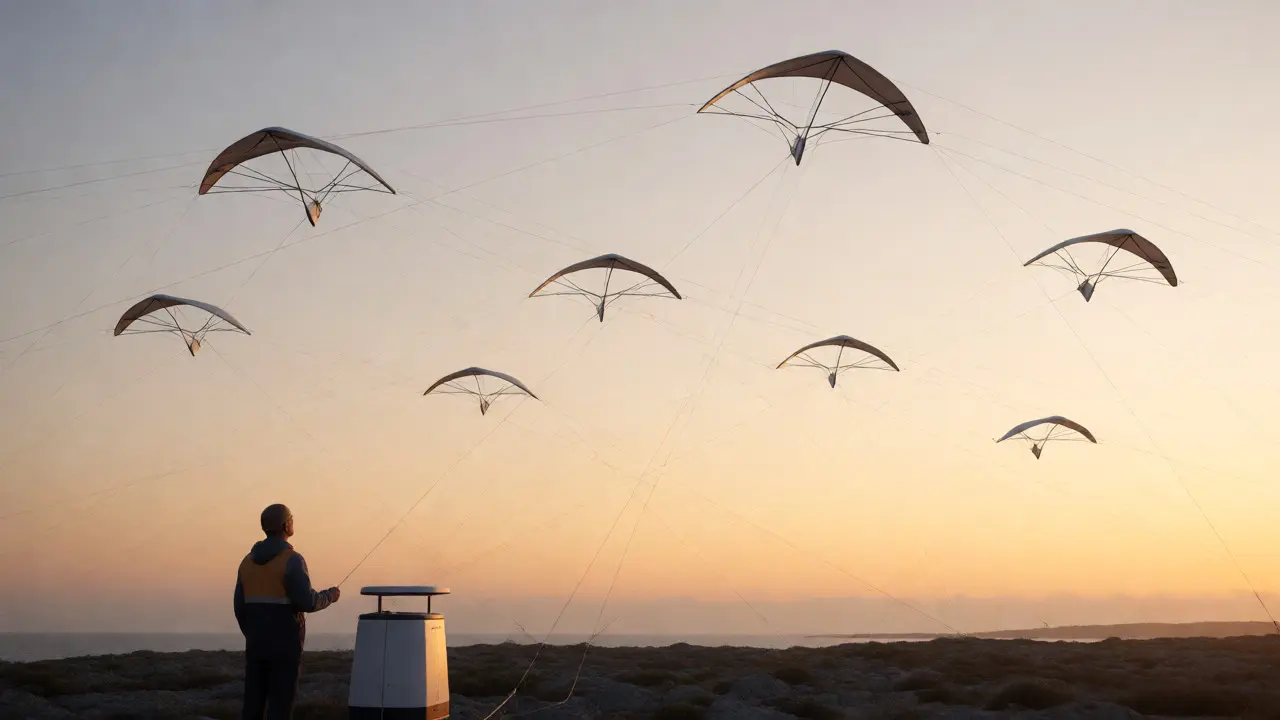
In Europe, firms like SkySails and Envision Energy are testing large-scale units. SkySails initially focused on ship propulsion, using kites to drag cargo vessels, reducing fuel consumption by up to 20%. This experience translated well to stationary power generation. Meanwhile, research groups in the Netherlands and Germany continue to refine control algorithms, pushing the boundaries of how close kites can fly to each other in "farms" without tangling.
For homeowners and off-grid enthusiasts, smaller versions exist. Portable wind kits can charge batteries for camping or remote cabins. These use simpler Yoyo mechanics but demonstrate the principle clearly. You launch the kite, watch the LED light up as the motor spins, and enjoy free energy from the breeze.
The Future of High-Altitude Power
Is airborne wind ready to replace traditional turbines? Probably not entirely. Traditional turbines are reliable, understood, and backed by decades of manufacturing infrastructure. But airborne systems have a niche. They excel in areas where soil conditions make foundations difficult, such as rocky terrain or deep water. Floating airborne platforms could anchor in deep oceans where fixed-bottom turbines can’t go.
As battery storage improves and smart grid technology advances, the intermittent nature of wind matters less. What matters is cost per kilowatt-hour. If airborne systems can deliver energy at $0.03/kWh while traditional ones hover around $0.05-$0.07, the market will shift. Early adopters are betting that the reduction in material costs and the access to superior wind resources will tip the scale.
We are likely years away from seeing vast fields of kites powering cities. But the technology is maturing rapidly. For now, it remains a fascinating blend of aerospace engineering and renewable energy innovation, proving that sometimes, the best solutions really do come from looking up.
How high do power kites actually fly?
Most operational airborne wind energy systems fly between 200 and 600 meters (650 to 2,000 feet) above ground level. This altitude range balances the increased wind speed found higher up with the practical limits of tether weight and aviation regulations. Flying higher than 1,000 meters is technically possible but introduces significant complexity regarding tether strength and air traffic control.
Are power kites dangerous for airplanes?
They can be, which is why strict zoning laws apply. Power kites operate below typical cruising altitudes for commercial jets but may intersect with regional flights, helicopters, or military training zones. Systems are equipped with transponders and radar reflectors to ensure visibility. Additionally, most sites are located in rural or coastal areas with limited low-altitude air traffic to minimize conflict.
What happens if the wind stops suddenly?
If wind speeds drop below the operational threshold (usually around 3-4 m/s), the system automatically initiates a landing sequence. The control software adjusts the kite's pitch to reduce lift, allowing gravity to bring it down gently to the ground station. If the wind dies completely while the kite is aloft, it will glide or descend under control rather than falling straight down, thanks to its aerodynamic design.
Can I install a power kite at my house?
Currently, residential options are limited compared to commercial systems. Small-scale DIY kits exist for charging batteries or powering small loads, but they require open space and careful local permission checks. Large megawatt-scale systems are industrial installations. However, community micro-grids using smaller airborne units are being tested in several European countries as a viable alternative to rooftop solar in windy regions.
How does noise compare to traditional wind turbines?
Airborne wind systems are generally quieter. Because the moving parts (the kite) are hundreds of meters away, sound dissipates significantly before reaching observers. The ground station contains the generator and winch, which produce mechanical noise similar to a car engine, but this is contained within a housing. There is no large blade sweeping through the air near the ground, eliminating the characteristic "whoosh" of traditional turbines.