When you think of kites, you probably picture a child running in a park with a diamond-shaped toy. But the world of competitive kiting is a high-stakes arena where physics meets engineering, and human ambition pushes boundaries that seem impossible. We are talking about machines that climb higher than commercial jets, stay aloft for weeks without landing, and travel thousands of miles across oceans. These aren't just toys; they are precision instruments designed to exploit atmospheric conditions with surgical accuracy.
If you have ever wondered how far a kite can really go or how long it can stay up, the answers might surprise you. The kite records we track today represent decades of innovation, from simple bamboo frames to carbon fiber structures capable of withstanding extreme altitudes. Understanding these achievements requires looking at three distinct categories: altitude, duration, and distance. Each has its own set of challenges, rules, and legendary figures who broke the mold.
The Race to the Sky: Altitude Records
Altitude is often the most visually dramatic category in kite flying. The goal here is simple but technically demanding: get as high as possible before the air becomes too thin to generate lift or the structure fails under stress. The current benchmark for manned kite flight was set by Bertrand Piccard and Brian Jones in 1999. They flew a giant balloon-kite hybrid called "Perseus" to an altitude of approximately 36,000 feet (11,000 meters). While this is technically a balloon flight, it shares aerodynamic principles with high-altitude kiting because both rely on buoyancy and air currents rather than engines.
For unmanned kites, the record holders push into the stratosphere. In recent years, experimental teams have used helium-filled blimps attached to kite lines to reach over 50,000 feet. However, pure aerodynamic kites (those relying solely on wind and lift) typically max out around 20,000 to 30,000 feet. At these heights, the air density is less than one-third of what it is at sea level. This means the kite must be incredibly lightweight yet strong enough to handle the turbulent winds found in the jet stream. Engineers use materials like mylar and specialized polymers to create surfaces that are nearly transparent but tough enough to withstand UV radiation and temperature drops below -50°F.
- Key Challenge: Air density decreases exponentially with altitude, reducing lift.
- Material Science: High-altitude kites use ultra-lightweight fabrics and carbon fiber spars.
- Weather Dependency: Flights are scheduled around specific weather windows when upper-level winds are stable.
Staying Aloft: The Battle of Duration
Duration records are all about endurance. How long can a kite stay in the air without touching the ground? For recreational flyers, a good day might yield four or five hours. For record chasers, the target is days, even weeks. The key to achieving long-duration flights is finding consistent wind patterns. Thermal soaring is the primary technique used. Pilots launch their kites into rising columns of warm air, allowing them to gain altitude without expending energy. Once at the top of the thermal, they glide down until they hit another column, repeating the cycle indefinitely.
The longest recorded duration for a free-flying kite is often attributed to glider pilots who use kites as auxiliary lifting devices, but dedicated kite-only records have seen flights lasting over 48 hours. To achieve this, the pilot must manage the line tension carefully. If the line goes slack, the kite stalls. If it’s too tight, the drag increases, causing the kite to lose altitude. Modern duration kites are equipped with telemetry systems that transmit GPS data, wind speed, and altitude back to the ground crew in real-time. This allows the team to make micro-adjustments to the line length and angle, keeping the kite within its optimal performance envelope.
| Category | Primary Goal | Main Technical Challenge | Typical Equipment |
|---|---|---|---|
| Altitude | Maximum height above sea level | Air density reduction and structural stress | Ultralight mylar, carbon fiber, helium assist |
| Duration | Longest time aloft | Finding consistent thermals and managing line fatigue | Glider-style wings, telemetry units, long braided lines |
| Distance | Farthest horizontal travel | Navigating changing wind directions and terrain | High-aspect ratio wings, GPS tracking, winch systems |
Crossing Continents: Distance Achievements
Distance records are perhaps the most complex because they involve navigation as much as aerodynamics. A kite doesn’t steer itself; it follows the wind. To cover massive distances, pilots must predict how wind patterns will shift over hundreds of miles. The record for the farthest distance flown by a kite is held by several notable attempts, with some crossing entire countries or even parts of continents. One famous example involves a kite that traveled over 1,000 miles from California to Hawaii, though this required a series of relay points where the line was swapped out.
In open-ocean distance flights, the challenge is different. There is no ground reference, so the kite must maintain stability against ocean swells and salt spray. The line system becomes critical here. Standard kite lines snap under sustained load, so record chasers use multi-strand Dyneema or Spectra lines that can hold thousands of pounds of tension. These lines are also treated to resist water absorption, which adds weight and weakens the material over time. The pilot’s job is to keep the kite in a steady state, adjusting the angle of attack to maximize forward speed while minimizing vertical oscillation.
The Technology Behind the Feats
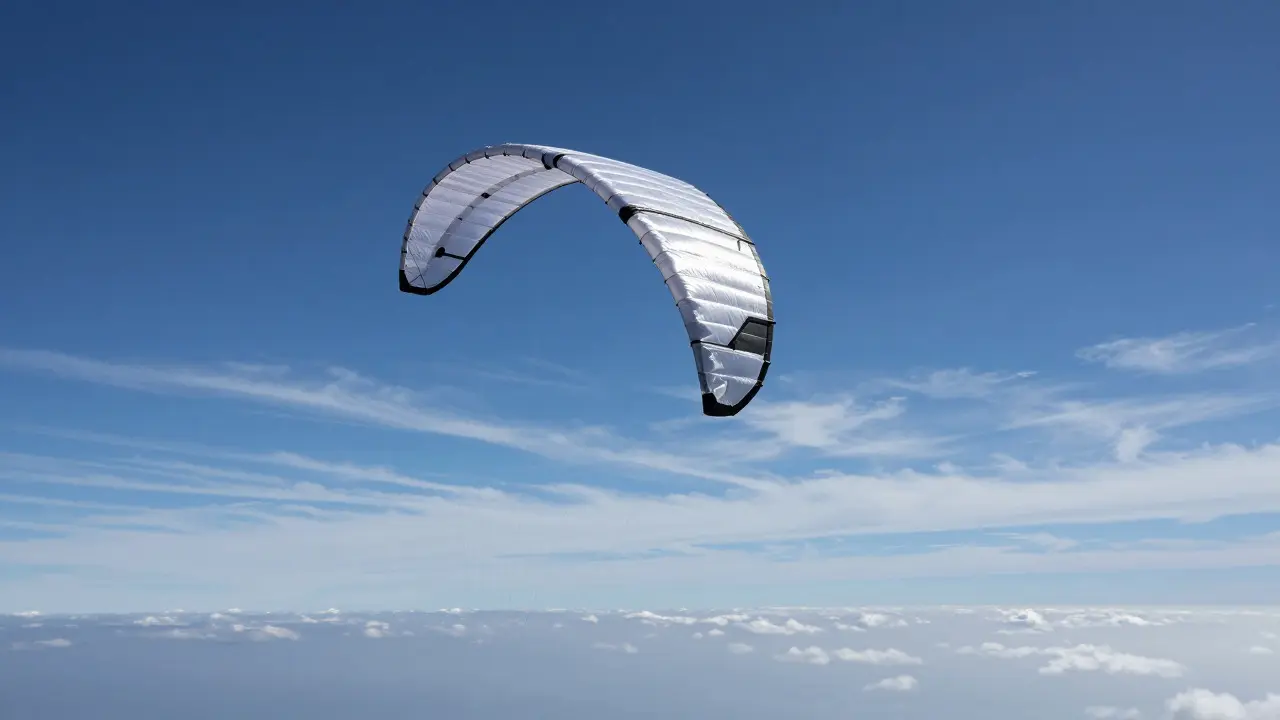
You might wonder how a piece of fabric and string can do all this. The secret lies in the design of the wing. Most record-breaking kites use a delta or gull-wing shape, which provides inherent stability. Unlike a traditional diamond kite, which tumbles if the wind changes direction, these shapes self-correct. They act like a sailboat, using the wind to drive forward motion. The aspect ratio (the ratio of wing span to chord width) is crucial. Higher aspect ratios reduce induced drag, allowing the kite to fly faster and farther on the same amount of wind energy.
Another critical component is the bridle system. This is the network of strings connecting the kite frame to the main line. A well-designed bridle distributes tension evenly across the structure, preventing any single point from failing. Engineers spend months testing bridles in wind tunnels to ensure they remain stable at various angles of attack. For altitude flights, the bridle is often adjustable, allowing the pilot to change the kite’s pitch dynamically. This is essential for maintaining lift as the air density changes during ascent.
Rules and Regulations: What Counts as a Record?
Not every impressive flight counts as an official record. Organizations like the International Kite Flyers Association (IKFA) set strict guidelines to ensure fairness and safety. For a flight to be recognized, it must meet specific criteria regarding line length, kite size, and documentation. For example, a duration record requires continuous telemetry data showing the kite remained airborne. If the signal drops for more than a few minutes, the clock stops. Similarly, distance records require GPS tracks that show a clear path from launch to recovery. Without this proof, the flight is considered unofficial, no matter how far it went.
Safety is another major factor. High-altitude and long-distance flights carry significant risks. Lightning strikes, line breakage, and unexpected weather changes can turn a record attempt into a disaster. Because of this, many jurisdictions require permits for large-scale kite launches. The ground crew must be trained in emergency procedures, including how to reel in a kite quickly if a storm approaches. Despite these hurdles, the allure of pushing the limits of human ingenuity keeps new challengers coming forward every year.
Future Frontiers in Kite Engineering
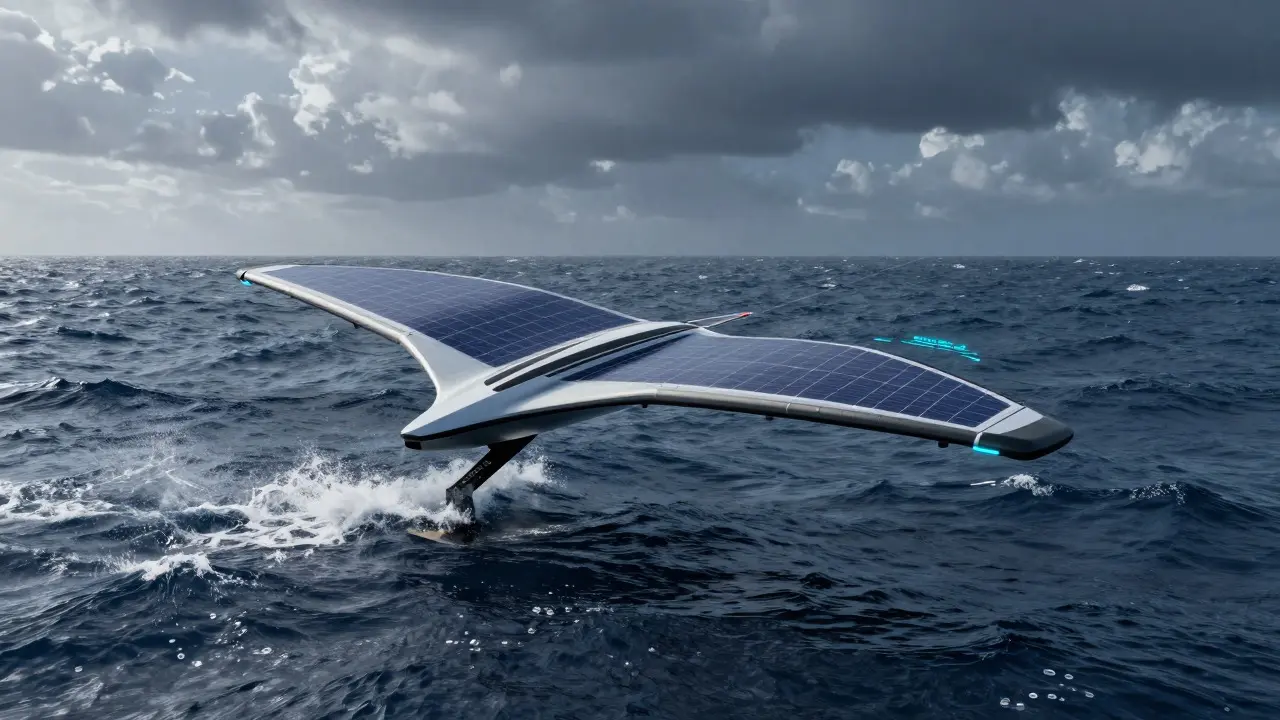
Where does kite technology go from here? The next big leap is likely in autonomous control. Imagine a kite that uses onboard sensors and AI to adjust its shape and orientation automatically, responding to wind shifts in milliseconds. This could allow for solo pilots to manage multiple kites simultaneously, increasing efficiency for energy harvesting or scientific observation. Solar-powered kites are also gaining traction. By integrating photovoltaic cells into the wing surface, these kites can power their telemetry systems and even small propulsion units for fine-tuning position, extending duration records significantly.
As materials science advances, we may see kites made from graphene or other nanomaterials that offer unprecedented strength-to-weight ratios. This would allow for even thinner, lighter structures that can withstand higher stresses, opening the door to true stratospheric flights. Whether you are a casual flyer or a hardcore enthusiast, the history of kite records shows that there is always room for improvement. The sky isn’t just the limit; it’s the playground.
What is the highest altitude a kite has reached?
The highest altitude for a manned kite-balloon hybrid is approximately 36,000 feet, achieved by Bertrand Piccard and Brian Jones in 1999. Unmanned aerodynamic kites typically reach between 20,000 and 30,000 feet, depending on wind conditions and structural integrity.
How do pilots manage kites for such long durations?
Pilots use thermal soaring techniques to gain altitude without expending energy. They monitor telemetry data in real-time to adjust line tension and angle, ensuring the kite stays within its optimal performance range. Consistent wind patterns are crucial for success.
What materials are used in record-breaking kites?
Record-breaking kites use ultralight materials like mylar, ripstop nylon, and carbon fiber. These materials provide the necessary strength-to-weight ratio to withstand high-altitude stresses and long-duration loads. Lines are often made from Dyneema or Spectra for high tensile strength.
Do kite records require special permits?
Yes, many jurisdictions require permits for large-scale kite launches, especially those involving high altitudes or long distances. Permits ensure safety compliance and minimize interference with aviation traffic. Ground crews must also be trained in emergency procedures.
Can solar power extend kite flight times?
Yes, solar-powered kites can extend flight times by powering telemetry systems and small propulsion units. This allows for more precise control and reduces reliance on battery life, potentially setting new duration records.