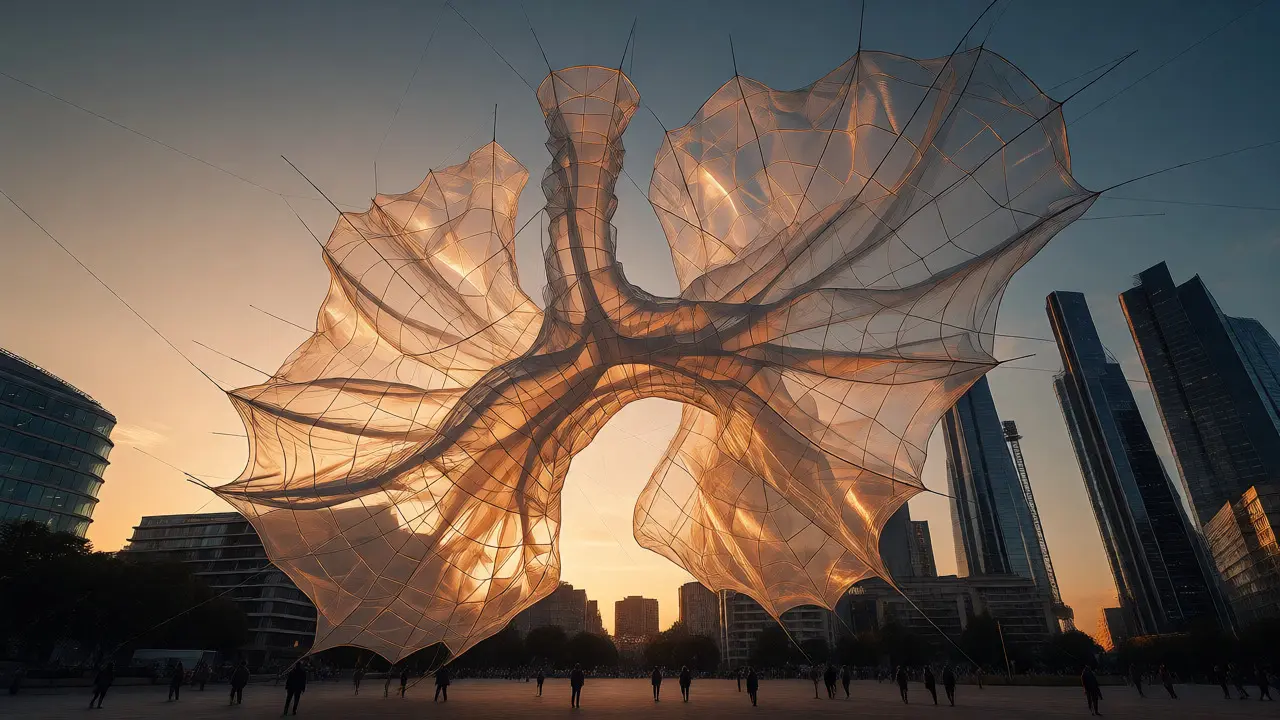
You might think of kites as toys for windy afternoons or competitive sports equipment. But look up at a city square in London or a festival ground in Japan, and you’ll see something else entirely: massive, breathing structures that defy gravity. Contemporary Kite Art is a form of visual art that uses the principles of flight to create large-scale, often temporary, sculptures. It’s not about how high you can fly a diamond-shaped toy; it’s about transforming the sky into a canvas.
This shift from recreation to fine art has exploded over the last two decades. Artists are no longer just attaching tails to nylon sheets. They are engineering complex systems using carbon fiber, silk, and wind sensors to create moving paintings that change shape with every gust. If you’ve ever wondered how these giants stay aloft or who is behind them, you’re in the right place. We’re breaking down the mechanics, the key players, and why this niche is capturing global attention.
The Evolution From Toy to Sculpture
Kites have existed for thousands of years, originating in China around the 5th century BC. For most of history, they served military signaling, religious rituals, or simple play. The artistic pivot happened when creators realized the kite wasn’t just an object in the air, but a partner with the air. Unlike static statues, a kite installation is alive. It reacts to its environment. A calm day makes it droop; a stormy one makes it dance violently.
This dynamic quality attracted sculptors and architects. In the 1970s, pioneers like Paul McCready began experimenting with flexible wings, laying the groundwork for what we now call Kinetic Sculpture art that contains moving parts or depends on motion for its effect. Today, the line between a kite and a building facade is blurry. Some installations are tethered to skyscrapers, turning entire blocks into shimmering skins of fabric. Others float freely, guided by teams of handlers who treat the lines like puppet strings.
How Large-Scale Installations Work
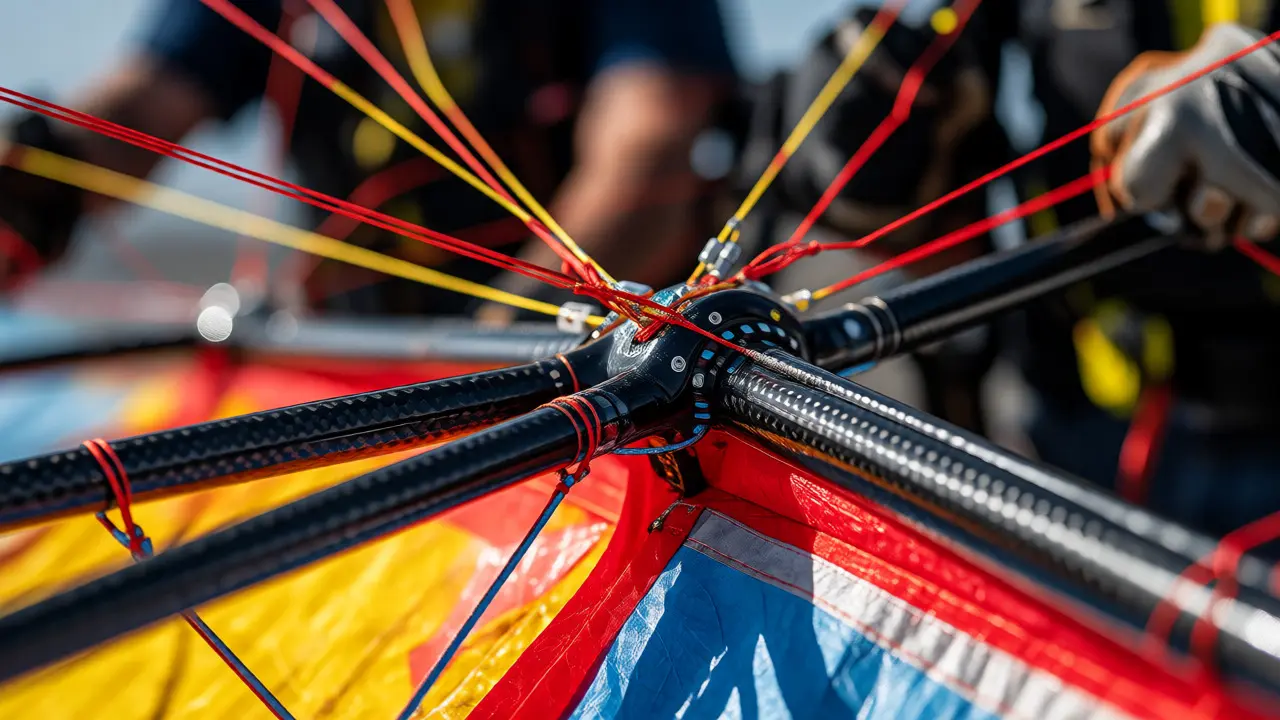
Flying a 50-foot dragon isn’t as simple as running and letting go. These structures require precise engineering. Most modern large-scale kites rely on soft-body aerodynamics. Instead of rigid frames made of wood or aluminum, artists use pressurized tubes or tension-based spars. This allows the structure to fold flat for transport but become rigid when inflated or pulled taut by wind pressure.
- Material Science: Ripstop nylon remains popular for durability, but high-end artists prefer Tyvek or specialized silks. These materials resist UV degradation and maintain color saturation under harsh sunlight.
- Anchoring Systems: You don’t just stake a rope in the ground. Large installations use deadman anchors buried deep underground or heavy concrete blocks. The tension must be distributed evenly to prevent tearing.
- Wind Windows: Handlers position themselves in specific zones where wind speed is consistent. Moving out of this "window" can cause the kite to crash or collapse.
The physics are unforgiving. A miscalculation in lift-to-drag ratio means a $10,000 artwork ends up tangled in a tree. That’s why many contemporary artists collaborate with aerospace engineers. They simulate airflow before cutting a single piece of fabric.
Key Figures Shaping the Scene
While hundreds of people fly kites, only a few have pushed the medium into gallery spaces and major festivals. Here are three names you should know if you’re diving into this world.
| Artist | Signature Style | Notable Feature |
|---|---|---|
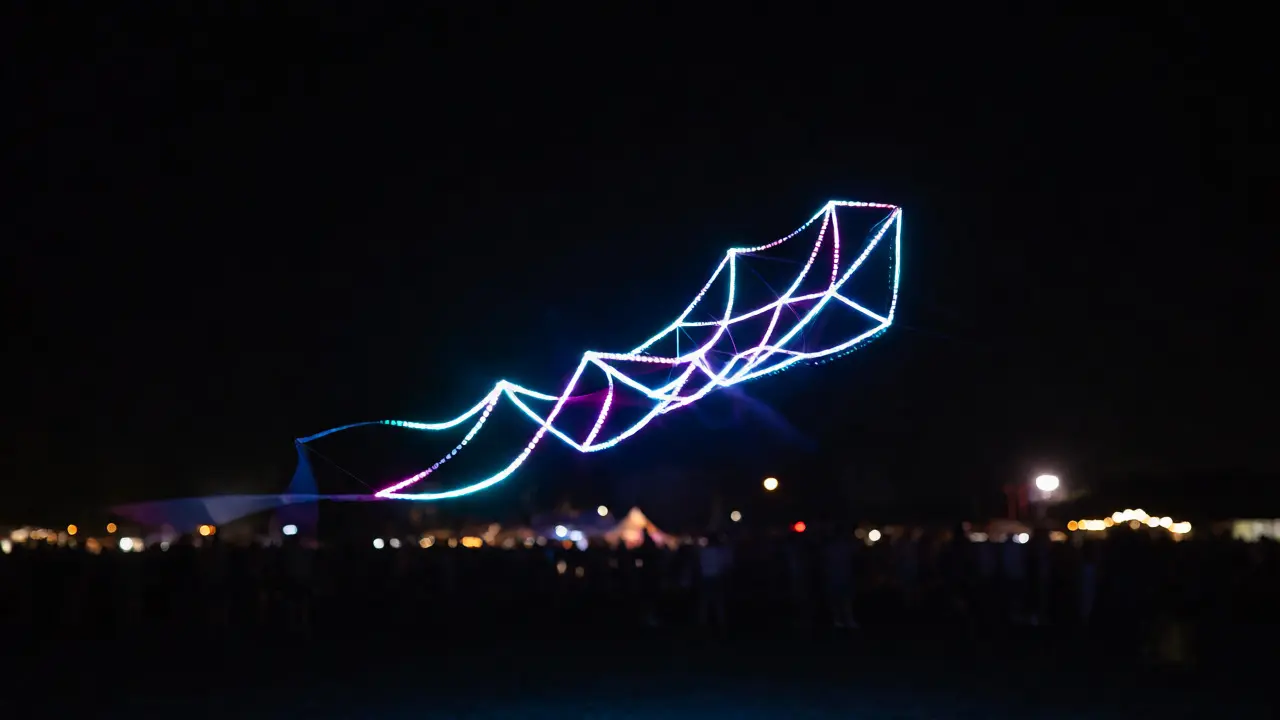
| Nancy Boudreau | Multimedia & Light | Integrates LEDs and sound into night flights. |
| Steve Morris | Soft Body Design | Invented the "soft body" kite technique used globally. |
| Laurie Anderson | Performance Art | Uses kites as narrative tools in multimedia performances. |
Nancy Boudreau changed the game by introducing light. Her night-time installations turn the sky into a glowing tapestry. Steve Morris, on the other hand, revolutionized construction. His soft-body designs allow for intricate shapes-like octopuses or whales-that rigid frames simply can’t achieve. Laurie Anderson approaches kites from a performance angle, using them to tell stories rather than just decorate space.
Where to See Them: Festivals and Galleries
If you want to witness this art live, timing is everything. Kite festivals are seasonal events dependent on reliable wind patterns. The Weifang International Kite Festival an annual event held in Weifang, China, known as the birthplace of kites is the largest gathering. It draws millions of visitors and features competitors from over 40 countries.
Closer to home, the Bristol International Balloon Fiesta a major hot air balloon and kite festival held in Bristol, UK includes significant kite displays alongside balloons. In the US, the San Diego International Kite Festival is a hub for experimental artists. These aren’t just contests; they’re open-air museums. You’ll see kites shaped like galaxies, abstract geometric forms, and hyper-realistic animals.
Galleries are also catching on. Institutions like the Museum of Arts and Design in New York have hosted exhibits featuring small-scale kinetic kites. This legitimizes the craft, moving it from hobbyist circles to serious art critique.
Challenges and Sustainability
Creating giant kites isn’t cheap or easy. The biggest hurdle is logistics. Transporting a 100-foot inflatable requires trucks, cranes, and a team of twenty people. Weather cancellations are common, leading to financial losses for independent artists.
Sustainability is another growing concern. Traditional kites use plastics and synthetic dyes that don’t biodegrade. A new wave of eco-conscious artists is switching to hemp canvas and natural dyes. Some are even designing "zero-waste" kites that can be composted after their exhibition life ends. This shift matters because these installations often take place in sensitive natural environments, from beaches to mountain valleys.
Getting Started With Your Own Installation
You don’t need a million-dollar budget to start. Many local parks host community kite days where beginners can try flying larger formats. Start with a dual-line stunt kite to understand wind dynamics. Once you grasp how pull and release affect altitude, move to parafoil kites, which are easier to launch and safer for beginners.
Joining a local club is the fastest way to learn. Groups like the American Kitefliers Association offer workshops on rigging and safety. You’ll learn how to read wind socks, how to repair tears mid-flight, and how to negotiate space with other flyers. Remember, respect for the airspace is crucial. One tangled line can ruin someone else’s afternoon.
What distinguishes kite art from traditional kite flying?
Traditional kite flying focuses on sport, competition, or recreation, prioritizing height, stability, or maneuverability. Kite art prioritizes aesthetic expression, scale, and interaction with the environment. The goal is visual impact and emotional response rather than performance metrics.
How do artists keep such large kites airborne?
They use advanced aerodynamic designs, such as soft-body structures that inflate with wind, and multi-line bridles that distribute weight evenly. Heavy-duty anchoring systems and skilled ground crews manage tension to prevent collapse during gusts.
Are kite installations permanent fixtures?
Most are temporary due to weather constraints and material wear. However, some architectural integrations, like kinetic facades on buildings, are semi-permanent. True free-flying installations usually last only as long as the festival or event.
What materials are best for beginner large-scale kites?
Ripstop nylon is ideal for beginners because it is lightweight, strong, and resistant to tearing. For frames, fiberglass poles offer flexibility and durability without the brittleness of carbon fiber, which is better suited for experienced builders.
Can kite art be done indoors?
Yes, through controlled environments like atriums or galleries with fans creating artificial wind. These indoor installations allow for detailed lighting and closer viewer interaction, though they lack the dramatic scale of outdoor sky-bound works.