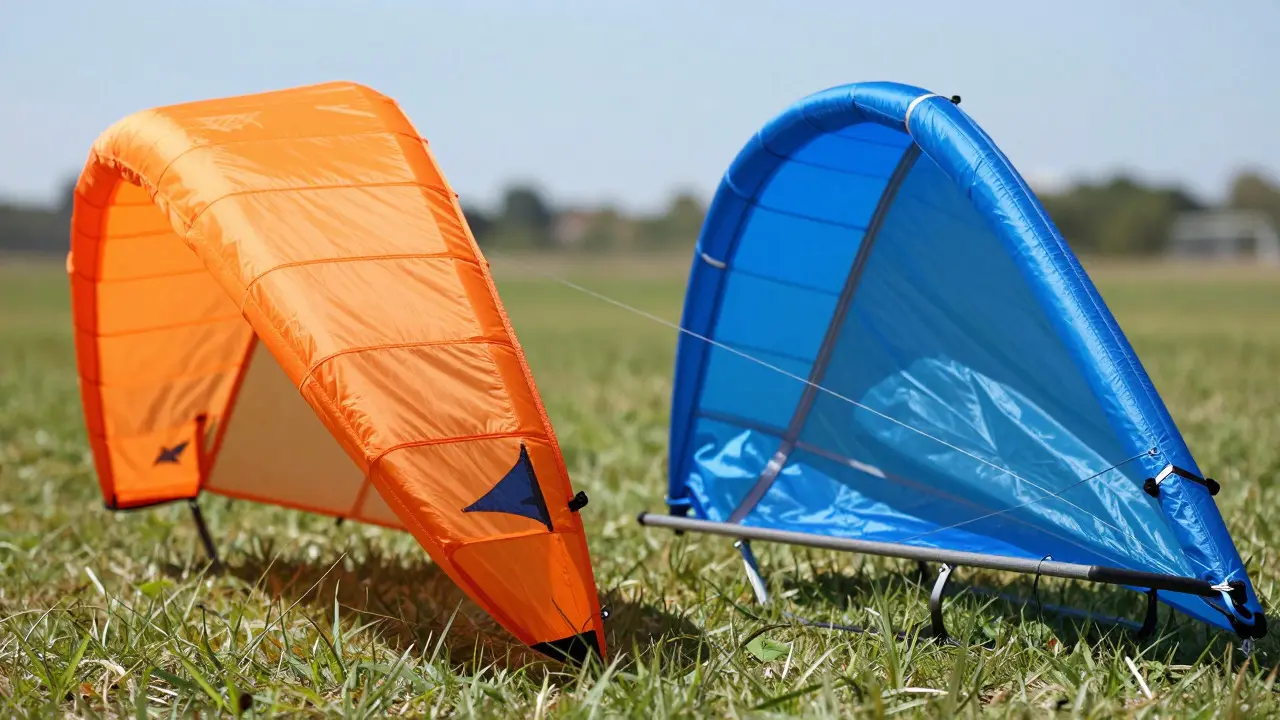
Choosing between a parafoil kite is a soft, inflatable wing that relies on air pressure to maintain its shape and provides stable, predictable flight in moderate winds and a sled kite is a flat, fabric-based design with a rigid frame or keel that excels in high winds but requires more active management for stability can make or break your flying session. If you fly in breezy coastal areas, you’ve likely felt the difference: one kite holds steady while the other demands constant attention. This guide breaks down exactly how these two popular soft-kite types handle varying wind conditions, so you can pick the right tool for the job without guessing.
Quick Summary / Key Takeaways
- Parafoil kites are best for wind speeds between 10 and 25 mph, offering high stability and easy handling for beginners and intermediate flyers.
- Sled kites perform best in stronger winds, typically from 18 to 40+ mph, providing higher lift but requiring more skill to control in gusts.
- Parafoils use internal air pressure to stay inflated, making them less prone to collapsing in turbulent air compared to sled kites’ reliance on structural rigidity.
- If you fly in variable or light-to-moderate winds, choose a parafoil; if you regularly face strong, steady breezes, a sled kite will deliver better performance.
- Both are soft kites (no rigid spars), but their aerodynamic designs create fundamentally different stability profiles and wind ranges.
Understanding the Core Design Differences
The fundamental distinction lies in how each kite maintains its shape. A parafoil kite works like an airplane wing made of flexible fabric. Air enters through leading-edge ports, inflating the cell structure to create a curved, aerodynamic profile. This self-inflating nature means it doesn’t need external support structures. In contrast, a sled kite uses a flatter surface area with a central keel or internal stiffeners to generate lift. Think of it as a large, lightweight sail rather than a wing. This design choice directly impacts how they respond to changing wind conditions.
Because parafoils rely on dynamic air pressure, they naturally dampen turbulence. When a gust hits, the extra air simply increases inflation slightly before stabilizing. Sled kites, being flatter, experience sudden changes in angle of attack during gusts, which can cause abrupt shifts in pull direction. This makes parafoils inherently more forgiving in inconsistent air, while sled kites reward precision in steady, strong winds.
Wind Range Comparison: Where Each Kite Shines
Wind speed is the single most critical factor when choosing between these two types. Most manufacturers specify operational ranges, but real-world performance often differs based on pilot skill and local terrain.
| Kite Type | Optimal Wind Range | Minimum Usable Wind | Maximum Safe Wind | Stability in Gusts | Lift Efficiency |
|---|---|---|---|---|---|
| Parafoil Kite | 10-25 mph | 8-10 mph | 25-30 mph | High - Self-stabilizing | Moderate - Requires consistent airflow |
| Sled Kite | 18-40+ mph | 15-18 mph | 45-50+ mph (with bar) | Low - Requires active trimming | High - Generates significant pull in strong winds |
Notice the overlap zone between 18 and 25 mph. In this range, both kites can fly, but their behavior diverges sharply. A parafoil will feel smooth and controlled, while a sled kite may feel aggressive and demand frequent line adjustments. Below 15 mph, sled kites often stall completely because they lack the inflation needed to maintain lift. Above 30 mph, parafoils risk over-inflation and collapse unless specifically designed for high-wind use.
Stability Mechanics: Why One Feels Calmer Than the Other
Stability isn’t just about staying aloft-it’s about predictability. Parafoil kites achieve passive stability through their three-dimensional shape. As wind flows over the curved upper surface, it creates a consistent pressure differential that keeps the kite centered in the sky. This is similar to how an aircraft wing stays stable during minor turbulence. The result is a kite that “locks” into position, allowing pilots to focus on maneuvering rather than constant correction.
Sled kites, however, depend on active stability. Their flat design means any change in wind angle immediately affects lift distribution. Pilots must constantly adjust line tension and body position to keep the kite balanced. In steady winds, this isn’t an issue-but in gusty conditions, it becomes exhausting. Experienced flyers often describe sled kites as “alive” and responsive, while parafoils feel “calm” and reliable. Your preference depends on whether you want a partner or a tool.
Practical Scenarios: Choosing Based on Your Flying Environment
Your local wind patterns should drive your decision more than personal preference alone. Consider these common scenarios:
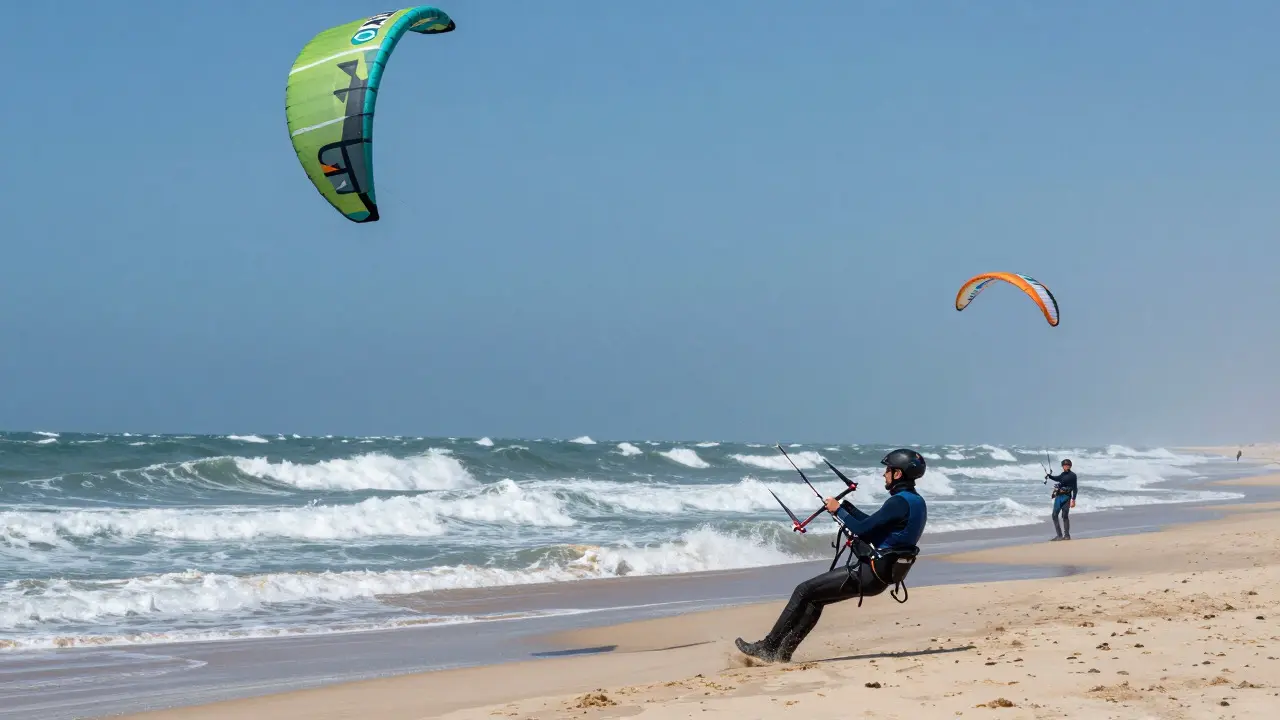
- Coastal Beaches with Steady Breezes: If you fly near the ocean where winds consistently blow at 20-30 mph, a sled kite offers superior lift and excitement. Just ensure you have a power bar for depower capability in case gusts spike above 35 mph.
- Inland Fields with Variable Winds: Grass fields often experience unpredictable gusts and lulls. Here, a parafoil’s self-stabilizing nature prevents crashes during sudden drops in wind speed. It’s the safer choice for mixed conditions.
- Mountain Passes or Urban Rooftops: Turbulent, chaotic airflow makes sled kites dangerous due to their sensitivity. Parafoils handle eddies and crosswinds much better, making them ideal for complex terrain.
- Light Wind Days (Under 12 mph): Neither standard parafoil nor sled kite performs well. You’d need a specialized low-wind parafoil or consider a different category entirely, like foil kites.

Common Pitfalls and How to Avoid Them
Many new pilots buy the wrong kite type because they misjudge their typical wind conditions. Here are the most frequent mistakes:
- Flying a Sled Kite in Light Winds: Expect stalls, weak pulls, and frustration. If your average wind is under 15 mph, skip sled kites unless you’re willing to wait for perfect days.
- Overestimating Parafoil High-Wind Capability: Standard parafoils aren’t built for 35+ mph winds. Check the manufacturer’s max wind rating carefully-exceeding it risks structural failure.
- Ignoring Depower Systems: Sled kites in strong winds require a power bar to reduce pull. Without one, you risk losing control during gusts. Parafoils don’t need bars, but adding a leash system is still wise.
- Assuming Size Equals Power: A larger parafoil doesn’t automatically mean more lift in strong winds-it means more drag and instability. Match size to wind strength, not just desire for height.
FAQ
Can I fly a parafoil kite in strong winds?
Yes, but only if the kite is specifically rated for high winds. Standard parafoils typically max out around 25-30 mph. For winds above 30 mph, look for models labeled “high-wind” or consider switching to a sled kite with a power bar.
Which kite is easier for beginners?
Parafoil kites are generally easier for beginners due to their self-stabilizing design. They forgive small errors and maintain altitude with minimal input. Sled kites require more active management and are better suited for intermediate to advanced pilots.
Do sled kites work in light winds?
Not effectively. Sled kites need at least 15-18 mph of wind to generate sufficient lift. Below this threshold, they stall and lose altitude quickly. For light winds, choose a low-wind parafoil or foil kite instead.
What’s the difference between soft kites and rigid kites?
Soft kites, like parafoils and sled kites, have no rigid frames-they rely on air pressure or fabric tension for shape. Rigid kites use metal or plastic spars for structure. Soft kites pack smaller, weigh less, and are more durable against impact, but offer less precise control in extreme conditions.
How do I know my local wind speed?
Use a handheld anemometer or check weather apps that provide real-time wind data for your location. Look for sustained wind speeds, not peak gusts, when selecting a kite. Many kite shops also offer local wind condition advice based on historical data.