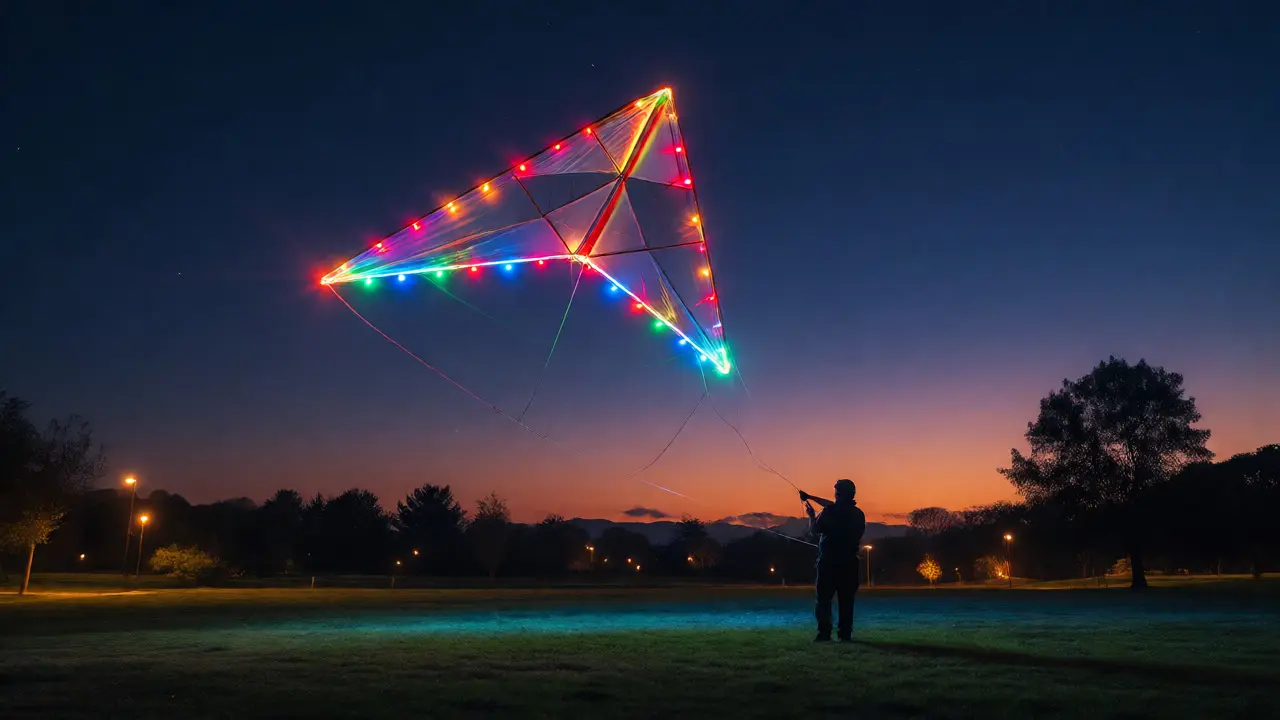
You’ve probably seen those glowing trails dancing across the evening sky-neon dragons or geometric shapes weaving through the stars. It looks magical, doesn’t it? But here’s the thing: flying a kite after sunset isn’t just about aesthetics. It introduces a set of risks that daytime flyers never have to worry about. If you’re thinking about joining the night flyer crowd, you need to know more than just how to tie a knot. You need to understand lighting requirements, visibility limits, and the legal rules that keep your kite from becoming an obstacle for someone else.
Why Light Matters More Than Wind at Night
During the day, you can see your kite against the blue sky or clouds. At night, contrast disappears. Your eyes adjust to the dark, making it nearly impossible to spot a standard nylon kite unless it’s lit up. This isn’t just a hobbyist inconvenience; it’s a safety issue. If you lose sight of your kite, you don’t know if it’s tangled in a tree, drifting into power lines, or crossing paths with another flyer.
The primary rule of thumb is simple: if you can’t see it, you can’t control it. Most experienced night flyers recommend using lights that are visible from at least 500 feet away. This ensures that even if you step back to let out more line, you still have a visual anchor. Without this, you’re essentially flying blind, relying on tension in the line rather than visual feedback. That’s a recipe for crashes.
Choosing the Right Lighting Setup
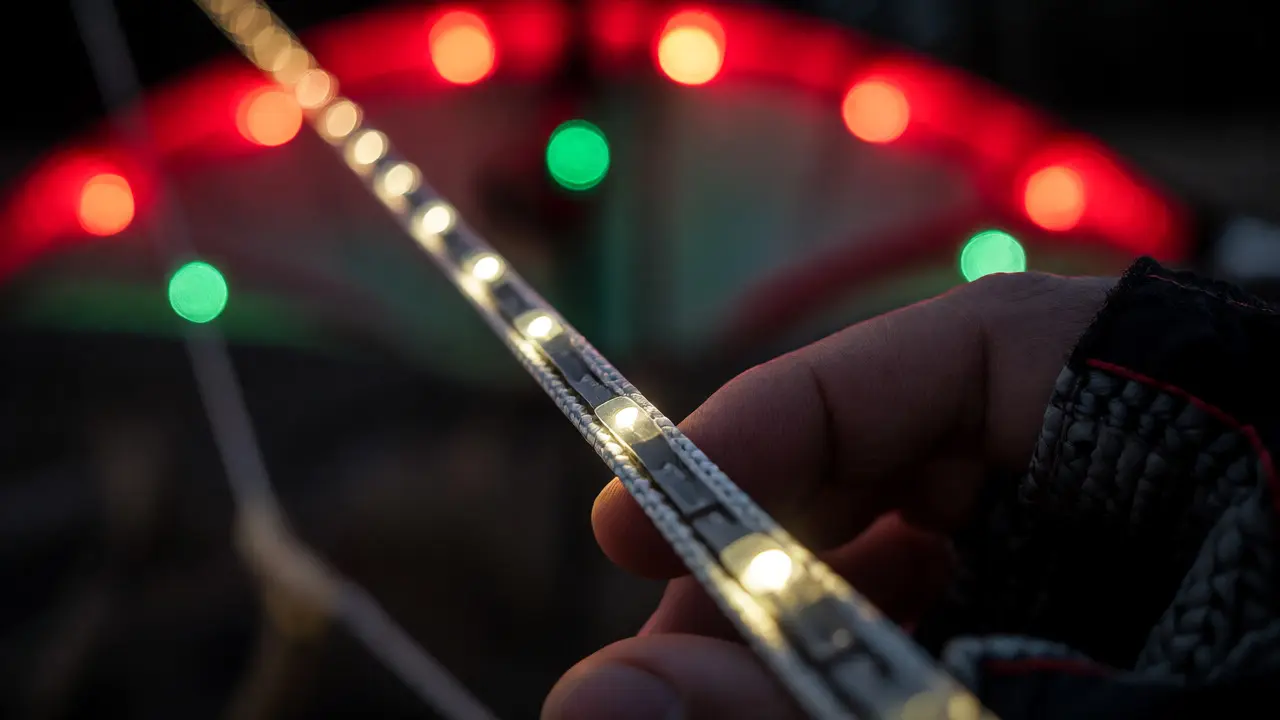
Not all lights are created equal. You might think taping a Christmas bulb to your kite frame works, but weight distribution matters. Too heavy, and your kite won’t fly. Too dim, and you’ll lose it against the city glow. The gold standard for modern night flyers is LED string lights powered by small lithium-ion batteries. They offer high brightness with minimal weight.
Here’s what you should look for when selecting gear:
- Battery Life: Aim for at least 3-4 hours of continuous operation. A typical evening session lasts about two hours, plus setup and teardown time.
- Water Resistance: Look for IP65-rated or higher strings. Evening dew or sudden rain showers can short out cheap electronics instantly.
- Color Choice: Red and green are traditional aviation colors, but white or multi-color LEDs often provide better contrast against urban light pollution. Avoid blue if you’re near airports, as it can sometimes be confused with emergency vehicle lights depending on distance.
- Mounting Security: Use zip ties or Velcro straps, not tape. Tape peels off in humidity or cold air, leaving your light dangling like a pendulum.
Line Visibility: The Invisible Danger
Your kite might be bright, but what about the line connecting it to your hand? Standard braided polyester line is nearly invisible at night. This creates a serious hazard for pedestrians, cyclists, or other flyers who might walk into it. We call these "line strikes," and they happen more often than you’d think.
To fix this, many enthusiasts use reflective tape or glow-in-the-dark line sleeves. Reflective tape catches light from streetlamps or flashlights, creating a shimmering path that warns others something is there. Some advanced users install tiny LED nodes every few meters along the line, but that adds significant weight. For most hobbyists, reflective markers spaced every 10 feet are sufficient and lightweight.
Legal Guidelines and Airspace Rules
This is where things get tricky. Just because it’s dark doesn’t mean the sky is empty. In the United States, the Federal Aviation Administration (FAA) regulates airspace above 400 feet. While recreational kites rarely hit that height, local ordinances vary wildly.
Before you launch, check three things:
- Local Parks Regulations: Many city parks ban kites entirely, or restrict them to specific zones. Some require permits for night events due to noise or light pollution concerns.
- Airport Proximity: If you’re within five miles of an airport, you likely need FAA authorization to fly above certain heights, regardless of the time of day. At night, low-flying aircraft may be less visible to you, so extra caution is required.
- Power Line Clearances: This is non-negotiable. Keep at least 200 feet away from overhead power lines. At night, judging distance is harder. Use landmarks during the day to map out safe zones before dusk hits.
Visibility for Others: Being Seen vs. Seeing
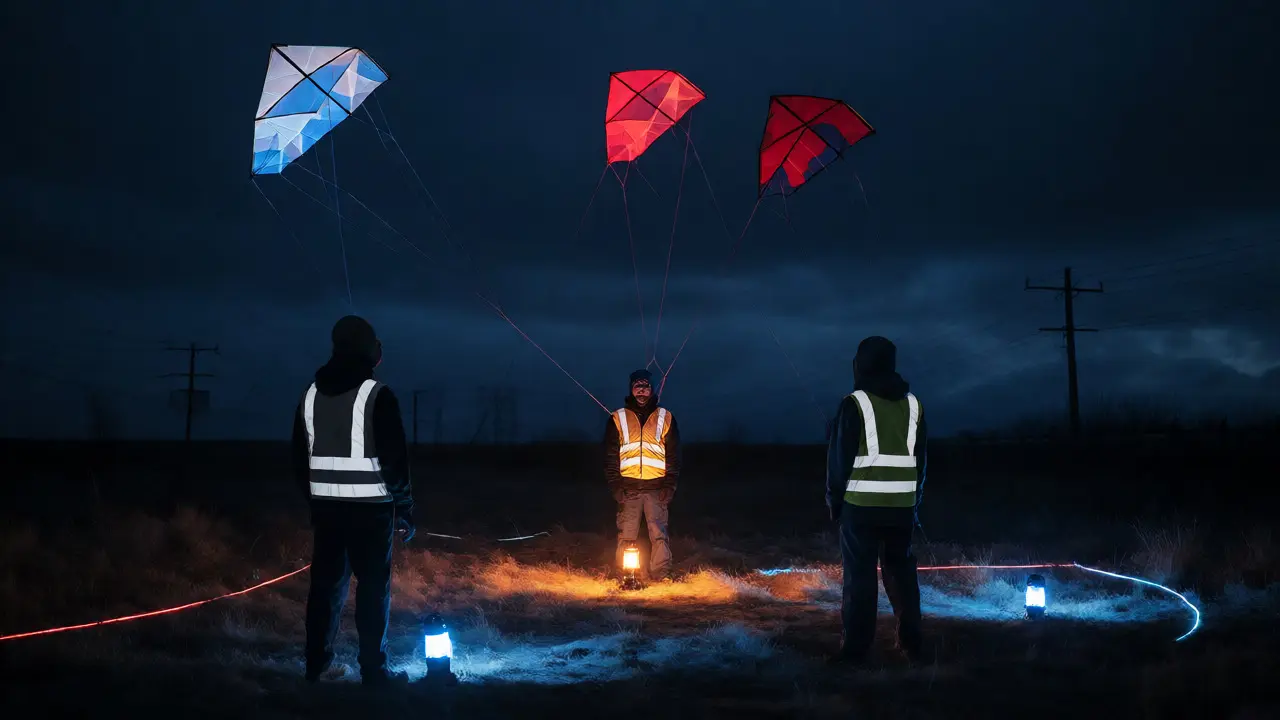
Safety isn’t just about you seeing your kite; it’s about others seeing you. If you’re standing in a dark field holding a glowing object, you become a moving target for distracted drivers or joggers. Wear reflective clothing or vests. If you’re part of a group event, ensure everyone has a ground marker light-a small lantern or glow stick placed near their feet. This helps prevent tripping over lines and lets you track where other pilots are standing.
Common Pitfalls and How to Avoid Them
Even seasoned flyers make mistakes. Here are the top three issues I’ve seen in Portland parks and beyond:
| Issue | Cause | Solution |
|---|---|---|
| Kite "disappears" | Lights too dim or battery dying | Use high-lumen LEDs; carry spare batteries |
| Line tangling | Inability to see line crossings | Use contrasting line colors; fly solo initially |
| Wind misjudgment | Cooler night air changes wind patterns | Test wind speed with a ribbon first; expect gusts |
Practical Tips for Your First Night Flight
If you’re new to this, start small. Don’t bring a massive box kite to your first outing. Choose a diamond or delta shape-they’re stable and easy to launch. Arrive before sunset. Set up your lights while there’s still some twilight so you can troubleshoot connections without fumbling in the dark. Once it’s fully dark, keep your line length short-under 50 feet-to maintain tight control. As you gain confidence, you can let out more line, but always stay within your visual range.
Also, consider the weather. Night temperatures drop, which can affect battery performance. Lithium batteries drain faster in cold air. Keep yours in an inside pocket close to body heat until you’re ready to fly. And finally, clean up. Remove all tape remnants and broken bulbs. Leaving trash behind gives night flying a bad name, and nobody wants stricter bans because someone left a pile of glittery debris.
Do I need a license to fly a kite at night?
Generally, no special license is required for recreational kite flying, day or night. However, you must comply with local park rules and FAA guidelines if flying near airports. Always check local ordinances, as some municipalities have specific restrictions on illuminated objects in public spaces.
What kind of lights work best for kites?
Battery-operated LED string lights are the most popular choice due to their low weight and high visibility. Ensure they are waterproof (IP65 rated or higher) and securely attached with zip ties or Velcro. Avoid incandescent bulbs as they generate heat and are heavier.
How far should I stay from power lines?
Maintain a minimum clearance of 200 feet from overhead power lines. At night, depth perception is reduced, so err on the side of caution. Power lines are difficult to see in the dark, and contact can cause electrical shorts or fires.
Can I fly multiple kites at night?
Yes, but it requires careful planning. Each kite needs its own distinct lighting pattern or color to avoid confusion. Ensure lines do not cross by maintaining adequate spacing between pilots. Using different colored LEDs for each kite helps distinguish them in the dark.
Is it safe to fly kites in the rain at night?
It depends on the kite material and electronics. Nylon kites handle moisture well, but paper or fabric kites may tear. Electronic lights must be waterproof. Wet lines become slippery and harder to grip, increasing the risk of losing control. Check weather forecasts and prioritize safety over persistence.