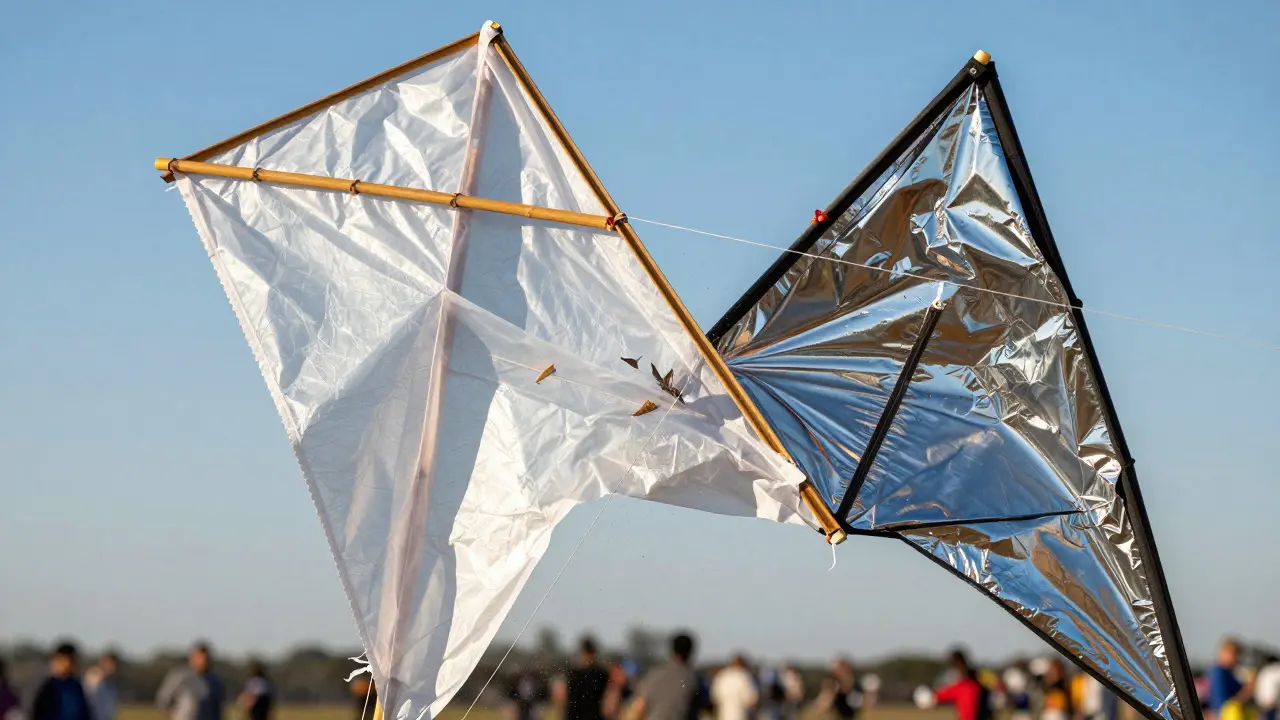
There is a specific sound that tells you everything about a kite fight. It’s the sharp thwip of the string cutting through air, followed by the sudden silence when a wing tears open. If you’ve ever watched two Fighter Kites specialized aerodynamic devices designed for aerial combat using abrasive strings dance above a crowd, you know that material choice isn’t just a preference-it’s survival. The wrong fabric turns your investment into confetti in under ten seconds. The right one lets you outlast opponents who spent twice as much on gear.
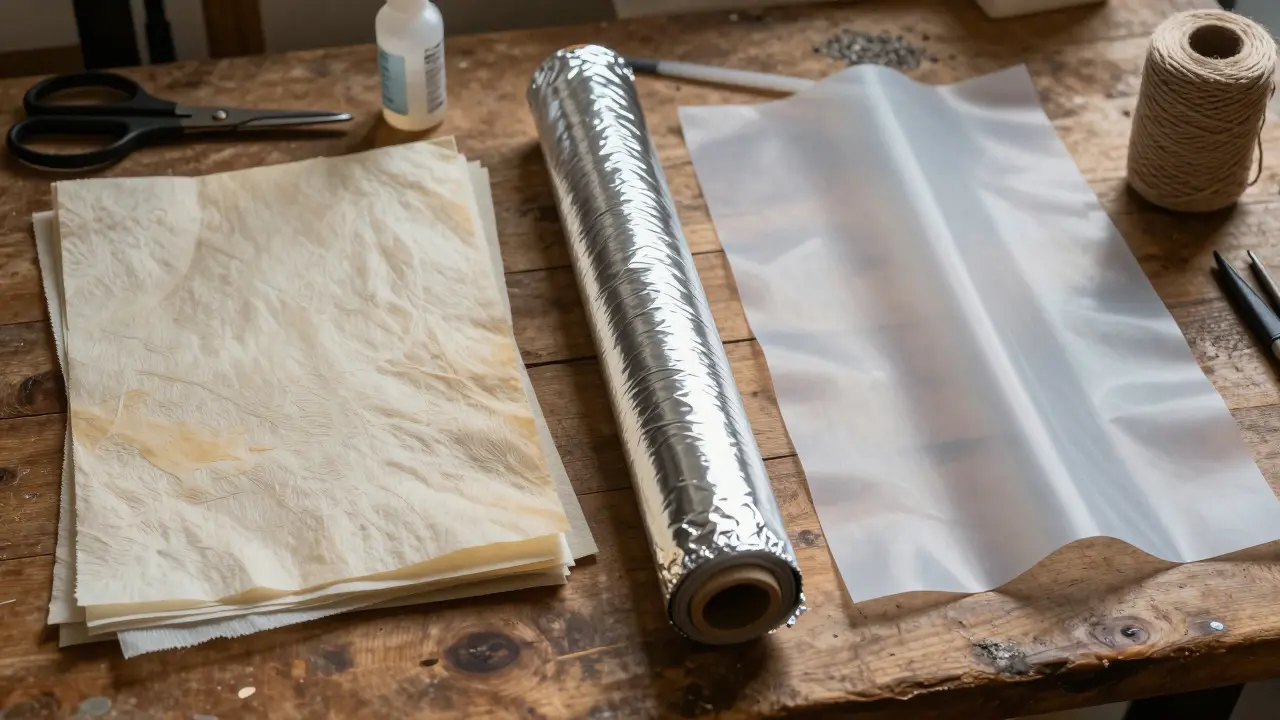
In this guide, we break down the three dominant materials used in modern kite fighting: traditional Tissue Paper a lightweight, porous cellulose-based material historically used for kite skins, high-performance Mylar a brand name for biaxially oriented polyethylene terephthalate (BOPET) film known for its strength-to-weight ratio, and emerging Ultra-Light Plastics modern synthetic films like PETG or specialized nylon blends engineered for extreme durability at low weights. We’ll look at how each performs in wind, how they interact with Manila String a twisted fiber rope coated with glass powder used to cut opposing kite lines, and which one fits your budget and skill level.
Why Material Matters More Than Frame Design
Most beginners think frame geometry determines victory. While true, the skin of the kite dictates how long it survives contact. When two kites collide, their frames usually hold up. It’s the surface that fails. A weak skin rips, creating drag that pulls the kite down. A strong skin shrugs off the abrasion, allowing the pilot to maintain control and launch a counter-attack.
The interaction between the skin and the Glass Coating fine silica particles mixed into adhesive applied to kite strings to increase friction and cutting ability is critical. Manila string works by grinding against the kite’s surface. If the material is too soft, it melts away. If it’s too hard, it might deflect the string but offer little grip for the pilot. The sweet spot lies in materials that are tough enough to resist tearing but slightly textured to handle the abrasive force without shredding instantly.
Tissue Paper: The Traditional Choice
Tissue Paper Kites kites constructed from multiple layers of thin paper glued together for structural integrity remain popular in regions where cost is a primary constraint. You can build a functional fighter kite for under five dollars using standard printer paper or specialized kite tissue. The appeal is simplicity. You don’t need special tools; just glue, scissors, and bamboo or carbon fiber rods.
However, tissue has significant drawbacks. It is highly susceptible to moisture. A light drizzle or even heavy morning dew can cause the paper to swell, adding weight and weakening the glue joints. In dry climates like parts of South Asia, where many kite festivals originate, this isn’t an issue. But if you’re flying in Portland, Oregon, or any humid coastal area, tissue kites often last only one flight session before degrading.
From a combat perspective, tissue offers minimal resistance to manila string. It tears cleanly, which means once the cut starts, it spreads rapidly. This makes tissue kites ideal for learning basic maneuvers and understanding wind dynamics, but less suitable for serious competitive fighting where durability is key.
Mylar: The Standard for Durability
Mylar Film a clear or colored plastic film widely used in packaging and kite construction due to its tensile strength became the industry standard for fighter kites in the late 1980s. Unlike tissue, Mylar is waterproof and tear-resistant. A single sheet of 4-mil (0.1mm) Mylar can withstand considerable stress before failing. Pilots appreciate that it doesn’t absorb water, meaning performance stays consistent regardless of humidity.
The downside of Mylar is stiffness. It doesn’t flex easily, which can make folding and storing the kite awkward. Additionally, Mylar tends to be more expensive than tissue, though still affordable compared to premium synthetics. In terms of string interaction, Mylar holds up well against light glass coating. However, against heavily coated strings, it can crack rather than tear, leaving jagged edges that catch on the line and complicate recovery.
For most intermediate fighters, Mylar offers the best balance of cost, availability, and performance. It’s the material you see in most commercial kits sold online today. If you’re starting a serious collection, Mylar is the safe bet.
Ultra-Light Plastics: The Modern Edge
Recent innovations have introduced PETG Film a type of polyester glycol-modified plastic known for its clarity, impact resistance, and ease of thermoforming and specialized nylon blends into the kite market. These materials are thinner than standard Mylar but significantly stronger per unit weight. They offer superior flexibility, allowing pilots to fold kites into compact shapes without creasing the surface.
These ultra-light plastics excel in high-wind conditions. Their low mass allows for faster acceleration and sharper turns, giving skilled pilots an edge in agility. Because they are more elastic, they tend to stretch slightly under stress rather than cracking. This elasticity helps them survive impacts that would shatter Mylar. However, they are sensitive to UV degradation over time. If left in direct sunlight for months, these films can become brittle. Proper storage in a cool, dark place is essential.
Price-wise, ultra-light plastics sit at the top end. A custom-built kite using these materials can cost three to five times more than a tissue model. For casual flyers, the price may not justify the marginal gain in performance. For competitors aiming for podium finishes, the agility and durability gains are worth the investment.
Comparing Performance Metrics
To help you decide, here’s a breakdown of how these materials stack up across key factors relevant to kite fighting:
| Material | Average Cost (per square foot) | Water Resistance | String Abrasion Resistance | Weight (grams per square meter) | Lifespan (Flights) |
|---|---|---|---|---|---|
| Tissue Paper | $0.50 - $1.00 | Poor | Low | 30 - 40 g/m² | 1 - 5 |
| Mylar (4-mil) | $2.00 - $3.50 | Excellent | High | 25 - 35 g/m² | 10 - 20 |
| Ultra-Light Plastic (PETG/Nylon) | $5.00 - $8.00 | Excellent | Very High | 15 - 22 g/m² | 20 - 30+ |
Note that lifespan varies significantly based on the intensity of fights and the quality of the opposing string. A gentle practice session extends life; a brutal tournament match shortens it.
Matching Material to Your Environment
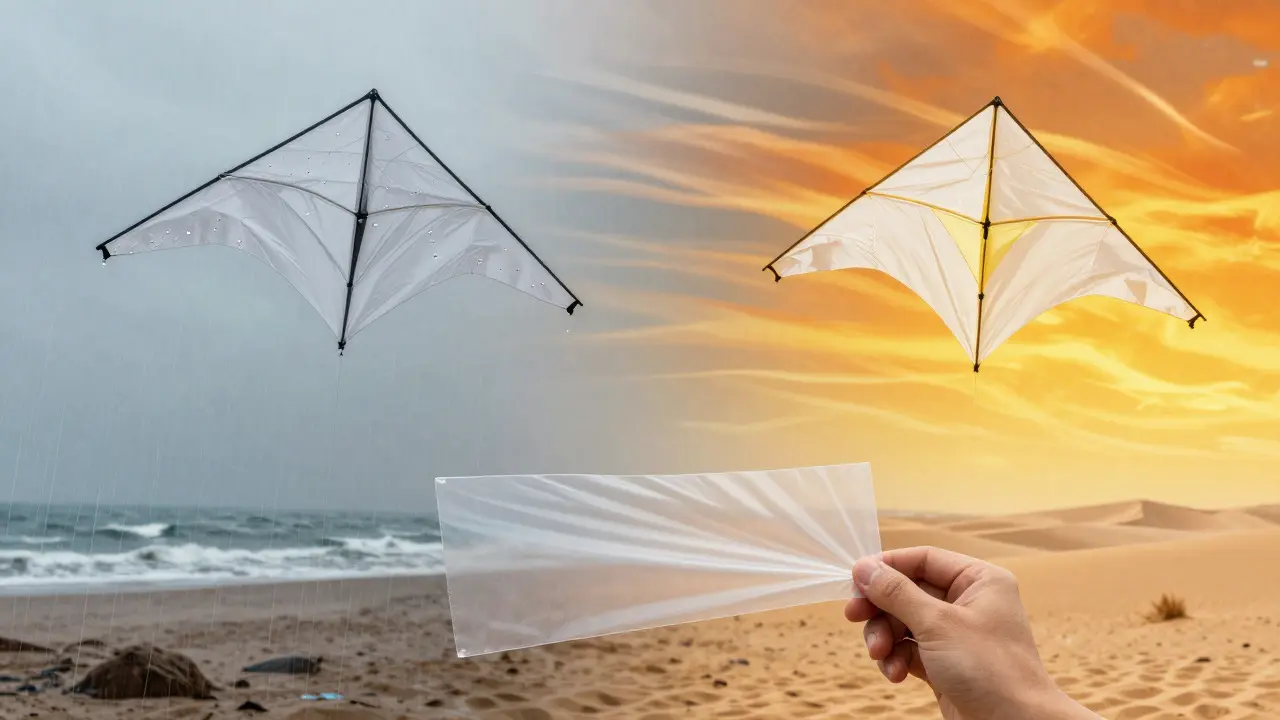
Your local climate plays a bigger role than you might think. If you live in a dry, arid region, tissue kites can last surprisingly long, provided you store them properly. The lack of humidity prevents the paper from warping. In contrast, if you fly near the coast or in areas with frequent rain, skip tissue entirely. Even the best glue won’t save paper from saturation.
Wind consistency also matters. In gusty environments, heavier materials like thicker Mylar provide stability. They dampen the effects of sudden wind shifts, keeping the kite predictable. Lighter ultra-plastic kites react instantly to gusts, which can be thrilling for experienced pilots but chaotic for beginners. If you’re new to fighting, start with a medium-weight Mylar kite. It forgives mistakes better than the hyper-responsive ultra-light options.
Practical Tips for Material Maintenance
Regardless of what you choose, maintenance extends the life of your kite. For Mylar and plastic kites, avoid folding along the same lines repeatedly. Use a rolling method for storage to prevent permanent creases that weaken the film. Clean the surface gently with a soft cloth and mild soap solution to remove dust and residual glass particles from previous fights. Leftover grit acts like sandpaper, accelerating wear during the next session.
If you do use tissue, consider applying a thin layer of clear acrylic spray. This adds a slight barrier against moisture and increases surface hardness, helping it resist string cuts for a few extra flights. Just ensure the spray is fully dry before attaching the frame to avoid sticking issues.
Common Mistakes to Avoid
- Mixing materials: Don’t patch a torn Mylar kite with tape. Tape adds weight and creates uneven tension points that lead to further tearing. Replace the section or retire the kite.
- Ignoring UV exposure: Store all plastic-based kites away from direct sunlight. UV rays break down polymer chains, making the material brittle over time.
- Over-tightening frames: Snapping the frame too tightly can stress the material, causing micro-tears that expand during flight. Allow for slight give in the structure.
- Using wet strings: Wet manila string is heavier and more abrasive. Dry your string after every flight to prevent mold and excessive weight.
FAQ
What is the best material for beginner fighter kites?
Mylar is generally recommended for beginners. It is durable enough to withstand learning curve mistakes, affordable, and widely available. Its moderate weight provides stability in varying winds, making it easier to control than lighter, more reactive materials.
Can I repair a torn fighter kite?
Minor tears in Mylar or plastic kites can be repaired with specialized heat-bonding patches or strong clear adhesives. However, large tears or damage near the frame attachment points usually compromise structural integrity. In such cases, replacing the skin is often more cost-effective than attempting a complex repair.
How does humidity affect kite materials?
Humidity primarily affects organic materials like tissue paper, causing them to absorb moisture, gain weight, and lose structural rigidity. Synthetic materials like Mylar and PETG are largely unaffected by humidity, maintaining their properties in both dry and wet conditions.
Is ultra-light plastic worth the extra cost?
For casual flyers, the cost difference may not be justified. However, for competitive fighters, the improved agility and extended lifespan of ultra-light plastics can result in lower long-term costs and better performance outcomes. The decision depends on your frequency of use and competitive goals.
How should I store my fighter kites?
Store kites in a cool, dry place away from direct sunlight. Roll them loosely rather than folding sharply to prevent crease damage. Keep them in a protective bag to shield the surface from dust and accidental punctures.