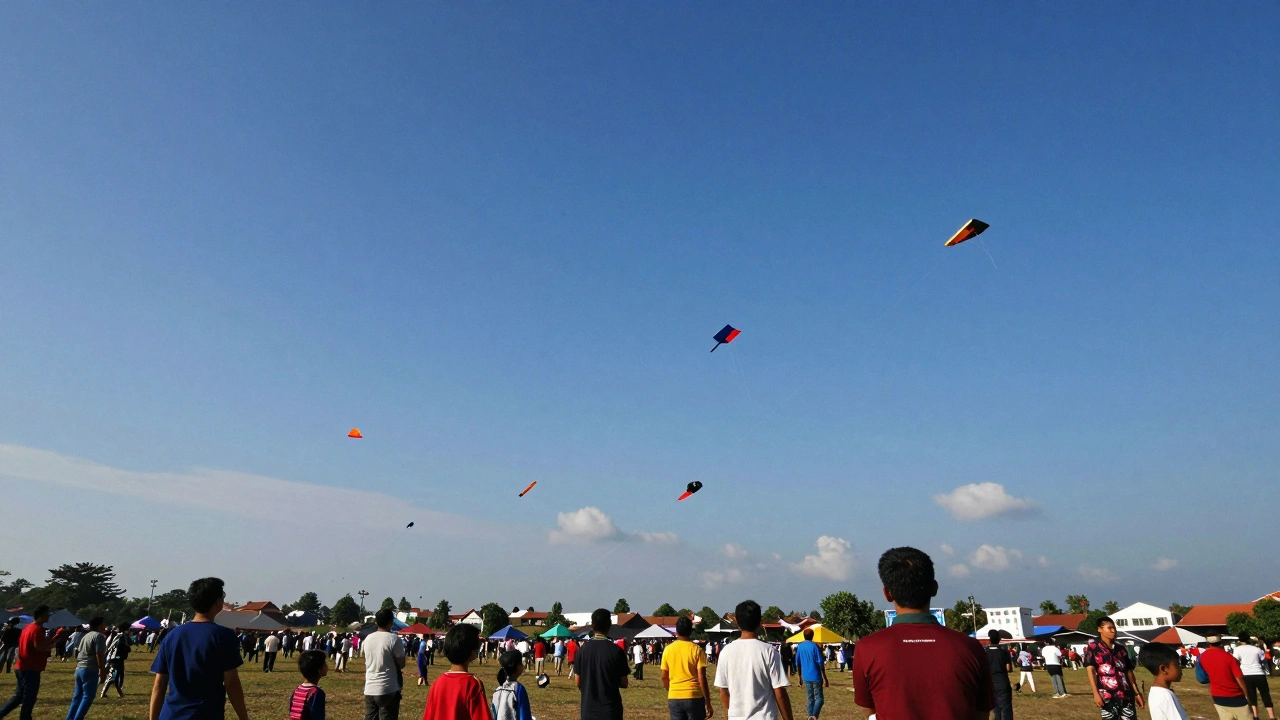
Forget those colorful diamond kites you see at the beach on a lazy Sunday. In Indonesia, kites aren't just for decoration-they are weapons. If you've ever seen a clear blue sky over Java or Bali suddenly filled with hundreds of fluttering shapes, you're witnessing a high-stakes aerial battle. This isn't about who can fly the highest; it's about who can cut the other person's line first. It is a sport of precision, patience, and a very specific kind of dangerous chemistry.
Key Takeaways:
- Regional styles vary from the fighter kites of Java to the massive ceremonial kites of Bali.
- The secret to victory lies in the Gelasan, a glass-coated string designed to slice through rivals.
- Winning depends on a mix of wind reading, string tension, and aggressive maneuvering.
- Safety is paramount because the strings used are sharp enough to cut skin instantly.
The Art of the Fight: What is Layangan?
To understand the sport, you first have to understand Layangan is the Indonesian term for kites, referring to both the physical object and the cultural practice of kite flying. While many cultures fly kites for relaxation, in the heart of Indonesian cities, it's a competitive game. The goal is simple: engage your kite's line with an opponent's and use friction to sever their string, sending their kite drifting aimlessly to the ground.
This isn't just a kids' game. You'll find adults spending hours meticulously balancing the bamboo frames of their kites to ensure they can pivot on a dime. A kite that is too heavy won't climb; one that is too light will tumble. It's a delicate balance of aerodynamics and aggression. Have you ever wondered why some kites seem to dance while others just hover? That's the difference between a beginner's build and a fighter's tool.
Regional Styles Across the Archipelago
Indonesia is massive, and its kite culture reflects that diversity. You won't find the same approach in Jakarta as you would in the highlands of Bali.
In Java, particularly in cities like Surabaya and Semarang, the focus is on agility. These fighters use smaller, lightweight kites that can dive and loop rapidly. The style is fast-paced, often involving "gang wars" where neighborhoods compete against each other in massive sky-battles. The kites here are often made of thin bamboo and lightweight plastic or paper, designed for maximum speed.
Shift your gaze to Bali, and the scale changes completely. Here, you'll find the Bebean, a traditional Balinese kite that looks like a fish. While some are used for fighting, many are ceremonial. In Bali, kites are often tied to spiritual beliefs and the harvest cycle. These kites are enormous, sometimes requiring a whole team of people to launch. The "fight" here is less about cutting lines and more about a display of strength and communal coordination.
| Feature | Javanese Fighter | Balinese Ceremonial |
|---|---|---|
| Primary Goal | Cutting opponent's line | Spiritual/Cultural display |
| Average Size | Small to Medium | Large to Massive |
| Maneuverability | Very High | Low/Stable |
| Material | Thin bamboo & Plastic | Thick bamboo & Fabric/Paper |
The Secret Weapon: Understanding Gelasan
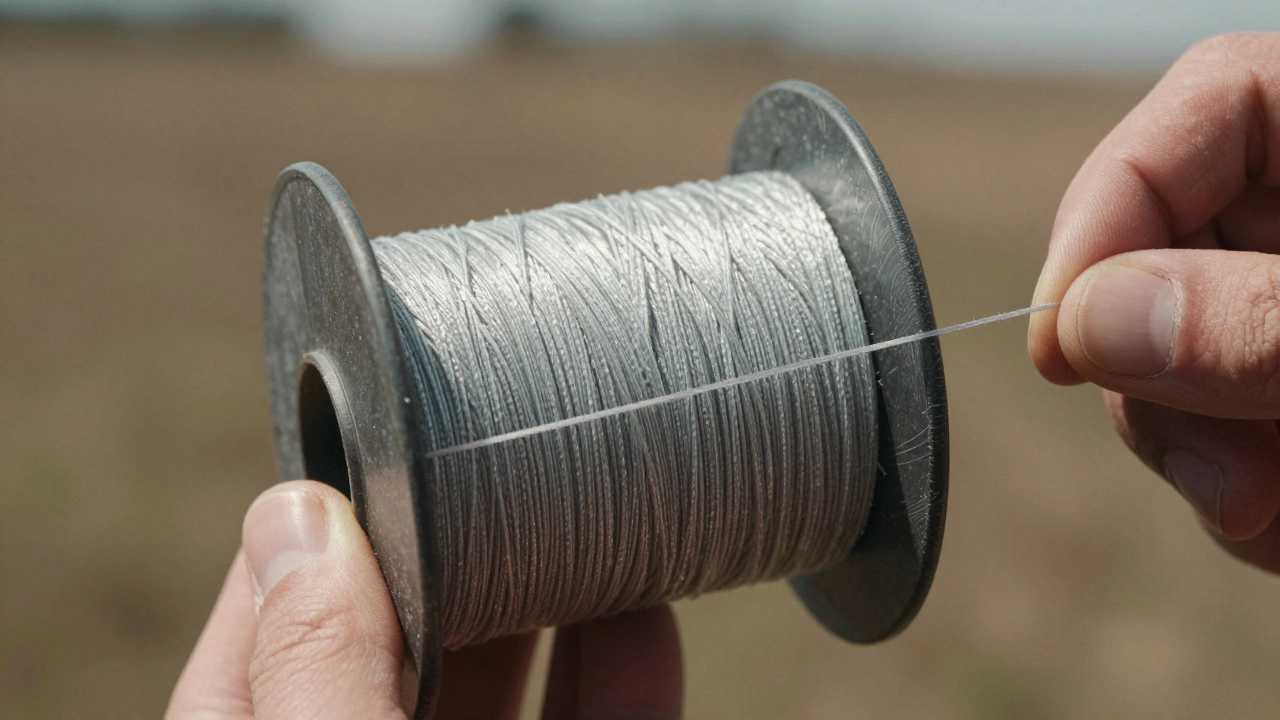
If the kite is the soldier, then Gelasan is the sword. Gelasan is a specialized kite string coated with a mixture of crushed glass, glue, and dye. This coating transforms a simple nylon or cotton thread into a microscopic saw. When two lines cross in the air, the one with the higher quality Gelasan and the better tension will slice through the other.
Not all Gelasan is created equal. Professional "string makers" spend days simmering the line in huge vats of adhesive and glass powder. The result is a string that feels slightly rough to the touch but is incredibly lethal. There are different grades based on the grit of the glass used. Some are "sharp" (tajam) for aggressive cutting, while others are "strong" (kuat) to resist being cut while they wear down the opponent.
But here is the danger: Gelasan does not discriminate. If a line snaps and drifts, it can slice through a power line or, worse, a person's finger. This is why experienced fliers always wear protective tape or finger guards. If you're trying this out, never fly near roads or power lines-the risks are simply too high.
Pro Techniques: How to Win the Sky
Winning a fight isn't just about having the sharpest string; it's about how you use the wind. There are two primary schools of thought when it comes to the attack: the "Pull" and the "Release."
The Tarik Technique (The Pull) is an aggressive move. The flier wraps the line around their hand and pulls the kite sharply and quickly across the opponent's line. The goal is to create a high-velocity friction point that shears the other string instantly. It requires immense strength and a kite that can handle sudden shifts in direction without diving.
Conversely, the Ulur Technique (The Release) is a game of patience. Instead of pulling, the flier lets the string slide out rapidly. By feeding the line, they allow the wind to push their string across the opponent's in a slow, sawing motion. This is often more effective against a stronger opponent because it uses the opponent's own tension against them. It's like a judo move for the sky.
A master flier knows when to switch. They'll start with an Ulur to wear down the enemy's line and then finish with a sudden Tarik to seal the victory. The timing is everything-you have to feel the tension in the string, almost like a fishing line, to know exactly when the opponent is vulnerable.
Building the Perfect Fighter Kite
If you want to compete, you can't just buy a generic kite. You need a custom build. The frame is almost always Bambu Apus, a type of flexible yet strong bamboo. The vertical spar needs to be rigid, while the horizontal cross-bars must have a slight spring to them.
The "tuning" of the kite happens at the bridle-the point where the string attaches to the frame. By shifting the knot just a few millimeters up or down, you change the angle of attack. A "nose-heavy" kite will dive faster, which is great for the Tarik technique. A "tail-heavy" kite will soar and hover, making it perfect for the Ulur strategy. Most pros carry a few different kites, swapping them based on whether the wind is steady or gusty.
The Community and the Culture of the Chase
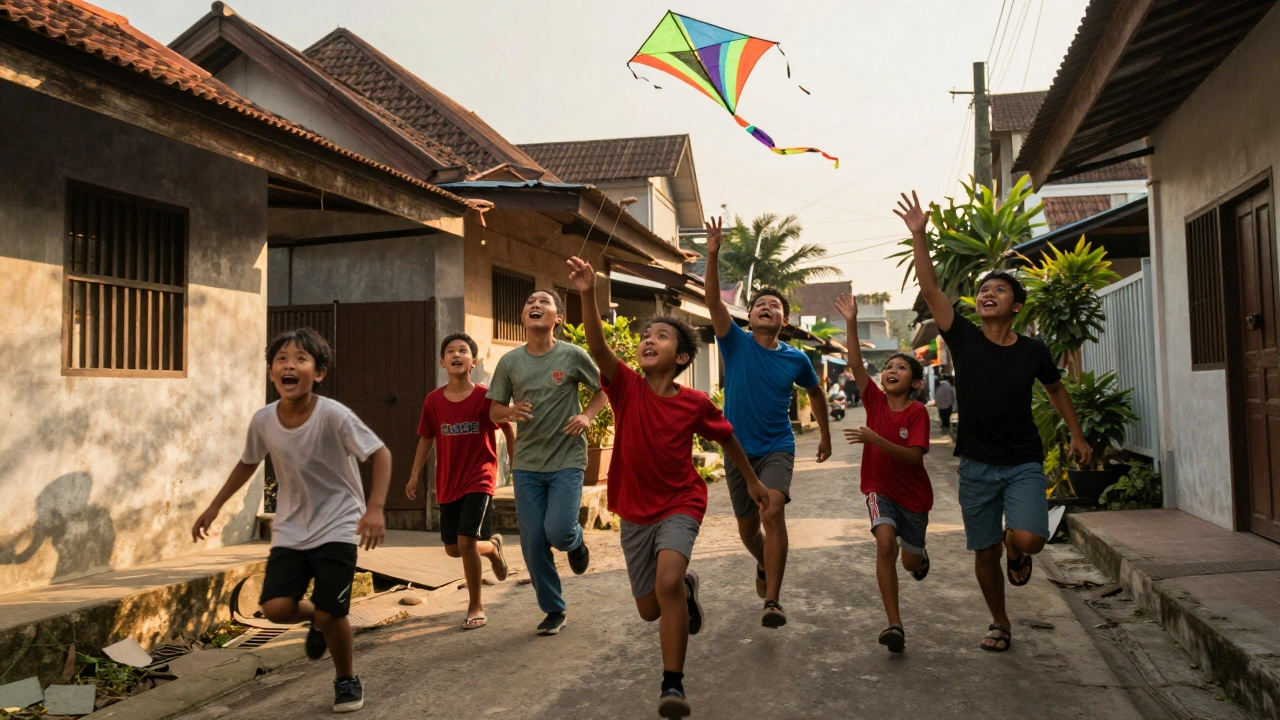
The fight doesn't end when the string snaps. In many Indonesian neighborhoods, the "chase" is just as exciting as the fight. When a kite is cut, it becomes a free agent. Everyone-kids and adults alike-sprints across fields and through alleys to be the one to catch the drifting trophy.
This creates a unique social bond. You might have just spent an hour trying to destroy your neighbor's kite, but five minutes after the cut, you're both racing down the same street, laughing and dodging traffic to grab the prize. It's a high-adrenaline cycle of rivalry and camaraderie that keeps the tradition alive in an era of smartphones and gaming.
Is Gelasan string dangerous?
Yes, extremely. Because it is coated in microscopic glass shards, it can cause deep cuts to the skin and is dangerous if it comes into contact with eyes or power lines. Always use finger protectors and fly in open areas.
What is the difference between Tarik and Ulur?
Tarik is a fast-pulling motion used to snap the opponent's line through speed and force. Ulur is the act of releasing the string, allowing the wind to push the line across the opponent's string in a sawing motion.
Can I use normal fishing line for kite fighting?
No. Standard fishing line is too smooth and lacks the abrasive coating found in Gelasan. Without the glass coating, you cannot cut another kite's string; you will likely just get tangled or be cut yourself.
Where is the best place to see these kites?
The beaches and open fields of Bali are famous for massive ceremonial kites. For the competitive fighting style, the open spaces in cities like Surabaya or Jakarta during the windy season are the best spots.
How do you balance a fighter kite?
Balance is achieved through the bridle (tali goci). By adjusting the knot's position, you control whether the kite is stable (for Ulur) or aggressive (for Tarik). The frame must also be perfectly symmetrical using lightweight bamboo.
Next Steps for Beginners
If you're new to this, don't start with a high-stakes battle. Start by practicing your launch and flight stability with a standard cotton string. Once you feel comfortable with how your kite reacts to the wind, introduce a low-grade Gelasan to understand how the tension feels. Find a local group or a "kite club"-these traditions are passed down through mentorship, and there is no substitute for watching a pro handle the string in real-time.
If you find your kite is constantly diving, move your bridle knot slightly toward the tail. If it won't climb, move it toward the nose. Experimentation is the only way to truly master the sky.